Dr. Mohammed Abu Salmiya says deaths caused by collapse of territory’s health system now exceed those due to Israeli airstrikes
By Ramzi Mahmud and Mohammad Sio, reposted from Anadolu Agency, July 3, 2026
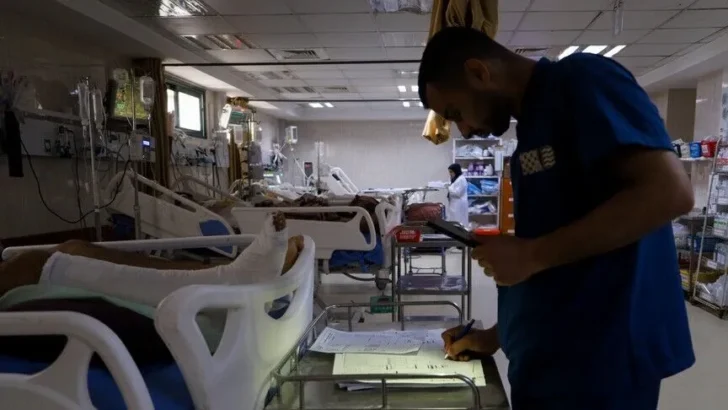
The number of deaths caused by the collapse of Gaza’s healthcare system due to the Israeli genocide now exceeds the number of people killed in direct Israeli airstrikes, according to Dr. Mohammed Abu Salmiya, director of the Al-Shifa Medical Complex.
In an interview with Anadolu marking 1,000 days since Israel’s genocide in the Gaza Strip began on Oct. 8, 2023, Abu Salmiya described Gaza’s healthcare sector as facing an “unprecedented humanitarian catastrophe.”
He said about 1,500 patients have died while waiting for permission to travel abroad for treatment.
Abu Salmiya said Israel, after destroying much of Gaza’s healthcare system, continues to prevent its recovery. More than nine months since a ceasefire agreement took effect, “there has been no meaningful improvement in health or humanitarian conditions,” he said.
Salmiya said a decline in deaths from Israeli airstrikes does not mean the humanitarian crisis has eased, noting that fatalities linked to the collapse of healthcare and the lack of treatment continue to rise daily.
According to Salmiya, Israel has systematically targeted Gaza’s healthcare sector since the start of the war by damaging hospitals, killing and detaining medical personnel, and restricting the entry of medical supplies and equipment needed to sustain medical services.
He said Al-Shifa Medical Complex, Gaza’s largest hospital, was one of the Israeli military’s primary targets. The facility suffered extensive damage and lost most of its operational capacity after Israeli raids in December 2023 and March 2024.
Heavy toll on healthcare system
Salmiya said more than 1,700 healthcare workers have been killed in the war, while more than 330 others have been detained. He said 88 medical personnel remain in Israeli custody, describing the figures as evidence of the direct targeting of Gaza’s healthcare system.
He said Gaza is now home to more than 173,000 injured people, including thousands who will require years of treatment and rehabilitation. The wounded also include about 6,000 amputees and more than 2,000 people living with complete paralysis.
Hospitals are also struggling with severe shortages of medicine and medical supplies, he said, with more than 50% of essential medicine and over 70% of medical consumables unavailable.
Patients waiting to die
Abu Salmiya warned that conditions for kidney dialysis patients continue to deteriorate rapidly, and said about half have died since the war began.
He attributed the deaths to severe shortages of bicarbonate used in dialysis treatment, forcing medical teams to shorten dialysis sessions for remaining patients.
Gaza has about 14,000 cancer patients, including 4,000 who require chemotherapy, radiation therapy or biological treatments, none of which are currently available inside the territory, he said.
Tens of thousands of wounded people need specialized reconstructive surgeries involving bones, the brain, nerves and blood vessels, he added.
Children are also suffering widespread physical and psychological trauma as reconstruction materials needed to repair hospitals and healthcare facilities remain barred from entering Gaza, Abu Salmiya said.
Limited medical evacuations
More than 22,000 patients require treatment outside Gaza, but only about 30 patients are allowed to leave during the intermittent openings of the Rafah border crossing, Abu Salmiya said, describing the number as “far below humanitarian needs.”
He said about 1,500 patients have died while waiting to travel abroad for treatment. Gaza also loses three to four cancer patients and one to two dialysis patients every day, he added.
The large gap between the number of patients needing treatment abroad and those allowed to leave reflects what he described as a “serious humanitarian gap” that continues to drive preventable deaths.
On June 9, Gaza’s Health Ministry said Israel had only allowed 1,204 patients to leave for treatment abroad out of the 17,757 patients that had received medical referrals.
Abu Salmiya also said Israel continues to block the entry of essential medical equipment.
“There is not a single MRI machine operating in Gaza today,” he said, adding that Israel is also preventing the entry of X-ray machines, CT scanners and breast cancer screening equipment.
Israel failed to fulfill the commitments of the ceasefire agreement, which included provisions for allowing medical equipment and supplies into Gaza under a plan proposed by US President Donald Trump.
Dire conditions in displacement camps
Abu Salmiya said living conditions in displacement camps are “completely inhumane,” with increasing numbers of children suffering from skin diseases and gastrointestinal illnesses caused by contaminated water and malnutrition.
He said hundreds of thousands of children and pregnant women are suffering from anemia, while about 350,000 people with chronic illnesses, including heart disease, diabetes, hypertension and thyroid disorders, face acute shortages of the medicine they need.
Abu Salmiya urged the international community and the guarantors of the ceasefire agreement to intervene immediately to secure a “real” ceasefire, reopen border crossings, allow medicine, medical supplies and equipment into Gaza, and enable patients to travel abroad for treatment.
“From the heart of bleeding Gaza, we appeal to the world to save the Strip before it is too late. Open the crossings, allow medicine and medical equipment to enter, and let patients travel for treatment so the people of Gaza can receive the minimum level of healthcare and save lives that could still be saved,” he said.
Since the genocide began, Gaza’s healthcare system has suffered widespread destruction affecting hospitals and primary healthcare centers. Gaza’s Health Ministry says continued restrictions on the entry of medicine and medical equipment are deepening the crisis and limiting hospitals’ ability to provide even basic medical care.
Ramzi Mahmud is a Palestinian Photojournalist; Mohammad Sio is a MENA Correspondent for the English News Desk at Anadolu Agency
RELATED:
- In Gaza’s hospitals, treatable patients face ‘slow, quiet death’
- This baby joins thousands of Gazans in need of medical evacuation
- MSF: Israel’s deliberate restriction of food and aid led to alarming malnutrition levels in Gaza
- Six Months into Gaza Ceasefire, Setting the Record Straight About Aid
- Israel’s restriction of aid into Gaza leads to critical shortages in bread, baby formula, and water
- Israel Destroyed Gaza’s Hospitals. Now It’s Banning Doctors Without Borders.