Excerpt from UN Geneva Press Briefing – 19 June 2026
United Nations Children’s Fund (UNICEF) Global Spokesperson James Elder:
For many, many months the world has been told there is a ceasefire in Gaza.
Yet for Palestinian children this so-called ceasefire has become a cruel and a deadly illusion.
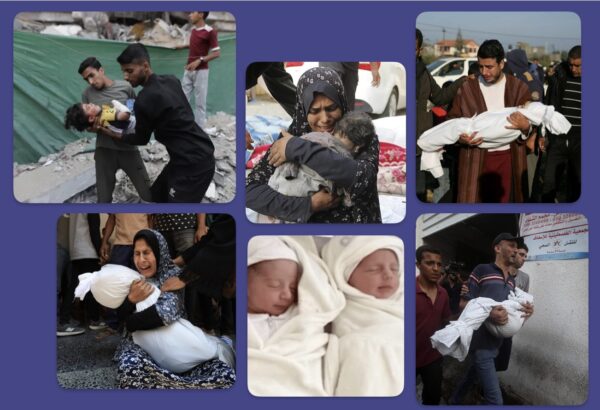
Since the ceasefire was announced in October last year, 265 Palestinian children have been killed across Gaza.
That is an absurd, that is a devastating figure.
So during a period supposedly defined by restraint and protection, a child is killed on average every single day for more than eight months.
Now, let’s be clear what that means.
These children were not killed in a war zone.
They were killed in their homes. They were killed in their schools, they were killed playing football, they were killed fishing, they were shot, they were bombed, they were struck by quadcopters.
While the world continues to speak the language of ceasefire, families in Gaza continue to bury their children.
However, if a child is being killed every day, surely the debate now is no longer about the quality of this ceasefire, it’s about the credibility of calling it one.
This week. This week, a 2 year old boy was shot and killed by Israeli forces.
A 13 year old boy was shot and killed in his tent.
A 5 year old boy and his father were killed by an Israeli strike.
And on and on and on it goes.
The suffering does not end with those killed.
More than 400 girls and boys have been injured, many with catastrophic wounds.
Again this week a 12 year old girl in her tent shot in the chest with live ammunition from a crane mounted gun.
A three-year old girl again in her home, shot in the face by a bullet from a quadcopter drone.
Doctors in Gaza are treating brain hemorrhages, devastating injuries to children’s chests, abdomen and life changing trauma.
Children fear, loss and violence. They’ve become so constant.
The trauma is no longer an episode in their lives. It is woven into the very fabric of childhood in Gaza.
It is quite literally carried in their bodies.
The trauma is so profound now that it affects children’s ability to eat, to sleep and of course, to develop normally.
Many children are in such a frightened state of of fear of distress that they struggle now to eat adequately, further aggravating malnutrition and leaving them physically weaker as well as emotionally scarred.
Sorry, colleagues, hundreds of children still require medical evacuation.
At the same time, we have restrictions on essential medicine that mean that wounded children are enduring ever greater pain and face an increased risk of infection, of complication and of further amputations.
We must stop accepting levels of child deaths that would provoke international outrage anywhere else.
We must stop normalizing the abnormal.
The fact that children continue to be killed at this scale during a ceasefire should alarm every government and every institution which claims to defend international law.
The killing of children.
It’s not the consequence of a lack of options, it is the consequence of a lack of political will.
Every day that passes without responsibility sends the same message. Palestinian children’s lives can be taken without accountability.
This is no longer a failure of the system.
It has become the system.
Ladies and gentlemen, if, if colleagues, if I could just add a final point on Lebanon. It is related.
I want to flag to you a statement that UNICEF, UNICEF issued just two days ago on Friday on Lebanon. We’re after more than 100 days of increased hostility.
Since the 2nd of March, 247 children have been killed, almost 1000 injured.
It’s an average of 12 children killed or maimed every day, 12 girls and boys every day.
The fact that we are once again calculating a daily average of children killed and wounded in the Middle East tells its own devastating story.
And Lebanon, of course, we’re also talking about periods of a declared ceasefire where children continue to be killed and wounded.
No ceasefire can be considered meaningful when children are not protected.
The violence against girls and boys in the Middle East must end.
Each month, numerous NGOs produce reports on the humanitarian situation in Israel-Palestine, but US media rarely report on them. See this compilation of reports by Human Rights Watch, Amnesty International, Red Cross, Christian Aid, B’Tselem, Defense for Children International, and others: