“You’re fucking crazy”: Trump fumes at Netanyahu in call on Lebanon
By Barak Ravid and Marc Caputo, reposted from Haaretz, January 1, 2026
President Trump lashed out at Israeli Prime Minister Benjamin Netanyahu over Israel’s escalation in Lebanon in an expletive-laden call on Monday, two U.S. officials and a third source briefed on the call told Axios.
Why it matters: Earlier on Monday, Iran threatened to abandon the negotiations with the U.S. over Israel’s actions in Lebanon. On the call, Trump called Netanyahu “crazy” and accused him of ingratitude, according to two of the sources. He also put the brakes on Israel’s plan to strike Beirut.
Behind the scenes: One U.S. official said Trump told Netanyahu that following through on his threats to bomb the Lebanese capital would further isolate Israel around the world.
- Two of the sources said Trump claimed he’d helped keep Netanyahu out of jail — a reference to his support during Netanyahu’s corruption trial.
- Summarizing Trump’s remarks to Netanyahu, the U.S. official said: “You’re fucking crazy. You’d be in prison if it weren’t for me. I’m saving your ass. Everybody hates you now. Everybody hates Israel because of this.”
- A second source briefed on the call said Trump was “pissed” and at one point yelled at Netanyahu: “What the fuck are you doing?”
Driving the news: The U.S. official said Trump knew Hezbollah had been shooting at Israel and that Israel needed to defend itself, but felt in recent days that Netanyahu was escalating in a disproportionate way.
- In addition to the threats on Beirut, Israel has been expanding its ground operation in southern Lebanon.
- Another U.S. official said Trump was concerned by the fact that Israel had killed so many civilians in Lebanon, and objected to the Israelis knocking down buildings to take out a single Hezbollah commander.
State of play: Israel no longer plans to strike Hezbollah targets in Beirut, an Israeli official told Axios.
Between the lines: Trump and Netanyahu have had several tense calls in the past but have still coordinated closely on Iran and other issues. One official said this was one of Trump’s worst calls with Netanyahu since he returned to office.
- Trump’s anger appeared to be driven by the fact that Netanyahu’s decision to escalate in Lebanon was threatening to implode his negotiations with Iran.
- After the call, Trump posted on Truth Social that the Iran talks were “continuing, at a rapid pace.”
The other side: Netanyahu released a statement after the call saying he’d told Trump that Israel would attack targets in Beirut if Hezbollah did not stop attacking Israel, and that in the meantime Israel would continue its operations in southern Lebanon.
- “Our position remains the same,” Netanyahu wrote.
- The second U.S. official claimed that, in reality, Trump had “steamrolled” Netanyahu on the call. “Bibi said, ‘OK, OK, just make sure everything is taken care of,'” according to the official.
- Netanyahu’s office did not respond to a request for comment.
What to watch: The memorandum the U.S. and Iran are negotiating calls for an end to the fighting in Lebanon, sources tell Axios. That was the source of a previous tense call between Trump and Netanyahu.
*Additionally*
Why Trump may actually have told Netanyahu “Everybody hates you!”
By Trita Parsi, reposted from Trita Parsi’s Substack, June 1, 2026
“You’re fucking crazy. You’d be in prison if it weren’t for me. I’m saving your ass. Everybody hates you now. Everybody hates Israel because of this.”
According to Axios, this is what Donald Trump said to Israeli Prime Minister Benjamin Netanyahu in “an expletive-laden call” earlier today.
Trump also accused Netanyahu of ingratitude since Trump had helped keep Netanyahu out of jail. At the heart of the matter was Trump’s frustration with Netanyahu not caving to his demands to cease bombing Lebanon, as Israel’s aggression risked jeopardizing Trump’s diplomacy with Iran.
The story has understandably been met with considerable skepticism. After all, there is a long and well-documented pattern of American presidents privately expressing anger and frustration with Israeli prime ministers while publicly standing shoulder-to-shoulder with them and continuing to support their policies.
Take Joe Biden as an example. In late December 2023, Axios reported that Biden’s frustration with Benjamin Netanyahu had become so intense that he abruptly ended a phone call with the Israeli leader, reportedly concluding the exchange with the terse remark: “This conversation is over.” Yet in practice, Biden remained firmly aligned with Israel’s conduct of the war in Gaza.
Two months later, NBC News reported that Biden had repeatedly referred to Netanyahu as an “asshole” in private conversations with aides and donors. But even as he vented his exasperation behind closed doors, Biden continued to arm Israel lavishly and shield it from mounting diplomatic and political pressure at the United Nations. The gap between private frustration and public policy could hardly have been more striking.
According to Bob Woodward’s 2024 book War, Biden’s frustrations became intensely personal during the Rafah dispute and Biden told an associate: “That son of a bitch, Bibi Netanyahu, he’s a bad guy. He’s a bad f***ing guy.” No policy change followed.
There are plenty of other examples.
There are, however, a few important counterexamples—particularly from Trump’s second term—that suggest the Axios story is not entirely implausible. (Indeed, the report would have been far more difficult to believe had Axios claimed that Trump told Netanyahu, “Everybody loves you.”)
On June 24, 2025, after Israel and Iran had agreed to a ceasefire following their twelve-day war, Israel almost immediately violated the agreement, infuriating Trump. Before boarding Marine One on the South Lawn of the White House, Trump delivered an unusually blunt and public rebuke, declaring that Israel and Iran “don’t know what the f*** they’re doing” and adding that he was “really unhappy with Israel.”
The outburst was not merely rhetorical. Trump reportedly intervened directly with Netanyahu, after which Israel halted its planned escalation and the ceasefire held for several months. Ironically, however, Trump himself would restart the conflict in February 2026, after sustained pressure from Israel and its supporters in Washington.
Another notable episode came after Israel bombed the Qatari capital, Doha, killing a Qatari security guard and jeopardizing Qatar’s role as a key mediator in the Gaza negotiations. In an extraordinary and arguably unprecedented move, Trump arranged a phone call from the Oval Office and had Netanyahu apologize directly to the Qatari Emir.
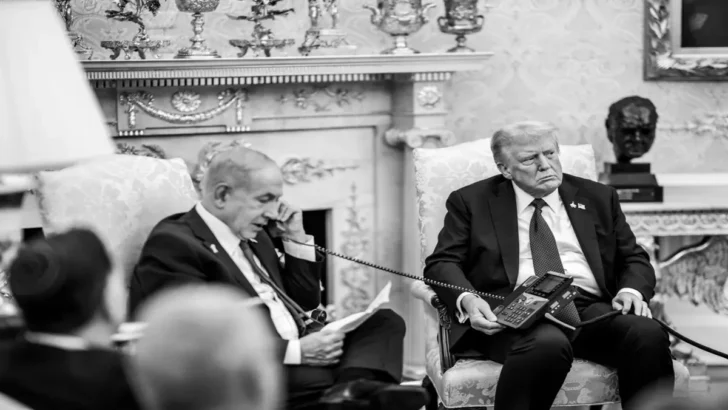
When Netanyahu later denied that he had apologized, the White House responded by releasing a photograph from the Oval Office showing Trump holding the phone while Netanyahu appeared to be reading from a prepared script. A Qatari diplomat was also present in the room, observing the apology as it unfolded.
The only comparable example that comes to mind is from 2013, when Barack Obama pressed Netanyahu to apologize to Turkish Prime Minister Recep Tayyip Erdoğan over the Mavi Marmara flotilla raid. Even then, however, the apology took place privately. By contrast, the Qatar episode was so unusually public that the White House itself effectively documented Netanyahu’s compliance.
None of this, of course, proves that the Axios story is true, but it suggests that it may not be as implausible as some may otherwise believe. What is also plausible, however, is that Trump will once again fail to sustain the pressure and, by that, allow for Netanyahu’s potential retreat to prove temporary.
*Additionally*
Trump’s Netanyahu Leak Was a Gift to Israel
By Yair Kleinbaum, reposted from JFeed, Jun 1, 2026
The leaked report that President Donald Trump shouted at Prime Minister Benjamin Netanyahu should not be treated as some great diplomatic scandal.
On the contrary, it may be one of the most useful leaks Israel has received in months. According to Axios, Trump exploded at Netanyahu over Israel’s escalation in Lebanon, reportedly accusing him of endangering American negotiations with Iran and warning him not to expand the war into Beirut. The report also claimed that Trump used harsh personal language toward Netanyahu and suggested that he had personally helped keep him out of prison.
Naturally, some pro-Israel voices rushed to treat the leak as an insult to Israel. Mark Levin’s outrage, however, misses the point. This is Trump. This is his language and style. This is how he signals dominance, frustration, loyalty, pressure, and personal power all at once. And in this case, the leak served several obvious purposes.
First, Trump showed the world that he controls Netanyahu, not the other way around.
That matters because one of the most toxic lies in global politics is the fantasy that Israel somehow controls the United States. The anti-Israel world has spent decades claiming that America fights Israel’s wars, obeys Israel’s lobby, and sacrifices American interests for Jerusalem.
This leak cuts directly against that myth.
If the President of the United States is shouting at the Prime Minister of Israel, ordering him not to bomb Beirut, and linking Israeli military action to American diplomacy with Iran, then the conspiracy collapses. Israel is not running Washington. Washington is restraining Israel. Second, Trump was sending a message to Iran.
The message was simple: America is holding Israel on a short leash. Tehran may not trust Jerusalem, but Trump wants it to believe that Washington can control the Israeli escalation ladder. That matters because the Lebanon front is now tied to the wider American effort to manage or freeze the confrontation with Iran. Axios reported that Trump’s anger was driven partly by concern that Netanyahu’s Lebanon moves could damage negotiations with Tehran.
Third, Trump was speaking to his own base.
The MAGA base contains voters who strongly support Israel, but also voters who are suspicious of foreign wars and tired of the idea that America is dragged into Middle Eastern conflicts. For those voters, the leak tells a useful political story: Trump is not being managed by Israel. Trump is managing Israel.
That is why the leak may actually be good for Israel.
It tells the world that America’s war decisions are American decisions. It tells Iran that Washington has leverage over Jerusalem. And it tells American voters that supporting Israel does not mean surrendering American sovereignty. The Times of Israel, citing the Axios report, noted that U.S. officials said Trump understood that Hezbollah had been attacking Israel and that Israel had a right to respond, but believed Israel’s recent response risked damaging broader diplomatic efforts.
That distinction is important. Trump was not necessarily saying Israel has no right to fight Hezbollah. He was saying that Netanyahu’s timing, scope, and escalation threatened Trump’s own regional strategy.
This is not friendship in the sentimental sense. It is power politics.
But power politics is exactly how the Middle East works.
Trump wants to be seen as the man who can restrain Israel, pressure Hezbollah, negotiate with Iran, and still appear pro-Israel to his own voters. That is a difficult balance, but the leak helps him perform it.
For Israel, the result is not entirely negative. In fact, it may be strategically useful.
Every time the world claims Israel is dragging America into war, this leak answers: no, the American president is the one yelling at Israel to stop.
Every time antisemites claim Washington is secretly controlled by Jerusalem, this leak answers: no, Washington is openly disciplining Jerusalem.
Every time isolationists claim Netanyahu runs Trump, this leak answers: no, Trump wants everyone to know Netanyahu answers to him.
That may be ugly. It may be humiliating. It may be pure Trump.
But it is not anti-Israel.
In the current political climate, it may be one of the clearest public refutations of the most dangerous anti-Israel conspiracy theory: that Israel controls America.
Trump did not leak weakness.
He leaked hierarchy.
Barak Ravid is a political reporter and Middle East expert for Axios covering foreign policy and the 2024 election. He also writes for Walla News in Israel and is the author of “Trump’s Peace.”
Marc Caputo is an American journalist and commentator.
Trita Parsi is the Executive VP of the Quincy Institute and an award-winning author. Washingtonian Magazine has named him one of the 25 most influential voices on foreign policy.
Yair Kleinbaum is a historian and journalist with a passion for exploring history and its impact on the present. Over the years, he has researched and written about Israel, the Jewish diaspora, sports, politics, culture, and economics—always driven by a deep desire to understand historical processes and connect the past to the present
RELATED: