Human rights defenders, international lawyers, judges and experts are being treated as criminals instead of Israel, the party violating international law. The aim of the sanctions is to target a few with the aim of impacting the whole…
By Maureen Clare Murphy, reposted from Electronic Intifada, May 18, 2026
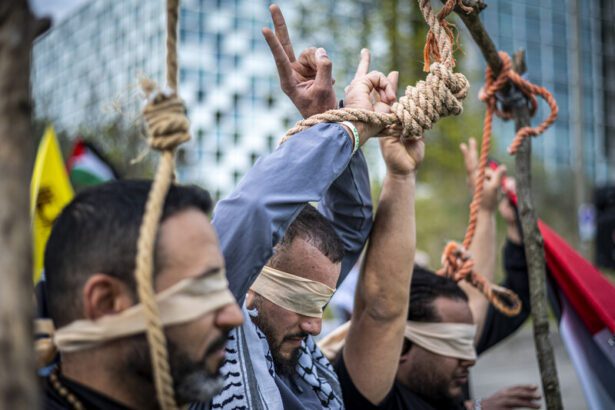
“I am very proud that we are sanctioned,” Raji Sourani, the director of the Palestinian Center for Human Rights, said of the administration of US President Donald Trump and the Treasury Department’s orders criminalizing four prominent Palestinian groups during a recent event in The Hague.
For Sourani, the criminalization of four Palestinian human rights organizations by Israel’s principal ally is an indicator of their effectiveness in threatening the decades of impunity that paved the way for the genocide in Gaza.
“We inflicted pain on those criminals,” Sourani said during the launch of a report on the impact of sanctions imposed by the US president on 11 officials elected to the International Criminal Court, including judges and prosecutors, and other human rights defenders.
“They worry and they know that if we proceed rightly, using the law effectively … they will know where this will end up,” a defiant Sourani added. “As all criminals in history, they will be held accountable.”
But under the sanctions, it is human rights defenders, international lawyers, judges and experts who are being treated as criminals – even those living outside the US and who are not subject to its domestic law.
Francesca Albanese, an independent UN human rights expert, has also been sanctioned under Trump’s executive order for her work carried out under her mandate as special rapporteur on the human rights situation in the Palestinian territories occupied since 1967 – despite her status granting her immunities under a convention adopted by the UN General Assembly in 1946. She is the first holder of a UN mandate to be subjected to sanctions in the history of the world body.
Albanese and her husband, who are Italian nationals, and their 13-year-old daughter, a US citizen, lost access to the US, including their property in Washington, under the sanctions. Albanese, who can no longer open a bank account, has likened the impact of sanctions to being condemned to “civil death.”
Albanese announced on 13 May that a US court suspended the sanctions imposed on her following a lawsuit filed by her husband and daughter.
A federal judge stated that Albanese was designated as punishment for First Amendment-protected speech, and that she had sufficient connections to the US to enjoy constitutional protections.
The judge’s ruling does not have any bearing on the sanctions imposed on any sanctioned individuals and organizations besides Albanese.
The sanctions lump international lawyers and judges with drug traffickers and “terrorists,” disrupting their lives and their work and cutting them off from their property, bank accounts and nearly anything that relies on digital services or the use of a credit card – including being able to simply buy a subway ticket.
All individuals and institutions sanctioned by the Trump administration were interviewed by the Coalition for the International Criminal Court for its 90-page report titled “Criminalizing Accountability.”
The report demonstrates how US sanctions have profoundly disrupted the lives of designated individuals and the staff of designated organizations and their families due to “the extraordinary global reach of the US banking, information technology and service sectors.”
Washington’s targeting of the ICC also threatens “accountability efforts for victims and survivors across all ongoing investigations,” from the Philippines to Venezuela, the report states.
Moreover, the ability of the US to exploit global dependency on technology and services based in the country “poses a threat … to the sovereignty, independence and security of states and their nationals.”
Additional arrest warrants rumors
Like Israel, the US is not a member state of the International Criminal Court or a signatory to its founding treaty, the Rome Statute. That statute allows for investigation of the nationals of states that aren’t party to the court if the alleged crimes occurred in the territory of an ICC member state.
Palestine joined the ICC in 2015 after it was admitted as a state to the United Nations.
While the administration of US President Joe Biden reversed sanctions imposed on Fatou Bensouda and two other court officials designated during Trump’s first term, it opposed the court’s investigation into suspected Israeli war crimes that was opened in early 2021.
DAWN, a human rights group based in Washington, has urged the ICC to investigate senior Biden administration officials, including the former US president, “for their accessorial roles in aiding and abetting, as well as intentionally contributing to, Israeli war crimes and crimes against humanity in Gaza.”
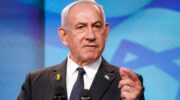
Karim Khan, the current ICC chief prosecutor, announced in November 2024 that the court had issued arrest warrants for Israeli Prime Minister Benjamin Netanyahu and former defense minister Yoav Gallant, citing the use of starvation as a weapon of war in Gaza “and crimes against humanity of murder, persecution and other inhumane acts,” among other serious violations. Arrest warrants were also issued for three Hamas leaders who were all eventually confirmed to have been killed.
Khan was reportedly investigating far-right Israeli ministers Bezalel Smotrich and Itamar Ben-Gvir before he went on leave following allegations of sexual misconduct and abuse of authority last year. When announcing the arrest warrants for Netanyahu and Gallant, Khan suggested that there may be additional charges over alleged international crimes in Gaza and the West Bank.
Khan, who rejects the misconduct claims, was cleared of wrongdoing by three judges following a UN investigation, Middle East Eye reported in March.
The misconduct allegations are still being reviewed by the executive bureau of the Assembly of States Parties, the governance and management body of the court.
There has been little public activity by the overstretched and underfunded court on the Palestine investigation during Khan’s ongoing and indefinite leave of absence. His leave “brought the work of the court to a virtual standstill,” the The New Yorker stated in an October 2025 article on the misconduct scandal.
Recent reports indicate that the wheels of international justice may be slowly moving in the meantime, however.
An unnamed source told Israel’s Haaretz newspaper that Khan requested arrest warrants for Smotrich and Ben-Gvir. In its report published on 17 May, Haaretz added that a “diplomatic source” said that Orit Strook, an Israeli lawmaker, and two Israeli military officials, were also being investigated.
The ICC has denied that new arrest warrants were issued in the Palestine case. It is possible that the applications for arrest warrants were prepared by Khan before his leave of absence or that his request is still under review by judges.
Since the arrest warrants for Netanyahu and Gallant were announced, the ICC amended its regulations so that applications for arrest warrants “must remain secret and can only be made public with the permission of the judges.”
“You have been warned”
The degree to which political intrigue is at play in the misconduct probe that has paralyzed Khan’s work at the ICC is unclear, though Khan was reportedly threatened by Nick Kaufman, a British-Israeli lawyer who claimed to be informally advising Gallant, less than two weeks before the sexual misconduct allegations were leaked to the media.
Khan was also subject to pressure by David Cameron, the UK’s foreign secretary at the time, and Lindsey Graham, the senior US senator. He also “received a security briefing that indicated that Mossad, Israel’s intelligence agency, was active in The Hague and posed a potential threat to the prosecutor,” according to Middle East Eye.
“Target Israel and we will target you,” a dozen Republican US senators, including Marco Rubio, the current secretary of state, warned in an April 2024 letter to Khan.
While tremendous pressure has been brought to bear on Khan and the court over its Palestine file, Israel’s underhanded efforts to consolidate its impunity began much earlier.
Israel mobilized its various intelligence apparatuses in a shadow “war” to try to put an end to the court’s preliminary examination and, later, its full investigation. Netanyahu viewed the tribunal as a “strategic threat” long before Khan’s term as chief prosecutor.
The misconduct allegations have all but spelled out the downfall of Khan, who was the first current ICC official to be sanctioned during Trump’s second administration. The criminalization of those upholding international law may result in the collapse of the court itself, which is being held up by the fortitude of its remaining staff with little meaningful support by the states that built the court.
The Coalition for the ICC observes that the sanctions against court officials have been “widely denounced” by states around the globe but the designation of the Palestinian human rights groups “have been met with a worrying silence.”
Nor has the ICC or the Assembly of States Parties made any public statements about the criminalization of the Palestinian groups for their work with the court.
But even if sanctioned court officials have received statements of support, they have seen little pushback by state parties to the ICC against the sanctions and practical support for those targeted by Washington.
One exception to this is Spain’s request that the European Commission activate a statute that would prohibit compliance with the sanctions by companies, nationals and residents of the EU.
The response from the UN General Assembly and secretary-general to the sanctions on a UN mandate holder has been “muted … in stark contrast with two previous occasions where coercive measures were used against UN independent experts,” according to the Coalition for the ICC report.
“So far no one wants to stand in the face of the bully,” Albanese said during the launch of the report.
This inaction “greatly impacts the functioning of the UN and has a chilling effect on the UN and on individuals, in particular people engaged in investigative work,” Chris Sidoti, an Australian human rights lawyer and one of three investigators on the UN Commission of Inquiry examining Israel’s system of oppression as a whole, told the Coalition for the ICC.
“A form of secondary victimization”
The aim of the sanctions is to “target a few with the aim of impacting the whole,” Agnès Callamard, the head of Amnesty International, told the Coalition for the ICC.
“The consequences have been immediate, and the impact on the daily lives of those designated, and their families … has been striking,” the coalition states in its report.
The documentation and advocacy work of the Palestinian human rights groups placed under sanctions – Al-Haq, Addameer, Al Mezan and the Palestinian Center for Human Rights – has been profoundly disrupted.
They are “unable to receive funds or to process payments such as salaries, rent or other office expenses essential to their operations,” the report states.
Senior staff members with dual nationalities have had to resign and the organizations lost significant amounts of funding from not only the US, but also European donors.
Their websites, email lists, social media accounts and other digital services were shut down, resulting in the “permanent deletion of hundreds, if not thousands, of videos, documentaries and victim testimonies about violations in Palestine.”
The sanctions follow years of persecution and Israeli attacks that destroyed the offices of Al Mezan and PCHR, which are based in Gaza. Several PCHR employees and their family members were killed in Israeli attacks.
For human rights defenders in Gaza, access to their salaries is “a matter of survival” for them and their families, as the coalition states in its report.
Israel has denied international human rights organizations, investigators and journalists access to Gaza, where more than 260 journalists and media workers have been killed since October 2023, making the work of the targeted Palestinian groups all the more essential.
The organizations are moreover a link between victims and the International Criminal Court, and their criminalization is “a form of secondary victimization” for victims of grave abuses who are left wondering where to turn to, according to Margaret Sattherthwaite, the UN special rapporteur on the independence of judges and lawyers.
The sanctions have shaken civil society working on a range of issues and organizations in the US who “face exposure to criminal liability for routine acts” in their work towards justice and accountability, should they be viewed as providing “material support” to designated individuals and groups, the Coalition for the ICC states in its report.
The designated Palestinian groups have been outcast from networks and coalitions based in the US. Some US nationals even “took themselves off group chats and completely stopped engaging with designated individuals,” the coalition adds.
Groups based outside the US have also taken “steps to prevent their US staff from working with the designated organizations and individuals,” leaving their Palestinian human rights colleagues feeling abandoned and isolated.
“Financial warfare”
The US sanctions regime – the weaponization of American dominance over the international financial system as a “new form of financial warfare,” as the lawyer Gavin Sullivan told the Coalition for the ICC – came out of the so-called War on Terror in the wake of the 11 September 2001 attacks.
Dependence on networks linked to the US compels financial institutions in other countries to overly comply with the sanctions and cut “services to designated persons, even when domestic law does not mandate the termination of services,” the coalition explains in its report.
Khan, the ICC chief prosecutor, said that not only were his bank accounts in the UK and Malaysia frozen, but his ex-wife’s bank account was “frozen when he tried to transfer money to her for their children,” the report states.
Family members of sanctioned court officials have also had US visas revoked and their Google, Apple and Amazon accounts canceled, with corporate monopolies instrumentalized “as proxy enforcement arms for sanctions,” according to the Coalition for the ICC.
The banks of the sanctioned Palestinian groups closed their accounts and they have been prevented “from transacting in any currency, even in the euro, Jordanian dinar or Israeli shekel.”
European banks “choose over-compliance,” violating the law by refusing to open a bank account for legal EU residents, who are guaranteed the right to a basic account.
The Trump administration has threatened to sanction the court itself if it doesn’t stop the investigation of Israeli and US nationals and amend the Rome Statute so the court can no longer prosecute nationals of non-state parties.
If the US makes good on its threat, it would immediately impact the ICC’s banking systems and financial transactions. It would affect all their investigations across all situations and the ability of the ICC Trust Fund for Victims to deliver reparations.
Already, the designations have “created a wave of fear among actors working on justice and accountability,” the Coalition for the ICC states.
For Nicolas Guillou, a French ICC judge, the greatest risk posed by the sanctions lies in this fear: “If judges are afraid to judge, prosecutors are afraid to prosecute and lawyers are afraid to defend, we are no longer in a state governed by the rule of law.”
This is the intangible, invisible impact, the coalition states, whether it be organizations not providing evidence or “friend of the court” briefs, to “senior experts not applying to be a judge or UN independent expert” out of fear of being criminalized.
“No other choice”
Giving in to pressure by Israel and its powerful allies to drop the Palestine file would irreversibly compromise the independence and impartiality of what is meant to be a court of last resort for the world’s most vulnerable victims.
“It should be the end [of the court], because then you are an instrument using the sword of justice solely against the enemies of the powerful,” Khan, the ICC chief prosecutor, is quoted as saying in the report.
It would also represent a major defeat of the rule of law in favor of a world in which might makes right.
“The sanctions are imposed in the same manner as when medieval criminal thugs kidnapped judges, burnt court houses and killed witnesses,” Sidoti, the Australian expert, told the Coalition for the ICC.
The first wave of sanctions on ICC judges targeted four women from countries with marginal power relative to the countries of the judges who were initially spared, though sanctions have also targeted nationals of key US allies, including Canada and the UK.
The coalition notes in its report that “beyond the ICC and those cooperating with it, the Trump administration has imposed sanctions against national judges, NGOs [nongovernmental organizations] and advocacy groups and movements under separate executive orders.”
Those orders are issued without any judicial oversight and designated individuals have “few, or no, due process protections.” Nor do they receive prior notice to their assets being frozen or access to the classified information used to support their designation.
“These actions directly violate the sovereignty of individual states,” the independence of their judiciaries and the rights of their citizens, the coalition adds.
The sanctions have “the potential to become a considerable threat to the rule of law worldwide and in Europe,” Guillou, the French judge at the ICC, states in the report.
Incidentally, the US company Expedia canceled a hotel reservation Guillou had made in Europe, citing the sanctions. Expedia was named in a recent report by the UN Human Rights Council as one of more than 150 companies with ties to Israel’s illegal settlement enterprise.
A corporate accountability project of the American Friends Service Committee states that Expedia’s listings in settlements inherently discriminate against Palestinians, who are unable to access those properties. Some listings moreover “raise concerns of pillage, as the company is charging a commission on their booking without the freely given consent of the legal landowners.”
While denying services to sanctioned ICC officials like Guillou, companies like Expedia are profiting from violations of the international law that those sanctioned officials are working to uphold.
But despite everything they are up against, Palestinians human rights defenders vow to seek justice through whatever means necessary.
Palestinian human rights organizations tried to work with the Israeli justice system for decades, Issam Younis, director of Al Mezan, said during the launch of the Coalition for the ICC report in The Hague.
“It’s mission impossible,” Younis said of engaging with the Israeli system, leaving Palestinians victims wondering where to turn to. A window of opportunity was opened when Palestine was recognized as a UN member state and became a state party to the ICC.
“The minute that we decided to go there, we were subjected to unprecedented smear campaigns to delegitimize us and defund our organizations,” Younis said of Palestinian groups engaged with the court.
“We will never give up,” Younis added. “There is no other choice.”
Maureen Clare Murphy is senior editor of The Electronic Intifada. She worked for Al-Haq between 2004 and 2006.
RELATED:
- Pro-Israel Groups Urge Trump to Sanction Palestinian NGOs Out of Existence
- Trump sanctions on UN Special Rapporteur Francesca Albanese are illegal and represent further U.S. complicity in genocide
- Bipartisan Group of Senators Meets With Netanyahu Despite ICC Arrest Warrant
- Spying & threats: Israel spent 9 years trying to keep the ICC off the trail of Israel’s war crimes
- War on Gaza: Why ICC bid for arrest warrants is a bold and historic move — Richard Falk