In Gaza, a pack of diapers that once cost around $3 can now cost more than $30, placing them far beyond the reach of most families.
By Sally Ibrahim, Reposted from The New Arab, April 15, 2026
In Gaza, where crises are often measured in airstrikes and casualty figures, a quieter emergency is unfolding inside tents and overcrowded shelters.
Away from the headlines, mothers are struggling to secure the most basic hygiene items for their babies. Diapers—once an ordinary necessity—have become scarce, unaffordable, and, for many, entirely out of reach, exposing the depth of the humanitarian collapse gripping the enclave.
The crisis emerged due to the ongoing Israeli restrictions on the entry of basic goods into the Gaza Strip, including hygiene supplies and infant care products.
These restrictions, combined with the continued closure of crossings and delays in humanitarian deliveries, have sharply reduced the availability of diapers in local markets and pushed prices beyond the reach of most families.
In a worn-out tent in the city of Deir al-Balah, Um Salim al-Hashah rocks her six-month-old baby as his cries grow sharper with discomfort.
She gently unwraps a faded cloth tied around his waist, revealing inflamed skin, then cleans him with limited water, reusing the same fabric. Disposable diapers have long been out of reach.
“I never thought I would ration diapers like food […] Now I count every single one,” the 35-year-old mother of two told The New Arab.
Since the start of Israel’s genocidal war on Gaza on 7 October 2023, the crisis facing families has deepened beyond bombardment and hunger, creeping into the most intimate aspects of survival.
Hygiene, once routine, has become a daily calculation. For mothers like Um Salim, caring for an infant now involves constant compromise between scarcity and health.
Displaced from Gaza City, Um Salim lost her home and financial stability. Her husband is unemployed, and humanitarian aid arrives irregularly, often without essential baby supplies.
“I used to change him several times a day,” she says. “Now I delay it as much as I can. Sometimes he stays like this for hours.”
The result is painful. Her baby has developed severe rashes, worsened by heat and friction from reused cloth. Finding treatment is another struggle.
“Even creams are expensive or unavailable,” she adds. “You feel helpless watching your child suffer over something so basic.”
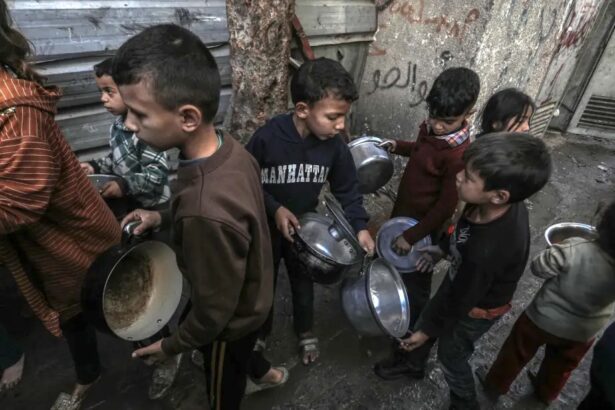
Across Gaza, similar scenes are unfolding in tents and overcrowded shelters, where thousands of mothers are forced into what many describe as “cruel rationing” of hygiene.
Markets without supplies, homes without options
In al-Nuseirat refugee camp in central Gaza, Um Rayan Jalal faces the same reality, but with three children to care for. Her youngest, still under a year old, has not had consistent access to diapers for months.
“I’ve tried everything, such as cloth, tissues, and even sanitary pads. Nothing protects him properly,” she told The New Arab.
She now reserves disposable diapers for nighttime only, hoping to give her child a few uninterrupted hours of sleep. During the day, she relies on washable alternatives, increasing her workload in a setting where water is scarce and expensive.
“I spend so much time cleaning,” she says. “But even that is not enough to keep him comfortable.”
The shortage is mirrored in Gaza’s markets. In Khan Younis, Abu Yasser, a shopkeeper specialising in baby supplies, stands before nearly empty shelves. What was once a stable trade has become uncertain.
“Supplies come in very small quantities, if at all […] Demand is huge, but there’s almost nothing to sell,” he told TNA.
Prices have surged dramatically. A pack of diapers that once cost around $3 can now cost more than $30, placing them far beyond the reach of most families. Even when available, quality is inconsistent, leading some parents to resort to inferior alternatives.
The reason, he explains, lies in ongoing restrictions on goods entering Gaza. Shipments are delayed or blocked, leaving markets in a constant state of shortage.
“We don’t know when anything will arrive,” he says. “People ask every day, and we have no answers.”
For families, the absence of diapers creates a chain reaction: more water is needed for washing, more effort is required, and health risks increase in already strained conditions.
Health risks, a quiet collapse
Medical professionals warn that the consequences are becoming increasingly visible. At a Gaza-based field clinic, paediatrician Reem al-Khatib told TNA that the cases of skin infections among infants have risen sharply in recent months.
“Children’s skin is extremely sensitive. When mothers are forced to use cloth or unsuitable materials, it can lead to severe rashes and even fungal infections,” she said.
Medication shortages compound the crisis. Clinics operate with limited supplies, and many treatments are unavailable or unaffordable.
“We treat the symptoms,” she says, “but the cause remains. Mothers go back to the same conditions because they have no alternative.”
Beyond physical health, the crisis is taking a psychological toll. Many mothers describe feelings of guilt and inadequacy as they struggle to provide even the most basic care.
“I feel like I’m failing,” Um Alaa Masoad, a Gaza-based mother, told TNA, saying, “A diaper is such a simple thing, but I can’t provide it.”
Yet this sense of failure is widely shared. Across Gaza, the lack of diapers has become more than a supply issue—it reflects a broader collapse in living conditions, where even the smallest necessities are no longer guaranteed.
Humanitarian organisations estimate that hundreds of aid trucks are needed daily to meet basic needs, yet only a fraction are allowed in. As shortages deepen, families are reverting to older coping mechanisms, reusing fabrics in ways that echo past generations.
“My mother told me this is how people used to manage, but we never thought we’d return to this,” Um Alaa said.
As night falls, new concerns emerge. Cooler temperatures mean more frequent changes, something many mothers cannot afford.
“I worry he’ll get sick, but I also worry about running out completely,” she added.
In Gaza today, a diaper is no longer a simple commodity. It has become a measure of dignity, health, and survival—its absence reflecting a crisis that continues to unfold quietly, but relentlessly, in the lives of the most vulnerable.
Sally Ibrahim is The New Arab’s correspondent from Gaza.
RELATED:
- Rep. Randy Fine Tells Palestinians To ‘Starve Away’ as Babies Die of Malnutrition Under Israeli Blockade in Gaza
- The Madeleine ship: A message of solidarity with Gaza and resolve to break the blockade
- History of flotilla campaigns to end Israel’s siege of Gaza
- Israel’s restriction of aid into Gaza leads to critical shortages in bread, baby formula, and water
- Gaza is not a natural disaster. It is the victim of genocide enabled by global inaction