How Western Media Normalizes Israel’s Ethnic Cleansing in Lebanon
Like in Gaza, where genocide proceeds apace in spite of a declared ceasefire, the media tend to report “ceasefires” in Lebanon without caring to highlight the fact that it’s not a ceasefire when Israel is still pummeling the country and massacring people.
By Belen Fernandez, Reposted from Common Dreams, June 12, 2026
In October 2024, one year into Israel’s genocidal war on the Gaza Strip and attendant assault on Lebanon, the Israeli army did a thing. It invited journalists from major Western corporate media outlets on an incursion into Lebanon’s ravaged south, accompanied by Israeli military personnel who would interpret the wreckage in Israel’s favor—not that the Western media have ever required much assistance in this regard.
Reporters from the New York Times, Washington Post, Associated Press, Reuters, BBC, Fox News and a handful of other special guests signed up for the cross-border sortie. It was, as Habib Battah and Christina Cavalcanti note in an investigation for the Public Source (8/27/25), an “awkward hybrid between a traditional embed and the kind of all-expense-paid publicity trip that journalists refer to as junkets, freebies and dog-and-pony shows.”
Never mind that it is entirely illegal for journalists or anyone else to enter Lebanon from Israel—what’s one more illegal invasion from a country that has been invading Lebanon pretty much since its founding? As Battah and Cavalcanti emphasize, these media professionals were also embedding themselves “within a national project of extraordinary transnational violence,” hosted by an “extrajudicial occupying military power—a critical point that all of them would fail to mention in their coverage.”
The Israelis certainly hit the jackpot with the coverage, as reporters excitedly discovered boots and helmets allegedly belonging to Hezbollah—clear proof that the group had been plotting a nefarious attack on Israel. New York Times Jerusalem correspondent Isabel Kershner, an old pro at conducting preemptive journalistic strikes on Lebanon, did not disappoint with her dispatch (10/13/24), “Just Over the Border From Israel, a Hezbollah Cache of Explosives and Mines.”
And in report after embedded report, Israel’s chosen journalists faithfully transmitted the tiresome and counter-logical notion that Hezbollah was somehow the aggressor in the arrangement—as opposed to the army that was busily slaughtering thousands of people in Lebanon while implementing a scorched-earth strategy.
‘Urgent evacuation warnings’
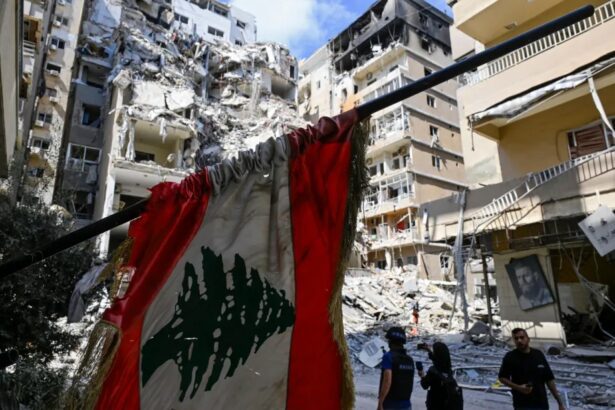
While the October 2024 embed was one of the more preposterous embodiments of Western corporate media’s special relationship with Israel, outlets continue to do a fine job of sanitizing Israeli brutality even when their reporters are not physically viewing the region from inside an Israeli armored vehicle. Since March of this year, Israel has killed at least 3,613 people in Lebanon and displaced 1.2 million, obliterating entire villages and otherwise expanding the ecocidal policy honed in the GazaStrip.
There has been no remotely comparable destruction on the Israeli side, and a recent Reuters article (5/31/26) that had attempted to suggest some symmetry now comes with the preface: “This May 31 story has been corrected to remove a reference to tens of thousands of Israelis being displaced by Hezbollah fire, in paragraph 3.”
Like in Gaza, where genocide proceeds apace in spite of a declared ceasefire (FAIR.org, 10/21/25), the media tend to report “ceasefires” in Lebanon without caring to highlight the fact that it’s not a ceasefire when Israel is still pummeling the country and massacring people, all the while setting the stage for a massive land grab with its creeping so-called “evacuation orders.” These “evacuations” have been focused on the Shiite demographic, with Israel warning Christian and Druze communities not to allow Shiite neighbors to take refuge in their towns (New York Times, 4/1/26).
Lebanese journalist Habib Battah, co-author of the aforementioned Public Source investigation, suggested to me that such orders might be more accurately termed “ethnic cleansing directives.” But that, of course, would be way too much for corporate media outlets to handle—and so it is that we learn about Israel’s “urgent evacuation warnings” and “large-scale evacuation orders,” as though it’s some sort of public service announcement, fire drill or other fundamentally legitimate Israeli undertaking, rather than entirely illegal in addition to downright psychopathic. From a legal and moral perspective, after all, you can’t just go around ordering people in other countries out of their homes, oftentimes only to bomb them when they comply.
Then there’s the matter of the “Yellow Line” or “security zone”—more terminology borrowed from Gaza (FAIR.org, 5/19/26)—which denotes the portion of south Lebanon that Israel is currently illegally occupying. But Israel has never been very good at staying within the lines, and its latest “evacuation orders” spanned no less than one-fifth of the entire country, far beyond its own unilaterally appointed Yellow Line.
As Battah remarked to me, the media’s acceptance and deployment of such arbitrary vocabulary creates “artificial structures” and a sense of orderliness, when in reality “there’s no yellow lines, there’s no yellow, there’s no colors—these are just illegal invasions.” And because media are committed to sanitizing Israel’s behavior rather than questioning it, “colonization becomes normalized.”
‘A warning to residents’
The eagerness of journalists to do Israel’s bidding is all the more confounding given that Israel is currently the No. 1 killer of journalists in the world. A recent Associated Press article (5/29/26), for example, reduced the pulverization of Lebanon to simply “ongoing fighting in southern Lebanon between Israeli troops and Hezbollah fighters.”
A June 4 Reuters writeup blamed Hezbollah for having “rejected” the latest US-mediated “ceasefire” plan—which, mind you, would basically have given Israel the green light to seize south Lebanon outright. Reuters refrained from referencing the thousands of Lebanese casualties since March, but did allow Israel the usual space to defend its depredations: “The Israeli military, in a warning to residents of the south, said it was continuing to target Hezbollah facilities.”
This is not to say that corporate media do not report on the destruction, displacement and killing in Lebanon; they do—and sometimes even sympathetically. But the refusal to paint a consistent and properly contextualized picture of what is actually going on in the country means that they mostly just end up legitimizing Israel’s war crimes.
Imagine for a moment that Hezbollah had just killed thousands of Israelis in three months and occupied northern Israel. In doing so, it laid waste to 5,000-year-old cities, and bombed the fuck out of everything from homes to ambulances to World Heritage sites to university students to environmental activists who protect sea turtles. Suffice it to say we’d be hearing a lot more about the utter barbarity of it all—and that Hezbollah wouldn’t be allowed to claim ad nauseam that it was targeting “military facilities.”
Almost three years into a genocide that has officially killed nearly 73,000 Palestinians and given Israel every opportunity to blind the world with its true colors, it is no short of an abomination that Israeli officials are still permitted to insist—with little to no media pushback—that they only target “terrorists” and “terrorist infrastructure.” If Israeli officials were to claim that two plus two equals eight, or that Elvis Presley was living in a cave in Madagascar, would the corporate media also report such information with a straight face?
By taking Israel’s word for it, journalists wind up essentially validating mass killing and occupation—as in the corrected May 31 Reuters piece that straight up makes the case for Israel’s seizure of a 900-year-old castle that lies nowhere near the imaginary colored line:
The advance into Beaufort Castle has granted Israeli troops a vantage point over much of southern Lebanon and northern Israel, from which attacks have been launched towards Israeli residential areas.
‘Iranian proxy on its borders’
Of course, willful media decontextualization and omission of relevant history facilitates the conversion of Israeli propaganda into “news.” One handy trick is to always, always, always remind audiences that Hezbollah is a “powerful Shia group supported by Iran,” as the BBC (5/28/26) puts it.
On March 13, CNN ran an analysis datelined Tel Aviv that bore the headline: “The War That Never Ended: Israel Seizes Moment to Finish Fight Against Hezbollah, Iran’s Proxy in Lebanon.” The analyst proceeded to justify Israel’s belief that “it needs to establish a strong military defense to protect civilians from the Iranian proxy on its borders.”
But while invoking Hezbollah’s support by Iran is practically a requirement for Western media reports, it is never deemed necessary to qualify Israel’s own orientation in any way—like, I dunno, “The war that never ended: Genocidal psychostate backed to the hilt by global superpower seizes moment to finish fight against Hezbollah.”
As for why this fight started in the first place, the media can somehow never summon the energy to explain that Hezbollah owes its very existence to Israel’s apocalyptic 1982 invasion of Lebanon that killed tens of thousands of Lebanese and Palestinians, prompting the group’s formation. Indeed, Israel’s lengthy history of invading Lebanon—not to mention its 22-year occupation of the south of the country, which ended in its ignominious eviction by the Hezbollah-led Lebanese resistance—would seem to be pretty crucial context in terms of understanding the current war.
But those journalists who do bother to provide a bit of background do so in as ambiguous and cursory a fashion as possible, as in the New York Times’ explanation (6/3/26) that “Hezbollah, the Iran-backed Shiite militia group, has been in conflict with Israel, on and off, for decades.”
A May 13 NBC News intervention headlined “Amid Ceasefire, Israeli Forces Ramp Up Destruction of Homes in Southern Lebanon” offers a roundabout summary of Hezbollah’s origins: “The group, formed in the early 1980s as a civil war consumed Lebanon, was created with support from Iran and sought to expel Israeli forces from Lebanese territory.” The piece went on to discuss some details of the present destruction in south Lebanon, including footage from a video posted to X on April 24 in which
two excavators can be seen destroying solar panels in the Christian border town of Debel, where a photo last month showed a soldier taking what appeared to be an axe to a statue of Jesus.
In a statement to NBC News that can be safely filed under the can’t-make-this-shit-up category, the Israeli army “said…that the damage to the solar panels was not in line with its values, and that disciplinary measures had been taken.” Here’s praying that corporate journalists might someday have the balls to take Israel to task on more existential matters.
Belen Fernandez is an opinion columnist for Al Jazeera.
‘A Nakba of 2026’: An IDF reservist recounts his time in Lebanon and Gaza
Branko Marcetic is a staff writer with Jacobin magazine and the author of Yesterday’s Man: The Case Against Joe Biden.
Ceasefires and construction: Satellite images reveal how Israel is cementing its presence in Lebanon and Syria

“These are permanent outposts that will be manned for a long time,” an Israeli soldier said. “Nobody really knows where this is going.”
By
With its sweeping panoramas of south Lebanon and flags rising over 1,000-year-old battlements, the footage Israel released last week of its troops seizing Beaufort Castle was intended to provoke awe and anger.
The Crusader castle is certainly an impressive landmark with a poignant history.
But while the eyes of invading Israeli soldiers will have undoubtedly been drawn to the vast basalt blocks of its ancient walls, some vestiges along the western ramparts may have also caught their attention: concrete bunkers.
Between 1982 and 2000, Israel maintained a permanent base at Beaufort Castle, one repeatedly shelled by Hezbollah during a guerrilla campaign that eventually forced the occupiers out.
A quarter of a century later, Israel has again established fortified military bases on vantage points in newly occupied land.
This time, they stretch through southern Lebanon and Syria, from the Mediterranean coast to the Yarmouk basin via the summit of Mount Hermon.
Developed since late 2024, analysis of satellite imagery reveals a concerted effort to build fortifications and infrastructure that suggests an intention to remain in situ.

Syrian and Lebanese military officers and sources close to Hezbollah tell Middle East Eye they are under no illusions: despite promises of withdrawal, Israel intends for these bases to remain permanent.
“If you are planning to withdraw, you do not carry out this much work,” a Lebanese military source tells MEE.
Lebanon: Invasion, truce and development
Israel invaded Lebanon in October 2024, escalating year-long, cross-border clashes with Hezbollah that the Lebanese movement launched in response to the genocide in Gaza.
By the time Israel agreed to fully withdraw in a 27 November 2024 ceasefire agreement, Lebanon was traumatized.
Hezbollah’s leadership had been largely wiped out, 4,000 people had been killed by Israel, and more than a million had been displaced from the south and areas of Beirut.
Under the terms of that agreement, the Israelis had 60 days to pull out, with Hezbollah promising to retreat north of the Litani River in return. Yet, despite an extension, the deadline came and went, with Israel refusing to leave five positions it established in the first days of the invasion.
These five bases were all built on hilltop positions, giving a clear line of sight over large stretches of south Lebanon.
Running along most of Lebanon’s 79km border with Israel, they loom over several towns and villages, all of which have now been depopulated and some of which have been leveled.

Unifil, the UN peacekeeping force set to wind down its operations in 2027, has operated in the area for two decades, and Israel appears to be making use of – and improvements to – tracks used by its patrols.
The post at Labbouneh, Israel’s most western position, is just 150 metres from a Unifil base and 2km from the force’s main headquarters on the coast.
Similarly, at Tal Dowary near Houla, the Israeli base has been established 1.5km from UNIFIL peacekeepers.
Satellite imagery shows work beginning at the sites in October 2024. At first, nearby buildings are destroyed. Israel has used air strikes, detonations and bulldozers to raze areas close to the border.
The images also show roads being widened, land degradation and earth fortifications emerging over the following months. By the turn of the year, accommodation units and vehicles have started appearing at the bases.
Work really gets going once the ceasefire begins and Israel has agreed to withdraw.
From January to September 2025, Israel rapidly develops the sites. Fortifications are widened, heightened and expanded, including alongside some roads.
The perimeters of some bases grow, with roads broadened and watchtowers erected.
By November, images show a large increase in accommodation units and vehicles in all the sites.
“For 15 months, we watched the Israelis bring in reinforcements, conduct drilling works, and open roads around these sites – steps that suggest an intention to remain permanently,” the Lebanese military source says.

The bases are, says a source close to Hezbollah, operational centers “designed defensively, making it impossible to approach them, while also allowing offensive operations to be launched from them”.
According to the source, who is intimately familiar with developments in the south, Israel intended for the bases to provide it with a secure zone five kilometers deep.
Yet hostilities broke out again in early March, when Israel killed Iran’s Ali Khamenei, an important spiritual figurehead for many Lebanese Shia, and Hezbollah attacked Israel once again, suspecting an imminent invasion.
Weeks later, Israeli Prime Minister Benjamin Netanyahu reportedly approved the establishment of several new outposts in Lebanese territory.
Israeli soldiers have told Haaretz that these newer positions do not appear temporary. “These are permanent outposts that will be manned for a long time,” a soldier told the newspaper. “Nobody really knows where this is going.”
The usefulness of Israel’s bases in Lebanon is debatable. Hezbollah, despite being struck almost daily during the supposed ceasefire, has reorganized in the south under Israel’s nose.
And since hostilities began again, Hezbollah attacks and operations have been seen in several border areas, with Israeli troops unable to assert control in villages close to their bases, such as Khiam.
Similarly, the Israeli hold on positions earmarked to become new outposts has been shaky: Hezbollah even managed to film itself tearing down an Israeli flag from one such post near the western town of al-Bayyada.

Last Thursday, a new US-backed ceasefire proposal was put forward. There was no mention of any Israeli withdrawal from the areas it occupies – now a fifth of the whole country.
Israel said it agreed to the plan but continued to attack Lebanon and occupy more territory. Hezbollah’s secretary-general, Naim Qassem, said his party rejects any ceasefire agreement that does not include a full Israeli withdrawal from Lebanese territory.
The source close to the party warns of Israeli attempts to separate the south from the rest of Lebanon entirely.
As the satellite imagery shows, Israel used the last ceasefire to cement a more permanent foothold in the country.
“According to current assessments, Israel is now trying to entrench itself in every position it has reached and turn those positions into fixed centers,” the source tells MEE.
“Yet so far, beyond the positions it already established, fortified and turned into centers during the previous war, everything newly created remains unfortified and vulnerable at any moment to attacks by the resistance.”
Syria: Revolution and occupation
The end of Israel’s 2024 invasion of Lebanon dovetailed with dramatic events in Syria that opened the door for a new occupation to the east.
On 27 November, the day the Lebanese ceasefire began, Syrian rebels charged out of their Idlib province stronghold in an assault that would reach Damascus and topple Bashar al-Assad within a fortnight.
As the rebels, led by Ahmed al-Sharaa, celebrated the end to a decade of civil war, Israel pummeled military sites across Syria and moved troops into a neutral UN-monitored buffer zone and beyond.
Among the first locations seized was the summit of Mount Hermon, which at 2,814 meters is the Levant’s second-highest peak.
Netanyahu triumphantly visited troops there that December, insisting Israel would not retreat for at least a year.
Deep into 2026, Israel remains at the summit. Meanwhile, a series of bases has been established from Mount Hermon’s peak to the Yarmouk River on the Syrian-Jordanian border – a line of control 70km long.
MEE has identified at least 10 Israeli bases and observation posts set up in newly occupied areas of Syria since the fall of Assad.
Eight are within the neutral buffer zone, which was created along the boundary of the Israeli-occupied Golan Heights after the 1973 Middle East war and is monitored by another UN peacekeeping force, UNDOF.
Satellite imagery also shows Israel has constructed long lines of earth fortifications along that boundary, known as the Purple Line, including elevated mounds allowing vehicles to ascend for surveillance.

According to Carmit Valensi, head of the Syrian program at the Institute for National Security Studies (INSS), Israel’s leading security-focused think tank, the push into Syria was prompted by distrust of Sharaa, who is now president, and his forces.
Valensi says the 7 October Hamas-led attacks on southern Israel “shattered” the assumption that deterrence – “the main pillar of Israeli strategy” – would keep its enemies at bay.
“From that point on, Israel decided to adopt what we might call the buffer zone strategy, which obviously we can see clearly in Syria and Lebanon and Gaza,” she tells MEE.
Israeli bases can now be found in three Syrian provinces: Quneitra, Daraa and the Damascus Countryside.
Like in Lebanon, earth berms speckled with watchtowers surround fortified accommodations and vehicle stations.
The bases are distributed across strategic hilltops, major road junctions, and dominant terrain overlooking the corridors connecting the Golan Heights to Damascus. At Tulul al-Humr, Israeli troops are situated just 40km from the Syrian capital.
“In western Daraa, positions were selected specifically because they provide commanding oversight over valley entrances and surrounding villages,” says a source from the new Syrian government’s military.
Some Israeli bases here are also close to UN peacekeepers: the position north of the village of Hader in Mount Hermon’s foothills is just 500m from a UNDOF base.
Strikingly, as the Israeli base is developed over a series of months, the UNDOF position, too, can be seen expanding and developing.
Israel’s bases in Syria depart from its five in Lebanon in important aspects. Most of them have been established in areas previously occupied by Assad’s Syrian Arab Army.
“Initially, Israel’s ground operations in southwestern Syria focused on the destruction of former Syrian Arab Army positions, followed by the construction of new military infrastructure,” the Syrian military source says.
“This process included mine-laying operations, the demolition of civilian homes, forced displacement, and the destruction of agricultural land and forested areas – methods that strongly resemble practices observed in both Gaza and the West Bank.”
At the hilltop near Hader, for instance, satellite imagery shows Israel enlarging an old Syrian position, converting it into a larger site that includes new buildings and facilities.
In the very south, Israel has taken over al-Jazira military barracks on a hilltop that commands views down both the Yarmouk and Ruqqad rivers.
And above and below Quneitra city, the provincial capital turned into a ghost town by Israel decades earlier, are two more Israeli bases that have been constructed on the ruins of old Syrian compounds.
While Israel relies on dirt tracks and roads in south Lebanon that pre-existed the conflict, in Syria, it has cut new roads, linking the bases and even stretching into the Golan Heights and its largest town, Majdal Shams.
Many of the new and old roads and tracks have been paved, facilitating rapid troop movement.
A staging post appears to have been established in the forested area of Jubata al-Khashab, close to the Purple Line, with roads connecting it to more advanced fortified outposts nearby.
It is the largest Israeli base in newly occupied Syria, with satellite imagery showing it hosting military vehicles and storage facilities.
“In terms of the characteristics of these positions and bases, we can assume that there is a long-term intention,” says Valensi.
Calm breeds chaos
One recurring pattern in both Lebanon and Syria is Israel’s propensity to rapidly develop military infrastructure during moments of calm.
While there is no formal ceasefire or indeed conflict between Israel and Syria, Damascus has sought US help to find an agreement that would end Israeli attacks and occupation of its territory.
“Ceasefires have increasingly functioned as diplomatic delays that provide Israel with opportunities to entrench itself militarily, exploit operational gaps, and consolidate territorial control. In practice, there is little evidence of a genuine diplomatic process,” a second Syrian military source said.
The source noted that Israel quickly spread its footprint in Syria after the US in January established a “joint fusion mechanism” between the three countries to facilitate coordination and help de-escalation.
Since then, Israeli checkpoints have sprung up on several roads in western Daraa between Tal Ahmar al-Gharbi and al-Jazira military barracks.
“Data [on Israeli activity] collected between February and May indicates that Israel is not genuinely pursuing negotiations or diplomacy. Rather, it is using diplomatic processes as windows of opportunity for long-term entrenchment,” the second source says.
Valensi believes the occupation of large areas of Syria is unsustainable, with the Israeli military exhausted by two-and-a-half years of constant regional war.
She also warns of the effects that a permanent, active and aggressive Israeli presence in Syria is having. “In my opinion, it causes much more damage than advantages,” she says.
According to Syrian military sources, Israel has conducted an average of 17.5 raids on villages a month in the past year, alongside arrests, occasional shelling of farmland and forced evictions.
“We clearly see the change and the shift in the Syrian discourse towards Israel from rather more moderate, restrained stances into much more radical ones,” Valensi says.
RELATED:
- In south Lebanon, as in Gaza, Israeli drones use the sound of crying children to lure civilians
- What Visual Evidence Tells Us About Israel’s Use of White Phosphorus in Lebanon
- Israel’s invasion of southern Lebanon devastates centuries of history
- Israel Is on a Killing Spree of Paramedics and Rescue Workers in Lebanon
- ‘Over the Border It Was Okay to Be Crazy’: IDF Soldiers Tell About the Army’s Moral Decay in Lebanon