Gaza doctor Hussam Abu Safiya has been detained by Israel for a year and a half without trial and says his jailers are trying to kill him. His case has made international headlines, yet it is being ignored in the U.S. Why?
By now, editors at the New York Times and producers at CNN are surely squirming over what to do about Dr. Hussam Abu Safiya, the Gazan doctor and hospital director who Israel has locked up for a year and a half without trial, and who says his jailers are trying to kill him.
Worldwide campaigns, by Amnesty International and other human rights groups, have called for Dr. Abu Safiya’s release and global media coverage has been significant. Britain’s flagship newspaper, the Guardian, has naturally already reported about Dr. Abu Safiya. Here is its July 6 headline: “Detained Gaza doctor almost unrecognisable after injuries in Israel jail, lawyer says.” Even the Israeli press have reported about him, including covering a demonstration in Tel Aviv on July 6 drawing attention to his case.
But in the American media, there has been a complete blackout about his case and his dire condition.
As this site and other alternative media have regularly reported, Dr. Abu Safiya, a pediatrician who was the administrator of the Kamal Adwan hospital in Gaza, turned himself in to the Israeli army on December 27, 2024. There is an iconic photo of him, in his white physician’s coat, walking through the rubble in Gaza toward an Israeli tank. (Somehow that photo has never made it into the New York Times.) Since then, first-hand accounts from his lawyer and now his son have alerted the world about his terrible treatment in various Israeli jails and his physical deterioration. Dr. Abu Safiya, now held in Rekefet Prison, has said: “They’ve brought me here to kill me. I don’t see myself surviving. This is the end.”
Israelis have insinuated that Dr. Abu Safiya is somehow linked to Hamas, but he has never been charged with any crimes. But the media is not supposed to decide on his guilt or innocence before reporting on his jailing. Hiding the story of Hussam Abu Safiya is clearly pro-Israel censorship, and unfortunately all too characteristic of America’s newspapers and cable networks in their coverage of Palestine.
What’s more, the U.S. media is also covering up a much bigger story. Dr. Abu Safiya is being held without trial, in what Israel euphemistically sometimes calls “administrative detention.” Precise figures are hard to confirm, but Amnesty International has estimated that at the end of 2025 Israel was holding 4,622 Palestinians, from both Gaza and the occupied West Bank Palestine, without putting them on trial.
Dr. Abu Safiya’s terrible situation, which even just by itself is newsworthy, could also serve as a news peg to write about Israel’s administrative detention policy. National Public Radio, to its credit, did just that back on May 30. Its excellent on-air report even interviewed Dr. Abu Safiya’s son, Ilyas.
Mainstream media reporters based in Israel who want more background could drop into the offices of Israel’s premier human rights organization, B’Tselem, which monitors the detentions, even though Israel’s government no longer gives them the figures. Here’s one of their reports.
What’s extraordinary about the U.S. self-censorship is that the Israeli media has reported about Dr. Abu Safiya’s plight. Haaretz, Israel’s newspaper of record, even ran an editorial charging the Netanyahu government with mistreating him and others, and urged Israeli courts to “halt the ongoing starvation, abuse and imprisonment.” And even the more right-wing Times of Israel has at least recognized his existence.
What explains the cowardice at the New York Times and at CNN? Even those of us who have spent years monitoring the distorted and dishonest U.S. coverage are stupefied.
James North is a Mondoweiss’ Editor-at-Large, and has reported from Africa, Latin America, and Asia for four decades.
(2/2) ‘Abandoned and left to die’: Family of Hussam Abu Safiya says he has been betrayed by rights groups

Abu Safiya has been held by Israel since December 2024, his son told MEE he may die unless he is released
By Amara Sophia Elahi, Reposted from Middle East Eye , July 08, 2026
The son of the Palestinian doctor Dr Hussam Abu Safiya has told Middle East Eye that his family feels betrayed by human rights groups, and that they hold the international community accountable for his deteriorating health in Israeli prison.
Dr Abu Safiya is a paediatrician and former medical director of Kamal Adwan hospital in northern Gaza. He was abducted by Israel and held without charge since December 2024.
Last week the advocacy group Physicians for Human Rights Israel (PHRI) warned that his life is in imminent danger and demanded his immediate release.
On Wednesday, PHRI said the Israeli state had rejected a high court petition for Abu Safiya and other doctors to be released.
The state said the doctor had been examined several times by medical personnel but did not explain why those examinations were necessary or respond to allegations about his severe injuries and torture. PHRI told Middle East Eye in a statement that it rejected the Israeli state’s position.
Abu Safiya’s son Elias, told MEE: “Regrettably the time for appeals has passed – the moment has arrived for a final opportunity, a last call addressed to every person to intervene urgently and speak out about my father’s situation.
“The world clearly doesn’t see us as human beings or deserving of equal rights. There is far more support for Israeli causes than Palestinian ones.
“We have been abandoned, and Palestinians like my father are being abandoned in Israeli prison cells and left to die.”
Dr Abu Safiya’s lawyer Nasser Odeh visited him on 2 July at the underground Rakefet interrogation facility in Nitzan Prison, northern Israel.
Odeh reported that he struggled to recognise Abu Safiya because of new injuries to his face and head, and that he appeared extremely weak, struggled to breathe and speak, and was in a state of psychological distress.
“I was in shock and disbelief when I heard this news,” Elias said.
“I went outside of my home, talking to myself, not knowing what to do, and thinking about my father being tortured and hit repeatedly.
“Just imagine a doctor being tortured, humiliated and killed behind bars, isolated and crying out for help, it’s truly devastating.
“How can we as a family bear to watch my father dying before her [his lawyer’s] eyes while we remain helpless in the face of utter subjugation and injustice?”
‘They brought me here to kill me’
Abu Safiya reportedly said to his lawyer: “This is the last time you will see me… They brought me here to kill me. I don’t see myself surviving. This is the end.”
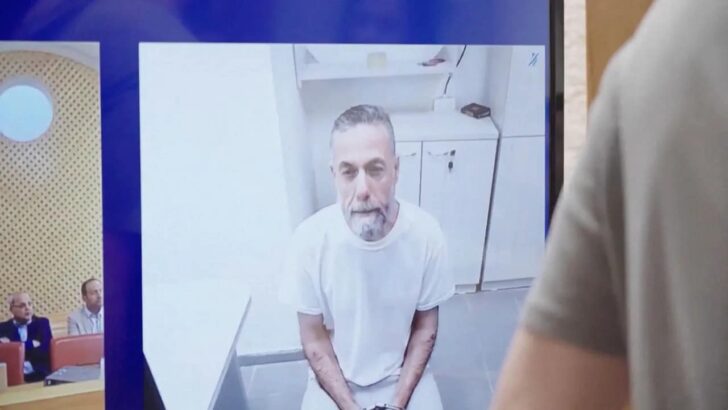
He had a Supreme Court hearing in June, where visible injuries could be seen on his arms and face.
According to PHRI, four or five prison guards had entered his cell before his hearing and assaulted him with a hammer and metal batons, inflicting injuries across his body and head.
A source close to the family believes that the symptoms Abu Safiya is displaying as a result of these injuries is likely to have caused a blood clot, which put pressure on his brain.
PHRI added that since his transfer to the Rakefet facility after his hearing, he has been subjected to daily beatings, resulting in several instances where he lost consciousness.
He has been held in solitary confinement since last month and has continually been denied access to medical treatment.
Abu Safiya still has six pieces of shrapnel in his leg from a quadcopter shooting in 2024, which targeted his family while they were asleep in Kamal Adwan hospital – that wound continues to cause him bleeding and swelling.
Since he has been in prison, Dr Abu Safiya has also developed an enlarged heart as a result of high blood pressure.
Singled out for torture
Derek Summerfield, honorary senior lecturer at King’s College London who has researched and campaigned on the psychiatric impact of detention and torture of Palestinian prisoners in Israel, told MEE the treatment of Abu Safiya was not surprising.
“Torture is very much an everyday matter in Israel and has been used as a weapon against Palestinians in interrogation suites for decades,” he said.
“I think the savagery inflicted on Palestinian detainees has increased markedly since 2023.
“The state feels it has complete impunity and doctors are part of that.
Israel is currently holding 14 other doctors from Gaza without charge.
According to testimonies gathered by Healthcare Workers Watch, which tracks the treatment of Palestinian detainees in Israeli prisons, Dr Abu Safiya was singled out for humiliation, starvation and intense torture by Israeli soldiers.
Summerfield believes Israel would prefer Dr Abu Safiya to die, rather than be released and tell his story to the world.
“Dr Abu Safiya represents a heroic resilience that Israel is determined to quash,” he said.
“The more pressure we can create, it is perhaps more likely that they will not allow him to die.”
Another doctor, Adnan al-Bursh, who was head of the orthopedic department at Al-Shifa Hospital in Gaza city, was found dead in an Israeli prison in April 2024.
He was detained by Israeli forces at Al Awda hospital in northern Gaza in December 2023.
While in prison he was subjected to brutal beatings, torture and repeatedly raped, according to testimonies of released Palestinian prisoners who had come into contact with him.
His body hasn’t been released by Israel yet.
Prominent Palestinian doctor Hussam Abu Safiya, captured by Israeli forces in Gaza in late 2024 and held in detention ever since, appeared via video link at Israel’s Supreme Court on Wednesday, still handcuffed, shackled and in solitary confinement, his lawyer said.
“Dr. Hussam… pic.twitter.com/SmGUJtbdoS
— Middle East Eye (@MiddleEastEye) June 10, 2026
“My father told me to speak out for all of the Palestinian healthcare workers who are suffering inside Israeli prisons,” Elias told MEE.
Organisations including the UN have also called for the immediate release of detained Palestinian healthcare workers, and PHRI has filed appeals to the Israeli authorities echoing this, as well as urging them to allow Dr Abu Safiya to have an independent medical examination.
A member of the Israeli Knesset, Ofer Cassif, also called for Dr Abu Safiya’s immediate release last week.
“The increased, intense abuse of my father has reached a point where even Israeli society is talking about it,” Elias observed.
‘Words can’t describe the pain’
Elias, who holds medical qualifications, worked alongside his father in Kamal Adwan Hospital during the genocide.
He told MEE that despite bombardments, his father remained dedicated to his patients until the hospital was besieged and he was forced to leave.
“I don’t have the words to describe how proud I am of my father’s courage. When the local population was being starved and killed, he stood steadfast and refused to betray their trust or shirk his responsibilities, and as a result people saw him as a beacon of hope,” he said.
“I have nothing but love, appreciation and respect for this great man.”
Elias’s 20-year old brother Ebrahim was killed by Israel in October 2024, he believes this was a deliberate targeting, as a form of revenge on his father.
Abu Safiya refused to leave his hospital when the Israeli military had declared northern Gaza a combat zone.
He also made public statements about famine and the injuries Israel had inflicted on children.
Elias said his family doesn’t know whether to grieve for the loss of his brother or for his father.
“Words can’t describe the extent of the pain we have been going through,” he said.
‘Silence is complicity’
Advocacy groups in the UK are holding protests this week to highlight Dr Abu Safiya’s case.
A coalition of medical groups will be demonstrating outside the Royal College of Pediatrics and Child Health in London on Friday, which trained Gaza’s doctors, demanding advocacy for Dr Abu Safiya.
A petition will also be delivered to the college urging them to demand the release of Abu Safiya and condemn the targeting, detention and killing of health workers in Gaza. So far, the college has not made any public statement.
“Dr Abu Safiya’s situation is no longer tolerable for any medical professional with a conscience,” said Reyhana Alborz, co-chair of Child Health Advocates 4 Palestine.
“When one pediatrician is punished for protecting children, all pediatricians must speak up.
“The Royal College of Pediatrics and Child Health used to train Gaza’s doctors and has a duty to speak up.”
Amira Nimerawi, co-founder and chief executive of campaign group Health Workers 4 Palestine, told MEE: “Every institution with the power to demand his release has the facts in front of them.
“Silence at this point is not neutrality, it is complicity in whatever happens next to him.”
Elias told MEE he continues to find strength in his father’s example.
“He was still defending his people, still carrying the humanitarian mission of his profession up to the point of his arrest, and it is a privilege and an honor to carry his message to the world,” he said.
“He taught us that sacrifice comes at a price, and this is a price we have paid and continue to pay.
“Those who remain silent now are complicit and colluding with Israel, and I urge anyone who is in a position of influence to put pressure on these criminals by speaking out for my father and all of the Palestinian prisoners.”
Amara Sophia Elahi is a reporter who has covered Iran and the experiences of diaspora communities for BBC News and LBC.
RELATED:
- Israel has detained Dr. Hussam Abu Safiya without charges for a year. Why has the New York Times refused to cover his case?
- Israel still abusing noted pediatrician Dr. Hussam Abu Safiya
- The Disappearance of Dr. Hussam Abu Safiya
- Dr Abu Safiya symbolized humanity in Gaza, as it is destroyed
- Dr. Hussam Abu Safiya’s life in danger due to torture: Immediate international intervention needed for his release