By Maya Rosen, Jonathan Shamir, and Tareq Baconi, Reposted from Jewish Currents, April 16, 2026
In November and December 2025, Jewish Currents reached out to some two dozen Palestinians from Gaza and the West Bank—all of whom the magazine had previously interviewed after October 7th, 2023—to ask them how their lives had changed since they last shared their stories.
The resulting testimonies are difficult to read. They show the effects of years of industrialized, live-broadcast massacres and colonization, particularly in Gaza, where more than 10% of the population is estimated to have been killed or injured in the last two years. The Gaza dispatches are a portal to a place where dystopian science fiction—the exporting of killing to artificial intelligence and robots, the shooting of children lining up for food aid, the crushing of people under air-dropped food parcels—has become reality. We see how Palestinians’ very fabric of life, of home and family, has been torn apart; we see a world where being killed may be more merciful than continuing to bear the indignities of living. As Saleh, displaced in the West Bank but watching his family live through the genocide in Gaza, puts it, “We’ve grown tired of life.”
I can’t help but read these dispatches through the prism of grief. Grief often manifests as a state of unreality: The world around the grieving person becomes a theater, a space where life plays out at a distance, somewhat removed. Survivors of the Gaza genocide seem similarly cloaked in disbelief at the lives they are living, unsure of how they got here, unable to process how much was taken from them. For all the crimes of the genocide, this is perhaps the most heinous: the theft of time; the erasure of the past recorded in Gaza’s land and cities, the blocking of any sense of future, the darkness shrouding the present. Reading these excerpts, one feels that the Palestinian condition of waiting—at checkpoints, for medical care, to travel—has been taken to a new extreme. Now, the wait is to bury the dead brought out from under rubble, to secure an elusive next meal, to survive the cold and rains of winter.
The individuals interviewed here shared their reflections weeks after the so-called ceasefire came into effect. There is no way to deny the relief that comes with diminished bombing. But the structural reality of genocide—that is to say, the concerted effort to erase Palestinian life—persists. Gaza has simply, according to Mohammed Zraiy, entered a “new chapter of suffering.” Aside from the ongoing killing, humanitarian aid barely trickles in, and if food is available, it is unaffordable. Borders remain impenetrable, with families scattered between the UK and Gaza, Egypt and Jordan. Just like time, space too is frozen, with Palestinians geographically suspended, unable to travel or reunite. Even those who have made it out of Gaza remain tethered to family members living in tents, and are reliving the genocide over their phones even as their bodies are safe elsewhere.
This is the structure of the Nakba: fragmentation and dispossession; constantly searching for a return to one’s homeland amid the colonial quest for erasure. “The true homeland is one that protects the dignity of the person,” Adel al-Ramadi in Gaza reminds us. For now, there is no such place. There is a profound cruelty to the “choices” forced onto Palestinians along the way. Do they flee mass death, knowing that flight will then be used against them, weaponizing the prevention of return? How can Palestinians make the decision to whisk their children away from bombs when this may mean condemning them to homelessness, displacement, and destitution? Is the level of sadism on display in this genocide meant to break the Palestinian spirit of survival, or simply to torture Palestinians for it?
These are not questions limited to Gaza. These dispatches include Palestinians from the West Bank, who have increasingly faced land grabs, home demolitions, and growing dispossession after October 7th. The line separating the State of Israel from its colonizing apparatus in the West Bank was already illusory; now, even that pretense has disappeared. Soldiers turn into settlers, settlers into soldiers; in both guises, they terrorize inhabitants of pastoral communities as well as small towns and villages throughout the West Bank. Here, too, we see sadism: women forced to go into labor in cars parked at checkpoints, or surviving hours of contractions to avoid the terror of driving to a hospital at night; a father shot to death in front of his toddler while filming a settler.
Ceasefire or not, such violence continues with the full backing of the state. The apartheid regime and its mercenaries have internalized the correct lessons from Gaza: They can get away with anything. The half-hearted attempt to separate Israel and its “legal colonization” of 1948 from the settlers and their “illegal colonization” of the West Bank is now moot. Ghassan Najjar from Burin is correct; what was once under the table is now all above it.
Which is why it’s worth noting that these dispatches are missing the voices of Palestinians who remain inside the Israeli state. Ironically, they are possibly the people most terrified of speaking about their lives due to the level of surveillance and intimidation from the government and their neighbors; nevertheless, their experiences living amid a society responsible for genocide are an important part of the Palestinian story of the past years. Missing too are the Palestinians in Israeli prisons, who have been experiencing the horrors of torture, deprivation, and systematic sexual abuse for years, and who have mostly been blocked from the outside world since October 7th. Their stories exemplify Israel’s relentless push to crush any commitment to Palestinian life and resistance, wherever and however it might manifest.
And above these dispatches hover the spirits of our martyrs: those who have been murdered by the Israelis over the course of this survey, and whose loved ones’ lives will never again be the same. “They took away my heart,” Umm Khalil Abu Yahia says of her son Khalil, who was murdered on October 29th, 2023, before his brother Ahmad was also killed on July 2nd, 2025. She has had no time to grieve either son, or other family members; she’s barely surviving the incessant bombardment herself. “I didn’t have the chance to say goodbye,” says Hamza Salha of his best friend Yahya Obeid. “I am now without the people who are my home.”
These losses have not only irrevocably changed us as humans; they have also changed the nature of our political project. What is a home, what is the struggle for a homeland, when our people are being eradicated? The dispatches offer a snapshot of the diversity of opinion among Palestinians on these questions. Some would pay any fortune to escape Gaza, others can imagine nothing other than return to their homes, even if those homes have been destroyed. Some blame Hamas for October 7th and the ensuing genocide, others blame only Israel; some think armed resistance has been a fatal strategic mistake, others call it an inevitable response to the ongoing Nakba; some put faith in negotiations while others have lost all hope in the political track.
What all the voices share is disillusionment: with the Palestinian political parties Hamas and Fatah; with supposed allies like Arab countries; with international systems such as the United Nations; and with notions of international law and justice writ large. “The targeting of civilians, the destruction of homes, and mass displacement happened before the eyes of the world,” Sameera Wafi says from Gaza. “Everything was documented through photos and videos, yet international humanitarian law was not applied to us.” Here, Palestinians are articulating a globally observable phenomenon: that post-World War II systems of international governance have failed, and what stands to replace them is a world structured solely by military and financial might. The stories below offer an early dispatch from this emergent global order.
—Tareq Baconi
Gaza: “They have bombed us back into the Stone Age”
* Interviewees marked with an asterisk are not being identified by their full names due to safety concerns.
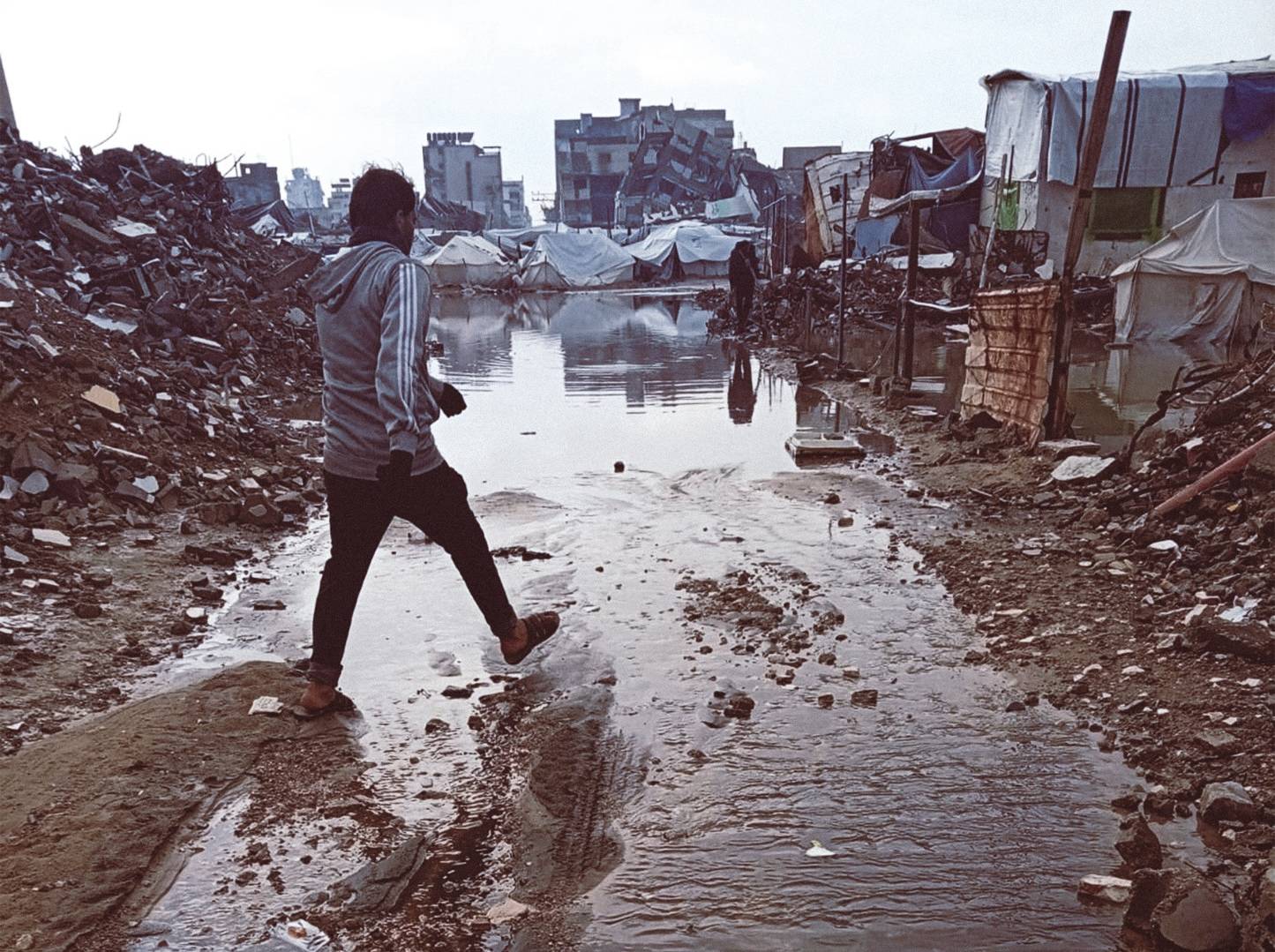
Ahmed Totah: Life used to be good. We had our homes, we had bread. But since October 7th, there is no life in Gaza. The streets are filled with rubble and garbage. They are not even streets anymore. We’re living in a jungle where the strong eat the weak. They have bombed us back into the Stone Age.
Umm Moin*: I used to live in my home with my family. Why was it bombed? Why was my car bombed? I did not harm anyone. Every day I cry over my home—my memories, my belongings that I loved. Everything beautiful is gone.
Ahmed Totah: My family and I are living in a tent in an area called al-Zawayda. The tent is broken and open on all sides, exposed to the wind. The conditions now in the winter are harsh: The tents flood, and water gets inside. You can’t find mattresses to sleep on, you can’t find bathrooms.
Sameera Wafi: After multiple prior displacements, we had to move to a tent in al-Mawasi in Khan Younis in February 2024. The bombardment never stopped all through that year. Tents near ours were repeatedly targeted, and danger was a daily presence.
With the beginning of the “humanitarian truce” in January 2025, we discovered that our house in Khan Younis was still standing. We worked on repairing it, and last February, two days before the start of the blessed month of Ramadan, we were able to return home. But after only a few weeks, the war resumed. On May 19th, our area was subjected to a large-scale attack by Israeli forces, which included airstrikes and heavy gunfire. We survived by a miracle. Hours later, evacuation orders were issued for our neighborhood, displacing us for the sixth or seventh time.
Later on, Israeli forces advanced and blew up what remained of the houses using robots.[1] Our home was completely destroyed. I am now in al-Mawasi again, in a tent that is completely unfit for living. It does not shield us from the heat of summer or the cold
of winter.
Saleh*: My family was displaced from the city of Khan Younis to Bani Suheila and then to the sea, where they have been living in thin nylon tents. My grandchildren don’t have warm clothes and now the winter has come. Our house is gone. They don’t have a shekel to their name.
Mohammed Al Khatib: In mid-2024, I managed to send my wife and children to safety outside Gaza. I have now been separated from them for more than 19 months. In that time my overall health deteriorated. I was diagnosed with hepatitis and, later on, with a gastric infection that I am still being treated for. I have lost over 20 kilograms [44 pounds].
Ahmed Totah: I suffer from a heart condition, so I managed to get a referral from the World Health Organization for a medical evacuation back in April 2024. The backlog has been so long that we have not heard anything since.
My son Muhammad has cerebral palsy. When we were displaced the first time, we left his wheelchair behind. He is quadriparetic, so we—my wife, my other children, and I—have had to physically carry him. He requires constant medical attention, but the circumstances have made that impossible. When there is bombing, he starts to scream; he buries his head in the ground. Even the sound of rain now scares him. It’s difficult to say this, but I have wished for death a million times because of his situation.
Mohammed Al Khatib: Since the ceasefire agreement, movement is easier, more aid is coming through the crossings, and my stress levels are lower. But my life at present can still best be described as survival, rather than really living.
Mohammed Zraiy: The food situation has improved a lot. It’s not like it was before the genocide, but it’s much better for a people who were starved to the brink of death.
Ahmed Totah: The main problem is that there’s no work—there is more food, but you need money to buy it.
Mohammed Zraiy: Meanwhile, Israeli airstrikes are still ongoing, the cities are still destroyed, and people are still living in tents even in the harsh winter. For them, the war hasn’t ended yet. They’ve simply moved into a new chapter of suffering.
Saleh: At this point, I would want my wife and children to leave Gaza, whether that means going near or far—Egypt or Jordan, England or Belgium, I don’t care. We’ve grown tired of life.
Ahmed Totah: If they opened the borders and I had the chance to start life in another country, I would do so in a second. There’s nothing left here for us.
Adel al-Ramadi: I’m awaiting the soonest opportunity to leave Gaza so I can continue my literary and academic career. During these past two years, I have learned that the true homeland is one that protects the dignity of the person. This doesn’t mean that I’m letting go of Gaza; I will carry it in my heart wherever I go. I will write about it just as I used to.
Sameera Wafi: At one point, I wished to leave simply to survive, but I later realized that survival alone is not enough. Despite the destruction and pain, I discovered that I cannot live outside of Gaza.
I am trying to hold on to my passion for photography. Almost every day, I walk about an hour and a half to the building of the Palestinian Journalists Syndicate in al-Mawasi. There, I charge my phone and follow the latest news. Sometimes I photograph emptiness, exhaustion, and worn-out faces. Other times I go to activities organized for children and capture them laughing inside a tent. My job as a photographer is to convey not only the pain of the people of Gaza but also their dignity. I try to tell the world: We are here, and despite everything, we are still living.
Exile: “A country that is not my own”
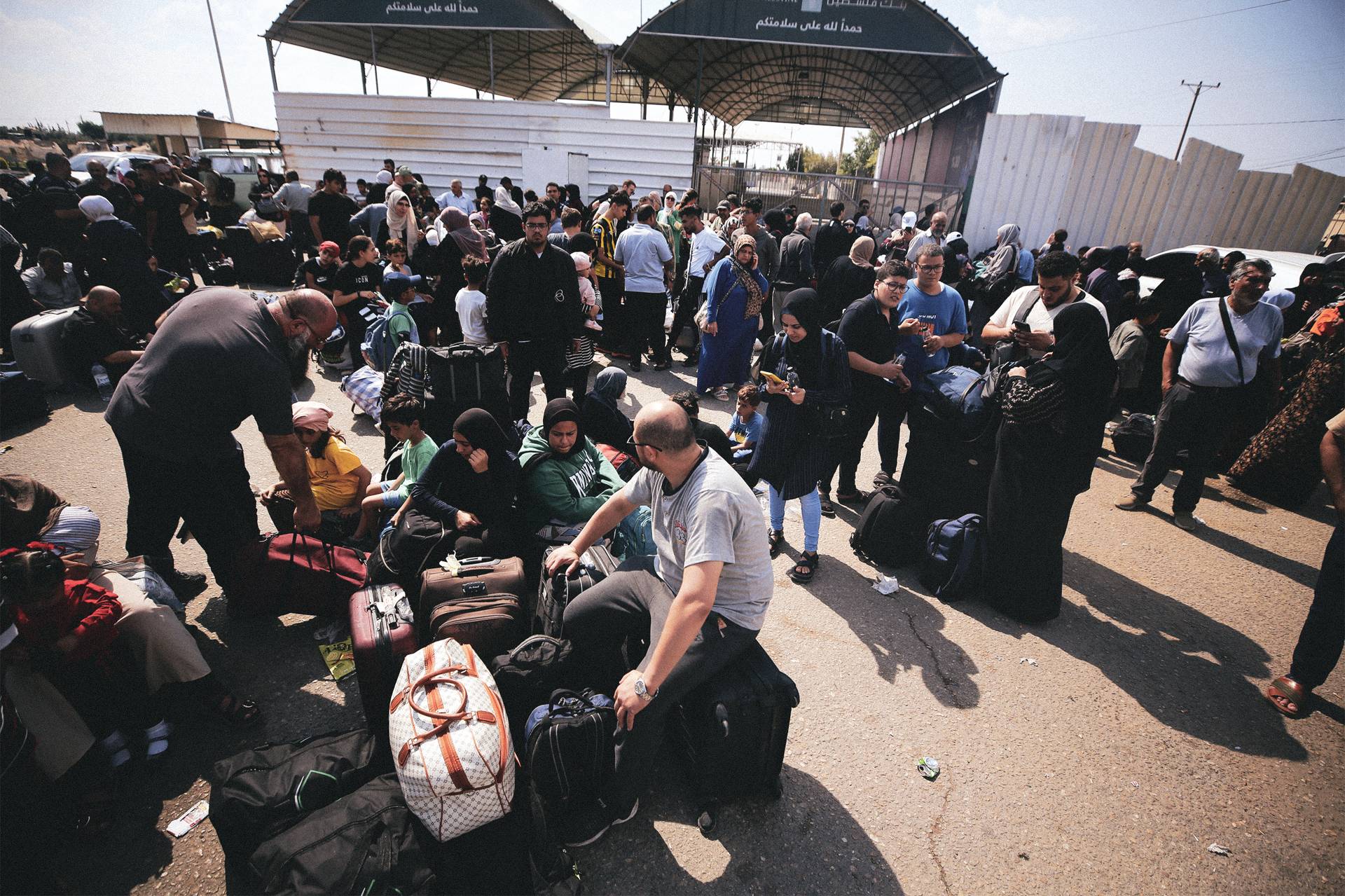
Yousef al-Akkad: I left Gaza briefly after October 7th to arrange university matters for my children, but the Rafah crossing was occupied and closed shortly afterward, and I have not been able to go back since. As soon as the crossing reopens and some minimally acceptable, safe level of life returns to the Strip, I will return from Nigeria to my medical work at the European Gaza Hospital.[2]
Naila*: For the last two years, I have been stuck outside Gaza [in Israel’s Sheba hospital, then in Ramallah]. In 2025, I was supposed to fly to Cairo, where my husband was medically evacuated for back surgery early in the war. But there is no way for me to get there because I haven’t been able to get a travel permit.
These have been the worst years of my life because I am so far away from my family. My children’s lives, in particular, are very difficult with the harsh conditions in the tents in Gaza. I don’t know what to do. I live in a constant state of exhaustion and despair. I have lost hope in everything.
Umm Moin: I am in Egypt now, a country that is not my own, while the rest of my family, my siblings, and my mother—who has cancer—are living in a tent that does not protect them from the cold winter rains. I think about them constantly. I am unable to provide them with anything. My children lost their jobs, and their workplaces were destroyed. Their options have become extremely limited.
Jameel*: I hear the voices of thousands of people who would love to leave Gaza, and I can’t blame them. But life outside Gaza is not as simple as they might imagine. When we arrived in Egypt, we had no residency papers and we could not register the kids for schools. I now receive only 30% of the salary that I used to receive in Gaza, which is not enough to cover our daily needs.
Aisha*: I got to Ireland before the ceasefire, and at that time I couldn’t stop checking the news. If I ever saw that a bombing had happened near my family, I would stay up all night trying to call them, and if I got through I’d ask: “Are you okay? Do you hear heavy bombings or anything? Do you have food? Are you cold?”
When the ceasefire started, I thought, “Okay, now I can rest.” I thought I would feel relief that I’m in a different place, where I have this beautiful life that I always wanted. But that hasn’t happened because my family is suffering in Gaza; Israel is still bombing and I am always nervous. I pray for the border to open so my family can go to Egypt. Only then will I be able to live my life.
Hamza Salha: In August 2025, I got a scholarship to study in Ireland, where I am now. It is such a privilege to leave Gaza, but it hasn’t been easy. I’m physically surviving, but mentally, most of the time I’m still being chased by the trauma. I think of my family. I’m afraid that our house, the skeleton of which remains standing, might collapse at any time.
The people of Ireland are supportive, but they’re not the people I grew up with for 24 years. This is not my home; it’s not my land. Despite their compassion and generosity, I feel so lonely.
West Bank: “All our life is settlers”
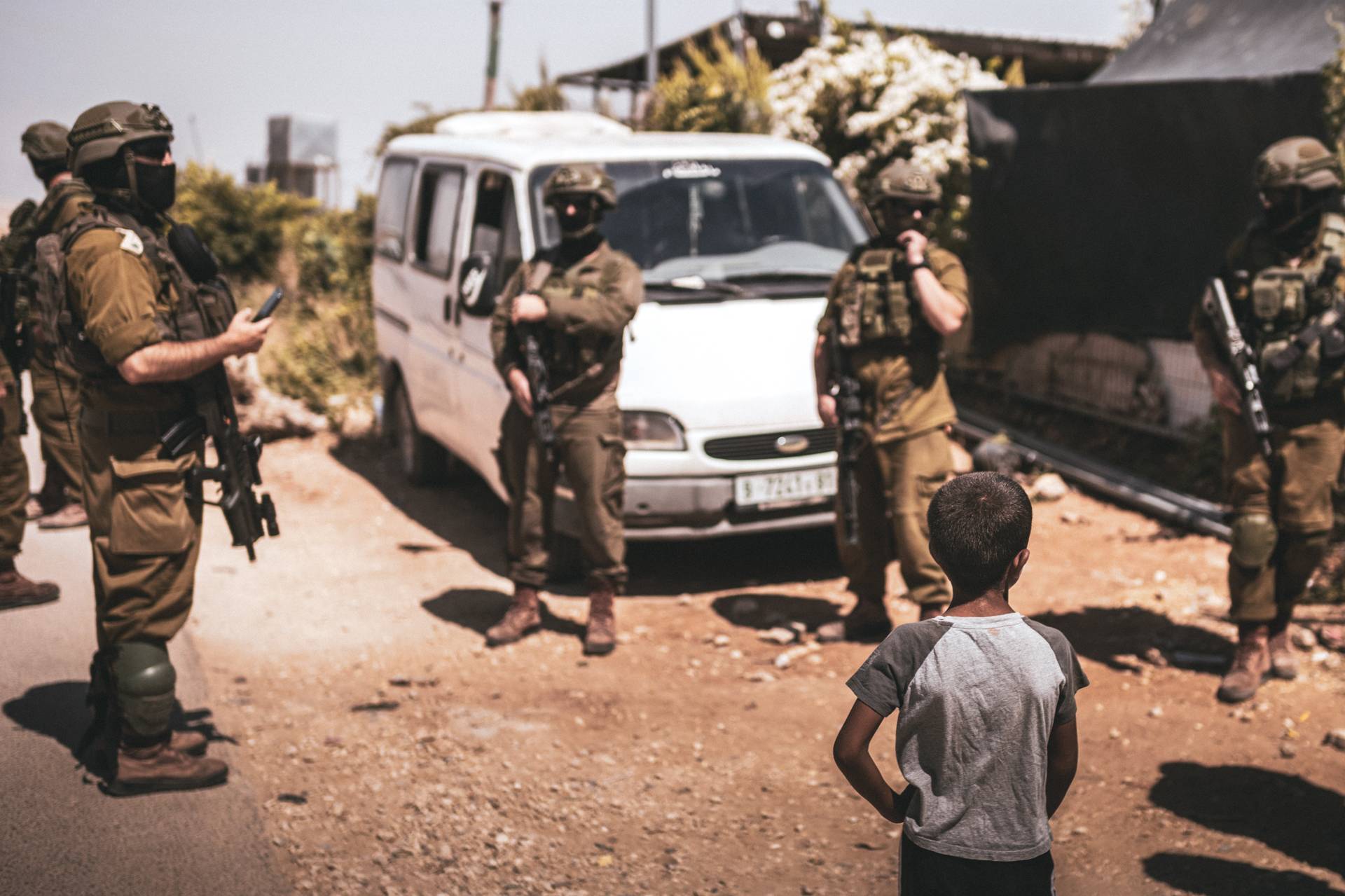
Hanady Hathaleen: Since October 7th, every day there are settler attacks here in the West Bank. Whenever someone comes to tell you something, you first ask: “Settlers? Settlers? What’s going on?” All our life is settlers: if they’re here, if they’re coming, if they’re not. The settlers walk from house to house with guns and dogs—in front of our children—to scare us. [The settler] Shimon Attia sits in front of certain houses and refuses to leave; he comes in the middle of the night. One night, my aunt was in the bathroom, and Shimon opened the bathroom door. Whenever he crosses the street into the settlement, he beeps the car horn loudly to scare the children and shouts sexual slurs at the women. We see how they look at us—like we are criminals, or trash they want to remove
Shoug Adra: When my husband Zakariyah was shot by a settler in October 2023, I felt like my life stopped. He was in the hospital through 2024. He underwent many surgeries and was in a lot of pain. I have four children, including twins who were infants then. All the pressure to care for our family was on me alone.
Alhamdulillah [thank God], in the last year, Zakariyah has gained weight and is doing well. Now, he can move, smile, and play with the kids a little. But he’s still very weak; the doctor said it could take 15 years for him to recover. And he is now afraid of us leaving the house, of the kids going to the playground. But he cannot work or run errands anymore, so I must go. When I do, he calls me constantly: “Did you cross the road? What is happening? Are you okay?”
Ghassan Najjar: It has become clear how organized the settlers are, and how much they coordinate with soldiers and police. A year ago, for example, when settlers from Givat Ronen attacked us, the soldiers gave the settlers weapons to shoot. The settlers now have army uniforms, and they are the ones setting up checkpoints, taking IDs, stopping people, beating and arresting them. Sometimes you see a soldier, and just five minutes later, you see him participating in a settler attack. Before, this was happening under the table. Since October 7th, it’s above the table.
Abu Suliman*: Due to attacks by settlers, we were displaced from Ein al-Rashash to the nearby village of Duma on October 12th, 2023. There, we lived in makeshift shelters that did not meet our basic needs. And we still had no protection against settler violence—neither from the law nor any other entity. In our two years in Duma, the place where we lived was demolished four times—in May, June, August, and November of 2024. We moved to the eastern part of Duma hoping that it would be safer, but the attacks have remained continuous; the latest one came just this past Thursday. It’s been very difficult to maintain sumud [steadfastness] as our children are terrorized, our women and elderly assaulted, our trees vandalized. There is terror everywhere here.
Eid Hathaleen: We are besieged from all sides. In August 2025, the settlers built caravans inside our village of Umm al-Khair, isolating its two halves from one another. The goal of these caravans is to make it harder to move around, to access the school. We are also facing a new round of demolition orders from the Israeli army. If these are carried out, a whole part of the village will be fully destroyed; some 100 more people will be homeless.
Abu Suliman: They want the land, barren and burnt—without any Palestinians. They carry out the displacement in stages: kick out the Bedouin first, then the small communities, then the villages, and lastly the big cities. This has been the policy since 1948. My paternal grandfather was expelled from Arad in 1948, and he was displaced again in 1967, then in 2023, and here we are again getting displaced in 2025. The displacement is continuous.
Basel Adra: The village of Khalet a-Daba is full of rubble from the demolitions in mid-2025. The soldiers came back repeatedly to destroy houses and then the tents and makeshift shelters that families had built to protect themselves from the rain. When the community didn’t leave after the demolitions, the occupation forces brought in the settlers.
An attack in late September 2025 was one of the craziest scenes I have ever witnessed. I arrived in the village at midnight. People had been sleeping outside because of the heat, which made it easier for the settlers to attack them. I saw people bleeding from their faces, from their hands. The families are still living there, but I don’t know how much longer they will be able to handle it. We know now that what the West Bank settlers have achieved during the genocide in Gaza will never stop. We are living in the new reality that they have created.
Hanady Hathaleen: All the entrances to the nearby cities are closed. You cannot move around. If Israeli forces see a car, they will confiscate it. As a result, no one is going to work.[3]
Issa Amro: My movement in my own neighborhood in Hebron has become very restricted. There are more checkpoints, some of which are closed all the time. When they are open, I am repeatedly detained at the checkpoints for long durations. Whenever we leave home now, we are not sure when we will be able to come back.
Mohammad Matar: The checkpoints and roadblocks cause significant traffic—a three-kilometer drive can take three or four hours. That’s how our days are spent: on the road, moving between traffic jams, or changing routes due to settler attacks.
Hanady Hathaleen: My contractions began on a cold night in December 2024, at around 11 pm. I went outside to the bathroom 12 times that night, and each time I was scared because of the settlement that is right next to our village. I refused to wake up my husband Awdah until 6 am because I knew that there was no way he wouldn’t take me to the hospital right away. But driving from here to Hebron at night, it’s like throwing yourself at death, especially because we would have to drive past the settlement of Kiryat Arba. I kept thinking about a close friend of mine who had planned to give birth at the hospital in the city of Yatta, but when she arrived, she found that the Israeli army had closed all entrances to the city. She gave birth in the taxi, with a strange driver, and I was really scared that this would happen to me.
I had a difficult time after I gave birth, especially because a few months later, Shimon Attia attacked our village. He closed his car door on my hand three times. I had to nurse my newborn with a broken arm.
Tariq Hathaleen: Since the ceasefire, things have gotten worse. It was after the ceasefire that the army officially prevented Palestinians from plowing their own agricultural land.[4] This had never happened before, and it happened for the first time after the ceasefire.
Every day, every month, every year that passes is worse than the day or month or year before. It’s an attempt to erase the community: to delete, destroy, and take away anything that helps us stay.
Ghassan Najjar: There is no ceasefire. It is propaganda. Since the ceasefire was signed, how many people have been killed? Just yesterday in Jenin, two young people were shot and killed for no reason.[5]This is a ceasefire? Our life doesn’t matter to them—not to the Israeli government, not to the Palestinian Authority, and not to the world.
Remembering the Martyrs: “They didn’t leave us any time for grief”
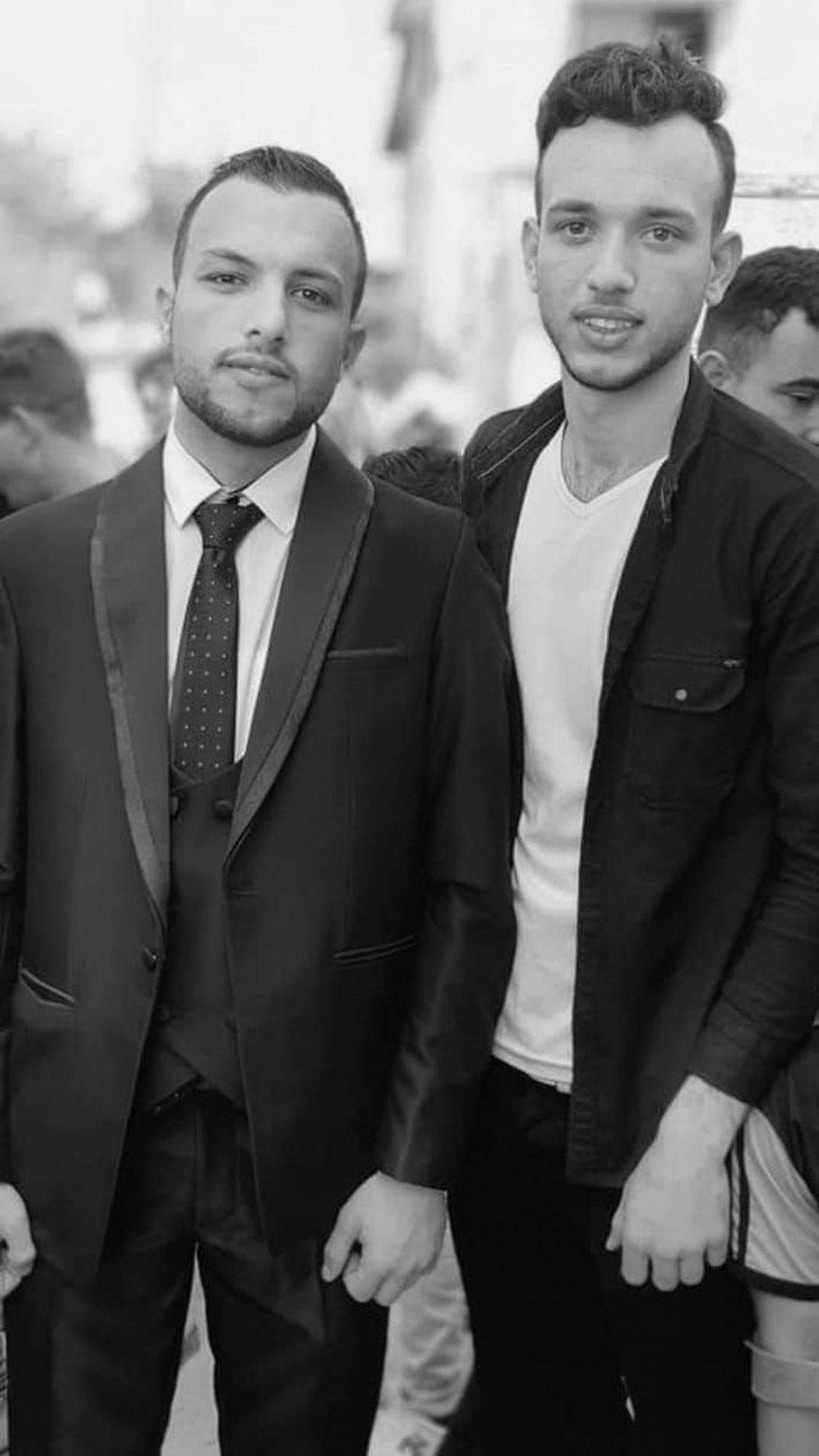
Jewish Currents spoke with Palestinian student and activist Khalil Abu Yahia on October 16th, 2023. Khalil was killed in an Israeli airstrike on October 29th, 2023.
We interviewed Khalil’s brother Ahmad Abu Yahia on February 2nd, 2025. Ahmad was killed in an Israeli airstrike on his family’s tent on July 2nd, 2025.
Umm Khalil Abu Yahia*: After October 7th, my son Khalil was in touch with his pro-Palestine friends and activists around the world to tell them what we were suffering. But this was a war waged not only against the resistance, but against anyone who dared to tell the truth. Israeli forces bombed my son’s home, killing him and his wife Tasnim and children Elaf and Rital. They took away my heart, the most valuable thing in this world to me. Due to the intense bombardment, I couldn’t even say farewell to them.
Afterwards, my other son Ahmad took it upon himself to continue the path of his brother Khalil, and he started reaching out to Khalil’s friends. But the occupation army assassinated him too. For sharing about the suffering of the Palestinian people, my sons paid with their lives.
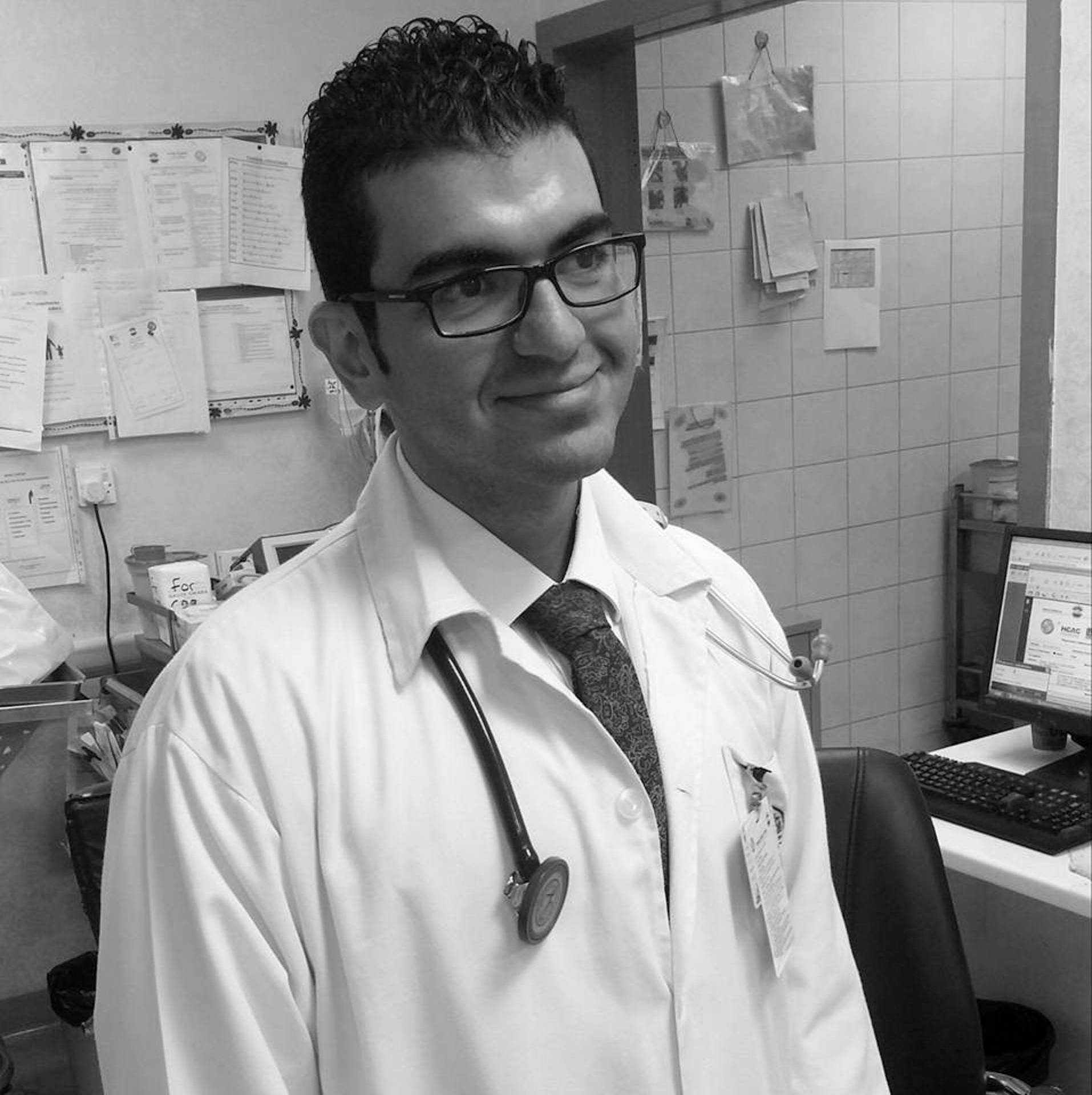
Jewish Currents spoke with Palestinian physician Hammam Alloh on October 26th, 2023. Hammam was killed in an Israeli airstrike on November 11th, 2023. We were not able to locate any surviving members of his family.
Umm Moin: I lost my only sister in the war, along with her husband, her children, and many of my relatives. They had no fault.
Aisha: Khan Younis was so dangerous that in May 2024 we moved to al-Zawayda, where there were aid distribution points. But that ended up being where we lost many people, including my favorite cousin, Ahmed. In August 2024, he was shot in the head trying to get some food for his family.
Mohammed Zraiy: In the summer of 2025, the organization Project HOPE[6] was using our home as a distribution point for children’s nutritional supplements. One morning, at exactly 7 am, an Israeli drone fired a missile at the main entrance of the house. We woke up to an explosion that shook the building. The sound of screaming and wailing was everywhere. We opened the windows, and more than 15 mothers and children who had been standing in line for the supplements had, within seconds, been turned into pieces of flesh. My brothers and I ran to try to help them, but most had already died. That scene is burned into my memory. Every time I leave the house and see the shrapnel marks on the walls and the main door, I’m taken back to that day, which I will never forget.
I also lost Ibrahim, my friend since high school. He was killed when a shell hit his home last Ramadan. I used to spend most of my days with Ibrahim; we had a habit of sitting together by the sea. I never imagined I would one day gather his remains with my own hands.
Hamza Salha: During the war, I was focused on survival, but now, as I’m returning to a normal life, I’m remembering my best friend Yahya Obeid. He was my neighbor and my companion in everything: going to the mosque, football, therapy, sitting and chatting, walking—everything, every moment. He was so intelligent: He studied medicine, he memorized the Quran without any mistakes, and he used to teach at the mosque. Israel killed his entire family: around 66 people. The day he was killed, I didn’t have the chance to say goodbye. The strike happened at around 9 am, and, without access to adequate medical care, he died around 4 pm. I long to pick up the phone and call him from Ireland. But I am now without the people who are my home.
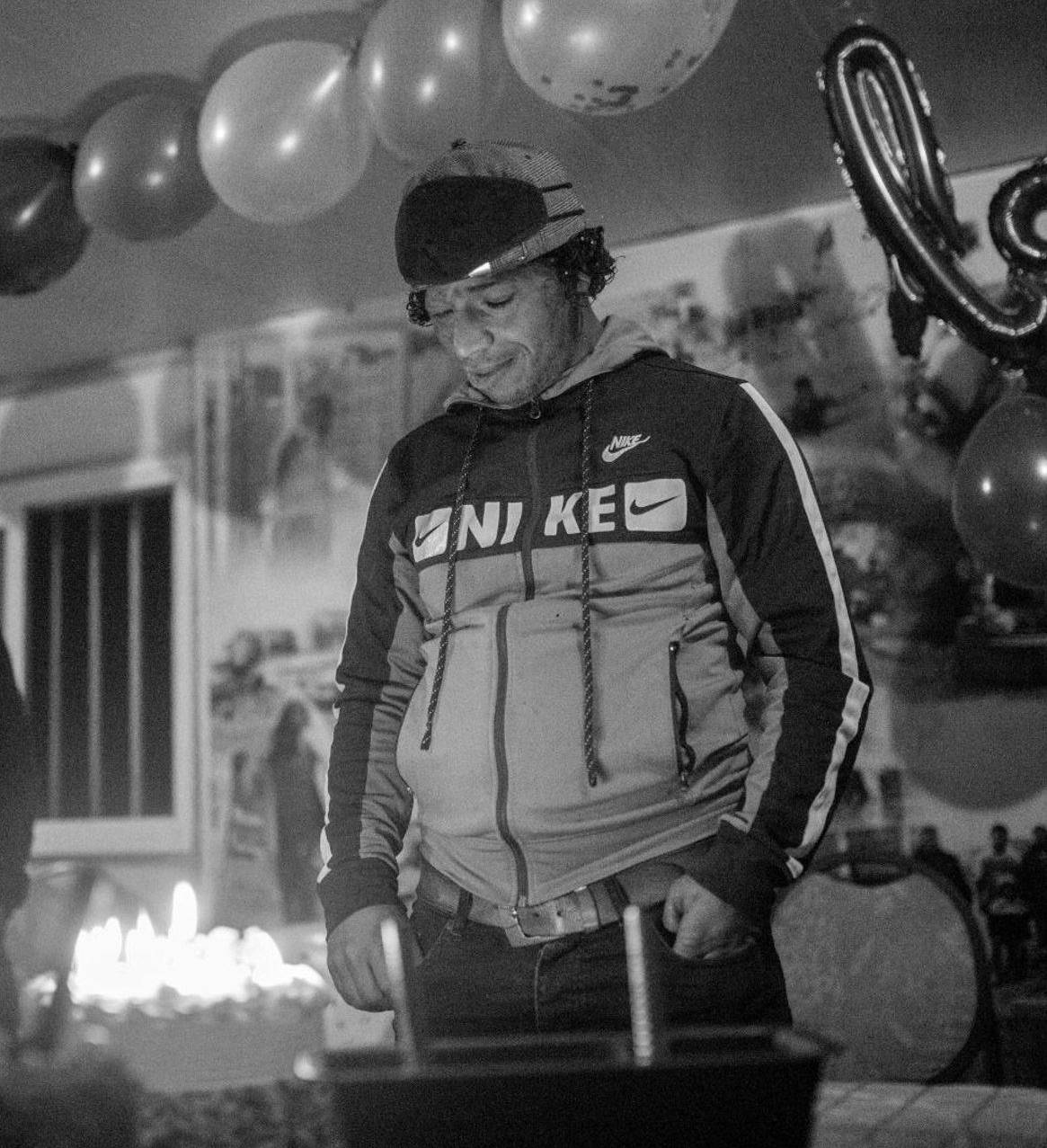
Jewish Currents spoke with West Bank educator and activist Awdah Hathaleen on October 17th, 2023. Awdah was killed by a settler on July 28th, 2025.
Hanady Hathaleen: On July 28th, settlers attacked the village, and they killed my husband Awdah. I cannot forget how the settlers were laughing, how the one who murdered him said: “I’m so glad that I killed a person right now.” The Israelis held his body for 11 days. They attacked the village every night, and took 18 of my family members to jail. Meanwhile, the man who killed Awdah was released from jail and even house arrest after a few days, and he came back to the village. The settler attacks continued. They kept working to expand the settlement at the construction site where he was killed. They built new caravans, and they cut off our electricity and water. They didn’t leave us any time for grief.
Awdah’s death opened my children’s eyes to things I didn’t want them to know. My three-year-old Mohammed was with his father when he was shot. When he sees settlers now, he’s not scared—he hates them. And then there is Kenan, who was seven months old when Awdah was killed. He is the luckiest because he doesn’t know what happened. But he is also the unluckiest, because he didn’t have the chance to get to know his dad.
I always used to think about the end of the war, but I never thought that I would lose this much. I had thought, “Okay, a missile might hit our house, one of the kids will lose a limb.” Or we worried that there wouldn’t be food or water. I never thought I would lose Awdah. I was scared when he was denied entry into the US and detained at the border, a month before he was killed.[7] But afterwards he told me, “I will never leave you again. This is the last time I am traveling.” I have this message in our WhatsApp chat. I look at it every day and think, “Are you really gone?”
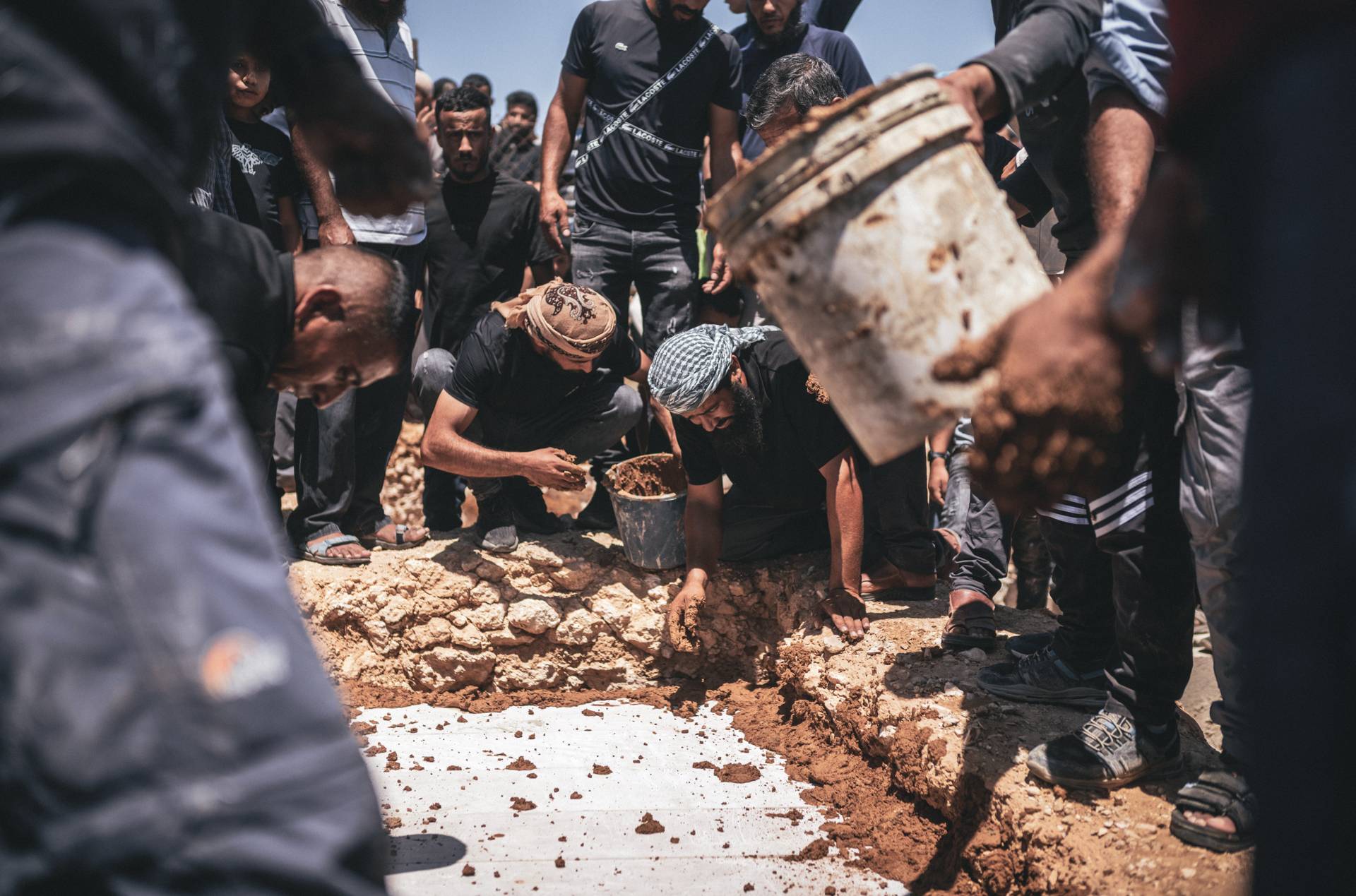
in the village of Umm al-Khair, West Bank, August 7th, 2025.
Basel Adra: For me, Awdah’s killing is the most hopeless thing that’s happened. Whenever I think about it, my mind refuses to believe it.
Hanady Hathaleen: When they killed Awdah, they killed all of us, the whole community. Awdah loved life the most out of anyone, and he really believed in peace. But they killed the peace. They killed everything.
Political Horizons: “We see no light ahead of us”
Tariq Hathaleen: Since the killing of Awdah, for the first time ever, I feel no hope. When I think about my vision, what I want to see politically, all I can think of is that I don’t want to see Shimon Attia. That’s what my dream has become. It’s the first time ever that we see no light ahead of us. They have left us wholly in darkness.
Umm Moin: There are other solutions besides war and destruction to resolve this issue—solutions that do not involve killing people or displacing them. But we have come to see that power is what determines decisions, not justice.
Sameera Wafi: The thing that pains me is the way the world responded to what happened in Gaza. Everything was documented through photos and videos, yet international humanitarian law was not applied to us. The targeting of civilians, the destruction of homes, and mass displacement happened before the eyes of the world, without real accountability or protection.
Ghassan Najjar: Before, we used to say, “Our enemy is the Zionist occupation and capitalism.” Now we can add the Arab governments to that list. They see our people being killed, children being massacred, and do nothing. They just give Israel what it wants. This includes the Palestinian Authority and the Gulf countries as well as Jordan, Egypt, and Syria. I think they are our enemies now, like Israel and like America.
Mohammad Matar: I no longer believe in any political party. We are in a reactionary loop of violence, while what we really need is brave leadership.
Aisha: My political views have changed, but for the worse, because now I hate everyone. The world is responsible for what we are enduring now. Of course, Israel destroyed everything and is the main culprit. But just as much as I blame Israel, I blame Hamas, because they are corrupt and think only of themselves.
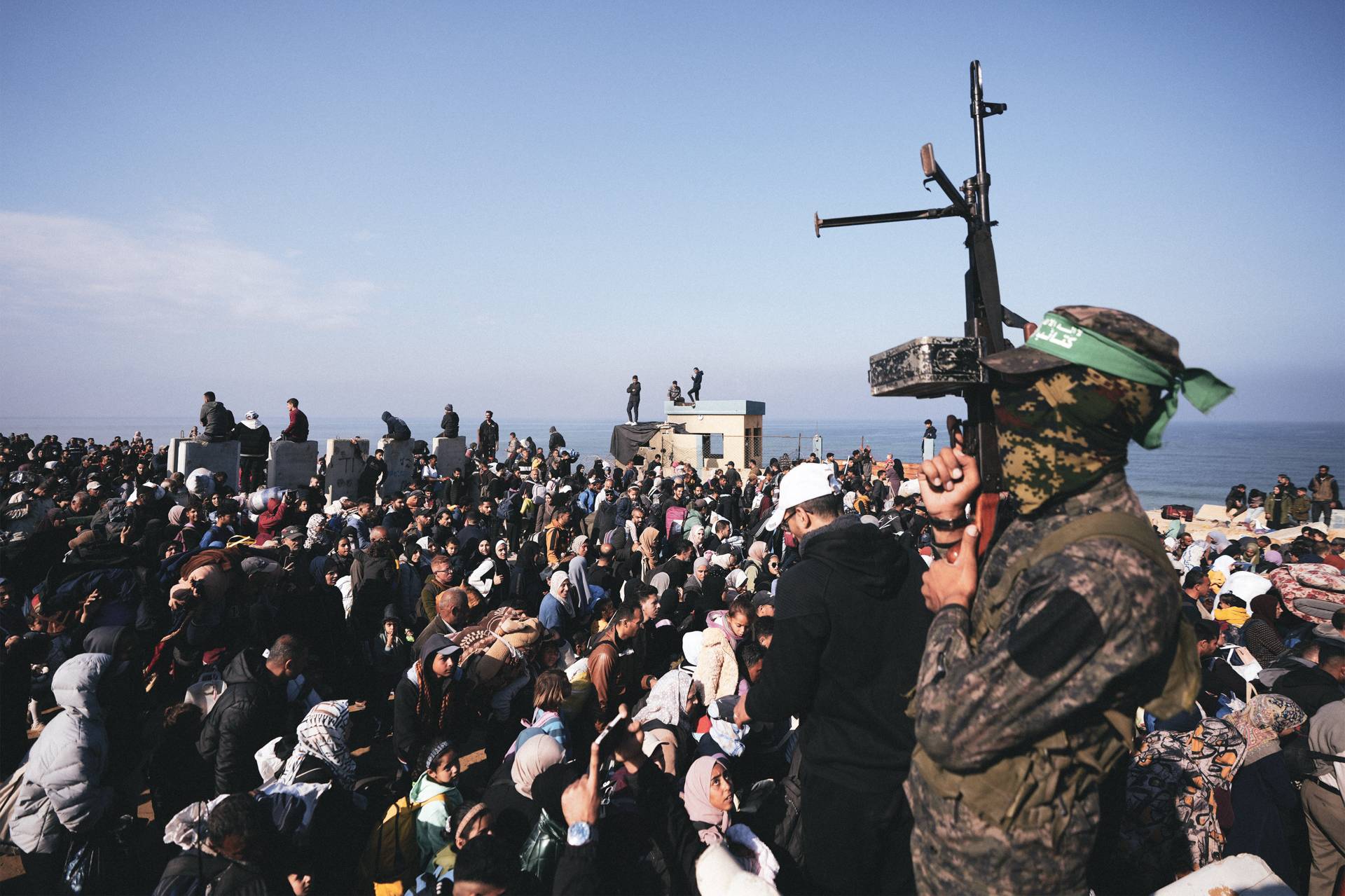
Sameera Wafi: I have come to hate all political parties without exception, especially Hamas, because the leadership failed to live up to their responsibilities. Negotiations to stop the war should have been more serious, and people’s lives should have been prioritized above all internal conflicts or political calculations.
Hamza Salha: This war has taught me the importance of pragmatism. I believe the resistance made a strategic mistake by starting this. We have a right to defend ourselves as an occupied people, but the resistance must take into account the power of our enemy and what it can do. It’s a minor fault in comparison to the occupation, which everything else stems from. But it was still not a wise decision by the resistance.
Mohammed Ghalayini: October 7th was an act of resistance that was also a horrific massacre. I often ask myself how I can hold these two truths together. My commitment to Palestinian liberation as a goal, and to resistance until liberation and return, remains as unwavering as ever. But I also think that any future strategy for Palestinian liberation cannot replace one oppression with another, and must ensure liberation and justice for all.
Successive Israeli governments have long been committed to the destruction of everything Palestinian, from homes to trees to human life itself, but October 7th undoubtedly accelerated this process. It was the perfect excuse for genocide. As Palestinians, we find ourselves in a new reality that requires a reassessment of strategy and a realignment of purpose within the Palestinian national movement. Whether this coalesces around a freed Marwan Barghouti or another as-yet-unknown person or movement remains to be seen.
Yousef al-Akkad: What happened on October 7th cannot be separated from over 75 years of occupation, dispossession, blockade, and the denial of Palestinians’ basic rights. It has become clearer than ever that there is no alternative to a genuine two-state solution. The region will not experience stability or peace unless a Palestinian state is established in which its people can live with dignity and security.
Mohammed Zraiy: Over the past two years, I’ve changed radically. If you had asked me before about my political orientation, I would have told you I was a liberal. But the genocide in Gaza revealed the true face of liberalism as an ideology committed to capitalism, and the latter is what ultimately guided so many European states to support Israel. It became painfully clear that arms deals, trade, and investments in AI have no ethical limits. The bodies of our children were turned into a testing ground for weapons and tech. Liberal parties—especially the British Labour Party and the American Democratic Party—offered fierce and unprecedented support for the genocide, in stark contradiction to the values of humanity, freedom, and justice they claimed to uphold. It became evident that their values do not apply to Palestinians.
I still believe in a one-state solution as a way of obtaining full justice for the victims of the genocide. This will entail dismantling the system that committed the genocide and holding Israel’s leaders accountable. But I no longer trust armed resistance as a strategic option in getting there. That project has failed disastrously, and has exposed how international and regional power balances favor the Zionist system rather than us. Both Palestinian political tracks—the Oslo path led by the Palestine Liberation Organization, and the armed-resistance path led by Hamas—have reached a dead end. Both have brought us nothing but further savagery. So we need to develop new political thought, a new political project, and new tools with which to neutralize Israel’s power.
Maya Rosen is an assistant editor at Jewish Currents. Jonathan Shamir is contributing writer at Jewish Currents and the former deputy editor of Haaretz.com. Tareq Baconi is president of the board of Al-Shabaka: The Palestinian Policy Network, a research fellow at the University of the Western Cape’s Centre for Humanities Research. He is the author of Hamas Contained and the memoir Fire in Every Direction.
RELATED:
- Six Months into Gaza Ceasefire, Setting the Record Straight About Aid
- Humanitarian Scorecard: Six Months In, Gaza Ceasefire is Failing
- Israel is attacking Lebanon to sabotage the Iran ceasefire, but the media is hiding its true motivation
- The U.S. has announced ‘Phase 2’ of the Gaza ceasefire. Here’s why it doesn’t matter for Palestinians.
- AIPAC Wants to Kill a Bill that would Ensure Israel Complies with Ceasefire