Fourteen Gazan physicians remain in Israeli prisons without charge, where they say they have been singled out for particularly severe abuse. Dr. Hussam Abu Safiya is one of Gaza’s most beloved.
By Shatha Yaish, Reposted from +972 Mag, June 17, 2026
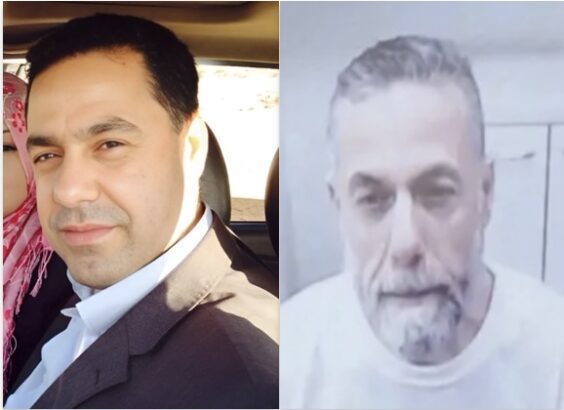
When a photograph of Dr. Hussam Abu Safiya appeared on June 10, it was one of the first signs of life his family had received since February 2025.
The former director of Kamal Adwan Hospital, among the most prominent Palestinian doctors detained by Israel during the genocide in Gaza, had been brought before the Israeli Supreme Court for a hearing on his continued imprisonment. In the image, taken during the proceedings, Abu Safiya appeared frail and visibly thinner than before his arrest following the Israeli military’s raid on Kamal Adwan Hospital in late December 2024.
For his family, the image was devastating.
“We all started crying,” his son, Elyas Abu Safiya, told +972 Magazine. “When we saw the latest picture of my father during his trial, it wasn’t just his face we saw — we saw clear signs of torture.
“It is so painful to see your father, who dedicated his life to saving lives and treating patients, like this,” he continued. “I don’t know how to describe it. What is he going through away from the cameras? If this is what we saw in public, what is happening there?”
Abu Safiya is one of 14 Palestinian doctors from Gaza currently held by Israel without charge. In April, Physicians for Human Rights Israel (PHRI) called for their release, saying the doctors had been denied adequate food and medical care and subjected to physical abuse in detention.
On June 16, the Supreme Court rejected Abu Safiya’s appeal, allowing Israel to continue holding him under the Incarceration of Unlawful Combatants Law. The law permits Israel to imprison people without charge or trial if there are “reasonable grounds” to believe they took part in “hostile activity.”
His lawyer, Nasser Odeh, who visited Abu Safiya in late May, said the doctor “suffers from chronic illnesses and is not receiving the medication he needs. The prison authorities have not provided him with adequate medical treatment.”
On June 3, Odeh added, Abu Safiya was transferred to solitary confinement. “The decision to place him in isolation appears to be punitive and came after he filed an appeal,” Odeh said. “One of the main difficulties is the extremely limited legal process available to challenge his detention, because there are no formal charges against him and no indictment.”
“He is denied family visits, International Committee of the Red Cross visits, and the ability to receive clothing from outside,” Odeh said.
‘Every doctor has lost more than 44 lbs’
PHRI, which filed a petition to the Supreme Court on April 30 on behalf of the 14 imprisoned doctors, said Israel has “arrested hundreds of essential medical workers, effectively paralyzing an already fragile healthcare system under constant destruction.”
Naji Abbas, director of the Prisoners and Detainees Department at PHRI, told +972 Magazine that over the past six weeks, the organization’s lawyer has been able to meet with 10 detained doctors from Gaza, including Abu Safiya. Their testimonies, he said, reveal a pattern of abuse, starvation, and medical neglect.
“All of them reported being denied medical treatment,” Abbas said. “All are suffering from injuries caused by violence, and all complained of being starved. Every doctor has lost more than 20 kilograms [44 lbs].”
In one case, Abbas said, a doctor’s medical condition was so severe that PHRI appealed to the Israel Prison Service. “After our appeal, he was taken to a clinic, where his weight was measured at 55 kilograms [121 lbs],” Abbas said, more than 30 kilograms (66 lbs) less than he had weighed when he was arrested over two years ago.
The doctors, Abbas added, are almost entirely cut off from the outside world.

“We should understand that Dr. Hussam Abu Safiya is not aware of the international campaign demanding his release because he is totally disconnected,” Abbas said. “They can’t read newspapers, listen to the radio, or access any outside information. The only people they are able to communicate with are lawyers.”
Abbas believes the doctors’ continued administrative detention is tied to what they witnessed during Israel’s assault on Gaza, and what they may one day say publicly.
“The Israeli state is afraid of what they might say,” he said. “It is afraid of the stories they will tell, and the testimony they will provide about what they faced and what they saw during these months.”
Recalling the words of one detained physician, surgeon Dr. Ahmad Moussa, after a recent PHRI visit, he pointed to the resilience that has enabled many detained doctors to endure — and to remain potential witnesses to what has happened in Gaza and inside Israel’s carceral system. “The last time we met him, he said: ‘I am adapting to the pain. I am getting used to it. My question is: when am I being released?’”
Singled out for harsher treatment
The abuse described by the doctors, Abbas said, was not just broadly consistent with the deterioration in prison conditions for all prisoners. In a previous PHRI report based on 21 testimonies from detained healthcare workers, doctors described being singled out for harsher treatment once soldiers or prison guards discovered their profession.
“All of the doctors described what we can call special treatment when soldiers and Israeli Prison Service guards learned they were doctors,” Abbas said.
“One physician, for example, said he told an Israeli prison doctor: ‘I’m a doctor too. I’m your colleague. You should treat me well.’ The Israeli doctor responded by slapping him.”

Other doctors recounted similar experiences. “During transfers between facilities, when soldiers or guards realized they were doctors, the beatings increased,” Abbas said.
According to Abbas, the pattern extended beyond medical workers. “One doctor said that when they knew someone was an educated Palestinian, he was beaten more,” he said. “So it wasn’t only about being a doctor specifically — it was about being an educated Palestinian in general.”
Today, over 1,300 Palestinians from Gaza are being held under the so-called Unlawful Combatants Law. They include minors, teachers, doctors, and nurses — all detained without charge on the basis of what he described as spurious claims based on propaganda and media reports.
One case he pointed to as emblematic of the law’s absurdity is that of Fahamiya Al-Khali, an 82-year-old Palestinian woman from Gaza suffering from Alzheimer’s, who was held for more than seven weeks in Israel’s Damon Prison under the same designation.
“This is why I emphasize that the name of the law does not reflect what is happening on the ground,” Abbas said. “It functions, in practice, as another form of administrative detention — where Palestinians are held for long periods without being formally charged.”
For the family of Dr. Ahmad Moussa, who was arrested from Nasser Hospital in February 2024, that uncertainty has defined every day since his detention.
“I saw him three days before his arrest and warned him about what had happened at Al-Shifa Hospital,” his brother, Ashraf Moussa, told +972. “I told him, ‘I’m scared for you,’ but he insisted on staying there.
“For an extremely long time, we had no information about him. For an entire year, we knew nothing. Then we began hearing conflicting reports until a lawyer was finally able to visit him and reassure us.”
The family has since learned that Moussa is being held in Ketziot Prison in southern Israel. A lawyer who visited him about 10 days ago, Ashraf said, reported that Moussa had fractured ribs and skin diseases.
“Before his arrest, he weighed about 110 kilograms [242 lbs],” Ashraf said. “He now weighs around 70 kilograms [154 lbs], according to the lawyer.
“We have not spoken to him at all. What we heard from people who were released is that the conditions are catastrophic, and that there is torture,” he continued. “There are no accusations. He has not been charged. His only crime is that he is a Palestinian doctor.”
Shatha Yaish is a journalist covering East Jerusalem and the West Bank.
(2/2) ‘If we don’t save Dr. Hussam Abu Safiya, he will die in prison’: released detainees say they saw Gaza doctor tortured in Israeli custody

Former detainees who spent time with the prominent Gaza doctor before his transfer to solitary confinement describe systematic beatings, dog attacks, and deliberate medical neglect, warning he may not survive.
By Tareq S. Hajjaj. Reposted from Mondoweiss, June 19, 2026
This week, the Supreme Court came back with a rejection of Abu Safiya’s appeal. He remains in solitary confinement in Nafha Prison, to which he had been sent earlier in June as the date of his Supreme Court appearance drew near.
No formal indictment has been filed against Dr. Abu Safiya to date, as he is being held under Israel’s so-called “Unlawful Combatants Law,” according to Nasser Odeh. The law allows Israel to indefinitely detain Palestinians without having to file charges against them, subject to judicial review by the district court every six months. “Abu Safiya is one of 14 Palestinian doctors from Gaza currently being held in Israeli detention,” Odeh told Mondoweiss. “If there were actual charges against them, or evidence supporting the allegations made by the Israeli prosecution, indictments would have been filed and evidence presented, as is the case with any other detainee.”
The lawyer added that Abu Safiya’s continued detention without the filing of formal charges demonstrates that his imprisonment is unjustified. To make it more difficult to challenge his detainment, Odeh said that Abu Safiya not only continues to be isolated from other detainees but is also cut off from his legal team, making it difficult to obtain verified information about his health condition.
Despite the efforts to suppress information pertaining to Abu Safiya, Mondoweiss has obtained testimony from recently released Palestinian detainees who said they spent time with the doctor in prison before he was moved to solitary confinement. The ex-detainees, all of whom were released in March of this year, said that Abu Safiya was subjected to physical torture, beatings, humiliation, and degrading treatment. They also say that they spent their final days in prison with the doctor.
“We saw him weighing no more than forty kilograms,” Ahmad Qaddas, 34, alleged. Qaddas had been detained from the Jabaila refugee camp in Gaza in December 2025, and previously knew Abu Safiya as one of north Gaza’s most prominent doctors and public figures. Qaddas claimed that he had spent six days with Abu Safiya shortly before being released. “I could not believe my eyes when I saw Dr. Hussam,” Qaddas told Mondoweiss. “His weight, his thinness, his health, his face, his hands, his feet, his entire body — I could not believe what I saw.”
Qaddas also claimed that Dr. Abu Safiya was minimally communicative, unable to respond to interactions. “He became so weak that he could barely speak,” Qaddas said. “He had to repeat each word he said at least four times before managing to pronounce it. Even when he ate, he vomited it back up. He always appeared exhausted and barely talked.”
Qaddas also said that the prisoners wore the standard gray prison uniform and appeared relatively clean, but that Abu Safiya “looked filthy” by contrast.
The testimonies from the detainees are the first details to emerge concerning Abu Safiya’s condition since reports of his torture first emerged in January 2025, a month after his arrest, as relayed by released prisoners who had been held at the notorious Sde Teiman torture camp with the doctor.
Each of the prisoners said they spent a limited period of time with the doctor, although the details of when and where they were held remain unclear. “We had no way of distinguishing one day from another inside the prison,” Rami Abu Amira, 32, who said he spent six days with Abu Safiya, told Mondoweiss. “We spent days and hours shackled and blindfolded, with no sense of how much time had passed.”
Abu Amira was a resident of Jabalia refugee camp, where he was arrested during an invasion of his area in December 2024. He said detainees often relied on other prisoners to learn where they were being held. “When the opportunity arose, we would ask other detainees where we were. Some would say Sde Teiman. Others would say we’re in Ofer, or another prison,” he recounted. “Those brief exchanges were the only way we could confirm that we were being held in a detention facility somewhere.”
Abu Safiya’s lawyer, Nasser Odeh, corroborated the substance of the prisoners’ testimonies based on his knowledge of the doctor’s condition, affirming that their descriptions of how he was treated fit with his conditions.
All interviewed former detainees described the doctor being repeatedly subjected to beatings, torture, interrogation, shackling, and food deprivation — conditions which many Palestinian detainees report being subjected to across the board, but which in the case of Abu Safiya were allegedly applied even more harshly. They said that the doctor was clearly experiencing a deterioration in his health, and that they interacted with him as much as they were allowed to, even though any detainee who attempted to help him was allegedly beaten.
‘Soldiers placed their boots on his chest and forced him to insult himself’: humiliation and medical neglect
Rami Abu Amira said that detainees, including Dr. Abu Safiya, were kept shackled by their hands and feet for an entire week, without their restraints being removed even for eating or using the bathroom. Their restraints would only be removed for 10 minutes every 3 days to shower, before being shackled again. “Occasionally, our restraints would also be removed so we could eat,” Abu Amira added.
Ahmad Qaddas emphasized that Abu Safiya “was constantly asking for medical treatment,” noting his advanced age. “Whenever he would ask for treatment, a doctor from the prison would come by and give him a single blood pressure pill.”
Nasser Odeh confirmed Qaddas’s testimony, asserting that Abu Safiya continues to suffer from chronic health conditions that have been exacerbated by his systematic abuse and mistreatment. The doctor’s lawyer said that Abu Safiya suffers from high blood pressure, for which he requires regular medication, as well as from other health issues affecting his back, eyes, and neck. One of the most serious concerns is what Odeh described as a policy of “deliberate medical neglect” by prison authorities, which has deprived Abu Safiya of access to essential medications and treatment.
“We previously submitted a legal petition to the prison authorities,” Odeh said. “We were requesting that the detention facility’s physician examine Dr. Abu Safiya and that his blood pressure medication be restored.”
Ahmad Qaddas also said that “soldiers would wrap him in a blanket and move him from one place to another, while soldiers placed their boots on his chest, and forced him to insult himself and call himself a donkey.”
“He would insult himself and cry as he did it,” Qaddas said, adding that the point was to humiliate him “in front of all the prisoners.”
The degrading treatment often crossed into torture and physical assault, the detainees added, alleging that they could hear Dr. Abu Safiya screaming while he was being interrogated nearby. “When we heard his screams, we first feared for ourselves,” Qaddas recounted. “Then we grieved for what Dr. Hussam Abu Safiya was enduring.”
Beatings, dog attacks, and food deprivation
Rami Abu Amira alleged that he witnessed some of these moments firsthand when Israeli soldiers moved the doctor from the prison section to interrogation, or when they returned him to his cell. “Dr. Abu Safiya was tortured. They stripped his clothes, dragged him across the ground, slammed him into walls, and attacked him with dogs,” he said. At other times, he added, he would only hear the doctor’s screams, but would later see him after the interrogation session when prisoners were released from their cells for brief periods of yard time.
Abu Amira also said that he witnessed soldiers raiding Abu Safiya’s cell at night as he slept, waking him up by throwing stun grenades beneath the bunk bed before storming his cell and taking him away. He would disappear for a day before being returned at night, or the following day, Abu Amira recounted.
Ahmad Qaddas said that Israeli soldiers would regularly unleash dogs on him to attack and pin him to the ground. “At that moment, he would cry like a child from fear and exhaustion,” Qaddas said, adding that the dogs would claw at him with their paws and nails.
He described how Abu Safiya would sit for long hours in prison, unable to speak to anyone because he had neither the energy nor the ability to talk. “When we spoke to him, he could not answer, and we ourselves would be tortured for approaching him,” Qaddas said. These ranged from beatings, having dogs set on them, being denied food, or being sent to solitary confinement, he detailed. “I wanted to help him and serve him in whatever he needed, but we could not. We feared being tortured ourselves.”
He explained that when prisoners were transferred from one place to another while shackled by their hands and feet, soldiers would beat prisoners on their legs, causing them to fall onto their knees. But with Abu Safiya, Qaddas said he saw the doctor totally collapse when hit, bumping his head on the ground from the fall. “He was that weak,” Qaddas explained. “But despite that, the soldiers kept beating him without mercy.”
He noted that although he himself was a man in his thirties, when he was beaten, he felt that he might die from the severity of the abuse, while “Dr. Hussam was an older man suffering from illness.”
“Now, when I remember what happened before my eyes in prison, I feel like crying from the cruelty of the scenes I witnessed and the torture inflicted on the doctor,” Qaddas said.
Breaking a symbol
The picture the ex-detainees paint is one in which every moment of Abu Safiya’s life in prison is geared toward torture and degrading treatment. “They singled him out for torture and humiliation more than the other prisoners,” Qaddas noted.
According to the ex-detainees ‘ testimonies, doctors were the most tortured prisoners in the facility. For Qaddas, this was because the Israeli army intended to “break their convictions,” explaining how doctors in Gaza had repeatedly been a thorn in the side of Israeli ground invasions by refusing the army’s evacuation orders throughout the war. Healthcare workers — and the health and community infrastructure they represented — became synonymous with the refusal to comply with Israeli expulsion orders.

During the Israeli invasion of northern Gaza in late 2024, Abu Safiya refused to evacuate Kamal Adwan Hospital, turning the medical compound into a last refuge of civilians and becoming a symbol of north Gaza’s defiance of the Israeli army’s invasion. Abu Safiya quickly became the face of that steadfastness, even in how he surrendered to the army, walking toward two armored tanks with nothing but his white coat amid the rubble.
During an earlier invasion of northern Gaza in late 2023, Dr. Adnan al-Bursh of al-Awda Hospital played a similar role. He was arrested on December 19, 2023, alongside other doctors and displaced civilians. Later, his death was announced in Ofer Prison in mid-April 2024. According to testimony obtained by Sky News via the Israeli rights group HaMoked, al-Bursh died shortly after being brought into Section 23 of Ofer Prison, outside Ramallah. The prison guards had reportedly brought al-Bursh into the section “in a deplorable state,” with “injuries around his body,” which was naked from the waist down.
“The prison guards threw him in the middle of the yard and left him there,” one source told Sky News, adding that one of the prisoners helped him afterward and took him to one of the rooms, where he died shortly thereafter.
To this day, Dr. Al-Bursh’s body remains withheld by Israeli authorities. He stands as an example of the severe torture endured by Palestinian doctors who refused to abandon their posts and leave their patients to their fate, choosing instead to carry out their duties until they were arrested or killed.
Abu Safiya’s fellow prisoners fear he is on the same trajectory. “We heard doctors inside the prison repeatedly wishing for death because of the torture they endured,” Qaddas said. “If there isn’t an urgent intervention to save Dr. Hussam, he will inevitably die inside the prison.”
RELATED:
- Israel still abusing noted pediatrician Dr. Hussam Abu Safiya
- Israel has detained Dr. Hussam Abu Safiya without charges for a year. Why has the New York Times refused to cover his case?
- The Disappearance of Dr. Hussam Abu Safiya
- Dr Abu Safiya symbolized humanity in Gaza, as it is destroyed
- Dr. Hussam Abu Safiya’s life in danger due to torture: Immediate international intervention needed for his release