Calling Hamas “terrorist” is an attempt to delegitimize the struggle of a people seeking freedom, justice, and self-determination.
The truth is that Israel, as the occupying power, systematically violates international law, practices apartheid, and commits war crimes and crimes against humanity.
By Sayid Marcos Tenorio, Reposted from Middle East Monitor, August 30, 2025
The dominant narrative in the West portrays the Islamic Resistance Movement – Hamas – as a “terrorist group”, uncritically repeating the rhetoric of Israel and its allies. However, when analyzing the issue from the perspective of international law and the history of national liberation movements, it is clear that the “terrorism” label is more a tool of political propaganda than a legal definition.
In light of international law and the United Nations Charter, Hamas should be understood as a Palestinian resistance movement in the face of more than seven decades of Israeli colonization, ethnic cleansing, and military occupation. This also includes almost two years of uninterrupted confrontation with genocide in the Gaza Strip.
The United Nations (UN) has never declared Hamas a terrorist group. Only a few countries, such as the United States, the European Union, Canada, the United Kingdom, and Australia, have unilaterally adopted this classification. International law, in turn, does not criminalize resistance against occupation.
Since 1967, Israel has maintained its occupation of the Gaza Strip, the West Bank, and East Jerusalem, in flagrant violation of the UN Charter and Security Council resolutions. According to International Humanitarian Law, people subjected to foreign occupation have the legitimate right to resist, including by armed means, against the occupying power.
This principle is supported by Article 51 of the UN Charter, as well as Resolutions No. 2649/1970, 2787/1971, 3070/1973, and 3103/1974, which explicitly recognize the inalienable right of peoples to fight against colonial domination, foreign occupation, and apartheid. Furthermore, the Geneva Conventions of 1949 and the Additional Protocols of 1977, along with the practice of the International Criminal Court (ICC), distinguish between armed resistance and terrorism.
Therefore, the existence of an armed struggle against occupation does not constitute terrorism, but rather a legitimate exercise of resistance.
Founded in 1987 during the First Intifada, Hamas is not just an armed group; it is also a political, social, and religious movement deeply rooted in Palestinian society.
Its surprising victory in the 2006 legislative elections, which were recognized as free and democratic by international observers, demonstrates its popular representation. It won 76 of the 132 seats, while its main rival, Yasser Arafat’s Fatah, won 43 seats.
Over the decades, Hamas has administered social institutions, hospitals, schools, and assistance programs, playing a similar role to liberation movements in Algeria (FLN), Vietnam (Viet Minh), or South Africa (ANC), all of which were also labelled terrorists at some point in history. Today, many of these movements are recognized as legitimate builders of their national states.
The classification of Hamas as “terrorist” serves the clear objectives of Israeli policy: To silence the debate on occupation, apartheid, and genocide, diverting attention from the root cause of the conflict; to justify massive attacks against civilians in Gaza, presented as “the fight against terrorism”; to criminalize all forms of Palestinian resistance, whether armed or peaceful – from NGOs to journalists and students.
Judith Butler, an American philosopher from the University of Berkeley, observes that armed resistance under occupation cannot be reduced to terrorism, as this ignores the structural causes of violence: colonialism, supremacism, and military occupation.
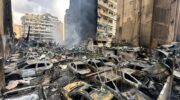
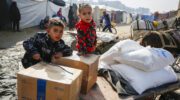
Since 2007, Israel has imposed a land, air, and sea blockade on the Gaza Strip, which the UN classifies as collective punishment – a practice prohibited by international law. Millions of Palestinians live without freedom of movement, drinking water, electricity, and medicines. With each Israeli offensive, thousands of civilians are massacred, homes and hospitals are destroyed, and entire neighbourhoods are razed.
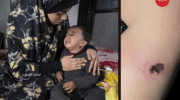
The current scenario of indiscriminate attacks on hospitals, schools, and refugee camps is described by international law experts and UN rapporteurs as ongoing genocide, due to the scale of the destruction and the explicit intention to expel or exterminate the original Palestinian population of Gaza.
In the face of this reality, Hamas’s armed resistance should be understood not as terrorism, but as the exercise of a people’s right to self-defense under occupation and ethnic cleansing. The Palestinian struggle is, in essence, a struggle for physical and cultural survival in the face of a colonial project to eliminate all forms of life in Palestine.
The framing of Hamas as a terrorist group is a political construct of Israel and its Western allies, without a basis in international law. Palestinian resistance, whether armed or not, is recognized as legitimate by the UN, the BRICS countries, and international treaties whenever it is intended to confront foreign occupation and colonial oppression.
Calling Hamas “terrorist” is an attempt to delegitimize the struggle of a people seeking freedom, justice, and self-determination. The truth is that Israel, as the occupying power, systematically violates international law, practices apartheid, and commits war crimes and crimes against humanity.
Hamas is an integral part of the Palestinian resistance and must be understood as a national liberation movement, not as terrorism. Recognizing this fact is a fundamental step towards a fair and honest reading of the conflict and for seeking a solution based on historical truth, justice, and the right of peoples to self-determination.
Sayid Marcos Tenório is a historian, specialist in International Relations, founder and vice-president of the Brazil-Palestine Institute (Ibraspal).
RELATED:
- Hamas’s 2017 Charter: Full Text
-
Why As A Christian, I Won’t Be Condemning Hamas Anytime Soon
- The New York Times Repeated Israeli Claims of Hamas Stealing Aid Without Evidence
- No Proof Hamas Routinely Stole U.N. Aid, Israeli Military Officials Say
- Why Israel’s demand for Hamas to disarm is a red herring
- Hannibal Directive: Israeli troops ‘killed civilian during Hamas attack and covered it up’