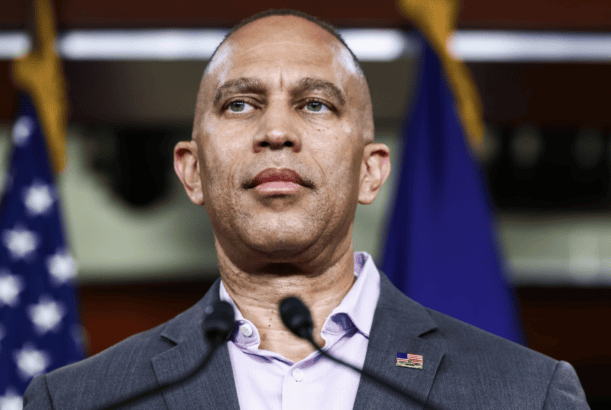
Hakeem Jeffries, House minority leader, and Pete Aguilar, third highest ranking House Democrat, oppose Massie’s amendment. Both are major AIPAC recipients.
By Chris Stein, reposted from The Guardian , July 14, 2026
*EDITOR’S NOTE: Hakeem’s action came just weeks after his fundraising committee received the largest earmarked disbursement in the history of AIPAC’s political action committee, according to Sludge. “AIPAC opposes the amendment and is urging its supporters to pressure members of Congress not to pass it.” “Other members of Jeffries’ House leadership team have received six-figure sums earmarked by AIPAC PAC this cycle, through May: Reps. Pete Aguilar ($600,000); Ted Lieu ($375,000); Katherine Clark ($261,000); and Joe Neguse ($166,000).” A major AIPAC donor is Daniel Och, a billionaire hedge fund investor with a record of giving to pro-Israel causes.*
Top House Democrats split on Tuesday (July 14) over a proposal to block aid for Israel’s military, with two of the party’s highest-ranking lawmakers saying they will oppose the effort while the chair of the progressive caucus encouraged his colleagues to back the defunding.
The debate over an amendment introduced by Republican congressman Thomas Massie to halt $3.3bn in aid for Israel – the majority of which would go to its military – comes as Democrats grapple with a rebellion among their voters over the party’s support for the Middle Eastern ally, which has fueled the defeats of a series of congressional incumbents in recent primaries.
The proposed amendment would affect legislation funding the state department and related agencies for the coming fiscal year, which the House of Representatives is expected to vote on this week. House minority leader Hakeem Jeffries circulated a letter among Democrats saying he would vote against Massie’s provision, the New York Times reported, calling it “overly broad”.
He warned the amendment could cut off funds for humanitarian aid programs and complicate efforts to counter militant groups like Hamas and Hezbollah. The minority leader’s office did not respond to a request for comment.
“In my view, there are more decisive ways to achieve the urgent change necessary when it comes to the far-right Netanyahu government,” Jeffries wrote. He also accused the House’s Republican leaders of “trying to weaponize an amendment they do not support for nakedly partisan reasons”.
However, he said, he would not launch a formal effort to sway his party’s vote, citing “the strongly held views throughout the caucus in this important area of foreign policy”.
Jeffries was joined by Pete Aguilar, the third-highest-ranking House Democrat, who told a press conference: “It’s clear that the Netanyahu administration has done everything they can to isolate Israel, and we need to ensure that we are building more friends in the region, not having fewer.”
In a letter to members of the congressional progressive caucus obtained by the Guardian, its chair, Greg Casar, said he would vote yes on the amendment, and encouraged his colleagues to join him. “The American people are crying out for an end to US tax dollars subsidizing Israel’s military,” he wrote.
Nodding to the losses of three Democratic incumbents in recent primaries to candidates who vowed to take a hard line on Israel and the government of Benjamin Netanyahu, Casar said: “The Democratic party needs a new approach to Israel and Palestine.
“I hope you will join me in beginning that process by voting yes on this amendment.”
Joe Biden’s support for Israel following the 7 October attack rocked his aborted bid for a second term, and has haunted some Democratic incumbents who sought re-election this year. In Colorado, the longtime congresswoman Diana DeGette last month lost her party’s nomination to Democratic socialist Melat Kiros, while in New York, incumbents Dan Goldman and Adriano Espaillat fell to democratic socialist primary challengers who criticized their stance on Israel.
The issue has loomed large in Missouri, where freshman representative Wesley Bell is facing a challenge in the Democratic primary from Cori Bush, the former congresswoman he ousted in 2024 with the help of heavy spending from pro-Israel groups. It’s also a factor in the primary to replace the retiring Democratic senator Gary Peters in Michigan, where the former public health official Abdul El-Sayed has criticized his opponent Haley Stevens for her support of Israel.
Jeffries and Aguilar signaled their own support for the US rethinking its approach to Israel and Netanyahu, whose government has faced accusations of genocide from international commissions over its incursion into Gaza following the 7 October attacks.
In his letter, Jeffries called for “a major reset” in relations between the two countries based on two principles: a continued US commitment to Israel’s right to exist and the creation of a Palestinian state. With a 10-year memorandum of understanding signed under Barack Obama with Israel soon to expire, Jeffries wrote that the next agreement should “strictly adhere to our human rights laws and values” and acknowledge Israel’s ability to afford its own weapons.
Aguilar acknowledged to reporters that “there needs to be a change in the relationship moving forward with Israel” but downplayed the impact on his strategy of the views of lawmakers who may win election in November.
“We’re not thinking about what a Democratic candidate is going to say in December after they’re sworn in … that’s not part of the calculus,” he said.
Chris Stein is a senior politics reporter for Guardian US, based in Washington
(2/2) Massie Revives Effort to Strip NDAA’s Section 219 Combining US-Israeli Defense

The Kentucky Republican and vocal critic of tying U.S.-Israel defense had his first amendment blocked.
By Haley Fuller, reposted from Military.com, July 14, 2026
Rep. Thomas Massie (R-Ky.) plans to reintroduce an amendment removing a provision from the Fiscal Year 2027 National Defense Authorization Act (NDAA) that would substantially expand military technology cooperation between the United States and Israel.
The provision, which was renumbered from Section 224, would establish a United States-Israel Defense Technology Cooperation Initiative. It would require the defense secretary to appoint an official responsible for coordinating joint research, testing, weapons development, technology integration and industrial cooperation between the two countries.
The initiative would cover areas including missile defense, artificial intelligence, autonomous systems, cybersecurity, quantum technology, electronic warfare and weapons co-production.
Why the Amendment Was Blocked
The House Rules Committee declined to permit a vote on the amendment during its June 29 meeting.
The committee controls which proposed amendments may reach the House floor, and the Massie-Khanna proposal was not included among those approved for debate.
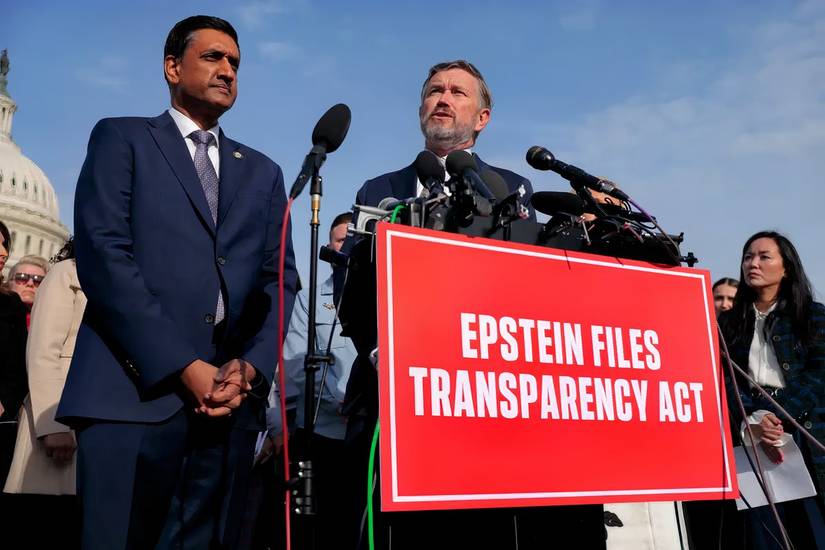
That decision blocked the amendment without requiring the full House to take a public position on Section 219. Khanna criticized the move, writing, “Congress has blocked the amendment [Thomas Massie] and I introduced to stop the integration of our military with Israel’s. It is unconscionable to not even have a vote. We will be continuing on and will not be intimidated by the pro-Israel lobby.”
The committee’s decision did not settle the issue, however. The House needed to approve a separate resolution establishing the terms for debating the NDAA before lawmakers could consider the bill. On June 30, that resolution failed by a vote of 198-224, preventing the House from proceeding.
“My amendment to strip section 219 from the NDAA was rejected last week by the Rules Committee without even a debate, but their rule for the NDAA didn’t pass the House,” Massie wrote July 6. “When we reconvene, I will offer my amdt again to strip the merger of our military supply chain with Israel’s.”
Concerns About Sovereignty and Technology
Massie argues that Section 219 goes beyond ordinary cooperation with an ally because it would place Israeli technology and companies more deeply inside the American military’s research, acquisition and supply systems.
“This goes well beyond our pre-existing military relationships, such as with Five Eyes nations, or our more conventional defense partnerships with foreign militaries that are typically limited to information sharing, joint exercises, or bilateral development of specific weapons contracts,” Massie said.
He called the provision an “unprecedented escalation of foreign involvement” and said its enactment would amount to Congress “fully capitulating our nation’s autonomy to foreign influence.”
“If the provision in the NDAA to integrate/synchronize the U.S. and Israeli militaries … makes it out of committee, I’ll offer an amendment to strip it from the bill on the floor,” he wrote. “We are a sovereign country.”
Supporters of the provision describe it differently.
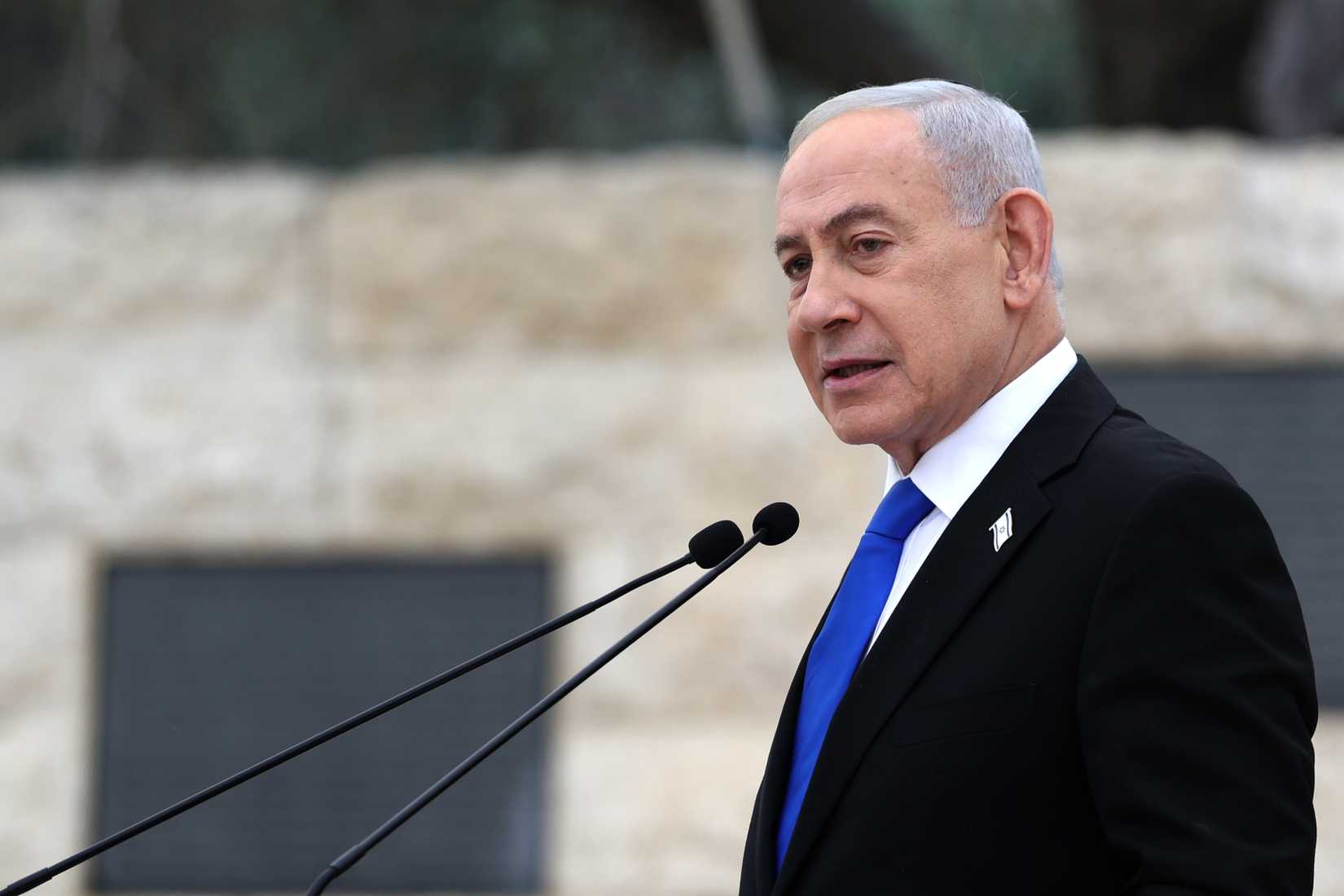
Israeli Prime Minister Benjamin Netanyahu has characterized the broader proposal as an effort to shift U.S.-Israel defense cooperation “from aid to partnership.” Before Congress introduced Section 219, Netanyahu said he wanted to eventually phase out direct U.S. military aid to Israel and instead deepen the countries’ defense partnership through expanded joint development and industrial cooperation.
Rep. Adam Smith (D-Wash.), the ranking Democrat on the House Armed Services Committee, shifted his position after initially defending the U.S.-Israel cooperation language during committee markup.
The reversal also came after Smith had called for an independent U.S. investigation into the killing of Ayşenur Ezgi Eygi, a Washington constituent and Turkish American activist killed by Israeli forces in the West Bank.
Smith’s office did not respond to questions about why he initially backed integrating U.S. defense technology and intelligence-sensitive systems with the same government whose conduct he had already urged the U.S. to independently investigate.
Unless the committee changes its earlier decision, Section 219 could remain in the bill without members ever casting a separate recorded vote on the proposed expansion of U.S.-Israel military integration.
Haley Fuller is a contributing writer for Military.com and a former U.S. Marine Corps captain whose work bridges the worlds of military service, law, and public accountability
RELATED:
- Khanna Becomes First in Congress to Sign ‘Peace Pledge’ Promising to Reject AIPAC Funds
- AIPAC affiliate has funded lavish trips to Israel for dozens of Congress members since 7 October, filings reveal
- House blocks Massie-Khanna effort to kill US-Israel integration
- Thomas Massie Won’t Back Down
- Is America Truly Becoming a “Zionocracy?”