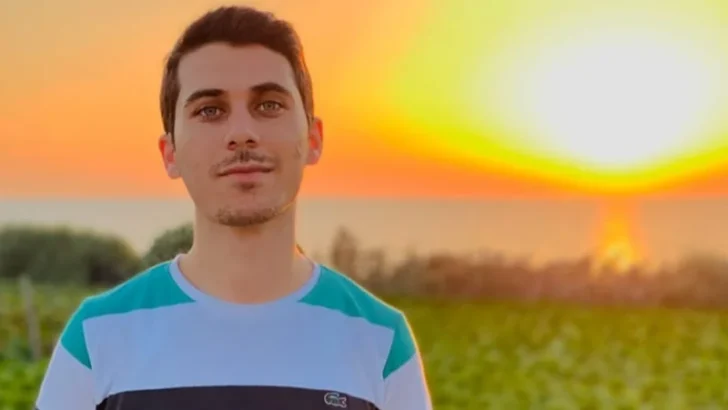
Israeli soldiers seized three brothers and used them as human shields to disarm traps and clear dangerous routes at gunpoint, one brother never returned.
By Amro Rashad Abo Aisha, Reposted from Electronic Intifada, March 19, 2026
My family and I evacuated from our home in the Tel al-Hawa neighborhood in Gaza City the first week of genocide.
After that, we had to evacuate many more times to escape Israeli bombs. We went from family home to family home, from al-Zahra in central Gaza to al-Tuffah in Gaza City, and then to the north and back again.
In November 2023, the first truce was brokered and then broken – by Israel – and my parents, eight brothers and I were again forced to evacuate so-called red zones for green zones, though nowhere was safe from Israeli bombs.
In December of that year, we ended up at my aunt’s home in al-Rimal neighborhood, near Palestine Square, in Gaza City.
On 6 December, Israeli troops invaded al-Rimal, despite its being a “green” zone. We were concerned, but as more and more people from the east, from al-Tuffah and Shujaiya, evacuated to the area, we were reassured and still felt some sense of safety.
This sense of safety quickly collapsed when an Israeli tank stationed itself right outside my aunt’s apartment building. We had no chance to evacuate, so we stayed put.
We moved to the stairwell inside the building – an area about 15 meters squared – and remained quiet, hoping that the soldiers would leave. We hid in the stairwell for 36 hours, only entering the apartment itself for food and the bathroom. The apartment was dangerous to be in because it overlooked the street where the tank was stationed.
To go to the bathroom we crawled on the floor, beneath the windows, hoping to remain undetected.
Yet the tank eventually fired on the building, targeting the first and fifth floors. We were in between them, on the third floor.
The building did not collapse on us, and we stayed in the stairwell.
The next day, around 6 pm, soldiers stormed the building next door. We could hear them speaking Hebrew, but the 60 or so residents of our building remained quiet.
Then, without any warning, our neighbor’s baby started to cry. The soldiers in the next building heard the wailing, and we could hear them making their way toward us.
One soldier appeared and screamed at us in a broken Arabic accent, “Yallah, kulo bara.” Come on, everyone outside.
I was not panicking at this time, as I had heard that the army would let people free when they found them in fighting areas.
But this was not how it went for us.
Abuse and terror at the hands of the occupation
Everyone in the building was forced onto the street.
The front gate was locked, so I had brought the key down and headed there to unlock it. I was about four meters from the gate when an Israeli soldier shot the lock about 20 times and opened it.
I quickly got back into the line that they had forced everyone to stand in.
I was surprised by the number of soldiers there. There were about 50 of them – about the same number as us – and in addition to that, two tanks were stationed nearby with their artillery pointed at us.
The soldiers separated the women and children from men. My mom and two youngest brothers – aged 13 and 7 – were told to walk south in a line.
Yet my brother Asem, who was only 16, was forced to come with the men, along with my brothers Adel, 27, Abdullah, 25, Yousef, 24, and myself.
The soldiers led us to Palestine Square, about 70 meters from the building. They ordered us to raise our hands, to not look around and to stay in line.
At the square, the soldiers ordered all of us to remove our clothing. It was very cold outside, and we did so.
They commanded us to sit on the ground, raise our hands up and keep our heads down.
After 30 minutes, they took us to the entrance of a nearby building that the soldiers had seemingly set up as a kind of impromptu headquarters. They tied our hands behind our backs tightly, blindfolded our eyes and kept us standing for two hours.
I remember my brother Yousef fell to the ground, though I did not see this, I could only recognize his scream. Also, my father, who is in his fifties, was suffering because the plastic handcuffs were so tight. Afterward he told me that his hands went numb, that it was like his hands had been cut off.
After two hours of standing, and with the blindfold on, I felt like I was in a daze. My body felt unstable, and I wished that this was a dream and not actually happening.
At this time, the soldier who had identified himself as the battalion commander delivered a speech. We all stood before him, naked and blindfolded.
“Now I will start an investigation, and I need the truth only,” he said.
Some of our blindfolds were removed and he pulled out his phone and showed us a picture of a dog eating a corpse. He scrolled through many images on his phone like this.
“This is what will happen to anybody who lies to me.”
Interrogation and humiliation
At 10 pm, the commander came and took my father, brothers and me to the ground floor of the building. They put us in the building’s housekeeper’s room.
They beat us one after the other: punching, slapping and kicking. They put the barrel of a gun to my head.
I remained quiet this whole time, as I did not feel afraid of death at this moment. They smoked cigarettes and put out the burning ends on my ear and my back.
After that, they grabbed us one by one to interrogate us privately.
They asked me, “Are you Hamas? Do you know any Hamas fighters?”
“Do you have a girlfriend? Are you gay?”
Then other questions like, “What is your major? How much is tuition?”
Very late, possibly around midnight, the commander called out for Yousef, Adel and Abdullah by name. I was blindfolded and did not see where he took them.
In the entryway it was still me, my father and Asem.
They left us in the indoor entrance area the rest of the night, sitting on broken glass and rubble.
As the soldiers walked past they would hurl insults at us and at Yahya Sinwar and at God. They called us “zombies” and “sons of bitches.” One poured cold water on us.
We remained like this, blindfolded and naked in the cold until dawn the next day.
Three brothers taken, only two return
At dawn, two soldiers got us up on our feet. It seemed that the commander had given an order to release us.
They removed the blindfolds. A soldier told us to follow him.
We walked about 500 meters, to the last of the tanks, and to our families.
With the blindfolds removed, I saw that they had not released my brothers, as well as another man named Nafeth Emad.
We went to a nearby school that was acting as a shelter and stayed in my aunt’s classroom (she is a teacher) to live in temporarily. Twenty-two of us were in a four-by-six-meter classroom.
We lacked food, clothes, mattresses and even blankets. We all shared what little we had.
The next day, my father and I went to Al-Shifa Hospital to ask about my brothers. There was no word of them.
Then, the day after that, two of my brothers, Yousef and Abdullah, appeared at the school. Adel was not with them.
They told us that they had been used as human shields. The soldiers had forced them to perform dangerous tasks.
They went down into tunnels and into other dangerous places, all before the soldiers themselves. The soldiers threatened that if anyone refused to do this, then their brother would be shot and killed.
We asked them about Adel and Abdullah replied, “We performed many operations, but during the last one, Adel went out and never came back. I asked one soldier about him, and he replied that they released him.”
“There is no information”
My brother Adel Rashad Rizq Abo Aisha was born in 1998 in Gaza City. He was successful in school and at the Islamic University of Gaza, where he majored in industrial engineering and then worked at the Palestinian National Beverage Company.
He enjoys soccer, riding his bike, playing oud and playing chess. He intended to marry before the genocide began, and he had even prepared an apartment. The apartment was bombed, spoiling his plans.
Day after day we have waited for Adel’s return. Fifteen days later, near the end of December 2023, the Israeli troops withdrew from the area, but only after they had completely destroyed everything in their wake.
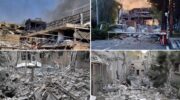
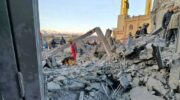
It was a massive destruction, unlike any I had seen before – much more so than the 2008-9 Israeli war on Gaza, when our house in the al-Nasr neighborhood was bombed and destroyed by Israel.
There were human bodies, many of them decomposing, in the streets. I checked all of them to see if anyone was alive.
I was looking for Adel, but I did not find him.
After the Israeli withdrawal, we contacted the International Committee for the Red Cross to see how we could find out what happened to Adel. The Red Cross told us that it would be in touch if it received any information.
When we reach out to the Red Cross, the answer is always the same: “There is no information.”
This is not what we want to hear, but it also gives us hope, as we believe he could be alive and detained in Israel. Yet with every prisoner release, Adel has not been among them. My uncle heard from one released prisoner that they had heard his name at Ketziot, an Israeli prison in the Naqab region. This news was a small bit of hope, especially for my mother, but nothing has come of it.
We contacted a lawyer in the West Bank, to see if he could find any information about Adel, yet the response was the same as the Red Cross’s: no information.
By the second truce, in January 2025, we were optimistic to find his name with the released prisoners, but again we found nothing.
It was joyful to see the prisoners released, but we could not help but feel disappointed. We still do not know anything about Adel’s fate.
Amro Rashad Abo Aisha is a student of English and writer in Gaza.
RELATED:
- Israeli forces use Palestinian women, elderly men as human shields in Gaza and the West Bank
- Israeli use of human shields in Gaza was systematic, soldiers and former detainees tell the AP
- ‘We are holding slaves’: Israeli soldier reveals systematic use of Palestinian ‘human shields’ in Gaza
- Freed Palestinian prisoners tell of horrific rape, torture in Israeli detention
- Hostages, captives, prisoners: Western media still privileges Israeli over Palestinian lives