Reposted from Electronic Intifada, July 04, 2025
Israeli forces massacred Palestinians seeking food supplies and sheltering in tents in Gaza during June as an ongoing blockade on fuel left humanitarian operations in the territory on the brink of total collapse by the end of the month.
All fuel retrieved from accessible reserves in Gaza has been allocated, the UN Office for the Coordination of Humanitarian Affairs said on 2 July.
“As a result, life-saving services, including health, water and sanitation, telecommunications, and protection services, are at imminent risk of shutting down,” according to OCHA.
Meanwhile, Israel launched an unprovoked attack on Iran during June, setting off a 12-day confrontation, while settlers attacked Palestinian communities in the West Bank, where families in Jenin, Tulkarm, and Nur Shams refugee camps have been repeatedly displaced since the beginning of the year.
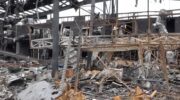
Israel continued to destroy structures in those camps, which “remain inaccessible to residents and humanitarian actors,” according to OCHA. “Israeli forces fire at residents who are attempting to return to their homes.”
As of 2 July, according to the Palestinian health ministry in Gaza, at least 57,012 Palestinians had been killed in the territory since 7 October 2023.
This cumulative figure “includes 223 fatalities who were retroactively added on 2 July 2025 after their identification details were consolidated and approved by a ministerial committee,” the UN Office for the Coordination of Humanitarian Affairs stated.
The health ministry said that during that same period, 640 people had been killed and nearly 4,500 injured while trying to access food supplies since 27 May, the date that the Gaza Humanitarian Foundation began operating distribution points.
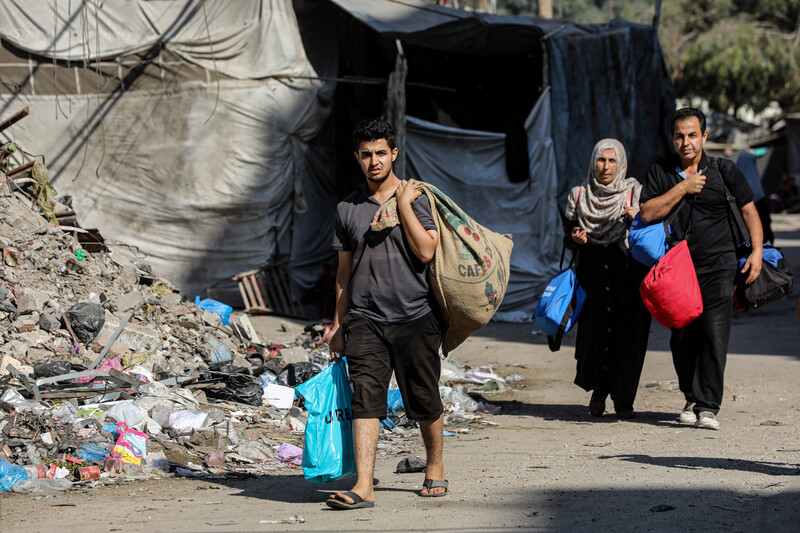
As of 2 July, more than 714,000 people, or a third of Gaza’s population, [had been displaced over the past three months,” according to OCHA.
OCHA added that “at least 107 aid workers have been killed since the start of 2025, including nine in the past week, bringing the total to 479 since October 2023, among them 326 UN staff.”
The aid workers killed in June included Ramzi Khader, an employee of the UN Development Program, who perished in an Israeli airstrike on his home in Jabaliya, northern Gaza, on 6 June, along with 36 members of his family, including his wife and six of their children.
Aid distribution in Gaza “has become a death trap,” Philippe Lazzarini, the head of UNRWA, the UN agency for Palestine refugees, stated on 1 June.
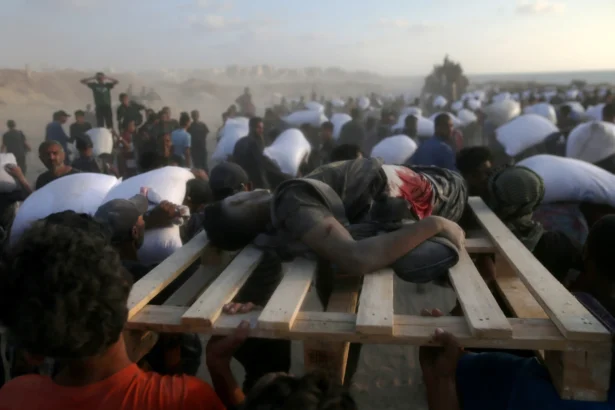
At least 32 Palestinians were killed that day, and dozens were seriously injured while attempting to access food at distribution points set up by the Gaza Humanitarian Foundation, a militarized American-Israeli scheme that began operations during May.
The foundation is “a hodgepodge of Israeli and US intelligence operatives, sketchy finance firms in the US, mercenaries and private military contractors posing as humanitarians,” the former senior UN official Craig Mokhiber told The Electronic Intifada during June.
He referred to them as representing the “final phase of the genocide.”
Benjamin Netanyahu, the Israeli prime minister, has said that the Gaza Humanitarian Foundation scheme has allowed Israel to ease international pressure and prolong its genocidal campaign in Gaza.
“The weaponization of food for civilians” and preventing access to life necessities “constitute a war crime and may constitute elements of other international crimes, including genocide,” the UN human rights office warned at the beginning of June.
In an exposé published by the Haaretz newspaper on 27 June, Israeli officers and soldiers admitted that they were ordered to shoot at crowds of people gathered near food distribution points.
One unnamed soldier told the paper that people seeking aid are “treated like a hostile force – no crowd control measures, no tear gas – just live fire with everything imaginable: heavy machine guns, grenade launchers, mortars.”
“Then, once the center opens, the shooting stops, and they know they can approach,” the soldier added. “Our form of communication is gunfire.”
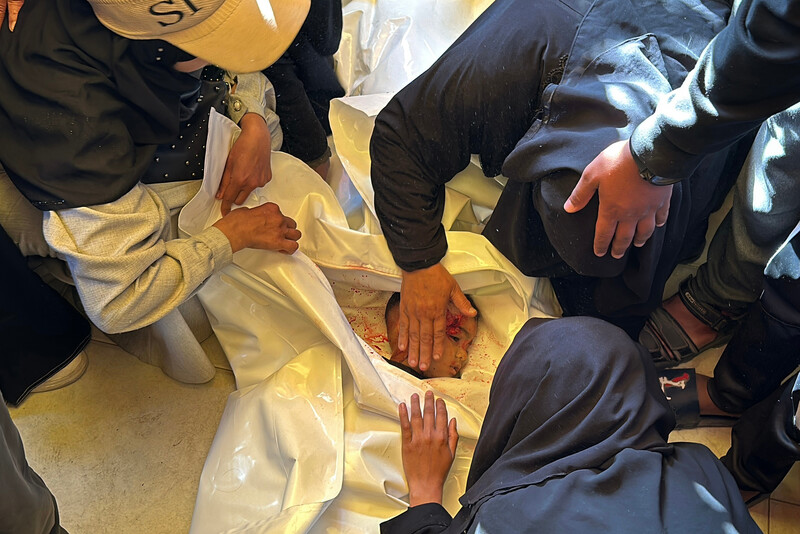
On the second day of June, Israeli forces shot and killed Yousef Fuqahaa, 14, “suddenly and without warning” at an entrance to Sinjil, a village near Ramallah in the West Bank, according to Defense for Children International-Palestine.
The military claimed that the boy threw stones and bottles at soldiers, “an allegation rejected by eyewitnesses,” according to the rights group.
After shooting Yousef, “Israeli forces raided a nearby house that had surveillance cameras and deleted footage of the attack,” DCIP added. Israel is withholding the boy’s body.
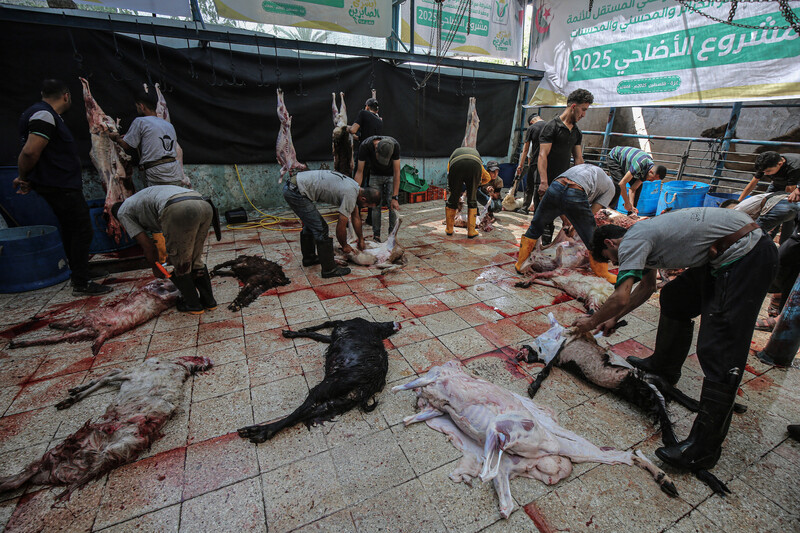
Two additional Palestinian children were killed by Israeli forces in the West Bank during June.
On 23 June, Ammar Hamayel, 13, was shot in the back by Israeli forces who were “stationed in a concealed position” while walking with a friend near a settlement bypass road next to Kafr Malik, a village near Ramallah, according to DCIP.
Israeli forces assaulted family members and neighbors who attempted to reach the boy and provide aid, and prevented an ambulance crew from assisting the boy, who the rights group said was an outstanding student and winner of local and international Muay Thai competition titles.
“Israeli forces handed over Ammar to a Palestinian ambulance which brought him to the Palestine Medical Complex in Ramallah, where he was pronounced dead,” DCIP added.
On 26 June, an Israeli sniper positioned on the roof of a Palestinian home killed Rayan Houshyeh, 13, during an incursion in al-Yamoun village near Jenin.
According to DCIP, Rayan looked over a wall in an alley “to observe nearby Israeli forces when the sniper opened fire … striking him in the neck, abdomen, and thigh.” The sniper fired towards young men who attempted to reach the boy, who was pronounced dead upon arrival at the hospital.
Rayan was the 30th Palestinian child killed by Israeli forces in the West Bank during 2025.
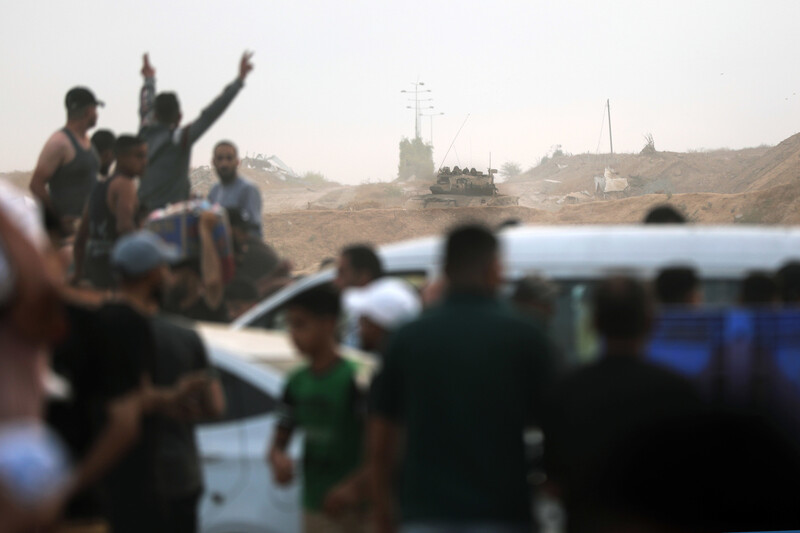
On 2 June, UN human rights experts demanded the safe passage of passengers aboard the Madleen, a Freedom Flotilla Coalition ship bound for Gaza.
“The people of Gaza have the right to receive aid through their own territorial waters even under occupation,” the experts said, “and the Coalition ship has the right to free passage in international waters to reach the people of Gaza.”
The ship was seized by Israeli forces a week later, on 9 June, and its 12 passengers, who included the prominent climate activist Greta Thunberg and two journalists, were detained in Israel and deported over the next several days.
Agnès Callamard, the head of Amnesty International, said that during its voyage, the Madleen “emerged as a powerful symbol of solidarity with besieged, starved and suffering Palestinians amid persistent international inaction.”
Meanwhile, Egypt detained hundreds of activists who traveled to the country in an attempt to reach Rafah and break the blockade on the Gaza Strip.
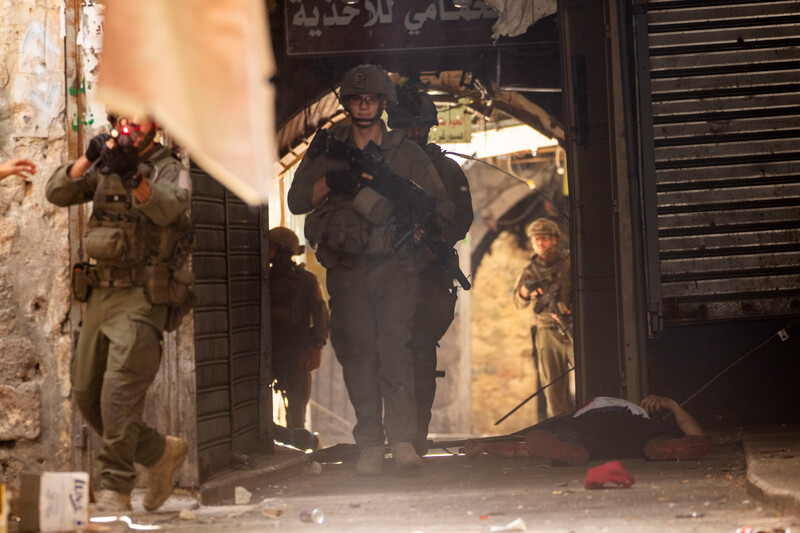
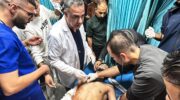
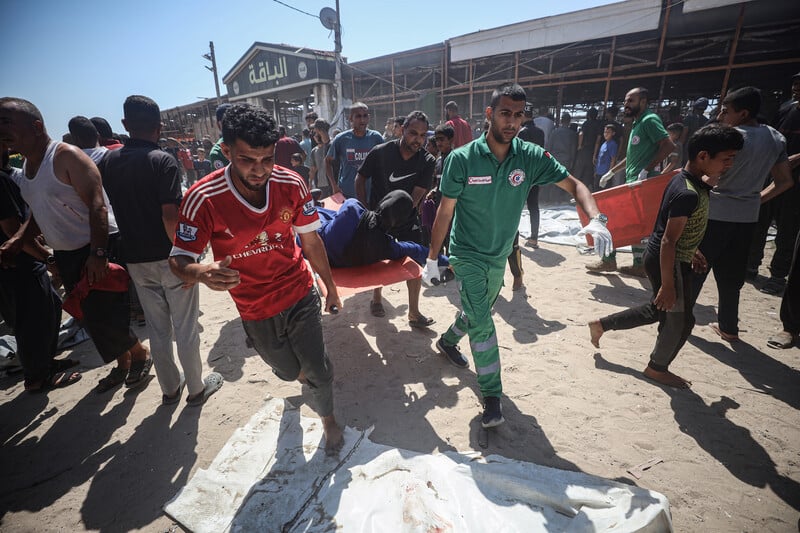
On 3 June, the Red Cross said that it “received a mass casualty influx” of patients injured while trying to reach an aid distribution site at its field hospital in Rafah, southern Gaza, earlier that day. Of those cases, 19 were declared dead upon arrival, and eight more died shortly thereafter.
It was “the highest number of weapon-wounded patients received in a single incident since the establishment of the field hospital,” more than a year ago, the Red Cross added.
At least 27 people were killed and 90 injured when Israeli forces opened fire on a crowd of thousands gathered at dawn near an aid site in Rafah that day, according to Euro-Med Monitor.
The Geneva-based group said within the past week that the Israeli military had killed and injured more than 600 Palestinians near aid distribution centers in areas under its control.
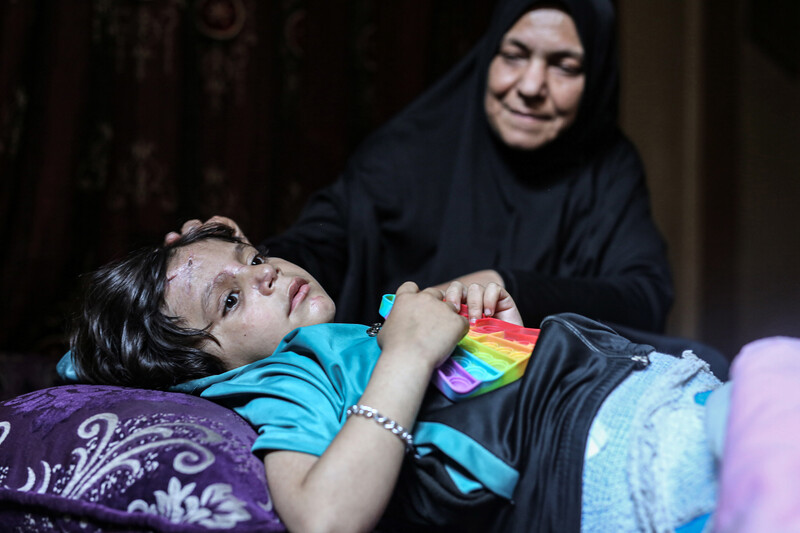
On 5 June, the World Health Organization warned that Gaza’s health system “is collapsing” with Nasser Medical Complex and Al-Amal Hospital at risk of becoming non-functional due to Israeli military encroachment, attacks, and forcible evacuation orders.
The facilities are the last two functioning public hospitals in the Khan Younis area, where most of the Strip’s population is now concentrated. “There are already no hospitals functioning in the north of Gaza,” the WHO said.
The following day, on 5 June, the Israeli military fired inside the compound of Al-Ahli Arab Hospital in Gaza City, killing four journalists.
Thirty people, including four hospital staff, were wounded in the “unprovoked assault against civilians,” according to the Episcopal Diocese of Jerusalem, which administers Al-Ahli Arab Hospital.
“This is at least the third instance of journalists apparently targeted and killed at hospitals,” according to the UN human rights office, which cited an attack on Nasser Medical Complex in April and an attack at Al-Awda Hospital in December.
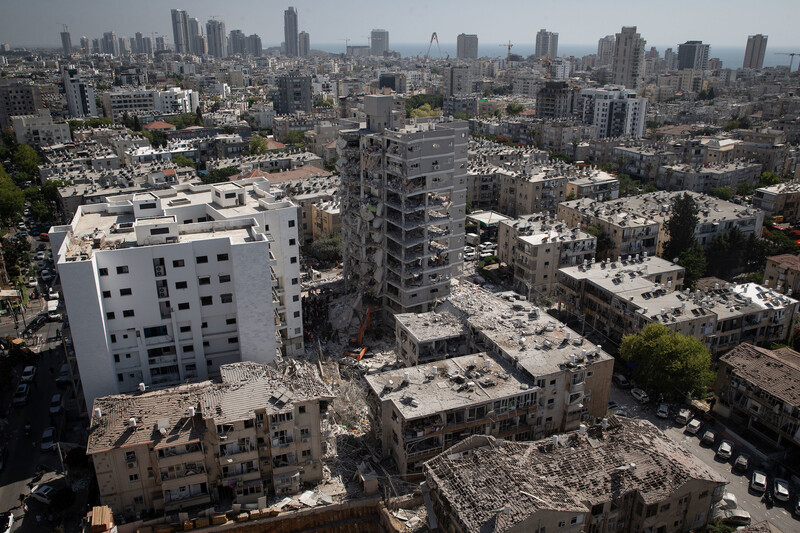
The UN human rights office said it had verified the killing of 227 Palestinian journalists in Gaza since October 2023.
The “apparent targeting of Palestinian journalists in Gaza, combined with the denial by Israel of access to foreign journalists,” appears to be a deliberate policy to “limit the flow of information … and prevent reporting on the impact of [Israel’s] attacks and denial of humanitarian assistance.”
More than 100 press freedom advocacy groups and international newsrooms demanded that foreign journalists be granted immediate and unrestricted access to Gaza and the full protection of Palestinian journalists.
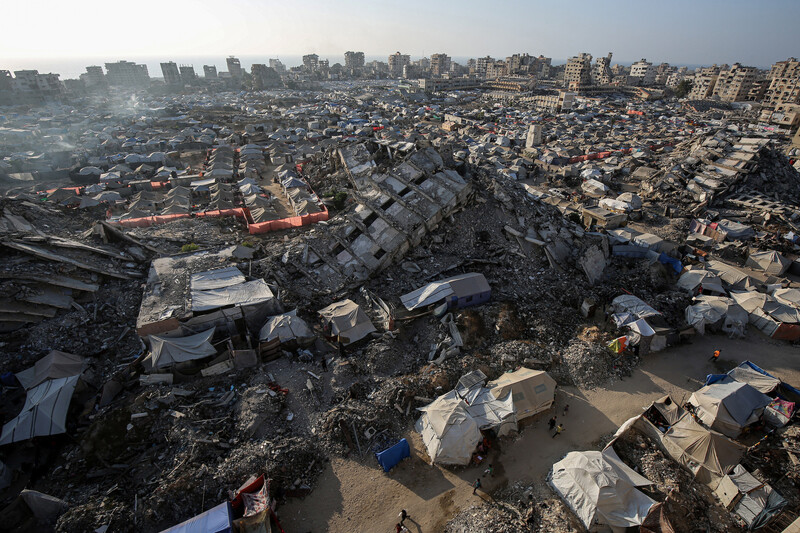
On 10 June, the World Food Program said that it dispatched 59 trucks carrying 930 metric tons of wheat flour destined for northern Gaza, but which was “stopped along the way and offloaded by hungry civilians in critical need of food to feed their families.”
The UN food relief agency said that it has only been able to “bring in small amounts of life-saving food and aid” into Gaza since Israel resumed limited humanitarian assistance on 19 May.
“This is largely due to delays or denials of permission for humanitarian movements due to expanded military operations,” the agency added.
Telecommunications were severed in Gaza City and northern Gaza on 10 June. The entire territory experienced telecommunications failure on 12 June after military activity damaged infrastructure.
Connectivity was partially restored on 14 June, but three days later, southern and central Gaza experienced a renewed blackout after a fiber was cut along al-Rashid Street.
“This marks the third major disruption within a week, highlighting the extreme fragility of Gaza’s telecommunications infrastructure and the urgent need for sustained safe access for repairs,” according to the Emergency Telecommunications Cluster, a global network of groups providing communications services in humanitarian emergencies.
The cluster added that “severely reduced data speeds and degraded mobile networks continue to undermine humanitarian coordination and prevent civilians from accessing life-saving information and assistance.”
Meanwhile, “telecom providers are facing critical shortages of fuel and engine oil, with limited reserves expected to be completely depleted within days,” the cluster said on 17 June.
“Without immediate resupply, generators powering the infrastructure are on the verge of failure, imminently threatening a total collapse of all communication services,” the cluster added.
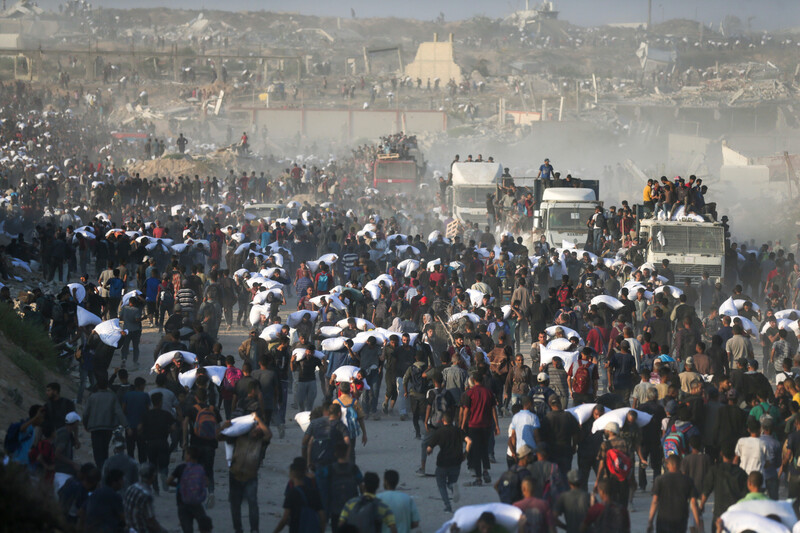
On 12 June, the Red Cross said that in the previous two weeks, its field hospital in Rafah “has had to activate its mass casualty incident procedure 12 times, receiving high numbers of patients with gunshot and shrapnel wounds.”
It had received 933 cases during that period, including 41 patients declared dead upon arrival. A majority of the patients were trying to reach aid distribution sites when they were injured.
“Medical personnel are struggling to cope with the overwhelming number of patients,” the Red Cross said. “They are working to save patients under constant exposure to stray bullets, endangering the safety of those providing and receiving medical care.”
“Supplies are being used faster than they can be replenished,” the Red Cross added.
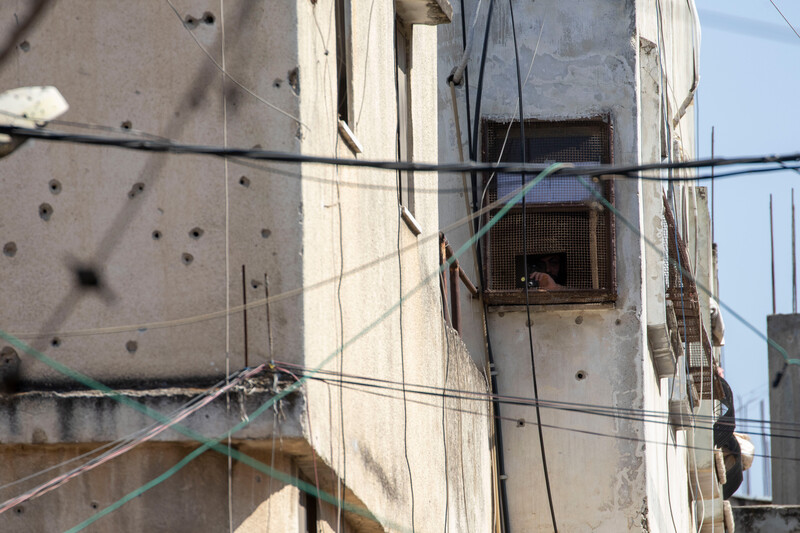
On 13 June, the UN Security Council failed to adopt a resolution introduced by Slovenia demanding a permanent ceasefire in Gaza, with 14 member states voting in favor and one member – the United States – voting against, with no abstentions.
Israel’s representative to the UN thanked the US and warned the General Assembly against wasting “more of your time” by holding an emergency meeting triggered by the veto of the resolution. He said that no UN resolution “will stand in our way.”
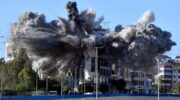
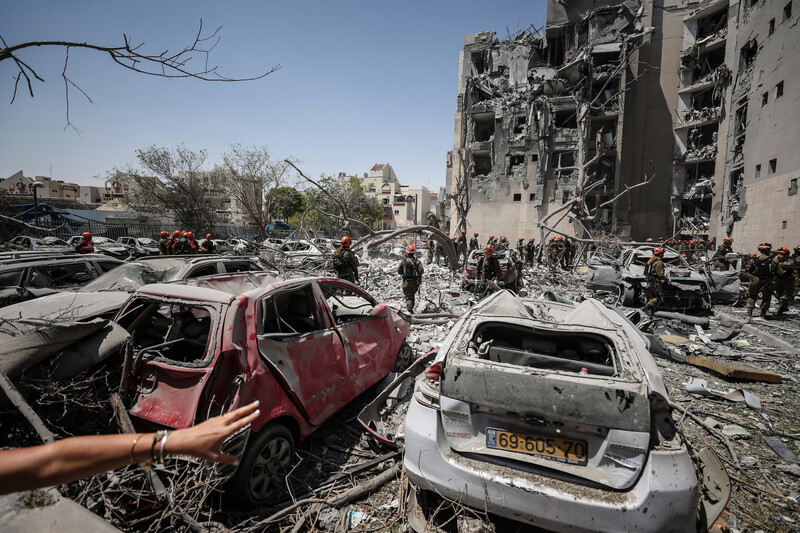
That same day, on 13 June, Israel launched a surprise and unprovoked attack on Iran, targeting the country’s military leadership and senior scientists.
Iran hit major population centers in Israel in response, destroying entire neighborhoods and exhausting the country’s supply of missile interceptors.
The extent of Iran’s blows to Israeli military targets is not fully known due to military censorship in that country.
The conflagration begun by Israel ended after 12 days following American strikes on three nuclear sites in Iran and a reprisal Iranian strike on a US military base in Qatar.
More than 600 people were killed in Iran, while 28 people were killed in Iranian strikes in Israel, including three women and a girl who died when a missile hit a building in Tamra, a Palestinian city near Haifa lacking bomb shelters.
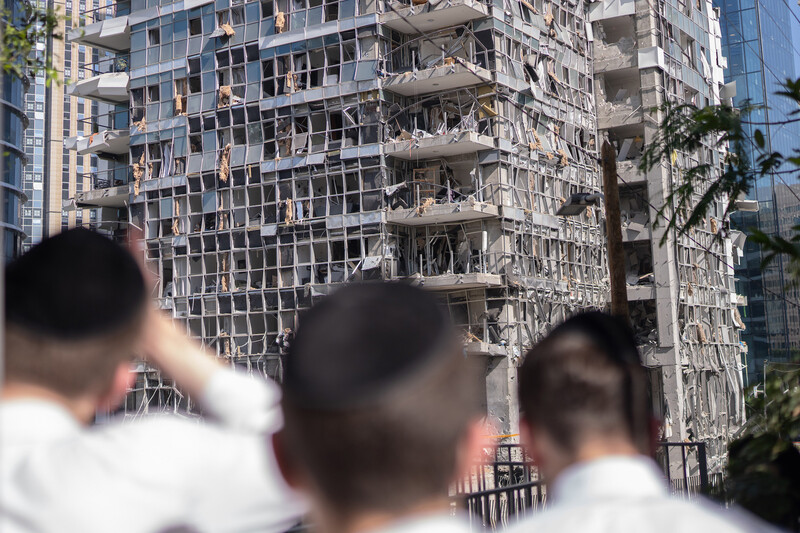
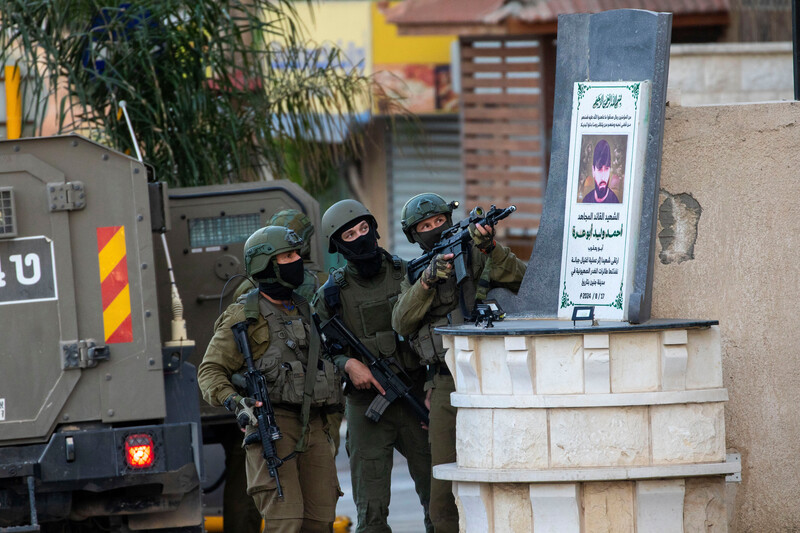
The UN monitoring group OCHA said that since 13 June, following the start of Israel’s offensive in Iran, it had documented “36 incidents whereby Israeli soldiers took over roughly 267 Palestinian homes [in the West Bank] … for periods ranging from several hours to a few days.”
“This has affected at least 1,300 people who, in most cases, returned to their homes to find their property vandalized,” according to OCHA.
“These include 237 housing units whose residents were temporarily evacuated in the six governorates in the northern West Bank,” OCHA added. Meanwhile, Israel closed most of its checkpoints in and around the West Bank and added new closures after the start of its attack on Iran, resulting in heavy traffic congestion.
Nearly 900 people in Gaza were killed during Israel’s offensive in Iran.
On 14 June, the Red Cross raised alarm over Israeli evacuation orders around Nasser Medical Complex in Khan Younis in southern Gaza.
There will be no place for patients to receive specialized care if the hospital is forced to shut down, the humanitarian group warned.
In addition to specialized care, Nasser Medical Complex “provides blood bank services” that allow for blood transfusions at the Red Cross Field Hospital in Rafah and “forensic services and management of the dead,” the Red Cross said.
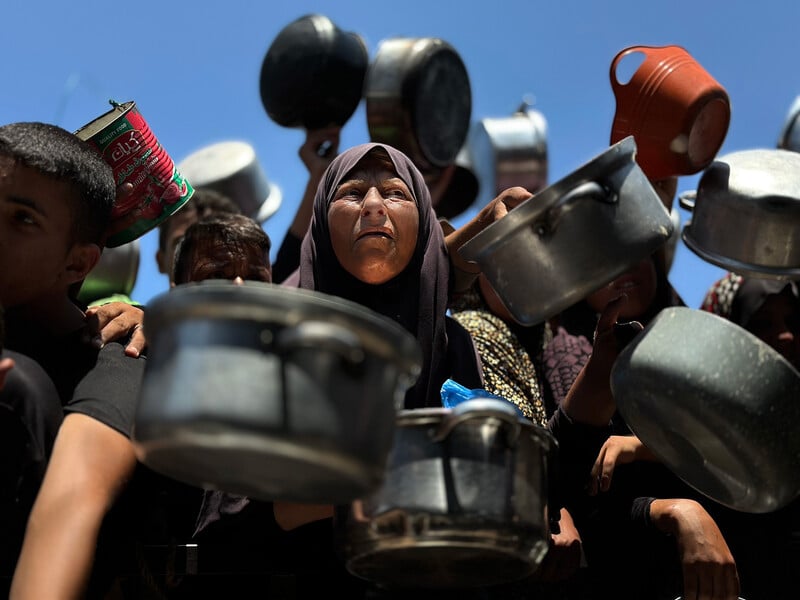
At least 70 people were killed and 200 injured when the Israeli military fired tank shells at a crowd of Palestinians waiting for UN food trucks in Khan Younis, southern Gaza, on 17 June.
It was the deadliest incident at an aid site after such mass casualty events near distribution points became an almost daily occurrence when an American-Israeli militarized aid scheme began operating in Gaza on 27 May.
Euro-Med Monitor, a human rights group based in Geneva, said that its field team in Gaza had documented the involvement of a local armed gang collaborating with the Israeli military in deadly attacks on people attempting to reach aid points.
The group said it also “received credible information that a foreign mercenary employed by the US security company overseeing the aid distribution center shot and killed a civilian” near Rafah, in southern Gaza, on 9 June.
A few weeks later, the Associated Press reported that it had obtained video and accounts confirming that “American contractors guarding aid distribution sites in Gaza are using live ammunition and stun grenades as hungry Palestinians scramble for food,” even when there was no “threat.”
Two contractors working for the Gaza Humanitarian Foundation said that Israel is gathering biometrics and other data via cameras installed at the distribution sites.
Israel is also facilitating the looting of humanitarian aid, fueling hunger and chaos in Gaza, the Palestinian human rights group Al Mezan said in a report published on 14 June.
The escalation of looting throughout May and early June points to “a systematic Israeli policy that weaponizes starvation, deprivation and chaos to further its genocidal campaign,” according to Al Mezan.
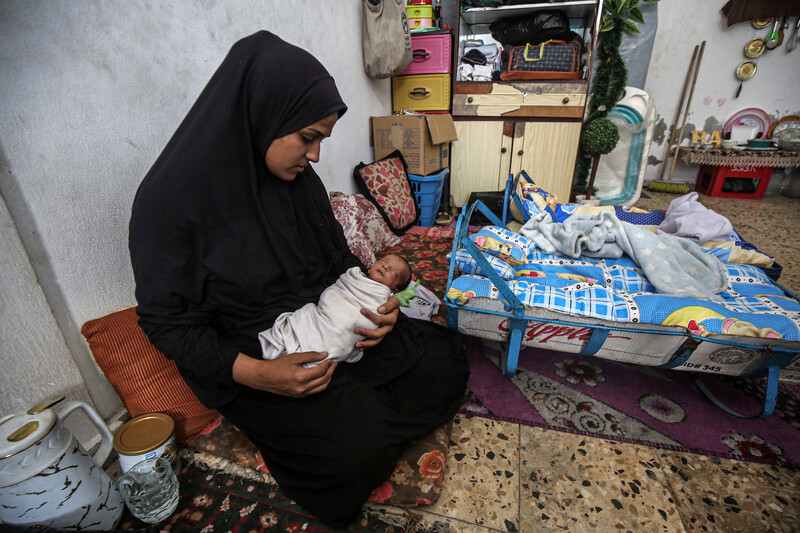
On 18 June, the UN’s sexual and reproductive health agency UNFPA warned that nearly 11,000 pregnant women in Gaza are reported to be at risk of famine and some “17,000 pregnant and breastfeeding women will need urgent treatment for acute malnutrition over the coming months.”
An estimated “one in three pregnancies are now considered high-risk, and one in five newborns are born preterm or underweight, requiring specialist care that is increasingly unavailable,” the agency added.
More than 190 trucks loaded with urgently needed supplies – including mobile maternity units, ultrasounds, and portable incubators for premature infants – have been denied entry into Gaza, according to UNFPA.
Also on 18 June, the UN human rights office called on the Israeli military “to immediately cease its use of lethal force around food distribution points in Gaza, following repeated instances of shooting and killing of Palestinians seeking to access food there.”
People with serious injuries are without access to medical treatment due to Israel’s “almost complete destruction of the health system across Gaza,” the UN human rights office added.
“They face excruciating pain and potential death,” the office added.
Civil order in Gaza has severely deteriorated due to Israel’s attacks, total blockade, and targeting of the civilian police force.
“As a result, Palestinians are increasingly facing the inhumane choice of dying from starvation or risking being killed while trying to access the little food that is available,” the UN human rights office said.
On 20 June, the UN human rights office condemned the killing and possible summary executions “of Palestinian staff associated with the so-called Gaza Humanitarian Foundation by armed men allegedly affiliated with Hamas.”
The human rights office said it had received information that armed men attacked a bus carrying local contractors on 11 June.
“The armed men stripped and beat the workers and shot some of them,” the UN office added. The workers were allegedly tortured, and 12 were reportedly killed.
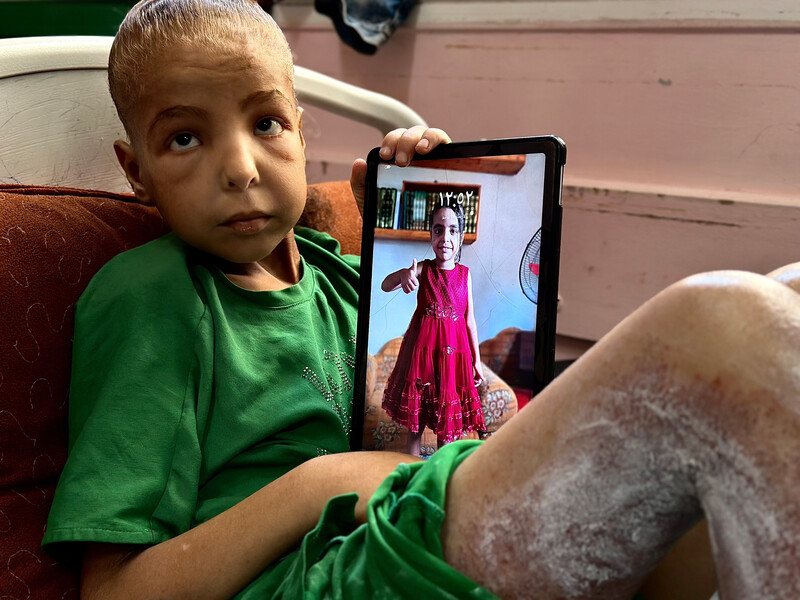
Malnutrition among children in Gaza “is rising at an alarming rate,” the UN children’s fund, UNICEF, stated on 19 June. The agency said that “5,119 children between 6 months and 5 years of age [were] admitted for treatment for acute malnutrition in May alone.”
Nearly 640 of these children have severe acute malnutrition, “the most lethal form of malnutrition,” UNICEF added.
Cases of acute malnutrition are likely to rise to the highest level since October 2023 unless Israel allows “the large-scale delivery of life-saving aid through all border crossings,” according to UNICEF regional director Edouard Beigbeder.
Defense for Children International-Palestine published a report on 24 June, “asserting [that] Israeli authorities have deliberately weaponized starvation as a method of genocide.”
This policy has resulted in “the preventable deaths and suffering of Palestinian children in Gaza that will carry negative impacts for generations to come.”
“Doctors Against Genocide contributed a comprehensive section on the devastating medical, developmental, and psychological consequences of starvation in children,” DCIP said.
“They warn of long-term and often irreversible effects, including stunted growth, neurological damage, weakened immune system,s and permanent cognitive impairment.”
Most families in Gaza were surviving on “just one notoriously poor meal per day” in Gaza, according to OCHA, “while adults routinely skip meals to prioritize children, the elderly, and the ill amid deepening hunger and desperation.”

The date 20 June marked the 100th day of a blockade on fuel entering Gaza, which remained in place at the time of publication of this story on The Electronic Intifada.
The same day, James Elder, the spokesperson for UNICEF, warned that without fuel, the desalination plants that remain in operation in Gaza at a reduced capacity “will cease completely.”
“Without fuel, trucking the millions of liters of water to people will stop,” he added. “At major production points, large numbers of donkeys are starting to replace trucks.”
Noting that a donkey cart can “barely carry 500 liters,” compared to the ability to carry 15,000 on a truck, Elder said that “even the donkeys are slowing – there’s barely enough food to keep them moving.”
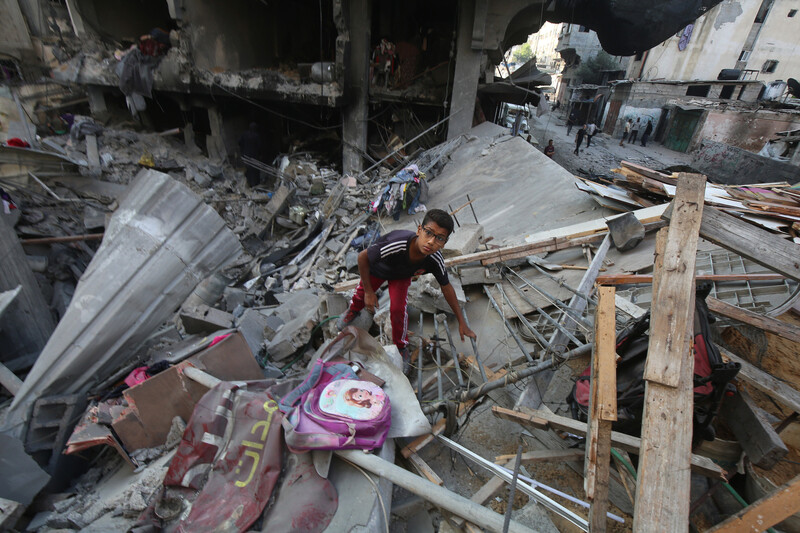
On 19 June, the Norwegian Refugee Council said that three months after Israel broke the truce on 18 March, “the shelter system in Gaza is on the verge of failure.”
More than 680,000 people in Gaza were newly displaced since mid-March, as more than 82 percent of Gaza’s territory is under displacement orders or declared no-go zones by the Israeli military.
The Norwegian Refugee Council added that “relentless displacement, access restrictions and the near-total destruction of housing have left hundreds of thousands of people without adequate shelter, and humanitarian actors without the means to assist them.”
The Palestinian Center for Human Rights released a report in June, finding that women and girls are disproportionately affected by the lack of basic necessities, including clean water and sanitation facilities, as well as an acute lack of privacy and heightened risk of gender-based violence.
Women and girls have resorted to extreme coping mechanisms, including limiting the frequency of showers, avoiding drinking water to reduce the need to use toilets, or using buckets in tents to relieve themselves, as well as using oral contraceptives continuously to suppress their menstrual cycles.
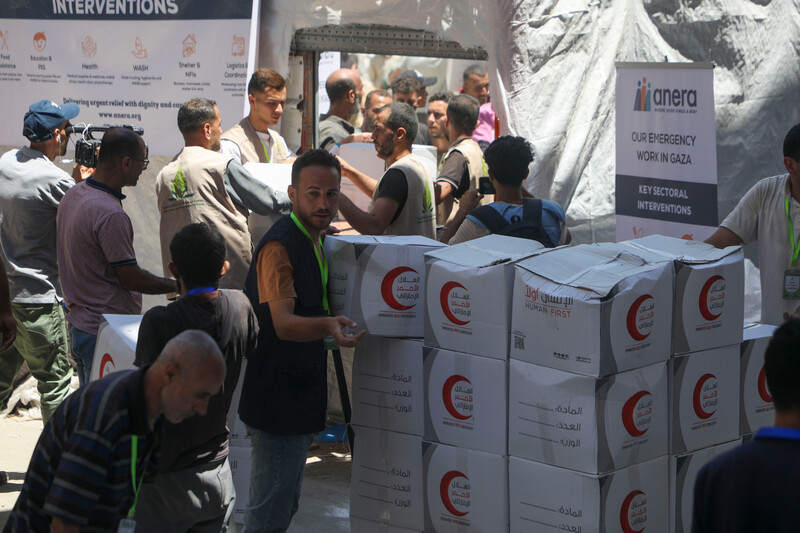
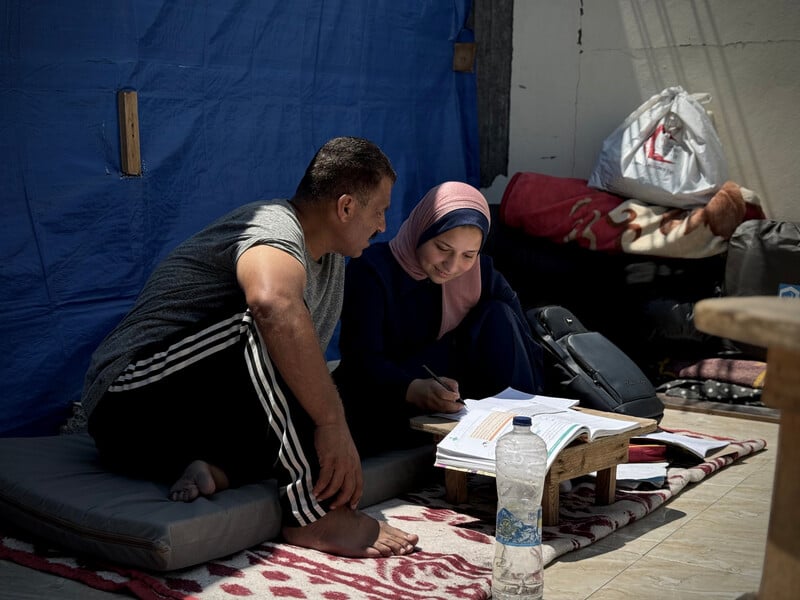
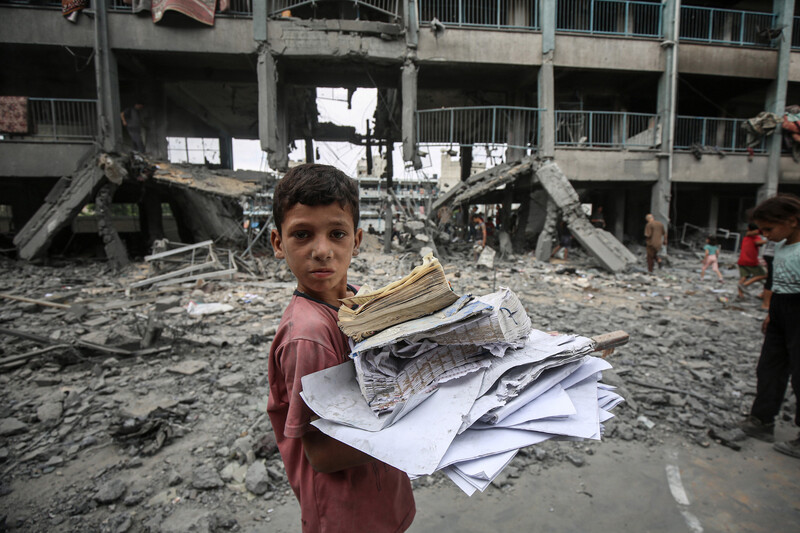
On 21 June, 49,000 high school students began their school leaving exams, known as tawjihi, in the West Bank and overseas, according to the Palestinian education ministry. Students in Gaza remain unable to sit for their exams for the second consecutive year, affecting more than 76,000 pupils.
The education ministry stated on 23 June that special arrangements would be made for high school students in Gaza to sit for their exams as soon as possible.
However, according to OCHA, “implementation of these plans remains contingent on a ceasefire, the lifting of restrictions on the entry of supplies, including tablets needed for the exams, and the reopening of border crossings.”
Meanwhile, OCHA warned in June that “the right to education of nearly 13,000 students, including more than 6,500 girls, is at threat should the Israeli authorities execute pending demolition orders against 84 schools across the West Bank, including East Jerusalem.”
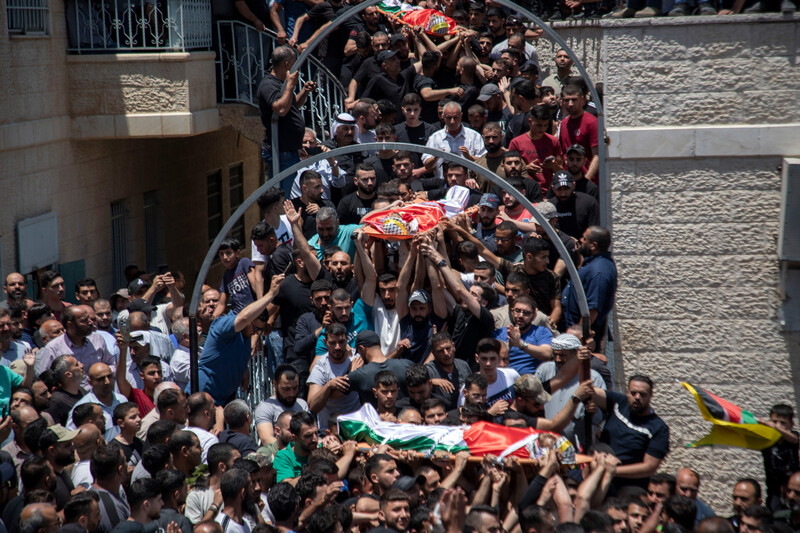
Israeli settlers attacked Kafr Malik, a Palestinian town near Ramallah in the occupied West Bank, on 25 June, leaving three Palestinians dead at the hands of the Israeli military.
According to OCHA, one of those killed “was a 34-year-old Palestinian father of two who, according to community sources, was shot in the head at point-blank range at the entrance to his home” while evacuating his wife and children.
The violent rampage by settlers, who set fire to homes and vehicles, was condemned by Germany, the UK, and the European Union.

Also on 25 June, settlers attacked the Bedouin community of Dar Fazaa near Ramallah, causing property damage and smoke inhalation injuries. They also attacked farmers working their land on the outskirts of al-Mazraa al-Sharqiya near Ramallah and obstructed emergency responders from putting out a fire in Asira al-Qibliya near Nablus.
OCHA said that it documented some 740 settler attacks against Palestinians, leading to casualties or property damage during the first half of 2025, affecting more than 200 West Bank communities.
“This is a daily average of four incidents, similar to the frequency observed in 2024, the highest year on record of settler incidents that resulted in casualties or property damage,” OCHA added.
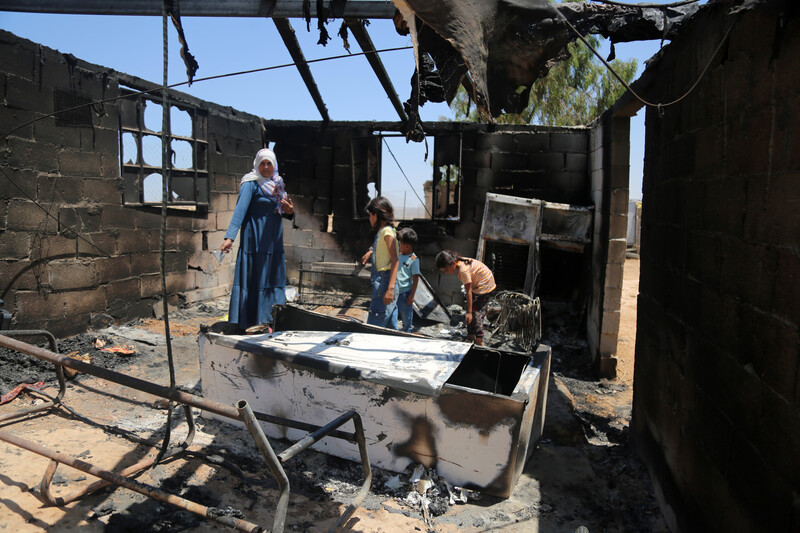
On 24 June, the UN human rights office and the Norwegian Refugee Council warned that 1,200 Palestinians, including children, in the Masafer Yatta area of Hebron in the West Bank “are at critical risk of forcible transfer.”
Earlier in the month, the Israeli military announced that it would resume military training in a firing zone encompassing 13 communities, and the Israeli Civil Administration – a military body – had newly enabled “retroactive dismissal of Palestinian building applications.”
The UN human rights office and the Norwegian group said that “affected structures include homes, schools, clinics, water systems and religious sites, and the demolitions will result in the forced displacement of 200 households, which could amount to forcible transfer.”
Forcible transfer and deportation constitute “a grave breach of the Fourth Geneva Convention and … a war crime,” the human rights office and Norwegian group added.
“It could also amount to a crime against humanity when committed as part of a widespread or systematic attack directed against any civilian population, with knowledge of the attack,” they added.
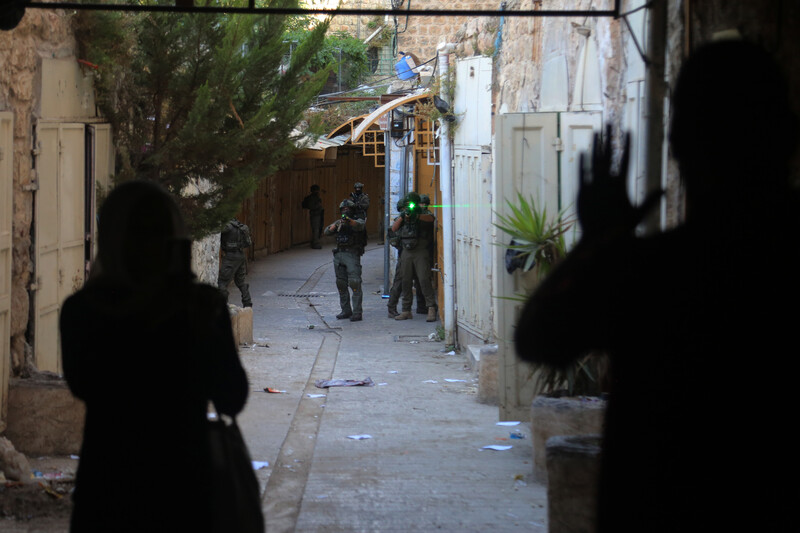
Also on 24 June, Zahiya Joudeh, 66, was shot in the head and killed while on the roof of her home in Shuafat refugee camp in East Jerusalem. Her family accused the Israeli Border Police of shooting the grandmother while they were operating in the camp.
Israel’s police claimed it was investigating the incident.
Earlier in the month, soldiers shot and killed a Palestinian man during a raid in al-Walaja village near Bethlehem.
“According to eyewitnesses, Israeli soldiers entered an under-construction apartment, handcuffed and blindfolded three Palestinians who were present, and then shots of live ammunition were heard,” according to OCHA. Israel is withholding the man’s body.
In addition to the aforementioned cases, Palestinian fatalities in the West Bank in June include a man who was shot while attempting to enter Israel through an opening in Israel’s annexation wall south of Hebron on 7 June; the killing of a man by undercover forces during a raid in Tammun near Tubas on 10 June; the killing of two brothers during a 30-hour operation in Nablus on 10 June; and the shooting death of a man after he allegedly opened fire at soldiers at Harmesh checkpoint near Jenin on 12 June.
Seven Israeli soldiers were killed by a fighter with the Qassam Brigades, the armed wing of Hamas, in a close-range ambush on a military vehicle in Khan Younis on 24 June.
Video of the stunning ambush released by the Qassam Brigades on Wednesday shows a fighter carrying a rifle running towards the armored personnel carrier, upon which he climbs and drops a shawaz explosive device directly into the cabin. The recording shows the fighter safely withdrawing before the military vehicle becomes engulfed in flames.
Moshe Gafni, a leading figure in the ultra-Orthodox party United Torah Judaism, said, “I don’t understand what we’re fighting for and for what purpose” after the deaths of the seven soldiers.
Around a week later, the Israeli military and the Shin Bet spy agency claimed to have killed two Hamas fighters who they said were involved in the ambush in a drone strike.
On 25 June, 12 trucks “carrying essential medical supplies, including blood units,” were supported by the World Health Organization for distribution at “priority health service points in Gaza.” It was the first such mission since 2 March and “represents only a fraction of what is needed to meet the overwhelming health needs on the ground,” according to OCHA.
On 27 June, the World Food Program published a food security analysis finding that markets in Khan Younis were running out of most essential food items and that prices for what remains available “continue to increase at an alarming rate.”
Meanwhile, the fee for receiving foreign remittances or for payment with a credit card “has risen to an all-time high of 40 percent, creating an extra burden for the already financially exhausted population in the Gaza Strip.”
Dietary diversity in Gaza has collapsed to its lowest level since October 2023, with people consuming food that is “severely deficient in nutrients.”
According to the World Food Program analysis, the price of wheat flour has increased by 3,000 percent compared to the cost before October 2023, while the price of sugar has increased by 6,310 percent. The cost of one kilo of potatoes is now 100 shekels or around $30 in Gaza City and Deir al-Balah.
The report noted that 29 commercial trucks had been allowed into Gaza carrying non-essential items, including “noodles, chocolate, and cigarettes.” Reports indicated that “those trucks were only allowed to enter after some tradesmen in Gaza had a deal with the Israeli army to release some of the piling cash money inside of Gaza.”
“The Chambers of Commerce, Industry and Agriculture in the Gaza Strip issued a statement strongly condemning those traders and saying that their actions will contribute to more spikes in the already very high prices in the markets,” the World Food Program added.
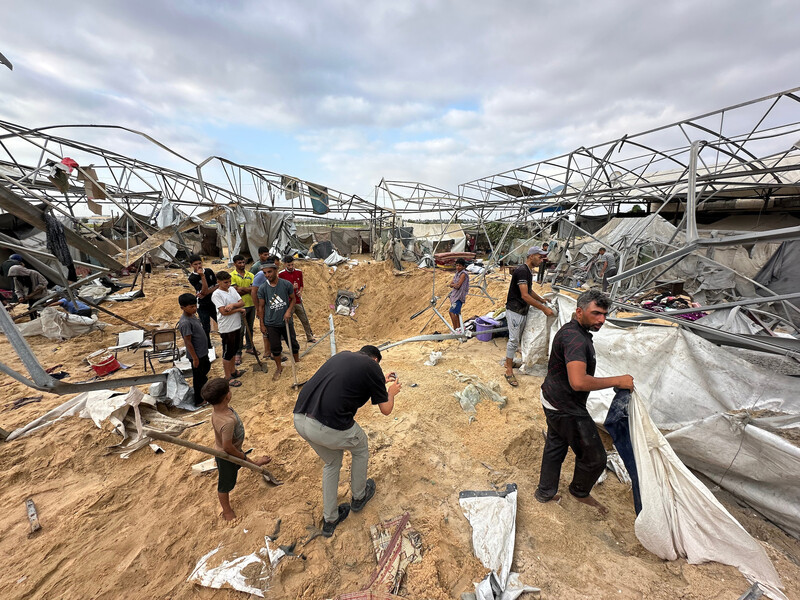
On 28 June, the UN human rights office said that Israel was continuing to target tents sheltering displaced people in al-Mawasi, “killing entire families, while at the same time ordering Palestinians from other parts of Gaza to move to ‘known shelters,’” referring to al-Mawasi, despite the lack of safety and basic infrastructure.
Al-Mawasi is “almost completely lacking … shelter, water and sewage systems, solid waste removal, latrines and medical facilities.”
Humanitarian agencies “have repeatedly called for Israel to facilitate the access and entry of supplies to Gaza that are urgently required for the construction of shelters,” the UN office added.
The UN human rights office added that “the Israeli military has not publicly provided justification for any of the 112 attacks on tents recorded by our office,” and it “could not identify any legitimate military objectives in the vicinity where these attacks took place.”
The Euro-Med Monitor stated on 29 June that “Israeli forces have intensified direct and deliberate attacks on Palestinian civilians, increasingly targeting shelters and tents.”
“These attacks reflect a deliberate policy aimed at forcible displacement and depopulation,” the human rights group added.
Israel is deliberately dismantling “the foundations of life, aiming to annihilate Palestinian society in Gaza and eliminate any prospect of reconstruction,” according to Euro-Med.
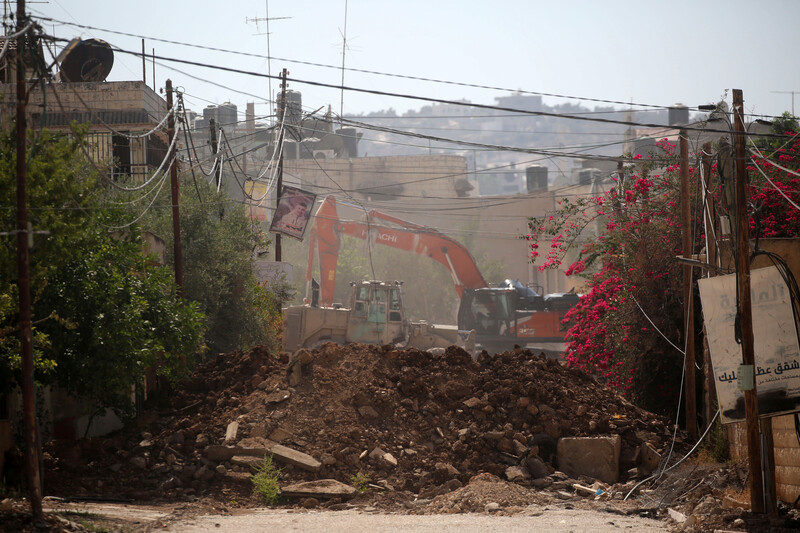
On 30 June, 25 organizations – including Doctors Without Borders, Human Rights Watch, and Physicians for Human Rights – demanded the release of health workers in Gaza and the West Bank arbitrarily detained by Israel.
“At least 185 healthcare workers from Gaza and the West Bank were estimated to be in Israeli detention as of February 2025,” the organizations said. “The conditions of many of those still detained remain unknown.”
The groups said that “many of those released have reported severe abuse, while some have died in custody,” and that the detentions “are part of a wider assault on Gaza’s health system.”
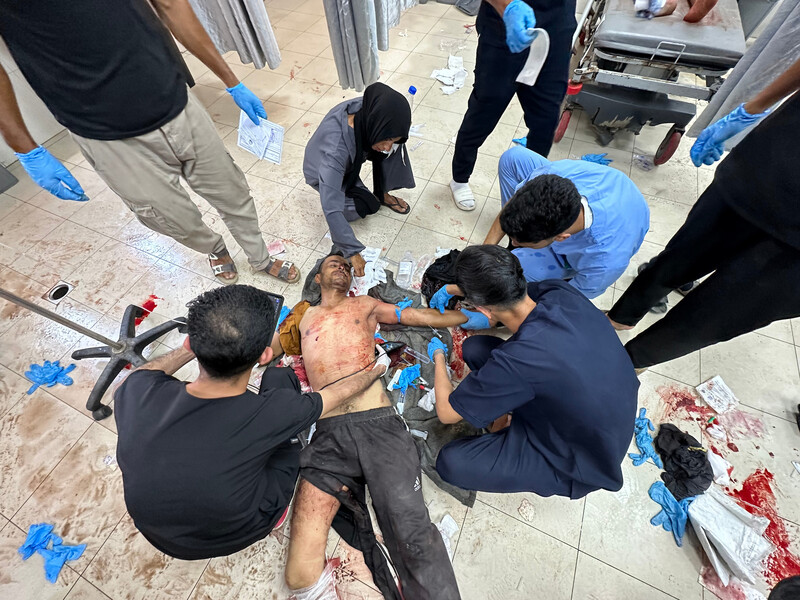
Palestinian authorities reported on 13 June that a Palestinian from the Tulkarm area of the West Bank died in Israeli custody after he was arrested on 17 May and transferred to an Israeli hospital on 9 June.
“According to the Palestinian Commission of Detainees’ Affairs, his death has raised to 26 the number of Palestinian detainees from the West Bank who have died in Israeli custody since 7 October 2023,” OCHA stated.
Another Palestinian detainee from the West Bank died in Israeli custody on 30 June.
According to Israeli Prison Service data provided to the Israeli human rights group Hamoked, as of June 2025, there were nearly 10,400 Palestinians being held by Israel, including some 3,500 administrative detainees held without charge or trial and more than 2,200 detainees held as “unlawful combatants.”
The data does not include Palestinians from Gaza detained by Israeli forces since October 2023, and about whom no information has been provided.
During June, the Israeli military recovered the bodies of seven Israelis, including a soldier, captured and taken into Gaza on 7 October 2023.
Fifty Israelis and foreign nationals remain in Gaza, including 20 who are believed to still be alive.
RELATED:
- Israel Besieges 2.3 Million Palestinians in Less Than 15% of Gaza, Amid Escalating Starvation and Mass Killings
- The Israeli Plot to Extinguish the Journalists Documenting Genocide
- Poll: Overwhelming majority of Jewish Israelis share genocidal belief there are ‘no innocent people in Gaza’
- US contractors say their colleagues are firing live ammo as Palestinians seek food in Gaza
- No truce on horizon as Gaza’s children starve