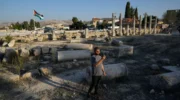
After the Israeli army razed my childhood home, I spent years building a new one for my family. Now, like most of Khan Younis, all that remains is rubble.
by Ruwaida Amer, reposted from +972Mag
This was supposed to be a time of celebration. Having waited for a ceasefire for so long, I imagined that its arrival would bring an opportunity to finally mourn the family members and friends we lost over the past two years, and to begin to piece back together what remains of our shattered lives. Instead, I have not been able to stop crying since my neighbor sent me a video of a mound of rubble where my home once stood, following the withdrawal of the Israeli army.
The shock was overwhelming. That home was my safety, my stability, my memories, and my dreams for more than 20 years, including throughout almost two years of genocide. We were forced to leave it behind in May, when Israel ordered the evacuation of large parts of Khan Younis including my neighborhood of Al-Fukhari.
Since then, I have prayed every day that it remains safe from Israel’s bulldozers and missiles. I followed the news intensely, yearning for any update about the fate of my home. My father became physically and psychologically exhausted from the worry.
Our neighbors were the first to return to Al-Fukhari after the Israeli military withdrew last weekend as part of the ceasefire agreement. When they arrived, they broke the cruel news: the genocidal army had turned our homes into piles of stone. My eyes scoured the video they sent for any part of the building that might still be standing, but there is none. It is totally destroyed.
I was afraid my father would collapse in shock, but he was strong. Instead, I fell to the ground.
Two universes destroyed
Building that house was a long, arduous journey that began with another loss: the Israeli army’s destruction of my childhood home in Khan Younis refugee camp during the Second Intifada. It was the year 2000 and I was only 7 years old. I remember sitting on the rubble, scanning the area for my belongings and looking on as people came to the destroyed site to report, observe, or offer support.
I still remember every detail of that day. But I couldn’t do anything then. Today, I refuse to stay silent, so I scream on these pages, alerting the world to my family’s second unjust loss.

After this first house was destroyed, we spent two years living in temporary units atop the sand, with no bathroom, doors, or windows. These were often infested with bugs and rodents, or flooded with sewage. My parents protested to the municipality, requesting that they provide us with a new, permanent home.
Eventually, we were given a small house in the Al-Fukhari area, near the European Hospital. It was very simple — certainly not big enough room for a family of seven — but we were relieved to have a proper shelter.
Since graduating from university in 2013, I have worked non-stop to renovate and expand the house to better suit our family’s needs. As a teacher and journalist, my salary has never been high, but every year I made sure to add something new to the house: a separate room for my sisters, a living room, a coat of paint, and then a whole second floor.
For 10 long years, I did as much of this work myself as I could, and saved to pay others to do what I couldn’t. I was financially and physically strained, but motivated to make my vision a reality. Even my mother, who suffers from a severe spinal condition, helped however she could in creating our perfect home.
We finally finished construction just three months before October 7, after having lived in the house for more than 20 years. I looked at it with pride: the comfortable home that I promised would provide for my parents as they grew older. But this week, when we learned that it was another casualty of the war, I realized that all of our efforts had been erased.
Without saying goodbye
Before the war, I never liked leaving the house. When I had to, I would finish my outside tasks as quickly as possible and then return home. I loved the security and tranquility it provided. My sister would often joke about how much time I spent there, time that I could have spent visiting friends or family.
When the war started, I used to remark that I could endure anything as long as our home remained. It didn’t matter if I died, I just didn’t want to lose it. I wished I was a superhero and could carry it with me wherever I went.

But when Israeli bombs and quadcopters began threatening our lives in May after the army ordered the evacuation of most of Khan Younis, we relented, fleeing without any of our belongings. I chose to leave everything behind to save my mother from the hideous sound of the drones’ bullets.
I didn’t get to say goodbye to my house. I didn’t get to ask it to remain steadfast and wait for us to return.
After being displaced to Khan Younis refugee camp, I would sit alone when I felt tired and afraid and imagine my home in its tranquility — my room, my bed, each corner of the building. My sisters and I would speak about our memories in it, the stages of our toil in building it, and how we deprived ourselves of even the most basic needs to save money for its renovation.
The three months living in its beautiful, finished state before the war started were not enough. I was determined to live there for the rest of my life, hoping to eventually pass away embraced by the walls I had worked so hard to build.
Now, like most of my city, nothing remains of it but rubble. We are left to confront the same devastation as 25 years ago, but I don’t know if we have the energy to rebuild again. Has my mind, heart, and body surrendered to this fatigue?
My dear home, I wish I had kissed and hugged you before leaving. I wish you were stronger and could have survived, but the war machine tired you out. I will never forgive the world. The war may be over, but there is nowhere left for us to live.