Zeteo speaks to survivors of the deadliest day in the resumed war, after Lebanon saw more than 100 Israeli strikes in 10 minutes.
By Ali Awada, Reposted from Zeteo, April 9, 2026
BEIRUT, Lebanon – The smell was the first thing Louna couldn’t explain. Charred flesh, gunpowder, burnt fabric, and the rubber of ambulance tires screaming down the steep entrance ramp to the hospital. She had worked through the Beirut port explosion. She had worked through the pager attacks. Nothing had smelled like this.
“I don’t know what kind of rockets they used,” said Louna, 30, an emergency room nurse at a hospital in Beirut’s suburbs. “I can’t forget the smell, it was so strong.”
At around 2:20 in the afternoon, the hospital heard the strikes and rang the Code Orange alert. Louna called her father first – she knew he was out on the streets – then her mother, her sister, the rest of her family. They were all crying. She prayed, walking toward the ER, that it wasn’t as bad as it sounded.
The first patients arrived in shock, eyes wide, unable to speak. Most were from Hay Al-Sillom in Beirut’s southern suburbs. They had glass embedded in their legs, their backs, and their heads. They didn’t understand what had happened to them. Then five bodies came in, charred beyond recognition. The only way to identify them was by a ring, a watch, or eventually through DNA and dental records.
An elderly man arrived looking for his son, tall, in his thirties, wearing olive-colored trousers. Staff directed him to the morgue. He left without going, still hoping to find his son alive somewhere else.
When the shift was over, the team went to the break room and wept.
“None of us could sleep last night,” Louna said. “The image of those bodies, and that smell, it wouldn’t leave us.”
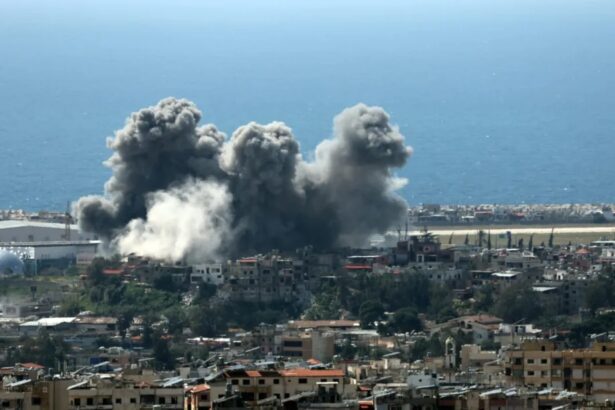
More than 100 Israeli strikes hit Lebanon in 10 minutes on Wednesday in an operation dubbed by the Israeli military as “Eternal Darkness.” It was the heaviest bombardment Beirut had absorbed since the 1980s, according to the Lebanese Civil Defense officials on the ground. And it came without warning.
The Health Ministry said on Thursday that the preliminary death toll from Wednesday alone is at least 303 people, including 110 women, children, and elderly people. More than 1,100 others were injured. The death toll since Israel renewed its escalation in Lebanon on March 2 is now at least 1,888, while 6,092 have been injured, according to the country’s crises management unit WhatsApp channel.
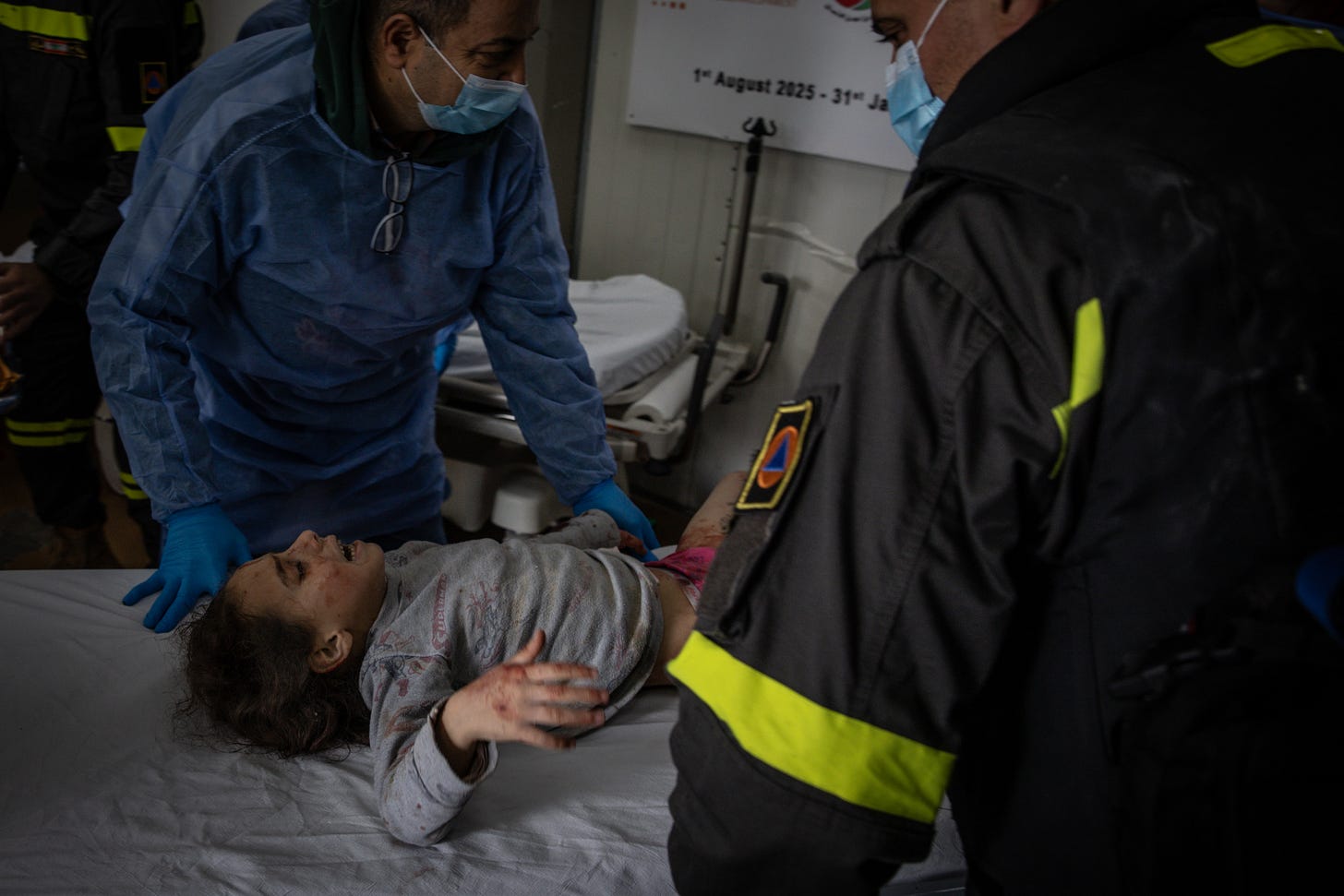
The timing of Wednesday’s bombardment was deliberate in its cruelty: midday, with schools reopening after Easter break, offices emptying for lunch, streets at their most crowded.
Many people in the city had woken up that morning to news of ceasefire talks and decided it was safe to go outside. When the first strikes sounded, most in Beirut assumed they were hitting the southern suburbs. The Israeli army had been issuing warnings for that area throughout the war, and the city had learned to calibrate its fear accordingly.
Then the strikes started landing in the city itself. Corniche Al-Mazraa. Basta, Mouseitbeh, Bashoura, Tallet Al-Khayat. Shweifat. Al-Rihab. Jnah and Bir Hasan. Most of these neighborhoods had not been hit with such ferocity in this war or the one before it. Because of that, hundreds of thousands of forcibly displaced people had taken shelter in these areas on the unspoken assumption that they were beyond reach. They were not.
“We will continue striking the Hezbollah terror organization and will utilize every operational opportunity. We will not compromise the security of the residents of northern Israel. We will continue to strike with determination,” the Israeli military said in a tweet.
But the people who died and were terrorized weren’t combatants. They were mothers, fathers, sons, daughters, colleagues, and friends. They were attending a funeral, or at work, or simply sitting at home.
‘She Just Wanted to Raise Her Children’
Jamila Hashim could not read or write. She knew other things instead, how to clean a stranger’s house so thoroughly they asked her back, how to cook food people remembered, how to keep three children fed on the wages of her own two hands after the company that employed her husband refused to pay out his death benefits following a workplace accident three years ago.
Her youngest daughter, who is 6 years old, has a developmental disability and is frightened by loud sounds. It was for her, more than anyone, that Jamila left her southern village of Ansar when the shelling began.
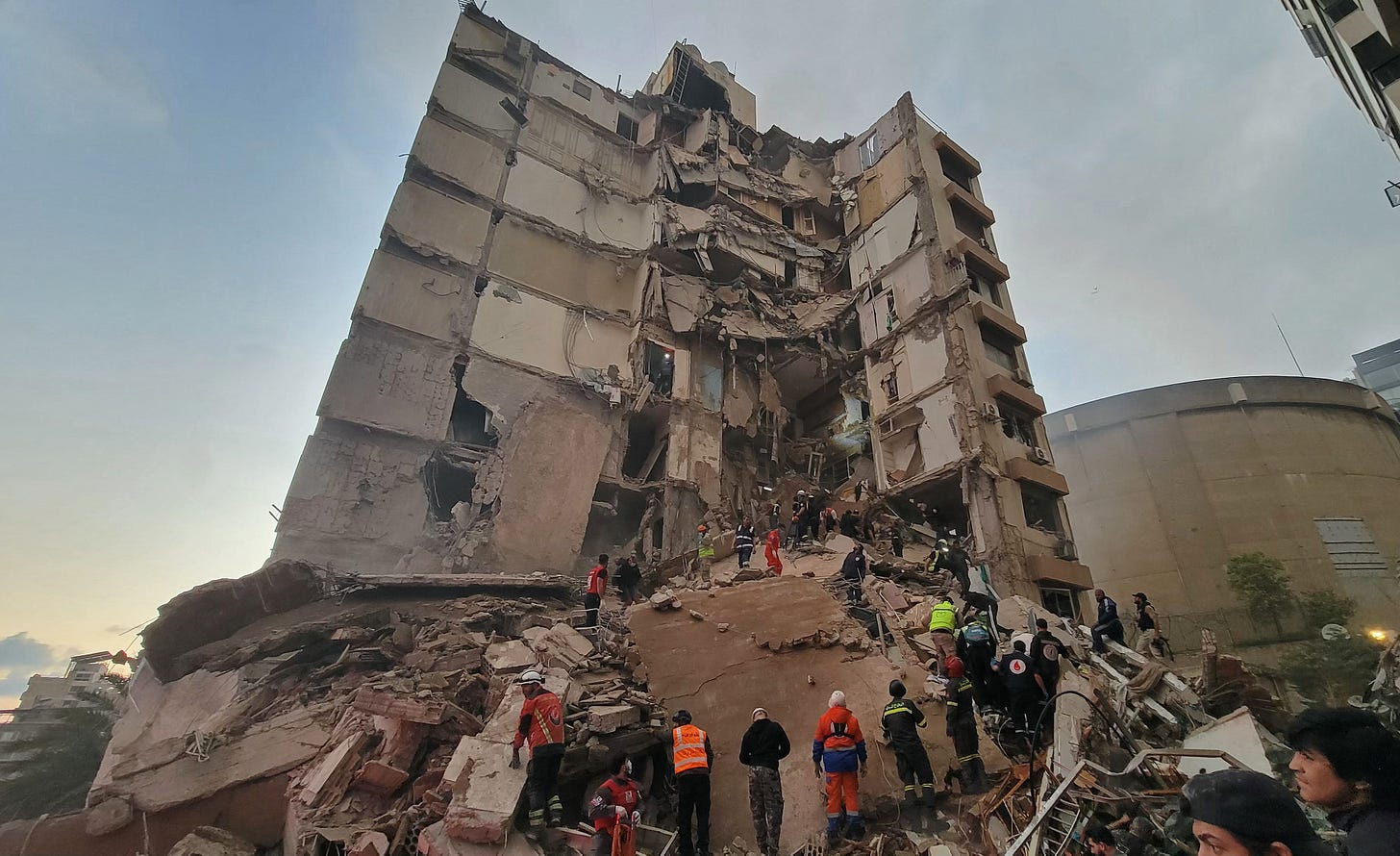
She tried the city of Jbeil. She tried Zgharta. She eventually settled in Beirut’s Bechara El-Khoury neighborhood. She cleaned houses in the mornings and cooked for families in the evenings, and she did not ask for help.
Her 10-year-old son had started taking on small errands to contribute. Her 9-year-old daughter had learned to manage the household on the days her mother worked double shifts. The youngest stayed close, startled at every sound.
On Wednesday afternoon, a strike hit Corniche Al-Mazraa, a few streets away. Jamila was killed. Her three children are alone now.
“She never asked anyone for anything,” said Maha, a colleague who had worked alongside her husband before his death. “She just worked and wanted to raise her children with dignity.”
A Funeral that Led to More Funerals
In the Northern Beqaa town of Shmistar, what is left of the villagers gathered to bury a man in his sixties who died a day earlier.
After noon prayers, the men were heading to bury the deceased when the rockets showered them. Ten men were killed instantly, and around 35 people were injured. The cemetery was hit hard. Graves were open, and bodies were scattered all over beyond recognition, according to a resident.
“I can’t even describe what happened. Only God protected my brother, who was at the funeral. He returned home traumatized, covered with blood and soot and injured by fragments,” Lama Tlais, 29, told me. They rushed her brother Khalil, 20, to the hospital to get treatment for his injuries, and he was discharged on Thursday, but he is still in shock.
On Thursday, the village gathered again to bury its dead.
‘I Don’t Know How We Survived’
After the strikes, around 35 people went missing, several of them children, according to the Information Minister Paul Morkos.
Sharif Mubarak, 34, doesn’t remember leaving the building. One moment, he was inside his flat on the third floor of the building in the Bir Hasan neighborhood in Beirut with his wife, his two daughters, Mariam, 6, and Malika, 4, and his 10-month-old son. Then the strike hit, and whatever came next, how they moved, which direction, how they got out, is gone from his memory.
“The blast took our hearing and their ability to think at the same time, he said. Everything went dark at once,” he told me.
When awareness came back, there was blood everywhere, and smoke, and screaming. The building was partially destroyed. He was taken to the Rafik Hariri Public Hospital. His wife was taken to another hospital with minor injuries. His daughters were not with him, and he didn’t know where they were. For hours, they were missing. His own injuries were relatively minor, but the not-knowing was its own kind of wound.
Hours later, after photos of the girls circulated, a relative found him and told him he had taken them to his nearby home. They were safe.
Sharif is still at the hospital. His 10-month-old son swallowed a large amount of dust and was found under the rubble. The baby may be discharged on Friday or the day after. He doesn’t know where they will go when that happens.
“I don’t know how my entire family survived,” he said. “It feels like a miracle inside all this destruction.”
It will be his second displacement. The first time, he left his home in the southern village of Dweir. He doesn’t yet know where the second one ends.
Ali Awada is a Lebanese journalist who has covered Lebanese affairs for more than a decade for regional and international outlets.
RELATED:
- Thousands dead and neighborhoods razed to the ground: Aid agencies fear southern Lebanon is becoming the new Gaza
- Israeli forces destroy 17 UN peacekeeper cameras in south Lebanon
- Israel’s Latest Genocide Is Against the Shias of Lebanon. Why Is the World Silent?
- 7 Ways Israel Is Turning Lebanon Into Gaza
- Israeli invasion of Lebanon could be worse than 1982, warn European officials