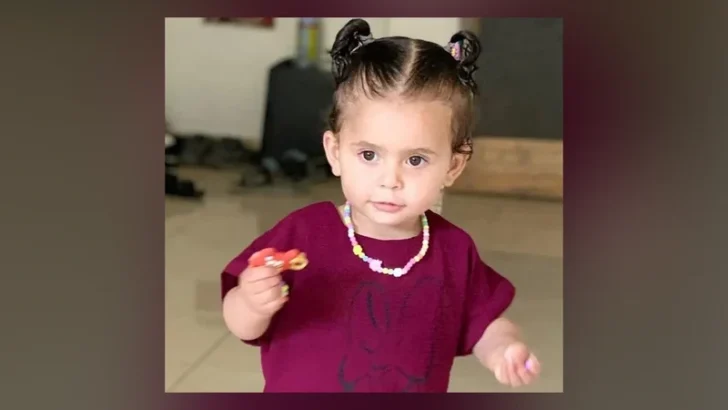
By Somaya Nassar, Reposted from Electronic Intifada, February 12, 2026
When the genocide on Gaza began, my daughter Noor was not yet three months in my womb.
I carried her inside me while living the bitterness of displacement and the cruelty of war.
She was born in April 2024 under the harshest of conditions, amid a suffocating siege. She became the hope that kept me alive. I named her Noor, which means light, so she could guide me through the darkness surrounding Gaza.
In mid-September, my family and I fled to a house in Deir al-Balah. I hoped we would finally be safe in an area the Israeli occupation had declared a “safe zone.”
On the morning of 23 September 2025 I woke early, dressed my daughter, gently combed her soft hair, and prepared her to meet her grandparents who had arrived from Gaza City at midnight.
Then a violent explosion shook the entire place.
I didn’t look for anything except Noor.
I screamed her name again and again. Then I suddenly heard her father yelling: “Help! Noor – quick!”
We found her lying on the ground. She had fallen from the third floor all the way down to the lower level when the upper floor was bombed.
Still. Unmoving. No trace of blood.
I screamed.
My husband and I were terrified to even touch her. Our hands froze above her tiny body.
Alive
Her uncle Muhammad, 22, gently placed his hand over her heart and felt a faint heartbeat.
He looked at us calmly and said: “She’s still alive.”
My husband ran outside, without realizing he had no shoes on, searching desperately for any means of transport.
He saw our neighbor getting into his car, heading to the market, and begged him to take them to the hospital.
My husband tried to pick up Noor, but he couldn’t. His hands were trembling uncontrollably and fear had numbed his entire body. So Muhammad carried her gently and placed her in the car.
I went with them to the hospital. When the doctor saw her, he looked at me with a silence that spoke plenty, as if he were saying: “There is nothing we can do. You may lose her.”
She was rushed into the intensive care unit.
She was the only child in the intensive care unit at Al-Aqsa Martyrs Hospital in Deir al-Balah. She lay on the bed, showing no signs of life. Her small body was covered in tubes and surrounded by machines. Long visits were forbidden – I was allowed only 10 minutes a day. I would place my hand on her tiny body and find it as cold as ice.
My heart shattered again and again.
She had internal bleeding, doctors said. Her skull was fractured from the fall. Every minute, I prayed that her bleeding would stop, that she would survive.
After 12 long days in the ICU, my beloved girl finally emerged from the critical stage and was moved to the pediatric ward.
She survived.
But at what cost?
Blind and paralyzed
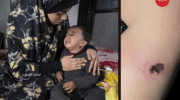
The head injury, and what doctors said was bleeding in her brain, caused Noor to lose her sight and her ability to move.
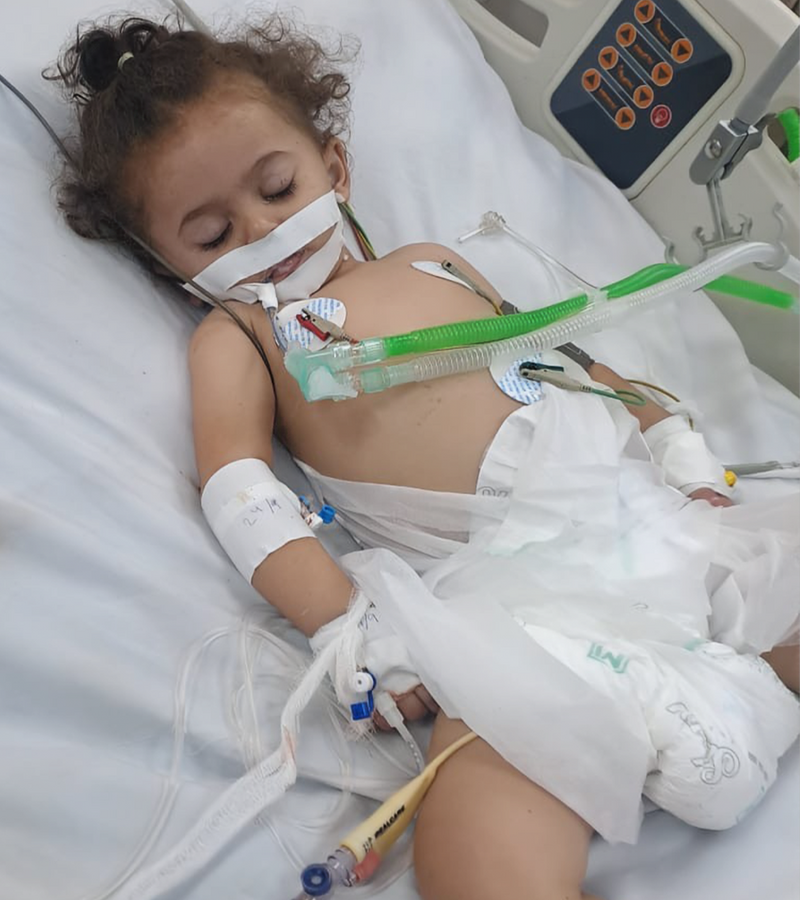
She lay in the hospital bed, conscious. She ate and slept. Nothing more. Her eyes had lost their light. Her little hands no longer reached out like they used to.
Her tiny body told the story of a childhood stolen before it even began, a story of innocence crushed by war.
When the ceasefire was announced on 10 October, I was in the hospital with Noor. I couldn’t rejoice. I had waited for this moment since day one of the genocide, longing to go back home. But my home had been bombed in 2024.
I longed to experience a moment of peace with my daughter and husband – safe and stable and unafraid.
When Noor heard the celebratory gunfire outside, she panicked and cried uncontrollably. I held her close and whispered, “People are celebrating, love. Don’t be afraid.”
But she couldn’t stop crying. Her whole body trembled as she sobbed.
The next morning, when my husband came to the hospital, I broke down.
“I wish we were in our home, safe … I wish my daughter were running and playing in front of us.”
He told me our destroyed home was now in the “yellow zone” and under full Israeli control.
The occupation would not even allow me to reach the rubble of my own house.
Waiting for Rafah
After a long period in the hospital, where doctors were unable to offer the treatment my daughter needed, I had no choice but to return with her to a tent in a displacement camp in Deir al-Balah, where we had found shelter.
I stand helpless before her suffering. I cannot restore her vision. I cannot help her walk or play with other children.
She cries constantly, out of pain, boredom, and confusion.
Every few seconds, she calls out “Mama,” just to make sure I’m beside her.
She clings to me, believing that I can protect her – even from Israeli airstrikes.
There is some hope.
The Rafah crossing to Egypt has opened – occasionally – and doctors believe that because she is young, she has a good chance of recovery if she gets the appropriate neurological treatment and physiotherapy, which she can only get abroad.
We live now, just waiting for a chance to save Noor. We’ve been ready for months. We have a referral letter from the Ministry of Health.
We know the obstacles. Only a small number of the tens of thousands of injured and ill are allowed to leave every day. We know we are entirely at the mercy of the whims of the Israeli military.
And we’ve not heard anything ourselves yet from any official body.
So we wait.
Somaya Nassar is a teacher in Gaza.
RELATED:
- Explosive Remnants in Gaza Cause Dozens of Casualties
- Bypassing Oversight to Rush Billions in Arms to Israel
- Trump Again Bypasses U.S. Congress to Push $6 Billion in Arms Sales to Israel
- On the frontlines of hell: Testimonies from Gaza’s doctors
- ‘I heard all of my friends’ last breath’: Testimonies from the Nuseirat massacre