By Justin Baragona, reposted from Zeteo, May 6, 2026
“I am deeply troubled by my portrayal and the omission of key facts in the segment in which I participated in good faith,” Zaid Azhari, in a message reviewed by Zeteo, wrote to CBS News producer Sari Aviv last month.
A cultural heritage researcher and leader of the “Save Sebastia Campaign,” Azhari was upset over a ‘CBS News Sunday Morning’ story that aired on April 5 and centered on the political turmoil surrounding Israeli archeological digs in the occupied West Bank, asserting that his interview for the piece was “selectively edited to falsely portray me as someone who erases Jewish history.”
According to four sources, the report was subjected to last-minute edits and script changes by self-avowed “Zionist fanatic” Bari Weiss, the CBS editor-in-chief who has made sweeping changes at the network since her hiring last fall. The story had been in the works for months, and prior to Weiss joining CBS.
“We aim to inform audiences, not satisfy story subjects. That’s what this piece did. We encourage everyone to watch it and judge for themselves,” a CBS News spokesperson said in a statement.
“Oh yeah, she definitely meddled,” one CBS News senior staffer told me, while other sources noted that this represented a new front in Weiss’s editorial “interference” at the network.
“Bari found out about the story and made changes to the script. She has never jumped in editorially on a ‘Sunday Morning’ story until this one,” one CBS insider said, while a network reporter noted that “this piece is the first time she’s pulled like a CECOT on the show.”
In their comment to Zeteo, a CBS News spokesperson did not directly address the claims about Weiss’s involvement in the ‘Sunday Morning’ story.
The CECOT story, of course, is a reference to ‘60 Minutes’ correspondent Sharyn Alfonsi’s piece that Weiss abruptly pulled at the 11th hour because she felt it lacked “critical voices” from the Trump administration, prompting Alfonsi to decry the move as a “political decision.” (The segment eventually aired a month later.) Alfonsi, who recently bemoaned the “spread of corporate meddling and editorial fear” at the network, is expected to be let go after the venerable newsmagazine’s season ends.
Still, a ‘Sunday Morning’ staffer suggested to Zeteo that Weiss’s edits to the piece may not have substantively changed the tenor of the segment, adding that it was “problematic from the beginning” and that they weren’t sure if her involvement had much to do with how the final product turned out.
Indeed, the segment had been in the works since before Weiss officially joined CBS News as its top editor. Seth Doane, the veteran correspondent who reported the story, traveled to the West Bank and Israel in mid-September to interview Azhari and the other subjects.
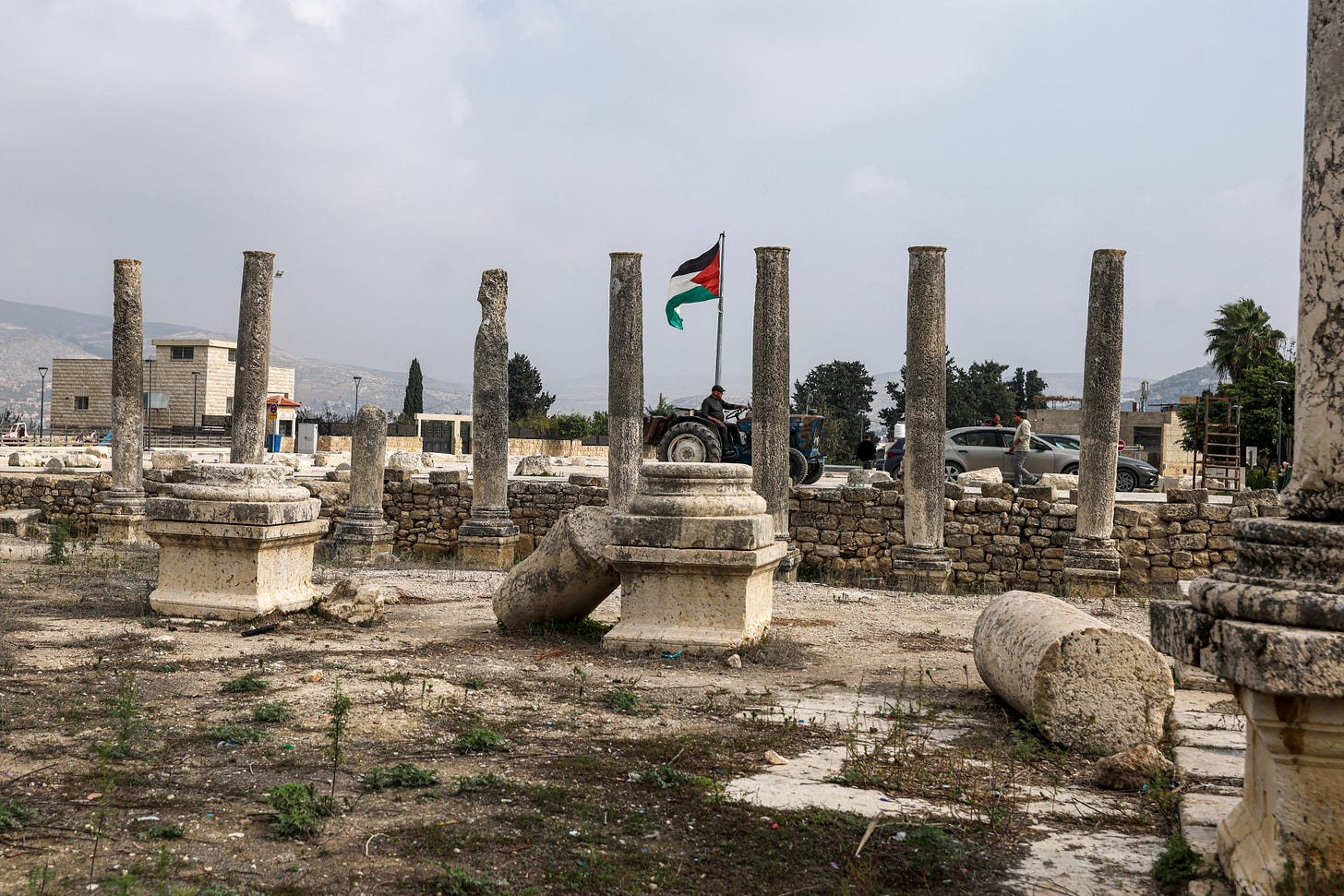
Though ‘Sunday Morning’ has largely been associated with human-interest feature stories over the decades and has generally steered clear of politically charged and controversial topics, the program decided to take on the subject of tensions between Palestine and Israel. In this instance, it focused on the escalating disputes in the West Bank over archeological sites – which Palestinian residents have said are being “weaponized” by Israeli settlers to appropriate more land.
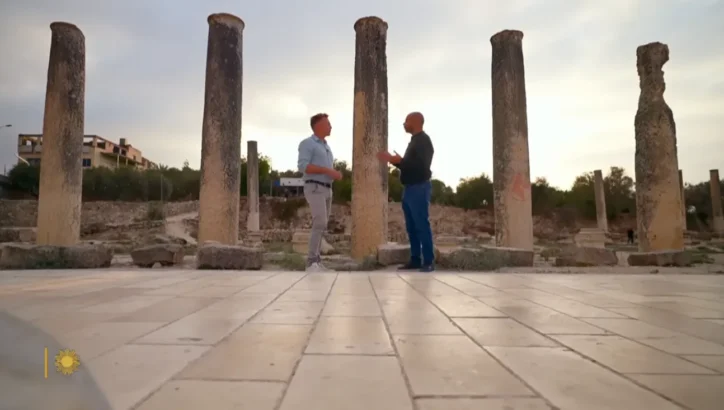
Throughout the 11-minute segment, Doane speaks with a number of archaeologists, residents, and government officials to understand how archaeology and historic artifacts have become so politically fraught in the area. It was his conversation with Azhari and how it was edited and framed that sparked a complaint.
Azhari told me his interview was edited in a way that portrayed him as a “stupid Palestinian who’s just a resident from Sebastia,” referring to one of the oldest continuously inhabited Palestinian towns in the West Bank and an area home to several ancient sites.
In the finished segment, most of Azhari’s remarks were contrasted with those of Amichai Eliyahu, the far-right Israeli minister of heritage who has called for the annexation of the entire West Bank and said that nuking Gaza was one option, suggesting that they represented the two extremes of the debate over the archeological digs. While the segment noted that Eliyahu is from a “far-right political faction,” the story did not mention his extremist positions or remarks.
After Eliyahu ridiculously tells Doane that the Palestinian people were “invented 60 years ago,” Doane notes in the report that it reminded him “of something we heard in Sebastia,” referencing his conversation with Azhari. Discussing a plaque in the city, Doane stated that it “made no mention that Sebastia had been the capital city of the Kingdom of Israel.”
This was followed by Doane telling Azhari that “on both sides, there’s an erasure of history” and that the plaque does “not include a Jewish history.” The response from Azhari that was aired in the piece, however, appeared to be cobbled together from different portions of the interview.
“To say this is a Jewish kingdom or a Jewish city, it’s not really that correct,” Azhari says in the segment. An additional comment, which showed him sitting in a different location, featured him stating, “This is my heritage. This is not the Zionist history or culture, this is mine.”
“This is mine. This is what we kept hearing on both sides,” Doane declared in a voiceover.
In his message to Aviv, Azhari wrote that it constituted “clear editorial malpractice” that his interview was held for seven months, only to air in “a selectively edited format” that reflected a “deliberate effort to construct a one-sided narrative.”
“This is exactly the mess they wanted from the beginning. Okay, I am from Sebastia. I am an activist, working on cultural heritage, but I am not a historical specialist,” Azhari told me in our interview.
“I am not an archaeologist. I am not someone who studied history. I am just like representing the local community of Sebastia, representing the organization that is working to develop tourism and cultural heritage,” he continued. “That’s my point. I talked about it from that way. But when you are hosting six Israelis, you need to host at least one Palestinian archeologist or the Ministry of Tourism, anyone of these people who can really tell the Palestinian opinion, or the Palestinian story about it.”
He called the editing of his interviews “deceptive” and underscored that it was “categorically untrue” that he wanted to erase Jewish history. Adding that he and the local community are “faithful custodians of all historical layers—Jewish/Iron Age, Roman, Christian, and Muslim alike,” Azhari wrote that he provided Doane “with the same historically grounded narrative we share with all visitors, yet the final edit suggests otherwise.”
Another problem Azhari raised in his email is that the piece suggested archaeology was “becoming” political. “In reality, archaeology has long been weaponized as a tool of state power,” he stated, adding that “the current settlement-driven interventions” represented an “act of segregation and erasure.”
Additionally, Azhari took issue with how others in the piece were portrayed, specifically Eliyahu and Preserving the Eternal, a settler lobbying organization described as merely “an Israeli archaeology group” in the piece. Emek Shaveh, which had two of its members interviewed for the story, was referred to as a “left-wing Israeli archeology group.”
“This is a serious failure of journalistic responsibility,” Azhari asserted in his email.
“My main mission is to have these sites safe, protected, and preserved. If it were to be done by the Palestinian Authority, fine. But unfortunately, they don’t do that,” Preserving the Eternal’s Adi Shragai said to Doane when asked if the excavations amounted to land grabs in the West Bank.
In the months since Doane trekked to Sebastia to interview Azhari, and prior to the story airing, the Israeli government announced its intention to seize about 450 acres of Sebastia, having already allocated millions of dollars to develop the hilltop archeological site. According to The Guardian, the “current plans for development of the site involve a visitors’ center, a car park, and a fence that will separate the ruins from the rest of the town.” This reality was not included in the CBS story.
The majority of residents in the town, meanwhile, depend on tourism at the ruins or the nearby olive orchards – which would be inaccessible once the site is developed – for their livelihoods. The expropriation would be Israel’s largest ever seizure of land for an archeological project. It is also expected that a large Jewish settlement will be expanded near the site.
“Unfortunately Sebastia has gone into a dark tunnel,” Sebastia Mayor Mahmud Azem said to The Guardian at the time. “It is an aggression against Palestinian landowners, against olive trees, against tourist sites and it is a violation of the history and the heritage of Palestine.”
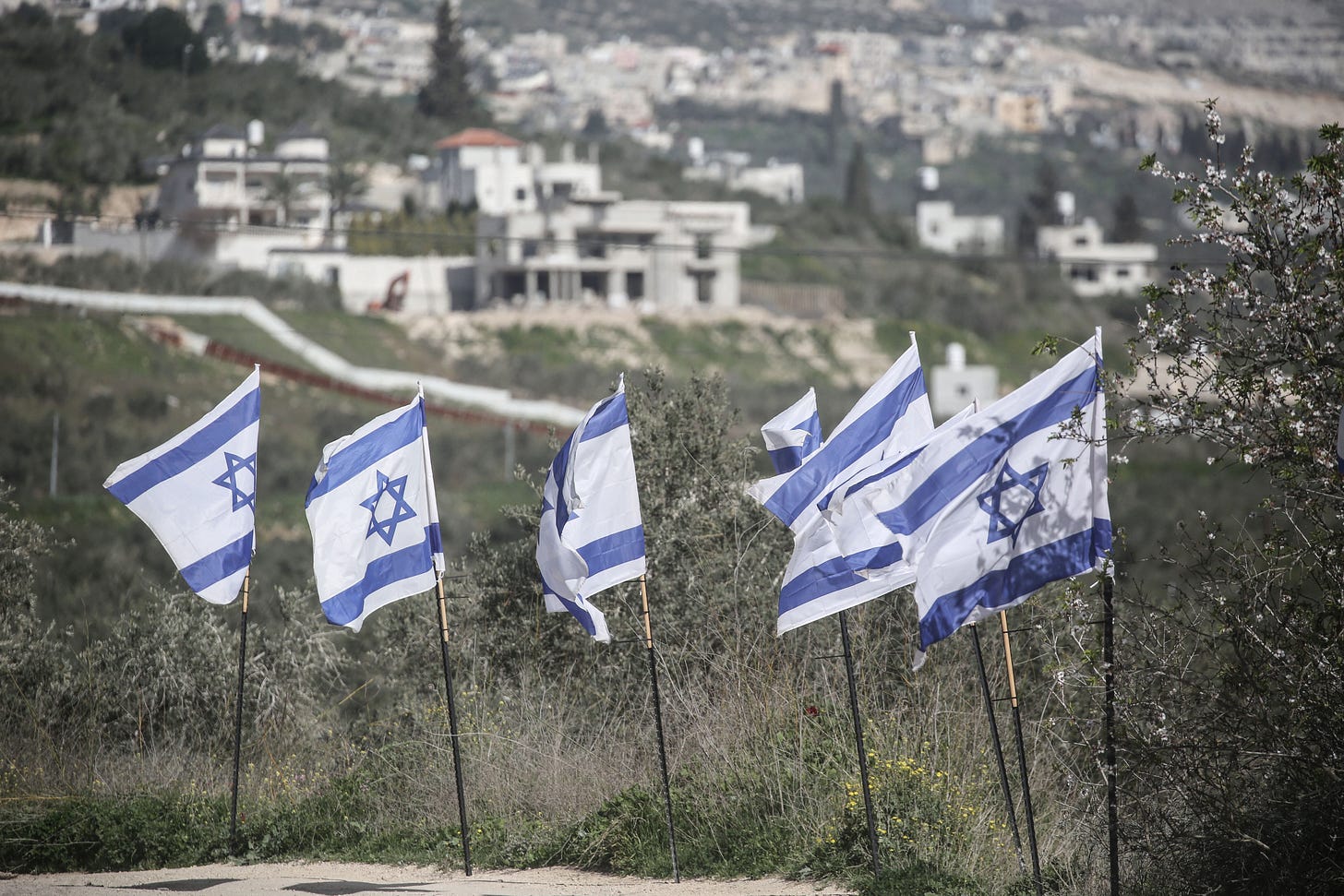
Jasper Nathaniel, an independent Jewish journalist who has spent the past two years reporting on the “archeological warfare in the West Bank,” told me that he rejected the notion that Azhari or any other residents of Sebastia were looking to erase “Jewish history” from the historic site.
It’s “simply undeniable how much” Sebastia’s residents “treasure all of the ruins” and “really think of themselves as the custodians of the ruins,” he added. The occupying Israeli forces in the area, Nathaniel noted, have now made that impossible for them.
In our conversation, Azhari repeatedly pointed out that he provided all of this context to Doane throughout the interview, but none of it made it to air.
“The report just showed a Palestinian guy living in Sebastia having a very, very closed mentality, not believing there are others in this world, and the whole idea that Palestinians are not accepting of others,” he concluded.
Azhari has yet to receive a response to his complaint to CBS, which was sent over two weeks ago.
Justin Baragona is Zeteo’s media columnist. He is a former senior media reporter for The Daily Beast & a correspondent for Mediaite.
RELATED:
- How Tony Dokoupil Became the Face of ‘Zionist Fanatic’ Bari Weiss’s CBS
- CBS News Reportedly Ousts London Bureau Chief Over Differences With Bari Weiss Over Gaza Coverage
- Bari Weiss Is Going Full ‘Propaganda-Palooza’ With the Iran War
- From CBS to TikTok, Pro-Israel Ellison is now in the driver’s seat
- Larry Ellison and Jared Kushner bid to buy Warner Bros