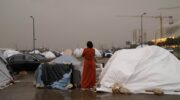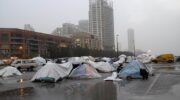
Israel’s continued restriction of aid into Gaza has cut bread production by half as hospitals run out of baby formula and water supplies run low.
Doctors warn that surging malnutrition cases among children may irreversibly harm an entire generation.
Amjad Ashour, 50, stands in the nutrition department at Nasser Hospital in Khan Younis, holding his four-month-old infant as doctors warn him that a lack of formula leads to stunted growth, developmental delays, and serious health complications. His child is already suffering from the shortage. Ashour’s wife, the baby’s mother, is herself malnourished, leaving the family entirely dependent on infant formula, which is no longer available at the hospital.
Ashour said he struggled to find milk for his child every day, and when the hospital had none, he turned to international organizations. “After knocking on the doors of organizations and receiving no response, we resorted to buying formula from the market, where it is sold at extremely high prices because of the shortage,” he told Mondoweiss.
The baby formula crisis comes amid a cluster of interconnected shortages that have hit Gaza over the past several weeks, with Israel continuing to enforce heavy restrictions on the entry of humanitarian aid and essential supplies into the Strip since launching its war with Iran alongside the U.S. The shortages have stoked fears among Gazans of a return to the same famine conditions that devastated the Strip last year.
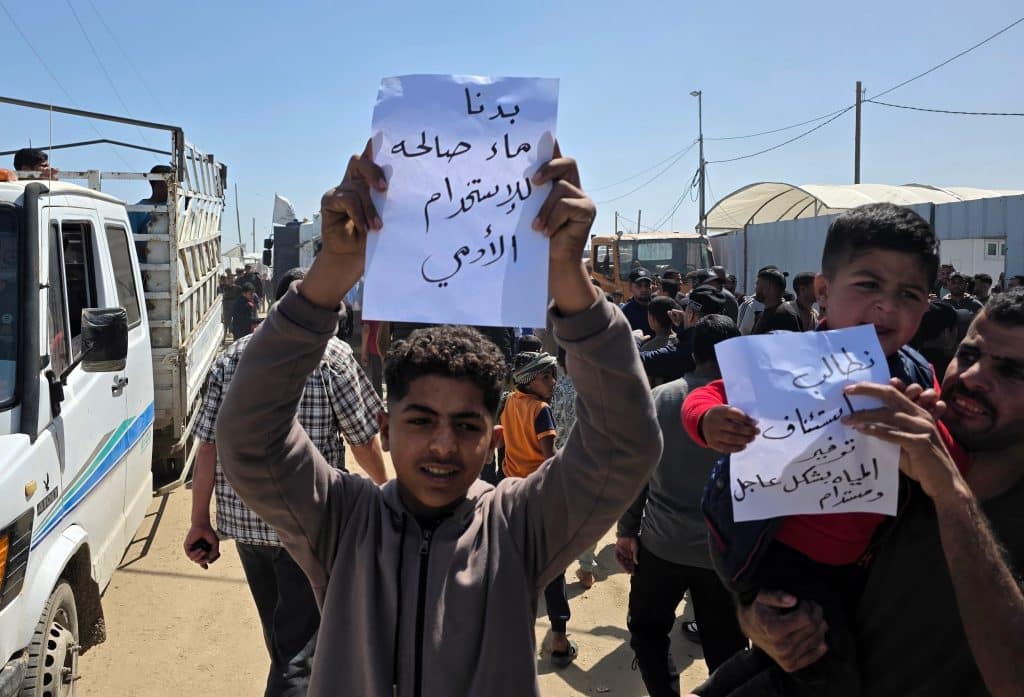
Bakeries have warned of a 50% drop in bread production after residents in displacement camps in the Mawasi area of Khan Younis protested last week over cuts to water deliveries by international organizations. The blockade takes place alongside Israel’s daily bombardment and killing of Palestinians across the Strip, most recently leading to the killing of Al Jazeera journalist, Muhammad Wishah, on Wednesday April 08.
The common thread running through these shortages is the effect they are having, namely “the systematic targeting of the basic elements of life,” said Ismail Thawabta, Director of the Government Media Office in Gaza. “All these sectors depend on the availability of fuel and energy and the free entry of raw materials. These are elements that Israel strictly restricts or denies outright, resulting in the simultaneous collapse of essential services,” he told Mondoweiss.
Thawabta said Israeli policies are designed to keep Gaza’s population permanently on the edge of collapse, in a situation where crises are not resolved but managed and controlled by Israel to prevent any recovery or return to stability.
“The population does not live according to a normal pattern based on self-sufficiency or stable markets,” he explained, “but rather under an imposed reality that depends on a daily or near-daily flow of aid.”
Any disruption to that flow, Thawabta said, is immediately reflected in acute crises in food, water, and other essential supplies.
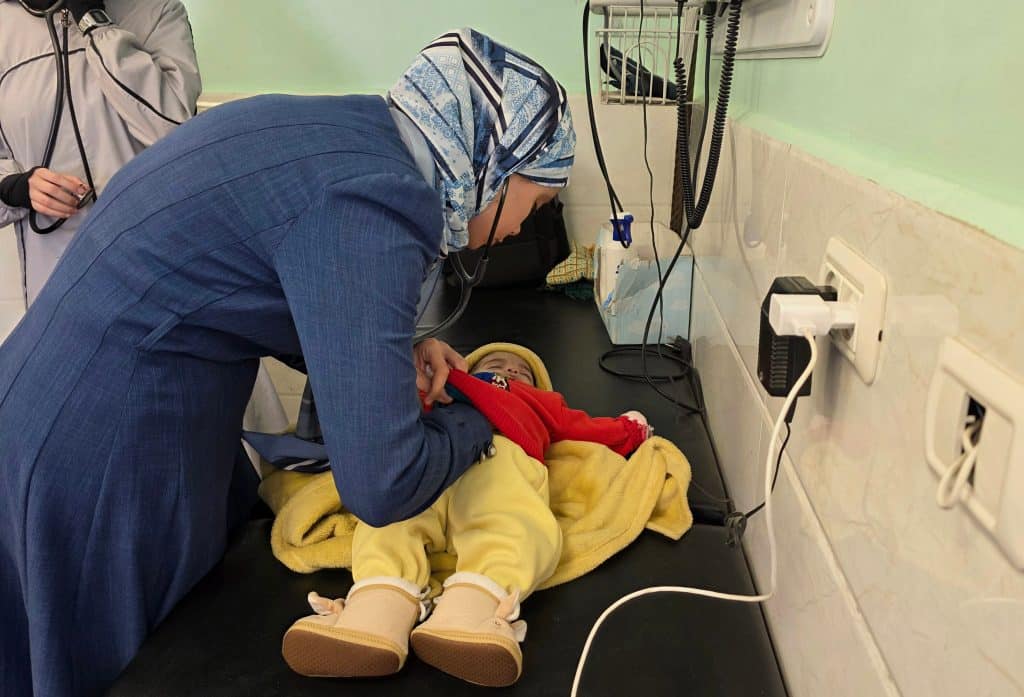
Inside hospitals, doctors are seeing a surge in infant malnutrition cases, which they attribute directly to the formula shortage. Dr. Ahmad al-Farra, head of the pediatrics department at Nasser Hospital, warned that medical supplies for treating children are either critically low or already depleted. “There is a severe shortage of infant formula and the necessary supplies to treat children suffering from malnutrition,” he told Mondoweiss.
Standing beside him in the malnutrition clinic, Dr. Israa al-Najjar, head of the nutrition department, explained that stage 1 formula, used for children aged one to six months, is on the verge of running out. “It may run out today or at any moment,” she said, while the stage 2 formula meant for babies aged 6 to 12 months already ran out two weeks ago.
Al-Najjar said the shortages are directly harming children’s health. “Approximately 100 cases enter the nutrition department daily,” she said, “with 30% suffering from severe malnutrition and 20% from moderate malnutrition.” But the lack of formula means even those who arrive are not receiving adequate treatment.
A total of 460 deaths from starvation have been recorded in Gaza since the start of the war, al-Farra noted. These include 106 children, and around 100,000 children under the age of five suffer from varying degrees of malnutrition. “This is according to the Health Ministry numbers, which we also cross-reference with the data of several international NGOs,” he said.
Al-Farra warned that the damage being inflicted on children goes far beyond immediate hunger. Four weeks of malnutrition, he said, is enough to cause irreversible harm.
“If a child develops malnutrition, irreversible brain damage may occur after four weeks,” he said. “Beyond that point, malnutrition may also affect sex steroids and thyroid hormones, and lead to neurodevelopmental injury and psychological effects.”
These changes could be permanent, al-Farra noted, stressing that the long-term consequences could “affect an entire new generation of Palestinian children in the Gaza Strip.”
The crisis expands
The crisis has not been isolated to infant formula. Shortages are now being reported in other key essentials, including bread and water.
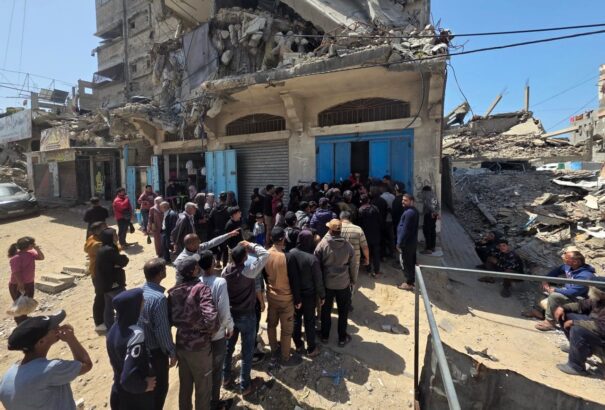
Bakery doors reveal crowded lines as people gather under the sun for hours in the hopes of securing a few loaves of bread. Ibrahim Shlayet, a father of seven who spoke to Mondoweiss, said he waited at the door of a bakery in Khan Younis for several hours last week before going home empty-handed. He had hoped to secure enough bread to feed his family, but was ultimately unable to get past the crowd. The shortage has sparked black-market bread sales, with some offering bread at double the available price outside the bakery, local journalists told Mondoweiss.
The head of the Bakery Owners’ Association in Gaza, Abdel Nasser al-Ajram, has warned of a worsening bread crisis, saying the local market is currently facing a 50% shortage that is impacting the population’s needs. The crisis began to emerge immediately after Ramadan in March, he said, driven by a widening gap between production and demand, as flour and fuel allocations to bakeries declined amid continued Israeli restrictions on the entry of aid.
Al-Ajram pointed out that the World Food Program (WFP) reduced flour and diesel allocations by 30%, “resulting in a drop in daily bread production from 300 tons to about 200 tons, further exacerbating the crisis.” Al-Ajram added that the program is moving toward shifting bakeries from a subsidized system to a commercial one, which threatens production stability and increases the price burden on consumers.
The WFP routinely contracts with most bakeries in the Gaza Strip, providing them with flour and gas. Moataz Mahmoud, a worker at a bakery in Gaza City, explained that production is dictated entirely by what the WFP supplies.
“What we receive, we produce daily. Increases or decreases in production are beyond our control,” he said, explaining that if they had everything they needed to work at full capacity, they would not be forced to shut down.
The shortages in Gaza have also extended to water. Last week, displaced people in the Mawasi area of Khan Younis organized a protest against ongoing cuts to water supplies from international organizations.

Khan Younis Mayor Alaa Al-Din al-Batta said the Gaza Strip has witnessed widespread destruction of water networks, with more than 20 kilometers of pipelines and distribution networks targeted and destroyed, leading to a significant decline in water production.
“The actual production of drinking water in Khan Younis has decreased by approximately 80% compared to pre-war levels,” al-Batta said. “This directly affects the supply to homes, healthcare facilities, and schools, resulting in reduced or halted pumping hours and a higher risk of contamination due to the leakage of untreated water.”
“Before the war, per capita water availability did not exceed 80 liters per day,” he added. “After the destruction of water facilities and networks, this figure has dropped to 15 liters per day.”
Al-Batta said the municipality is urging international organizations to take serious steps to rehabilitate networks and facilities, which would help reduce water costs for residents as a first step toward comprehensive reconstruction.
Abu Mahmoud, one of the displaced, said it had been five consecutive days without water for drinking or basic use in their shelters. He said international organizations used to regularly send water trucks but had recently stopped doing so. Um Khaled, an elderly woman waiting at the local water station in Mawasi, said that she and her family were “in crisis.” She arrived at 9 a.m. the previous day, carrying several empty water containers on a donkey-drawn cart, and stayed until 10 p.m. Yet she still didn’t manage to fill them all. Twenty-seven members of her family, children and grandchildren, live in adjacent tents and have been going without water for long stretches.
“We are human beings. We need water,” she said, saying that they’re now only using water in extreme cases, like cooking or other basic daily needs. “Yesterday, we were forced to buy water at an exorbitant cost just to wash our hands and faces, and for ablution before performing our prayers.”
With summer around the corner, the water shortage threatens to become a disaster. “This kind of crisis shouldn’t exist,” Um Khaled said. “Especially now, with rising temperatures.”
Tareq S. Hajjaj is a reporter for Mondoweiss.
RELATED:
- Israel gives war profiteers sole control of life-saving Gaza aid: Report
- The State Department Says Israel Isn’t Blocking Aid. Videos Show The Opposite.
- Food shortages return to Gaza as Israel tightens aid restrictions under the cover of its war on Iran
- Gazans face a triple crisis: severe shortages of water and bread, healthcare in tatters
- Palestinians in Gaza fear famine returning as Israel cuts off food amid Iran war