By Alaa Serhal, Reposted from Mondoweiss, May 4, 2026
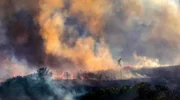
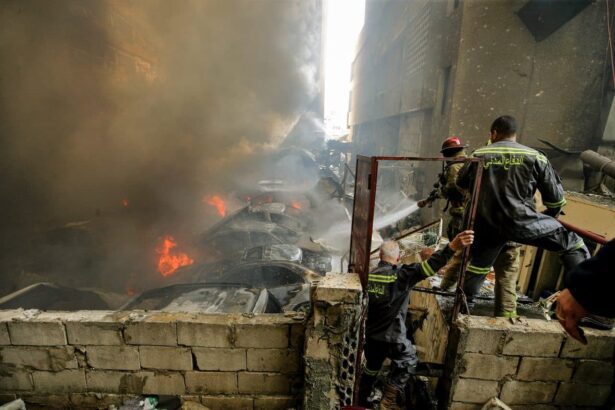
As airstrikes pound southern Lebanon, lawyer Abbas Ghandour leaves his case files behind, changes clothes, and drives south toward the blast zones.
The 38-year-old appellate attorney is also the head of the Lebanese Red Cross emergency services in the southwest, a role he has grown into since first answering distress calls as a teenager in Nabatiyeh.
Now his mornings are no longer spent preparing arguments in court, but securing safe staging points and making sure his paramedics’ families have somewhere to sleep, because, as he puts it, “no one can respond clearly while worrying about their own loved ones.”
He has a daughter, not yet a year old. Leaving the south, he says, has not crossed his mind.
Since war broke out between Israel and Hezbollah on March 2 as part of the broader U.S.-Israeli war on Iran, Lebanon’s emergency services have been pushed into the worst stretch in their modern history.
The Lebanese Health Ministry has recorded at least 103 health workers killed, the majority of them frontline paramedics, alongside more than 238 wounded and at least 25 ambulances and civil defense vehicles destroyed.
One of the deadliest single episodes came on April 15 in Mayfadoun, near Nabatiyeh in the south of the country. An initial Israeli strike on the village drew a first paramedic team from the Islamic Health Committee, a Hezbollah-affiliated rescue service. Israel struck the team, killing two.
A second team arrived. That team was struck. A third team, jointly from the Nabatiyeh Emergency Services and the Risala Scout Association, rushed in to evacuate the wounded. As team leader, Mahdi Abu Zaid ran to close the doors of his ambulance, the third strike landed.
Four paramedics were killed across the three strikes, and six were wounded. The Israeli military said it was looking into the attack.
The systematic Israeli attacks on Lebanese paramedics follow a precedent set by the Israeli military during the war on Gaza, including the systematic targeting of first responders and the dismantlement of Gaza’s health infrastructure.
A pattern that paramedics now plan around
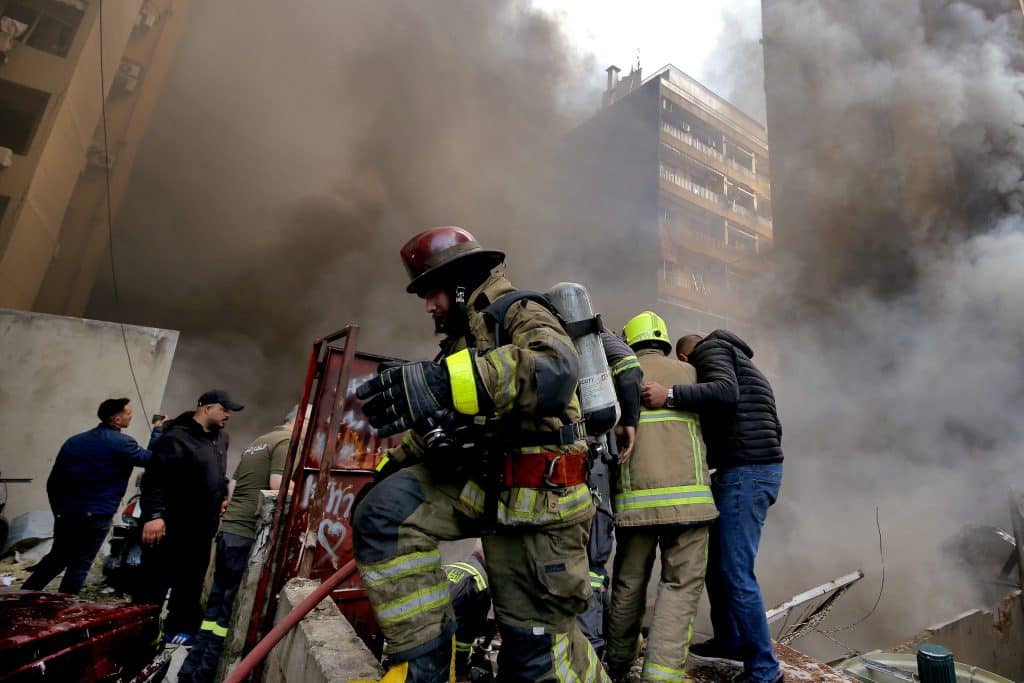
The pattern of the strikes is what frightens responders most. Across the south, paramedics describe what international observers and human rights groups now call the double-tap: an initial Israeli strike, followed by a second once rescuers arrive.
It is a policy for which Israel has become infamous in Gaza throughout its genocidal assault on the Strip, now applied in Lebanon. The Israeli military told NPR earlier in April that it abides by the law, but revokes legal protections for health workers when “misuse” occurs.
A Red Cross paramedic who requested anonymity out of fear for their life says the team operates on a deliberate 15-minute delay.
“That quarter of an hour is a gamble between life and death,” he tells Mondoweiss. “The wait could mean another chance at life to the wounded buried under the rubble, but it is the only way to keep the paramedics alive long enough to dig them out. Israeli reconnaissance drones stay overhead through the entire response.”
Hassan Badawi, a 31-year-old Lebanese Red Cross volunteer, did not get the chance to wait. On April 12, three days before Mayfadoun, he was killed near Bint Jbeil while traveling on a route the Red Cross said it had coordinated with Israeli forces for safe passage. The Israeli military said he had not been the target and that the strike was under review. Badawi was a father of one, with a second child on the way.
Muhammad Suleiman, chief paramedic for Nabatiyeh Emergency Services, similarly lost his sixteen-year-old son Joud on March 24.
Joud had been tagging along on missions since he was a child. He was on a motorcycle responding to a call when he was killed alongside a fellow paramedic. They were the first fatalities the unit had recorded since it was founded in 2002.
“I always had my fears,” Suleiman says. “But I believed that as a neutral organization with no connection to politics, we would be safe.”
What is left to work with
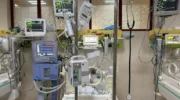
The World Health Organization counts 59 primary healthcare centers shuttered by Israeli attacks. Tebnine Government Hospital, one of the busiest trauma centers in the south, was hit twice in three days, wounding eleven medical workers and destroying ventilators, monitors, and the emergency department.
Lebanon’s Health Minister, Rakan Nassereddine, has begun filing a complaint with the UN Security Council. None of the international processes has slowed the pace of the strikes.
Hussein Jaber, a civil defense volunteer at the regional Nabatiyeh center, describes a fleet that is barely functional. After the center itself was struck, seven vehicles were damaged. Paramedics drive ambulances with no windscreens through the dust of fresh strikes.
“We have started buying shovels and basic equipment with our own money,” Jaber says. “Warehouses in the south have been closed, and the team now sends one vehicle a day to Beirut to bring back gauze and painkillers.”
Jaber himself was wounded in the head and leg when a building next to his center was hit. He returned to work the same day.
He recalls a woman in Arnoun whose call reached the center while she was buried under her own home. The team dug for her with their hands and with whatever tools they could find, working under drone surveillance and artillery fire. Half an hour later, they pulled her out alive.
“They should be targeting fighters, where the fighting is happening, at the border,” Muhammad Jaber, a senior paramedic on the team, said, resting on his foam mattress in the Nabatiyeh headquarters during a brief lull in the strikes. “Why target medics and civilians? So that life becomes unbearable, and people tell Hezbollah to give up?”
The paramedics who stayed
Israeli evacuation orders have emptied much of the south, but almost no responders have left.
“We have surplus personnel,” Suleiman says. “We are begging the young ones to take a break, and they refuse.”
Inside the centers, paramedics argue over who gets to take the most dangerous run. For Ali, staying is itself the point. “If every one of us turns his back at the first slap, we have lost everything.”
When the 10-day ceasefire took effect on April 16, the Nabatiyeh team rented a tow truck and went back to Mayfadoun, despite Israel’s continued violation of the ceasefire and its refusal to cease its hostilities.
When the Nabatiyeh team arrived, the three ambulances were still there, peppered with shrapnel, the asphalt stained with blood. They hauled the lead vehicle to a public square in Nabatiyeh and parked it there.
“We want this vehicle to bear witness,” said Mahdi Sadeq, a coordinator with the service. “To what happened. To what this war has done to our profession.”
Alaa Serhal is a freelance journalist with more than a decade of experience covering news and conflict in Lebanon.
RELATED:
- 100+ International Law Experts Say US Strikes on Iran Violate UN Charter, Could Be War Crimes
- Iranian girls killed by ‘double-tap’ strikes on Minab school
- No medicine, no beds, no food or water: inside Gaza City’s main hospital
- Israel can’t (or won’t) explain its use of large-scale airstrikes in civilian areas: Ha’aretz
- ‘Double tap’ airstrikes: How Israel targets Gaza rescue efforts