Subdued Lebanon Liberation Day celebrations under new Israeli occupation
By Justin Salhani, reposted from Al Jazeera, May 25, 2026
Beirut, Lebanon – On May 25, 2000, the last Israeli troops withdrew from southern Lebanon ending their 18-year occupation.
This expulsion of Israeli forces by an armed movement led by Hezbollah has been a cause of national celebration in Lebanon ever since, but this year, a new occupation in the south has dampened the mood.
“Liberation Day is a sacred day for us,” Ali Saleh, 55, from Jwaya in southern Lebanon told Al Jazeera. “It is a holiday of victory, pride and dignity.”
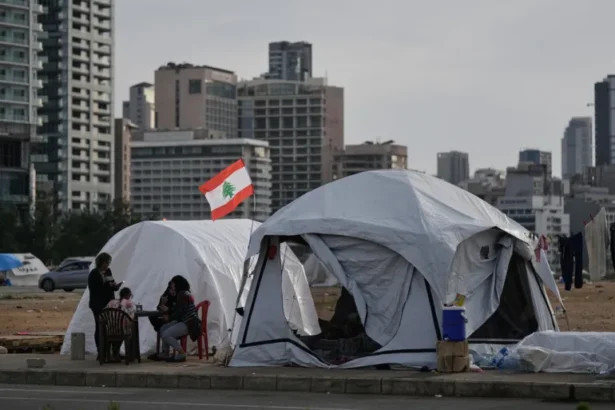
Saleh said he would spend this Liberation Day at the Camille Chamoun Stadium on the southern periphery of Beirut, where he has lived with his wife and son after being displaced in March, when Israeli forces again invaded the south.
He is one of more than 1.2 million people in Lebanon who have been displaced from their homes, predominantly from south Lebanon and Beirut’s southern suburbs, since then.
In the past two years, Lebanon has been invaded twice by Israel. In early 2025, more than two months after a ceasefire was agreed, the Israeli military withdrew from all but five points in south Lebanon. This time, however, many Lebanese fear history is repeating itself, and that a protracted Israeli occupation of the the country has started again.
“He who didn’t live in southern Lebanon before 2000 didn’t know what it means to live under occupation,” Saleh said. “Liberation Day broke our shackles, freed the precious land, freed the plants, freed the butterflies, the birds, every grain of dust. It freed everything.”
Conflicting speeches on Liberation
During the Lebanese civil war (1975-1990), Israel twice invaded the country – in 1978 and 1982 – to eject the Palestine Liberation Organisation (PLO) from the country.
Israeli forces reached as far as Beirut in 1982, forcing PLO fighters from Lebanon. But the Israelis continued to occupy large parts of southern Lebanon, until they were driven out in 2000, following a persistent campaign by Hezbollah. The recent Israeli invasion brought back memories of those years of occupation for southerners.
“There is a pain in my heart because this holiday is not complete,” Saleh said. “We are living in a body without a soul. Our soul is south and our body is here. I wish that this Eid we would be celebrating on our land.”
In the early hours of March 2, Hezbollah fired rockets at Israeli targets for the first time in over a year in retaliation for the killing of Iran’s Supreme Leader, Ayatollah Ali Khamenei.
Despite a November 2024 ceasefire, Israel had not stopped attacking Lebanon, but took advantage of the Hezbollah assault to launch a new wave of devastating attacks across the country and a ground invasion of the south.
Since March 2, Israel has killed 3,151 people in Lebanon, according to Lebanon’s Ministry of Public Health.
US President Donald Trump announced a ceasefire on April 16, and extended into early July. That has eased attacks on Beirut and its suburbs, but the assault on the south has continued, killing paramedics and civilians.
On a daily basis, Israel has issued new forced evacuation orders for towns and villages in the south. Hezbollah has launched its own attacks on Israeli targets inside Lebanon, and in Israel, including using fibre optic drones which are immune to Israeli jamming.
In a speech to mark Liberation Day on Monday, Lebanon’s President, Joseph Aoun, said that southern Lebanon “wrote an unprecedented chapter when the Israeli occupation withdrew as a result of the steadfastness and sacrifices of the people of this land, making May 25 a day of national dignity”.
Under Aoun’s command, Beirut is engaging in direct talks with Israel for the first time, and despite the controversial nature of the negotiations, he insists the government will not compromise on its goal of achieving a “full Israeli withdrawal” from southern Lebanon.
Prime Minister Nawaf Salam wrote on X that “we will not celebrate [the holiday] until the day of Israel’s complete withdrawal from our land and the safe and dignified return of our people”.
Hezbollah response
Hezbollah has repeatedly clashed with the government’s position, saying it rejects direct negotiations with Israel and prefers talks via intermediaries instead.
In a televised address on Sunday, Hezbollah’s Secretary-General Naim Qassem repeated his rejection of direct negotiations: “Indirect negotiations are preferable. Return to national dialogue and internal solutions rather than aligning with the United States and Israel.”
He also fueled controversy over increasing tensions inside Lebanon, for the first time suggesting that the Lebanese government should step down if it cannot fulfil its duties.
“If this government cannot protect sovereignty, it should resign,” Qassem said.
Qassem’s statement drew strong condemnation from the United States State Department.
Iran has reportedly included a ceasefire in Lebanon as part of its conditions to end the war with the US and Israel. However, Israeli Prime Minister Benjamin Netanyahu is believed to be eager to continue the war, and has been urged by his right-wing ministers to resume attacks on Beirut, where drones buzzed low overhead all day Sunday and Monday.
In search of “another victory”
On Monday, as banks and offices closed for the annual Liberation Day holiday, Israeli air raids killed three people in southern Lebanon and more evacuation orders were issued for 10 towns and villages.
Homes near the port city of Tyre in southern Lebanon were also struck, along with eight other towns in the south.
“What are we supposed to do,” Hussein told Al Jazeera. He is from Qlayleh but displaced at a school in Tyre. “There are warnings [to evacuate homes] all over [the area].”
Drones were reported flying over the Baalbek region in Lebanon’s east, another area that has come under sustained Israeli attacks since the ceasefire last month.
Under such conditions, many in Lebanon feel that this Liberation Day, which is usually marked with celebrations, comes at a sombre moment for the country.
Saleh, the man from Jwaya, said he had hoped to see southern Lebanon liberated, and Lebanese citizens held in Israeli detention facilities released.
Nabil, from Markaba, a border town largely destroyed since Israel set up a military outpost there, has been living in a school in the Ras Beirut neighbourhood since March 2, but remains hopeful and defiant.
“We are very proud that it is Liberation Day and that we expelled the Israeli enemy from Lebanon,” he said. “We took our areas and took everything and our house in 2000, and God willing, there will be another victory.”
*Second article*
In Lebanon, everything and nothing has changed since 2000
By Rami G Khouri, reposted from Al Jazeera, May 25, 2026
Twenty-six years ago this week, Israel was forced to end an 18-year occupation of south Lebanon. Much has changed since, yet Lebanon and Israel still cling to the very policies that dragged them into today’s war, a war that has engulfed Iran, drawn in the United States, and now threatens the global economy itself.
Palestine remains the central issue reverberating across the region and the world. It is why Israel began attacking pro-Palestine forces in Lebanon in the 1970s, years before Hezbollah formed, and why that local conflict has widened ever since. Iran’s backing of Hezbollah after 1982 turned Lebanon into a front line between Iran and Israel; today, with the United States fighting alongside Israel, that front has grown into a regional war. At its heart stands Hezbollah, the central pillar of the Iran-anchored “Axis of Resistance” that opposes Israeli-American hegemony.
Lebanon might seem like a sideshow in this regional and global frame. But it deserves greater scrutiny precisely because it was, and remains, the spark that expanded 78 years of Israel-Lebanon-Palestine friction into today’s regional war.
Much has changed in Lebanon since 2000. Advanced missile, drone and radar technology now shapes the balance of power, above all Iran and Hezbollah’s growing ability often to evade US-Israeli air defences. Lebanon’s economy has been shattered, its people driven from their homes again and again, and Israel has devastated towns and villages across the south, unleashing the doctrine of urban annihilation it forged in Beirut’s Dahiyeh in 2006, and subsequently applied in Gaza. Hezbollah was hit hard, but has been reborn as a leaner, more agile force that once again thwarts Israel’s drive to subdue Lebanon, or carve out another permanent security zone inside it.
The regional picture has shifted too. Syria’s role as Hezbollah’s link to Iran has collapsed, and Iran itself was damaged by the US-Israeli assault. Yet Tehran seems determined to see Lebanon covered by any regional deal that ends the war. The United States has openly sided with Israel, pressuring President Joseph Aoun and Prime Minister Nawaf Salam to “disarm” Hezbollah and remove a lingering threat to Israel, or else possibly face more Gaza-style destruction across Lebanon. Other powers, including China, Saudi Arabia, Türkiye, Pakistan and Russia, have pressed in different ways to end the war on Iran and restore calm and Lebanese sovereignty.
In the midst of this political whirlwind, several conditions from the pre-2000 era still prevail in Lebanon. The population remains split over Hezbollah’s role as an armed movement offering the only impactful resistance to Israel. The government seems unable to act, politically or militarily, for lack of funds, domestic consensus or military clout. At times it bends to Israeli or American pressure: “disarming” already marginalised Palestinian camps, or meeting Israeli officials in Washington under the aegis of Washington’s pro-Israel bias.
Washington has also tied financial support for Lebanon’s reconstruction to Beirut’s compliance with US-Israeli terms. Its pro-Israel bias is clear in its readiness to ignore Israeli violations of the last two ceasefires, and in formally backing Israel’s right to attack any Lebanese it deems a threat, while denying Lebanese threatened by Israel the same right.
The Lebanese government also feels the pressure of a disgruntled, deeply impoverished population, exasperated by relentless Israeli attacks that, in 2026 alone, have killed more than 3,000 people, forcibly displaced 1.2 million and devastated dozens of villages and small towns. It justifies its talks with Israel as an attempt to offset its military disadvantage, using US pressure to stop the attacks and let Beirut re-establish sovereign control over all its land.
Hovering above these old and new dynamics is a historic reality: Iran and Hezbollah, with support from allies abroad, absorbed the devastating Israeli-American assault and twice forced their far more powerful, nuclear-armed adversaries to accept a ceasefire and negotiate anew, first over Iran in early April, then over Lebanon days later. The Lebanon truce is now meant to fold into the wider US-Iran settlement. Both ceasefires seem to herald weakened US-Israeli positions in the region, deep political blows to Israeli Prime Minister Benjamin Netanyahu, and new diplomatic leverage for Iran, Hezbollah and their allies.
What lesson might we draw from all this? Perhaps that military power, however savage or genocidal, cannot forever dictate realities across the Middle East. Buffer and “security” zones, new Israeli settlements, local pro-Israel accomplices, military outposts, relentless air strikes, the whole US-backed Israeli playbook, may all be consigned to the past if current trends hold.
How a new diplomatic balance will emerge in Lebanon remains to be seen. But Iran and Hezbollah, having survived their “existential” battles and now pressing for permanent ceasefires, could weaken Israeli postures and help reshape Lebanon’s internal dynamics. Ideally this could prod Hezbollah, the Beirut government and all Lebanese to settle, once and for all, on a serious long-term approach to mutually beneficial relations with an Israel that fully respects Lebanese sovereignty.
Were that to happen, it would press all sides to resolve, fairly, the central issue they have ignored for 78 years and that has fuelled permanent war: Palestinian rights. Only mature and decisive diplomacy, alongside legitimate defence strategies, will determine whether current trends lead to that desired outcome.
Justin Salhani writes news, features and analysis pieces on the Middle East and North Africa region, with an emphasis on Lebanon, Syria and Gaza. Currently based in Beirut, Lebanon, Justin has 14 years of experience reporting from the Middle East, France and the United States.
Rami G Khouri studied at the American University of Beirut, Distinguished Public Policy Fellow
RELATED:
- Over 30 states met during Netanyahu’s UN speech to weigh action against Israel
- Israel’s ecocide in Gaza sends this message: even if we stopped dropping bombs, you couldn’t live here
- From Netanyahu’s Deceitful UN Speech on Gaza, a Terrible Truth Emerges
- Americans’ Support for Israel Dramatically Declines, Times/Siena Poll Finds
- New polls show growing support for Palestine, and for calling Israel’s actions “genocide”