Israeli forces have moved beyond the Golan disengagement lines into southern Syria, exercising effective control over civilians in ways that meet the legal threshold for occupation
In the weeks following the collapse of the Assad regime, residents of several villages in southern Syria found themselves confronted by a new and escalating military threat.
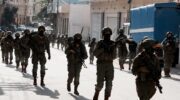
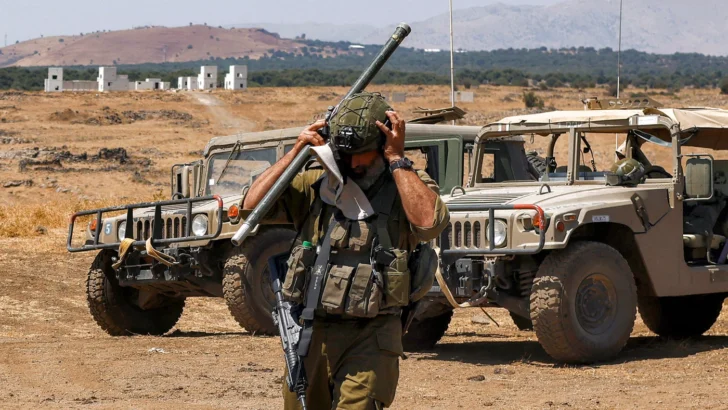
Israeli forces had crossed beyond the long-established disengagement lines, expanding their occupation of the Golan Heights and entering areas that had not been previously under their control.
What began as limited incursions soon developed into a sustained military presence.
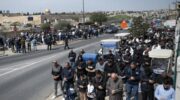
Israeli patrols appeared on access roads, checkpoints were established and temporary and permanent positions were set up, increasingly restricting civilian movement, access to land and basic economic activity.
According to documentation collected by Al-Marsad, the Arab Human Rights Centre in the Golan Heights, Israeli forces have, since expanding their occupation, detained more than 40 Syrian civilians.
Many were apprehended in their villages or while working on agricultural land and transferred to prisons inside Israel, reportedly without formal charges, judicial review or access to legal counsel.
In several cases, families were not informed of the detainees’ whereabouts, and Israeli authorities refused to provide basic information regarding their legal status.
At the same time, Al-Marsad reports that approximately 30 Syrians have been killed by Israeli forces in various circumstances, including shootings during military operations, the use of live fire near civilian areas, and fatalities linked to restrictions on movement and access.
In all cases, no transparent investigation or accountability mechanism has been made available to affected families.
Farmers have been denied access to their land during critical agricultural periods. Movement between villages has been restricted by ad hoc checkpoints and patrols. Military activity near homes, grazing areas and civilian infrastructure has fundamentally altered the security and economic conditions of local communities.
These facts, however, are not merely contextual but legally determinative. Israel’s actions in southern Syria cannot be separated from its occupation of the Syrian Golan Heights, which the international community has consistently recognised as illegal.
These post-Assad incursions amount to an expansion of military occupation into additional Syrian territory, to which international humanitarian law applies in full.
Occupation in fact
Under international law, a military occupation exists when a foreign armed force exercises effective control over territory outside its sovereign borders.
Article 42 of the 1907 Hague Regulations defines occupation as territory “actually placed under the authority of the hostile army”. The assessment is factual, not declaratory.
Three elements are commonly examined: the presence of foreign armed forces; the inability of the local sovereign authority to exercise effective control; and the capacity of the foreign force to exercise authority over the territory and its population.
Since the fall of the Assad regime, all three elements have been present in southern Syria, where Israeli forces have established a sustained physical presence beyond the 1974 disengagement lines.
The Syrian state, in a period of political transition, is unable to exercise effective authority in the areas concerned.
Most significantly, Israeli forces have demonstrated their capacity to control civilian movement, restrict access to land, conduct arrests and use lethal force.
The claim that such measures are temporary or defensive does not alter their legal character.
International humanitarian law does not recognise a category of temporary occupation exempt from legal obligations. Once effective control exists, the law of occupation applies in full.
Under the Fourth Geneva Convention of 1949, civilians in occupied territory are designated as “protected persons”.
Their protection does not depend on the occupying power’s motives or the territory’s political status. It flows from the fact of occupation and from the obligation to protect civilians during armed conflict.
This obligation has been explicitly denied by the Israeli military in southern Syria.
In response to a request submitted by Al-Marsad demanding disclosure of information regarding military activity in areas occupied after the fall of the Assad regime, the Israeli army argued that the area is not under military occupation, while simultaneously acknowledging both temporary and permanent military presence.
This position appears designed to deny the applicability of international humanitarian law and to evade the legal responsibilities that flow from occupation.
Yet the experiences of civilians – including detentions, killings, and restrictions on movement and access to land – provide concrete evidence of the exercise of authority by an occupying power, as well as of potential breaches of international humanitarian law in relation to protected persons.
Legal consequences
Where occupation exists, the occupying power is bound by extensive legal obligations. These include the duty to ensure public order and civil life, to respect private property, to protect civilians from violence and intimidation, and to administer the territory for the benefit of the local population.
Detention must comply with strict legal safeguards. The use of lethal force must meet the requirements of necessity and proportionality. Collective punishment, intimidation and coercive measures against the civilian population are prohibited.
Occupation law is also premised on temporariness. The occupying power may not alter the legal status of the territory or pursue long-term strategic or territorial objectives. Measures taken must be strictly linked to immediate security needs and must minimise harm to civilians.
The documented pattern of detentions, killings and restrictions in southern Syria raises serious questions about the Israeli military’s compliance with these obligations.
Large-scale detention without due process, refusal to disclose detainees’ whereabouts and the absence of effective judicial review may amount to arbitrary deprivation of liberty in violation of the Fourth Geneva Convention.
The classification of Israel’s actions as a de facto occupation carries concrete legal consequences, including international responsibility and accountability for violations.
It also engages the obligations of third states, which are required under international law not to recognise as lawful situations arising from serious breaches, nor to render aid or assistance in maintaining them.
For Syrians living under this reality, the issue is not abstract. It concerns liberty, safety, access to land and legal protection.
The situation in southern Syria, therefore, presents a critical legal test. Based on the facts on the ground, international law applies, and failure to enforce it risks further eroding the protections it was designed to provide.
Wesam Sharaf is an attorney from Ein Qiniyye in the occupied Syrian Golan Heights. He graduated from the Haifa University Faculty of Law. He has worked as a human rights lawyer for Adalah – The Legal Center for Arab Minority Rights in Israel, and for Al-Marsad, a human rights centre in the Golan Heights.
RELATED:
- Neocons Try Again in Syria
- Israel Expands Invasion of Syria, Launching Massive Airstrikes After Assad’s Fall
- Trump’s “Muslim ban”: Israeli strategic plans to “remake the Middle East” from 2001 and before targeted the same countries
- ‘Decades to rebuild’: Israel grabs land and wipes out Syria’s arsenal
- WATCH: The Israeli Hit List – Iran Remains