Haaretz: In the end, any plan for Gaza’s resuscitation will require more than America’s leadership, Hamas’ disarmament, the PA’s acquiescence, or the region’s support. Here’s what’s missing from U.S. President Donald Trump’s offering.
U.S. President Donald Trump’s 20-point plan for the end of the Gaza war includes some positive aspects, including, finally, a commitment by Prime Minister Benjamin Netanyahu that “Israel will not occupy or annex” the Gaza Strip and that none of its Palestinian population “will be forced to leave.”
Trump’s Gaza Riviera comments earlier this year alarmingly – and perhaps inadvertently – injected the idea of forced population transfers into mainstream Israeli political discourse, and so it is reassuring to hear that it is now, at least in theory, off the table.
There are also references in Trump’s newest plan to establishing Palestinian self-governance, even eventual statehood, and a role for the Palestinian Authority in Gaza – references that are surprising given the extreme aversion to such concepts by Netanyahu’s coalition partners.
The truth is that implementing the White House plan in full would be vastly better than the grim and grinding status quo. But, unfortunately, none of the comments made by President Trump or Prime Minister Netanyahu on September 29 should suggest that the plan will actually be implemented. And they certainly shouldn’t be seen as a fundamental shift in the trajectory of the Israeli-Palestinian conflict, despite Trump’s confidence.
A few days ago, we saw a leaked version of Trump’s plan and a post-war blueprint purportedly designed and to be led by former British Prime Minister Tony Blair. Both of these documents were almost fantastically ambitious – including a “Board of Peace” chaired by Trump himself that seems highly unlikely to ever get off the ground.
But the White House plan formally released on Monday (September 29) was slightly different. Namely, it included bigger loopholes likely added to make it more palatable to Netanyahu and his far-right coalition partners. These same loopholes will also make it decidedly unpalatable to other, critically important partners in this process: regional governments in the Middle East, of whose support Trump touted in his press conference.
Two areas are particularly problematic. The Israeli military withdrawal from Gaza will be “based on standards, milestones, and timeframes linked to demilitarization that will be agreed upon between the IDF and the International Stabilization Force created for Gaza, as well as the plan’s other guarantors and the United States. This essentially leaves any withdrawal from the Strip almost entirely up to Israel’s discretion. According to Netanyahu, that means that when it comes to Gaza, “Israel will retain security responsibility, including a security perimeter for the foreseeable future.”
The other problematic area relates to Palestinian statehood. The plan states that “while Gaza re-development advances and when the PA reform program is faithfully carried out, the conditions may finally be in place for a credible pathway to Palestinian self-determination and statehood.” So even if the PA reforms, statehood is no guarantee. To most Palestinian ears, that sounds a whole lot like “never.”
In a joint statement issued after the Trump-Netanyahu press conference, the governments of Saudi Arabia, Jordan, the United Arab Emirates, Indonesia, Pakistan, Turkey, Qatar, and Egypt welcomed Trump’s efforts, but then zeroed in on the IDF withdrawal and Palestinian statehood, calling for “a security mechanism that guarantees…full Israeli withdrawal, rebuilds Gaza and creates a path for a just peace on the basis of the two-state solution.”
This reflects what’s missing in Trump’s plan: Even if it is accepted by Netanyahu, the region doesn’t understand this as a true Israeli commitment to a full withdrawal from Gaza or genuine backing for a two-state solution.
Joint Statement by the Foreign Ministers of Qatar, Jordan, UAE, Indonesia, Pakistan, Türkiye, Saudi Arabia, and Egypt welcome US President’s sincere efforts to end the war in Gaza#MOFAQatar pic.twitter.com/TaBIDF8ysW
— Ministry of Foreign Affairs – Qatar (@MofaQatar_EN) September 29, 2025
The plan also presents a seemingly existential problem for Hamas, which, according to the text, is required to disarm. Desirable as that may be, from their perspective, it effectively means surrender. For a group defined by its militancy, stubbornness, cynicism, and pathological cruelty*, that seems impossible – essentially the equivalent of asking Hamas to stop being Hamas. What is more, it asks Hamas to commit to disarmament as a precondition – even before any of the other measures are implemented (and despite the fact that, according to hundreds of Israeli ex-security officials, Hamas’ military capacity was degraded to the point of no longer posing a strategic threat to Israel many months ago).
[*IAK NOTE: these words – “militancy, stubbornness, cynicism, and pathological cruelty” – could just as easily be applied to Israel’s leaders, and are based on October 7th mythology. There is literally no evidence of Hamas beheading babies or raping women, and it can not be stressed enough that “many, if not most of the civilians killed that day were killed by the overwhelming firepower the Israeli military deployed” using the Hannibal Directive. It is also imperative to recognize that international law supports the efforts of resistance groups against an occupying power, the UN extending that right to the point of armed resistance.]
With his popularity in Israel now greater than Netanyahu’s own and perhaps also greater than almost any other Israeli leader, Trump holds cards that could stop the Gaza war and improve the trajectory of the Israeli-Palestinian conflict. Trump has more cards, in fact, than most U.S. presidents would hold (or at least contemplate playing) in such circumstances. Both Israelis and Arabs, not to mention many Americans, hoped he would leverage that influence for good.
But can he or will he force Netanyahu to accept a genuine PA role in Gaza and a path – however conditional – to Palestinian statehood? Could Trump still push Netanyahu to do so, if such a commitment would likely dissolve Netanyahu’s government? Can Trump somehow influence Hamas to give up its weapons and leave the Gaza Strip, and therefore accept defeat? Can he convince the Palestinian Authority to accept a circumscribed and largely technocratic role, at least initially, and a half-hearted Israeli commitment to Palestinian statehood? And can he persuade regional governments to lend their political and financial support to a laudable but still improbable plan?

Obsessing over all this was never where Trump wanted to devote his energies. And from Saudi Arabia to Syria, Arab leaders would likely prefer nothing more than to move on from a conflict that has defined their region for far too long.
Here, their predilections coincide. What Trump wants is largely what much of the region wants: de-escalation of the region’s conflicts, replaced with an agenda driven by technology, investment, and commerce. This, of course, includes a stable and decent post-Assad Syria; an end to the belligerence of Iran and its proxies; and eventually the expansion of normalized Israeli relations with the Arab and broader Muslim world.
But as long as the principal news coming from the Middle East is more carnage in Gaza – and Trump’s plan suggests that the carnage will continue – it is hard to be optimistic for any of this to occur.

Even a year ago, Saudi officials still spoke of normalization with Israel. Now their focus has turned to an initiative with France to champion Palestinian statehood. Suffice it to say that’s not where the Saudis planned to devote their energies, either.
In the end, any plan for Gaza’s resuscitation will require more than America’s leadership, Hamas’ disarmament, the PA’s acquiescence, or the region’s support.
It will require Israel’s enthusiastic facilitation. But Israel’s approach to anything Palestinian is cautious, grudging, heavily caveated, and politically conditioned.
Here is where Trump really has cards to play: Netanyahu doesn’t like saying no to Trump, certainly not in public. This time, Netanyahu found a way to say yes to Trump, or at least seemed to. And for the moment at least, Trump seemed to go along.
Ambassador (ret.) Michael Ratney was the U.S. Ambassador to the Kingdom of Saudi Arabia, Special Envoy for Syria, and Consul General in Jerusalem.
Netanyahu secured key edits to Trump plan, slowing and limiting IDF’s Gaza withdrawal
By Jacob Magid, Reposted from Times of Israel, September 30, 2025
Times of Israel: US proposal for ending war says army will only pull back when specific benchmarks are met and a buffer zone is to be established, after the earlier version was more vague on Israel’s red lines
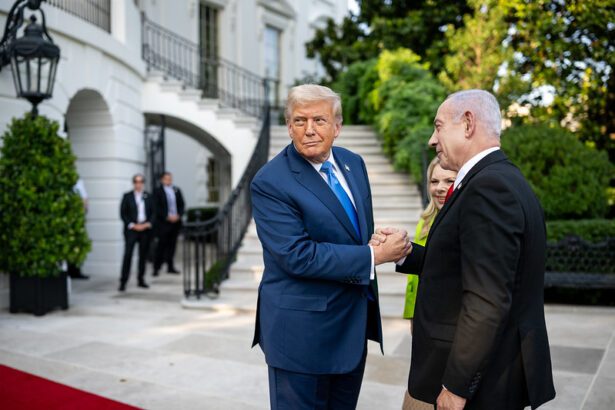
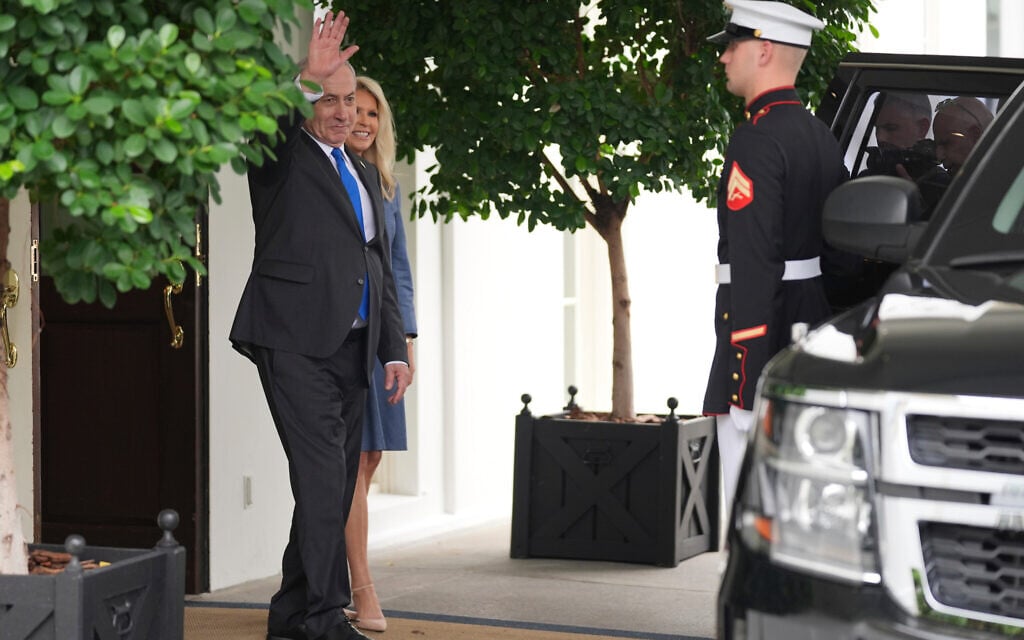
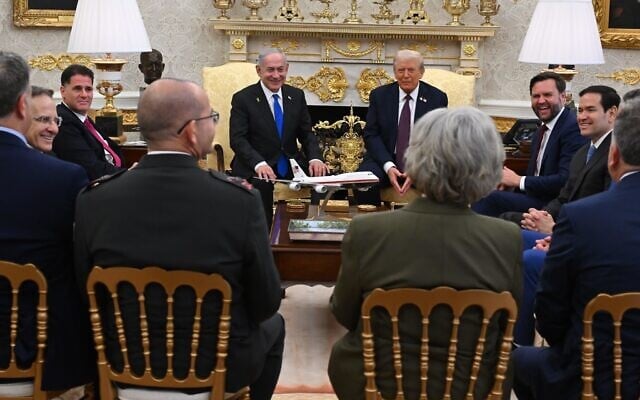
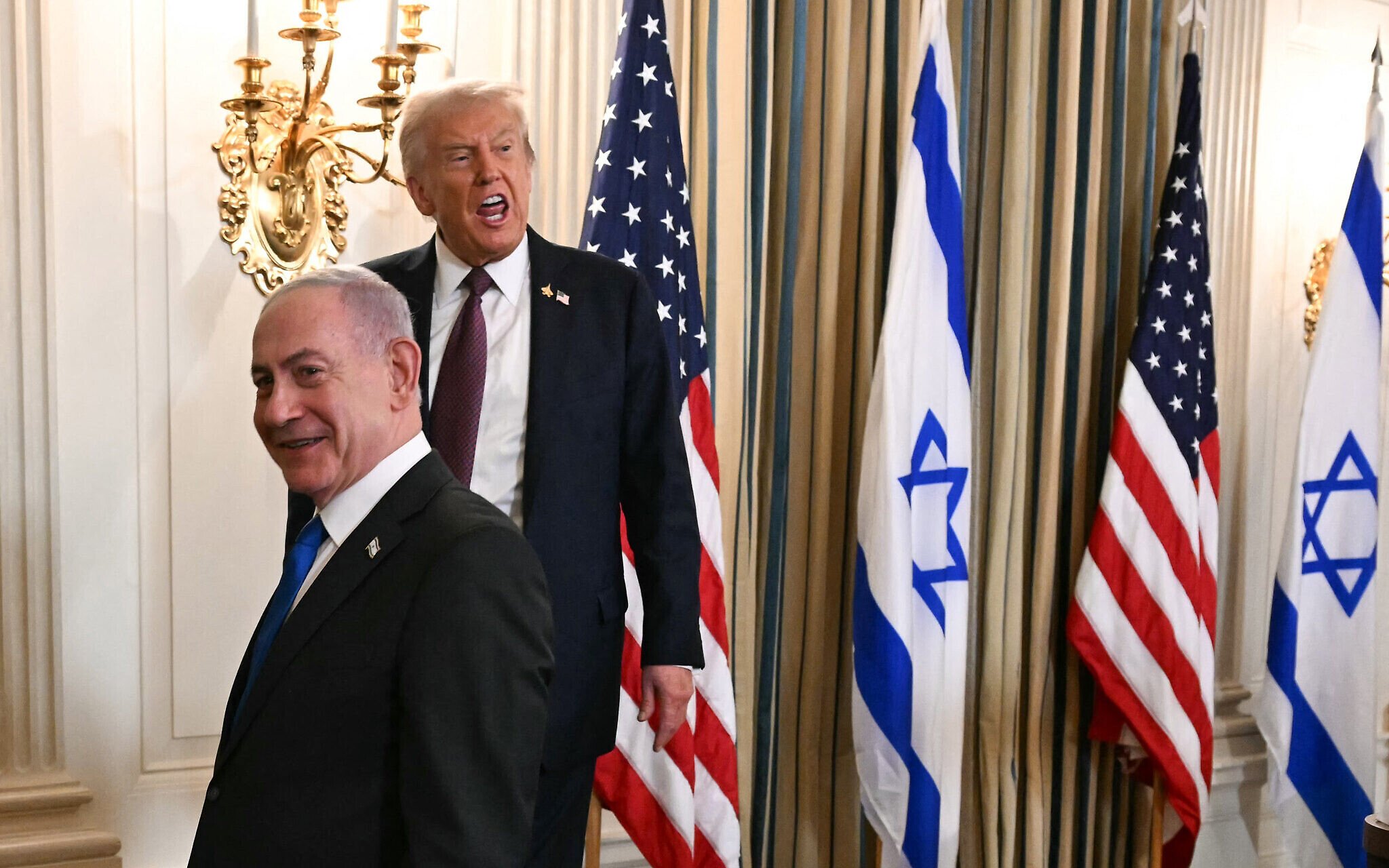
Prime Minister Benjamin Netanyahu was bullish on Monday evening shortly after leaving the White House, where he accepted US President Donald Trump’s plan for ending the war in Gaza.
“Now the whole world, including the Arab and Muslim world, is pressuring Hamas to accept the terms that we created together with Trump, to bring back all the hostages — the living and the dead — while the IDF stays in the majority of the Strip,” Netanyahu said in a video he posted to social media.
“Who would have believed it?!” Netanyahu exclaimed in Hebrew, relishing the terms of Trump’s plan.
Netanyahu was naturally trying to frame the trip positively to his base back home amid headlines from earlier in the day focusing on his apology to Qatari Prime Minister Mohammed Abdulrahman Al Thani for Israel’s strike targeting Hamas leaders in Doha.
But the premier did, in fact, have a lot to celebrate, as he managed to secure significant 11th-hour changes to the Trump proposal regarding the scope and nature of the IDF’s withdrawal from Gaza, along with the disarmament of Hamas.
The two issues are arguably the most sensitive of the entire negotiations.
Hamas’s central demand from the beginning of the war has been for Israel to completely withdraw from Gaza in exchange for the hostages.
And while it has expressed willingness to give up governing control of Gaza, the surrender of its weapons has been a red line, as it recognizes that they are essential for the group to maintain a degree of influence in the Strip.
Benchmarks for withdrawal
The US sought to address both of these issues, but did so somewhat vaguely in the version of its Gaza peace proposal that it presented to Arab and Muslim partners last week.
Point 3 of what was then a 21-point plan obtained by The Times of Israel stated that “Israeli forces will withdraw to the battle lines as of when the [US special envoy Steve] Witkoff proposal was presented to prepare for hostage release.”
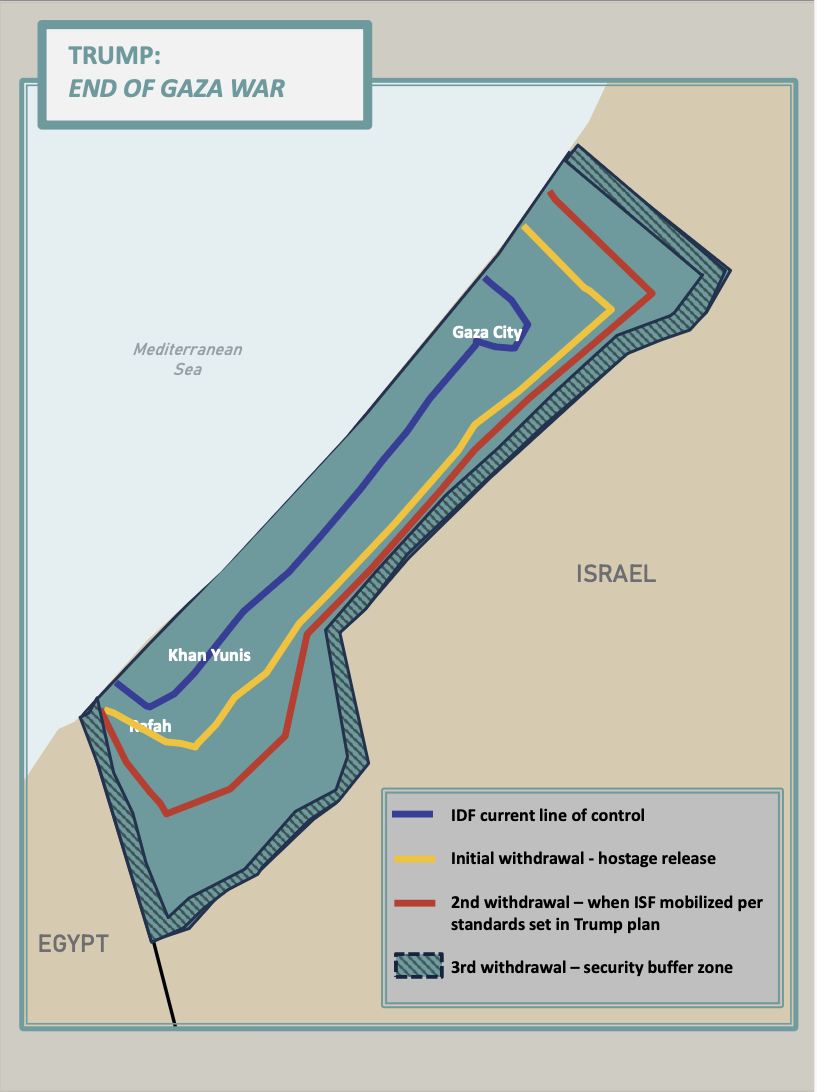
It didn’t specify which Witkoff proposal, even though there have been several. But the updated version published on Monday (September 29) by the White House stated that “Israeli forces will withdraw to the agreed-upon line.”
This, too, wasn’t elaborated upon, but it appeared to refer to a new map that was included in the updated version that illustrated three phases of Israeli withdrawals from Gaza.
As Netanyahu mentions in his video, the map shows that Israeli troops will be able to remain in the majority of the Gaza Strip even after the first pullback of IDF troops in preparation for all of the hostages to be released.
They will then be able to remain in those positions until the International Stabilization Force (ISF) of Arab and Muslim countries is prepared to deploy and fully operate to disarm Hamas, the plan states.
Even after the second phase of the withdrawal, the IDF will remain in over a third of the Strip, the map indicates.
The third withdrawal will clear the final troops out of Gaza, but the map shows that a security buffer zone will be established along the perimeter of the entire Strip, another Israeli demand aimed at mitigating the threat of another October 7-like invasion.
Point 16 of the original US plan simply stated that the IDF “will progressively hand over the Gaza territory that [it] occupies.”
But the updated version adds two lines that further qualify the nature of the withdrawal in Israel’s favor, stating that IDF “will withdraw based on standards, milestones, and timeframes linked to demilitarization that will be agreed upon between the IDF, ISF, the guarantors, and the US.
“Practically, the IDF will progressively hand over the Gaza territory it occupies to the ISF according to an agreement they will make with the transitional authority until they are withdrawn completely from Gaza, save for a security perimeter presence that will remain until Gaza is properly secure from any resurgent terror threat,” the updated plan adds.
Disarmament terms
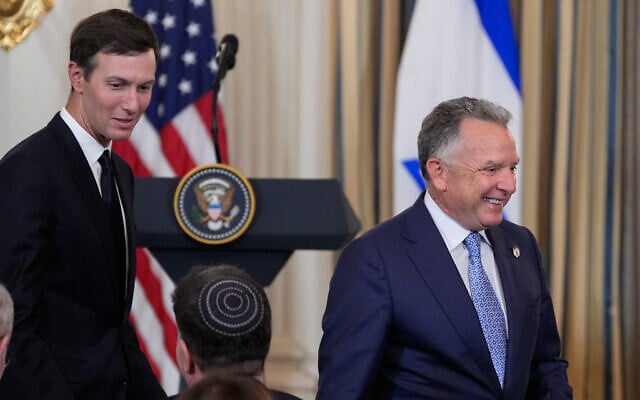
On the issue of disarmament, too, Netanyahu managed to secure noteworthy changes following a pair of hours-long meetings with US special envoy Steve Witkoff and top adviser Jared Kushner at his hotel in New York on Thursday and Sunday.
Whereas last week’s version granted amnesty to “Hamas members who commit to peaceful coexistence,” the plan published Monday adds that those members also have to “decommission their weapons.”
Point 13 of the plan originally stated, “There will be full commitment to destroy and stop building any offensive military infrastructure.”
But the updated version goes into much greater detail on the issue, stating that “all military, terror, and offensive infrastructure, including tunnels and weapon production facilities, will be destroyed and not rebuilt.”
“There will be a process of demilitarization of Gaza under the supervision of independent monitors, which will include placing weapons permanently beyond use through an agreed process of decommissioning, and supported by an internationally funded buy-back and reintegration program, all verified by the independent monitors,” the Monday-publicized plan states.
Arab mediator is less bullish than Netanyahu
A diplomat from one of the mediating countries reflected that while Arab and Muslim leaders got important face time with Trump last week during a multilateral meeting on the UN General Assembly sidelines, Netanyahu managed to secure “the last word,” convincing Washington to make additional changes to the plan at a point in the process when it was much harder for them to intervene.
Speaking to Trump last also allowed Netanyahu to secure something of a concession from the US president when the latter made a point of acknowledging the Israeli premier’s “understandable opposition to a Palestinian state” — somewhat deflating the proposal envisioning a pathway to Palestinian statehood, even if that pathway was far from definitive.
The Arab diplomat said it will be difficult for Egypt and Qatar to convince Hamas to accept the US proposal as is, given that it would force the terror group to give up all of its leverage by releasing all remaining hostages in the first 72 hours of the deal, while initially only securing a very partial withdrawal of Israeli troops.
The diplomat said it would likely take at least several days for Hamas to respond, at which point it would likely have amendments of its own that it would try to submit, as Netanyahu did. In the past, however, Witkoff has demanded that Hamas accept his proposals as is.
Jacob Magid is The Times of Israel’s US bureau chief
RELATED:
- Over 30 states met during Netanyahu’s UN speech to weigh action against Israel
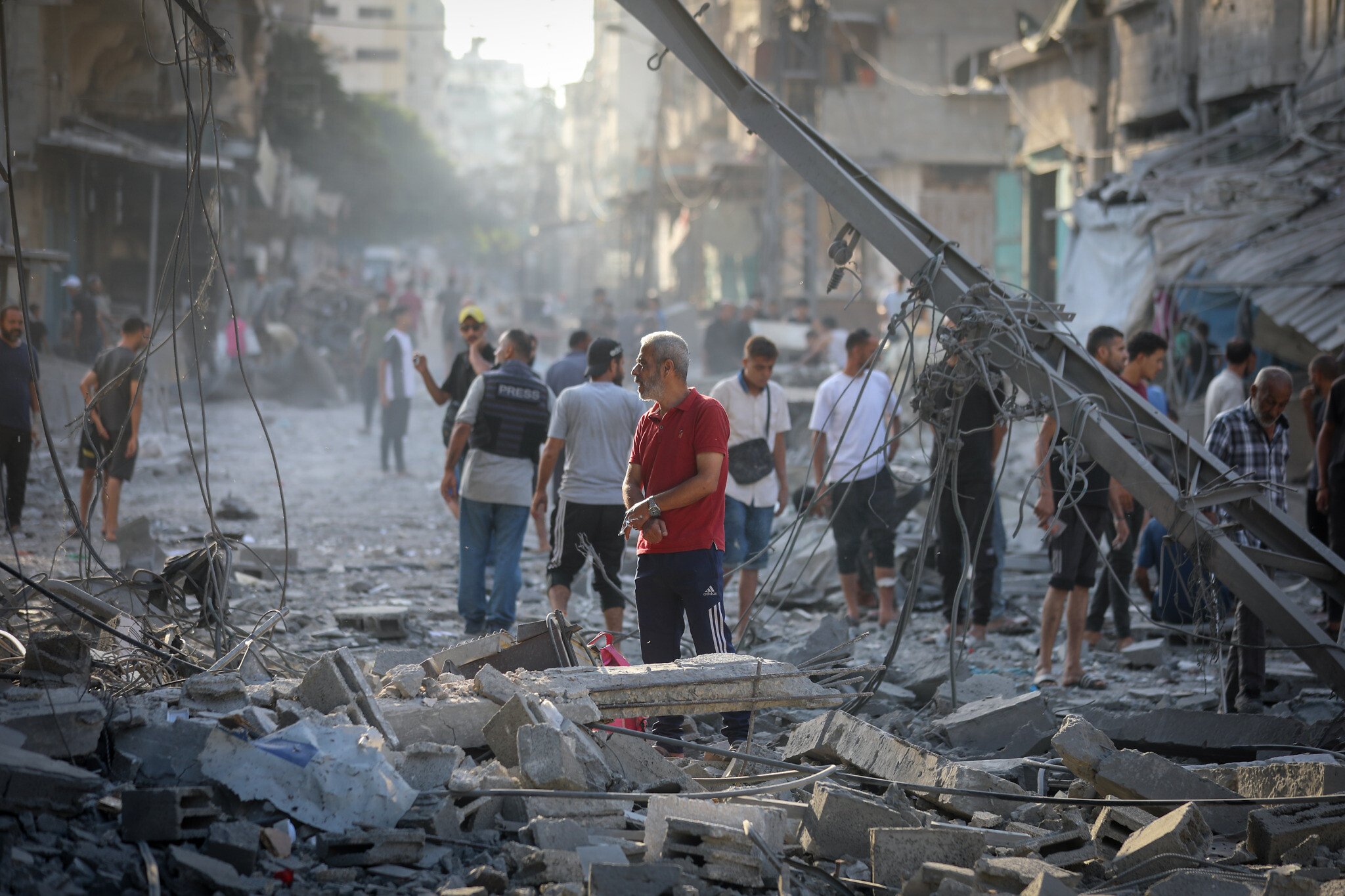
- Israel’s ecocide in Gaza sends this message: even if we stopped dropping bombs, you couldn’t live here
- From Netanyahu’s Deceitful UN Speech on Gaza, a Terrible Truth Emerges
- Americans’ Support for Israel Dramatically Declines, Times/Siena Poll Finds
- New polls show growing support for Palestine, and for calling Israel’s actions “genocide”