The last family in this Palestinian village left their home last week; Yanoun now joins a growing list of West Bank communities that have been erased from existence, through the establishment of Israeli “shepherding outposts” in their place.
My last visit to the village of Yanoun was about two years ago, when I reported on the only school that remained in the beleaguered hamlet in the northern occupied West Bank. Israeli settlers and the army had been continuously harassing the residents of the Palestinian village in an attempt to force them to leave.
“Look closely at the village and examine it carefully,” a local representative, Rashid Murrar, told me at the time. “You may not see it next time.”
He was right. Khirbet Yanoun, a small rural Hamlet southeast of Nablus known for its agricultural production, no longer exists.
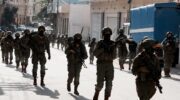
On the morning of Sunday, December 28, 2025, Israeli military authorities issued a sudden warning: all residents of Yanoun had to evacuate by 4 p.m.
Murrar packed all his belongings by evening, leaving Khirbet Yanoun with his family. Once home to dozens of families, the village stood completely empty of its residents for the first time in decades.
Murrar’s family had been the last to stand their ground in the village in the face of relentless settlement expansion. Since the late 1990s, when Israeli settlements and their associated outposts began encircling Yanoun, there have been hundreds of attempts to empty it of its inhabitants.
Yet no image of that slow process of displacement has rivaled the scene that unfolded in Yanoun last week, with roads, homes, and fields left silent.
This is the story of how yet another rural Palestinian community has been ethnically cleansed by Israeli settlers and the Israeli army, joining the growing list of Palestinian communities in the West Bank countryside that have been erased from existence.
A life like hell
Yanoun’s ordeal began between 1996 and 1999, with the establishment of the Israeli settlement of Itamar and a series of surrounding outposts, including Giv’ot Olam and Givat Arnon (also known as Hill 777). Over time, these settlements tightened their grip around the hamlet, restricting movement, access to land, and daily life.
Nearly twenty families were displaced from Yanoun in the years that followed, many after repeated settler attacks. By 2002, the remaining families were forced to leave the hamlet entirely for nearly a year, relocating to the nearby town of Aqraba, where they stayed with relatives or rented small apartments.
Rashid Murrar describes the attacks as relentless and calculated. “They came with dogs and guns. They beat residents,” he said. “They told us they didn’t want to see anyone here the following week, and that we should move to Aqraba.”
In 2005, following pressure from humanitarian organizations and international activists who accompanied them, the residents of Yanoun returned to their homes. But the violence never stopped, intensifying more in recent months.
Masked settlers regularly entered the hamlet, residents said, beating people, throwing stones, vandalizing crops, emptying water tanks, and stealing sheep. “Life became unbearable,” Murrar recalled. “It turned into hell.”
“We tried to stay in the village until our very last breath, but in the end, we were besieged inside our homes,” he said. “The army prevented anyone from outside the hamlet from dealing with us, selling to us, or buying from us. Our livelihood and our food were under siege.”
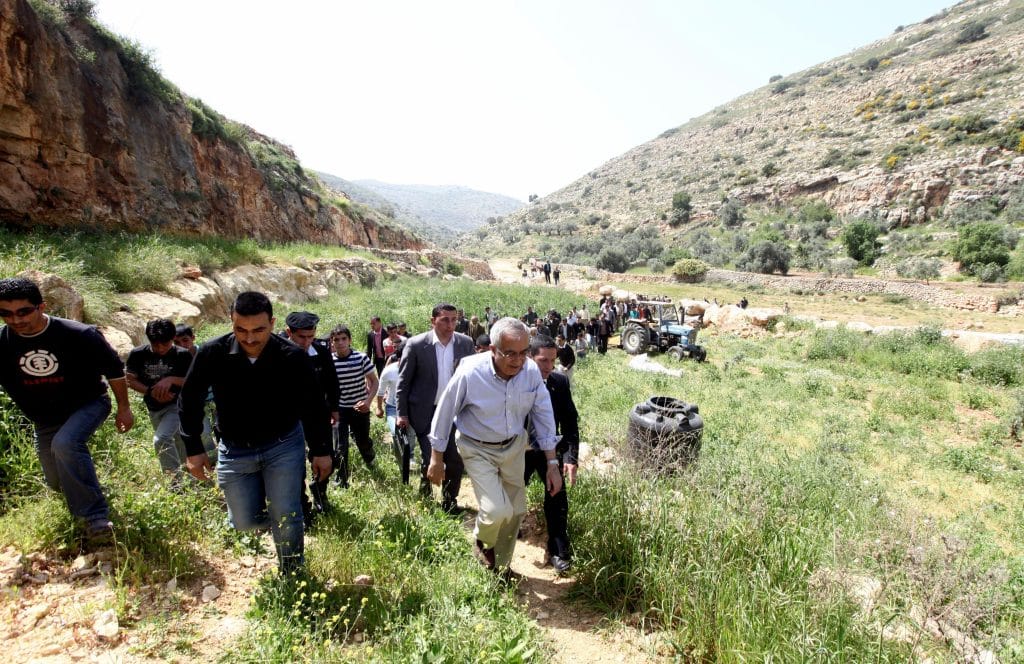
Today, Israeli settlers often take over Palestinian land in the West Bank’s countryside by establishing what are known as shepherding outposts — illegal settler outposts that are set up on Palestinian land for the purpose of grazing livestock, usually as a prelude to more violent forms of harassment and intimidation. Yanoun is one of the earliest testing grounds for this rural colonization strategy, according to local historian and social researcher Hamza Aqrabawi in an interview with al-Quds al-Arabi on December 29, 2025.
Aqrabawi told al-Quds al-Arabi that a settler by the name of Avraham Avri Ran established a shepherding outpost near Yanoun in the mid-1990s, which served as a gathering point for settler gangs and later formed the nucleus of what would become known as the Hilltop Youth movement.
The outpost established by Ran, now known as Giv’ot Olam, played a central role in launching organized attacks against Yanoun and surrounding communities, cementing Ran’s position as one of the movement’s key ideological figures.
In the years that followed, settler attacks on Yanoun residents continued intermittently, with the first lynching attack taking place in 1996 and causing an old man to completely lose his hearing. Recent years, however, have seen a significant escalation both in frequency and severity.
According to Aqraba’s mayor, the municipality, which administratively oversees Yanoun, has documented approximately 273 settler attacks over the past two years. Alongside the continued confiscation of Yanoun’s remaining lands, which do not exceed 3,500 dunams (350 hectares). This comes after nearly 80% of the hamlet’s land has already been gradually seized by the Israeli authorities, which either designated it as a closed military zone or allotted it to settlement expansion outright.
The municipality attempted to support residents’ abilities to remain by exempting them from electricity and water fees, in addition to other services. Appeals were also made to international organizations to fund agricultural and service projects.
“But under occupation, we cannot provide security,” Aqraba’s mayor said. “We appealed to several international bodies to provide agricultural and service projects for the hamlet, but we cannot provide them with security protection under occupation.”
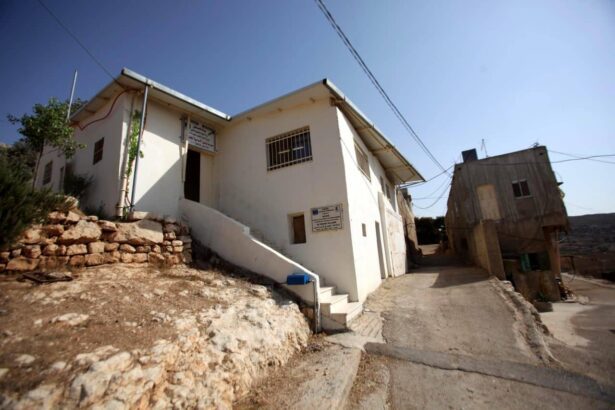
In an effort to support residents’ steadfastness, villagers renovated an old house in the year 2000 to serve as a school. The building was no larger than 150 square meters and consisted of only three rooms.
Since the Israeli occupation prohibited expanding the school or even undertaking basic repairs, the villagers completed the roof with corrugated steel sheets, a measure intended to prevent demolition.
The school served about 20 students from the hamlet. For these children, the journey to education was not simply a walk to class; the distance to surrounding schools was long, and the route was fraught with obstacles, including soldiers at checkpoints, searches along the road, and the constant presence of military vehicles.
Salah al-Din Jaber, head of the Aqraba municipality, explained that “students are subjected to searches by soldiers and checkpoints on their way to and from school.”
By late December 2025, Yanoun School was effectively closed. Students and teachers stopped attending classes after escalating settler threats and continuous attacks made the continuation of education unsafe.
“Settlers set up checkpoints at the entrances to the hamlet, making it difficult for teachers to reach it,” Jaber said. “This led to its closure.”
The closure of the school was not simply a disruption of learning. It was a final sign that the community’s social fabric had been irreparably damaged.
Land, water, and survival
Yanoun was more than a cluster of houses. It was an agricultural area whose fertile terrain had served as the foundation of local life for decades.
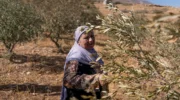
Locals tell Mondoweiss that fields of wheat, barley, and lentils once spread across Yanoun’s slopes, while ancient olive trees, some more than a hundred years old, made up a significant portion of the village’s subsistence.
At the entrance of the village lies Ain Yanoun — the local spring from which the hamlet gets its name and which is distinguished by a stone structure that collects spring water flowing from the north.
Many residents prefer the name “Ain Yanoun” over the Arabic designation khirbeh, which is often translated into English as “ruins,” arguing that the term implies abandonment. They insist that Yanoun has never been abandoned; its olive trees tell much of that story.
Yet this agricultural importance made the community a target. Israeli policies increasingly cut off Palestinians from their land, imposed restrictions on cultivation, and used rural outposts as cover for what many Palestinians see as de facto land annexation.
In 2006, residents petitioned Israel’s Supreme Court to regain access to their farmland. The court ruled that denying farmers access under the pretext of protection was disproportionate, allowing them to return under complex security arrangements, which never truly protected them.
Yanoun’s fate mirrors that of dozens of Palestinian villages surrounding Itamar and its expansion corridors. These communities are targeted through a combination of land confiscation, settlement outposts planted near homes, military checkpoints, and severe restrictions on farming and grazing.
“Every olive tree that cannot be harvested is another step toward emptying a village of its people,” community activist Ayham Abu Bakr told Mondoweiss. “Yanoun has long been a living example of this strategy.”
“The goal is gradual surrender,” he added. “To exhaust people until the land is empty of its owners.”
Today, Yanoun is empty. But its story has not ended.
“We were forced to leave once, then we returned,” Murrar says. “Now I live in an old house that I consider temporary. My wife lives far away in Aqraba. We will have to reunite there very soon.”
Yanoun did not disappear overnight. It was erased slowly — piece by piece.
Majd Jawad is a Journalist and researcher from Jenin, Palestine, holding a Master’s degree in Democracy and Human Rights from Birzeit University and a Bachelor’s degree in Journalism.
RELATED:
- ‘Nowhere is safe’: Fear and mourning inside the West Bank villages where Israeli settlers went on the rampage
- In This Palestinian Christian Village, the Hypocrisy of Christian Zionism Is Unmistakable
- The future of 12 Palestinian villages in the West Bank under threat
- A West Bank Village Destroyed
- Palestinians rally at historic villages in northern Israel