For Palestinians in Gaza, Phase 2 of the ceasefire offers little hope that it will fundamentally change the status quo Israel has established over the past three months, which many refer to as “a new form of genocide.”
Phase 2 of the tenuous ceasefire between Israel and Hamas has started, and it will involve “the full demilitarization and reconstruction of Gaza,” U.S. Middle East envoy Steve Witkoff declared on Sunday. Israel has opposed advancing to a second phase, which would include a larger Israeli withdrawal from the Strip, the start of reconstruction, and the transfer of control over Gaza’s institutions from Hamas to a provisional authority of Palestinian technocrats
This technocratic committee, tasked with day-to-day governance, will answer to a U.S.-mandated “Board of Peace” as part of Trump’s 20-point “peace plan.” Israel says this body will be headed by Bulgarian diplomat Nikolay Mladenov, who is known for his ties to Israel’s ally, the United Arab Emirates. The names of the 14 Palestinian technocrats were also made public, reportedly to be headed by former Deputy Minister of Planning in the Palestinian Authority (PA), Ali Shaath.
But these developments don’t matter. Israel remains the key party capable of influencing the details and likely implementation of the ceasefire — and it will try to use that influence to define what Phase 2 actually looks like.
Despite the Trump administration’s claims that Phase 2 will see a period of stable governance and reconstruction, the way in which Israel has already systematically violated the terms of the first phase indicates it will only try to further shirk its obligations and deepen the current status quo: a divided Gaza Strip undergoing slow starvation and pummeled with periodic deadly military strikes.
If the U.S. has so far fallen short of forcing Israel to adhere to the full terms of the ceasefire, what’s the likelihood that Trump will compel Netanyahu to cede more of Gaza’s territory in the second part of the deal?
For Palestinians in Gaza, Phase 2 doesn’t carry much hope that it will radically alter the direction of where things have been heading since October. The U.S. has turned a blind eye to Israel’s frequent military strikes, and as far as aid and reconstruction are concerned, U.S. officials already admit: the parts of Gaza where Hamas still exists — where the majority of the population currently resides — won’t see any relief.
Israel’s plans for Gaza, recycled
Israel’s plans for Gaza, which Israeli officials have made explicit over the past two years, have been gradually unfolding throughout the ongoing ceasefire: a policy of bombardment and starvation, with the hopes of precipitating mass exodus from Gaza — and if that’s not possible, to facilitate gradual “voluntary migration.”
Before the ceasefire, this Israeli policy was articulated unequivocally: build a glorified concentration camp for Palestinians in a small part of Gaza — euphemistically called a “humanitarian city” — and facilitate their eventual expulsion. Any Palestinian who refuses to go to these zones will be killed or starved.
Once the ceasefire went into effect, the basic Israeli blueprint didn’t change, but it adapted its methods to fit Trump’s “peace” framework. This allowed Israel to continue to impose the same basic strategy on the ground — in violation of the ceasefire’s nominal terms — with minimal push back from the U.S.
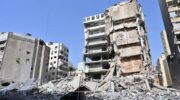
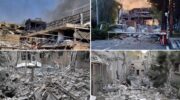
Over the past three months, Israel has created a status quo on the ground in Gaza that Palestinians say is still genocidal. These are the conditions it will be seeking to maintain in Phase 2 of the ceasefire.
‘A new form of genocide’
Gaza continues to be divided into two halves along the so-called “Yellow Line,” with one side controlled by Hamas, and the other exclusively occupied by the Israeli army.
The conditions Israel created in the past two months are consistent with Israeli and U.S. official statements that this division in Gaza will be permanent, and reconstruction will only be allowed into the Israeli-controlled zone, as articulated by Jared Kushner and JD Vance last October.
In effect, this would mean that Gazans would be forced to leave those areas of Gaza and move into the side controlled by Israel (after they have undergone security screening), and would remain under Israeli surveillance. U.S. officials reportedly said that this would be a “green zone” to which Palestinians would be allowed to travel, but would not be allowed to leave.
The Israelis have been even clearer about this. In early December, Israeli army chief of staff Eyal Zamir said the Yellow Line would be Israel’s new border. Most recently, Israel’s Defense Minister, Israel Katz, vowed in December that Israel would never fully withdraw from Gaza, and that Israel would establish “Nahal pioneer groups” (Israeli settlements) in northern Gaza, before later walking back the comment.
As for the area under Hamas control, Palestinians are free to starve or die. We’ve already been given a prelude of what this would look like over the past three months: Israel regularly launches military raids and strikes across Gaza, killing hundreds since the start of the ceasefire and assassinating Hamas leaders and military figures, while the population continues to be deprived of vital humanitarian aid that was supposed to be delivered from day one of the ceasefire.
The Israeli strikes have so far killed a total of 447 Palestinians since October. Many of the victims were killed while approaching the “Yellow Line,” including several children. Among them was 11-year-old Dana Maqat, who was killed on December 30 when Israeli forces opened fire on Palestinians east of the Tufah district in Gaza City, according to local testimonies.
Meanwhile, Israel continues to restrict the entry of humanitarian aid and goods, particularly mobile homes and construction materials. Although Israeli authorities claim that between 600 and 800 trucks of aid and goods enter Gaza daily, the World Food Program reports that only around 250 trucks are reaching the Strip, well below the 600 trucks stipulated in the ceasefire deal.
Under the first phase of the deal, the Rafah crossing point was supposed to be opened by Israel without restrictions on the movement of goods and people, particularly Palestinians needing medical treatment outside Gaza. Last week, Israel again refused to open the crossing before the body of the last Israeli captive was returned from Gaza.
And just recently, Israel has banned 37 different international humanitarian organizations from operating in the Strip, which will have devastating consequences for the Palestinians who rely on their services alongside the UN.
Amid these shortages, 1.8 million of Gaza’s 2.3 million residents continue to live in battered tent encampments, where the ongoing winter has taken a heavy toll on its inhabitants. In the past six weeks, 21 Palestinians have died from the cold, according to the Gaza Ministry of Health, including four children. The most recent was one-year-old Muhammad Basiouni, who froze to death last Tuesday in the Mawasi tent encampment.
Palestinians in Gaza have called this status quo “a new form of genocide,” maintaining that the only thing that has changed about Israel’s war on Palestinian existence is its pacing and intensity.
The work of the newly formed “peace” board and technocratic Palestinian committee could equally stall for months under various pretexts. But the main and most convenient pretext will remain Hamas disarmament.
Israel’s convenient excuse: Hamas disarmament
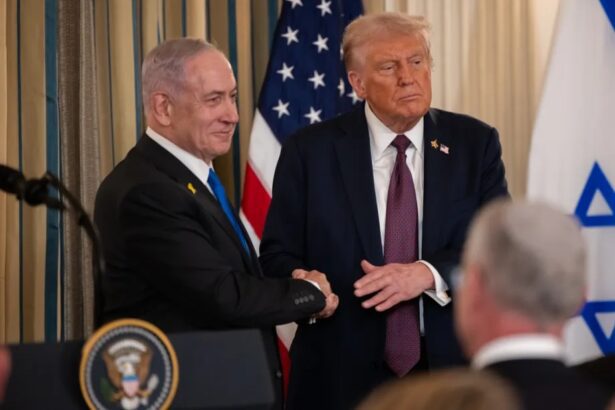
Over the past several months, Israel has lobbied Trump not to move to Phase 2 before Hamas has been fully disarmed. For now, Washington has chosen to move forward with the ceasefire without meeting that condition, but following Benjamin Netanyahu’s meeting with Trump on December 29, 2025, the Israeli Prime Minister said the U.S. president had reaffirmed Hamas disarmament as a precondition for completing the peace plan. Notably, however, Netanyahu did not mention that this means the start of the second phase of the agreement.
Previous statements from Hamas leaders have shown flexibility on various counts: former politburo chief Khaled Mishaal told Al Jazeera that the group had proposed to mediators the “freezing” of Hamas’s weapons — meaning a guarantee not to flout or use them in the framework of a long-term truce. In another Al Jazeera interview, senior Hamas leader Musa Abu Marzouq said in early November that Hamas was open to relinquishing weapons capable of striking inside Israel, but would retain the use of light weapons.
But it’s clear that whatever progress is made in the “green zone” under Israeli control, Israel will refuse to withdraw from the Strip, no matter what Hamas accepts.
Trump’s 20-point plan left what disarmament would look like deliberately vague, failing to specify how Hamas would disarm, whether disarming would include light weapons, according to what timetable it would proceed, and to what party Hamas would hand them over.
Israel, in contrast, has chosen to define disarmament — when it defines it at all — as a process that could take years. Defense Minister Katz has stated that disarming Hamas will mean dismantling all of its military infrastructure, including its massive tunnel network and manufacturing workshops. And Israel isn’t even aware of the full extent of this infrastructure, which it has been unable to dismantle during two years of full-scale war and the mobilization of all of its military forces.
The result of this maximalist demand is simple: no matter what happens, Israel can claim that Hamas has failed to disarm. In the meantime, it can continue implementing the plans it’s been carrying out, in various forms, ever since the genocide began.
Qassam Muaddi is the Palestine Staff Writer for Mondoweiss. He covers social, political, and cultural developments in Palestine, and has written for several outlets in English and French, including the Catholic Terre Sainte Magazine and other outlets. Follow him on Twitter/X at @QassaMMuaddi.
RELATED:
- Israel Has Demolished 2,500 Buildings in Gaza Since Signing Ceasefire Deal
- Why Is Trump’s ‘Peace Plan’ Focused on Deradicalizing Palestinians, Not Israelis?
- Israel’s Peace Plan: Assassinate The Ceasefire Negotiators – 3 articles on the Doha attack
- Experts weigh in on Trump’s Gaza “Peace” Plan – and find it wanting
- 98% of Gaza’s Tree Cropland Destroyed by Israel