Three released Palestinian boys abducted, tortured by Israeli forces while seeking aid
Reposted from Defense for Children International, November 13, 2025.
Ramallah, November 13, 2025—Three Palestinian boys from Gaza released by Israeli forces during the recent prisoner exchange were abducted while seeking aid and subsequently tortured.
Defense for Children International – Palestine field researchers interviewed three Palestinian boys who were released into Gaza by Israeli forces on October 13 as part of a truce agreement between Israeli forces and Palestinian armed groups. Mohammad Nael Khamis Al-Zoghbi, 17, Faris Ibrahim Faris Abu Jabal, 16, and Mahmoud Hani Mohammad Al-Majayda, 17, were all abducted by Israeli forces while seeking aid over the summer and transported outside of Gaza to Sde Teiman, an Israeli military detention camp in southern Israel, where they were subsequently starved and tortured. Mohammad and Mahmoud were abducted while seeking aid at a U.S.-administered Gaza Humanitarian Foundation site.
“Palestinian children are being brutally tortured by Israeli soldiers while the United States continues sending weapons and funding in support of Israel’s genocide against the Palestinian people,” said Ayed Abu Eqtaish, accountability program director at DCIP. “These three boys, alongside countless others, are facing a lifetime of recovery from Israeli forces’ torture. Israeli soldiers and officials must be held accountable for their pain.”
“Our soldiers raped and killed your mother and sisters”
16-year-old Faris was abducted by Israeli forces while searching for aid with his father alongside about 25 other Palestinians near the Morag corridor the morning of September 11, according to documentation collected by DCIP. An Israeli soldier interrogated Faris, severely beating him after binding his hands and forcing him onto his knees.
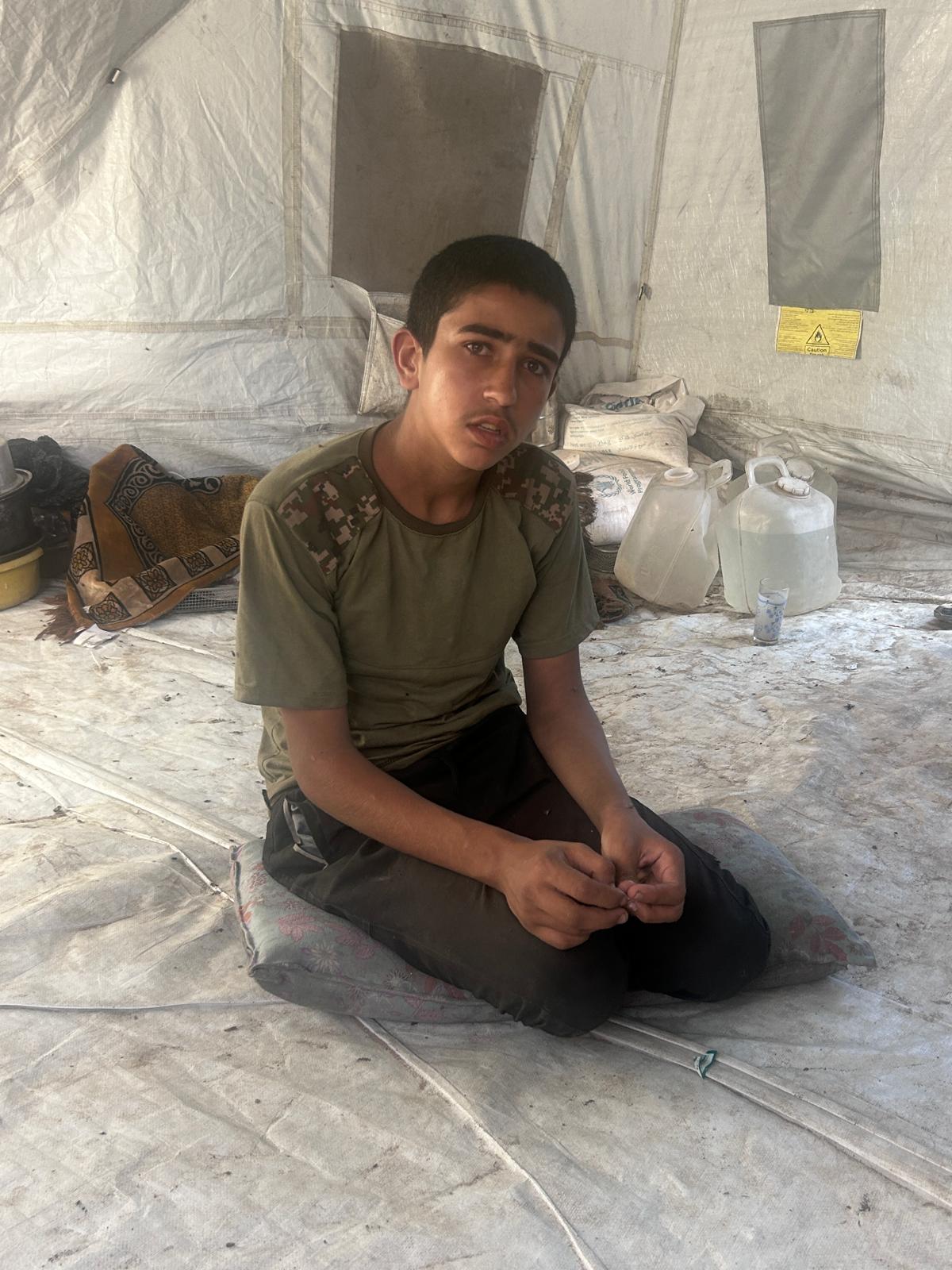
“He struck my forehead so hard that it split open and required stitches,” Faris told DCIP. After the interrogation, the soldier blindfolded Faris and threw him into a hole, where soldiers kicked him and other detainees. The next morning, Israeli forces transported them out of Gaza to Sde Teiman in southern Israel, with a stop at the Karem Abu Salem crossing, where detainees were ordered to disembark and strip naked. Israeli soldiers dressed them in white coveralls and forced them to lie on their stomachs on the ground for an hour, during which soldiers kicked and abused them.
Faris was placed in a cell with Palestinian adults for four days before being transferred to a cell for children which held about seven of them. After this, Faris was subjected to another brutal interrogation, during which he was handcuffed to a chair with his hands bound behind his back and his legs bound to the legs of the chair. Each time Faris answered, “I don’t know,” to an interrogator’s question, another interrogator beat his head and legs.
“In those moments, I felt nothing but pain, and my sole focus was on finding a way to escape the relentless beating and suffering,” Faris told DCIP. “I endured those hours without food, water, or even a chance to use the bathroom. Fear gripped me, preventing me from asking for anything, and I often lost control of my bladder during the interrogation. Each time I did, he would strike me harder and curse at me in Hebrew, words I could not comprehend.”
Faris was then transported to the “disco room,” a concrete room with speakers that blare music in Hebrew.
“They positioned my head right next to the speakers,” he said. “The soldier present, distracted by the sound, was evidently playing a game on his mobile phone. I could tell from his tone that he had just lost. In his frustration, he would open the door and unleash a brutal beating on me, striking randomly. I remained in that room until the day’s end, enduring numerous assaults, including having my head slammed against the wall, being kicked, and having my hair pulled.”
“I managed to sneak a glance for a few seconds and spotted my father in the disco room,” said Faris. “I tried to call out to him repeatedly, but he couldn’t hear me at all due to the overwhelming noise from the loudspeakers.”
Faris was returned to his cell, where rotten food and frequent beatings awaited him. He declined a haircut, which was required for all detainees, and Israeli soldiers placed him in handcuffs for a full week.
“One of the most challenging moments happened roughly a week prior to my release when a jailer approached me and displayed a photo of my mother in a compromising position through my cell window,” Faris told DCIP. “They had edited a picture of her alongside a soldier. ‘Look at what our soldiers did to your mother,’ the jailer taunted. In the image, my mother was lying next to a soldier. I could see her hair. ‘Do you want to go and see your mother? Our soldiers raped and killed your mother and sisters.’ In that instant, I felt an overwhelming urge to extend my hand through the cell window, kill the jailer, and drag him inside. I unleashed a torrent of curses fueled by my rage. As a consequence, I was suspended in the air for an entire week.”
“They bound my hands above my head and my legs below, each with a separate cuff, raising me about a meter off the ground,” Faris recounted. “Occasionally, they would strike my legs. I wet myself frequently during that time. They beat me with clubs on my legs and hurled vulgar insults at me, such as son of a bitch and other terms that I prefer not to repeat. After enduring the torture of being held in a stress position, the other children with me reassured me that [the rape and killing of my mother and sisters] was all fabricated, that the soldiers aimed to intimidate us, provoke us, and diminish our spirits, insisting that nothing of the sort had actually occurred.”
Since his release, Faris has been living in a tent with his family.
“I can’t stand for extended periods and find myself constantly seated,” Faris said. “I have a fear of seeking treatment or visiting a hospital, worried that they might kill me. Nighttime brings me terror as I awaken screaming from nightmares. Throughout the night, I am haunted by the same soldiers who tormented me, threatening to harm me. I continue to experience involuntary urination.”
Faris’ mother told DCIP, “I am jolted awake by his screams, and he cowers in fear of being struck, pleading, ‘No, no, please don’t hit me.'”
“The prison is inside me”
Mahmoud was abducted by Israeli forces the morning of August 7 while he was seeking aid at a Gaza Humanitarian Foundation site in Rafah, according to documentation collected by DCIP. Mahmoud was with about 50 other Palestinians, who scattered when Israeli forces approached, opened fire, and encircled them. The soldiers bound and blindfolded eight Palestinians, including Mahmoud, and transported them to Hamad Hospital in Rafah, which Israeli forces have taken as a military base, where they were interrogated individually.
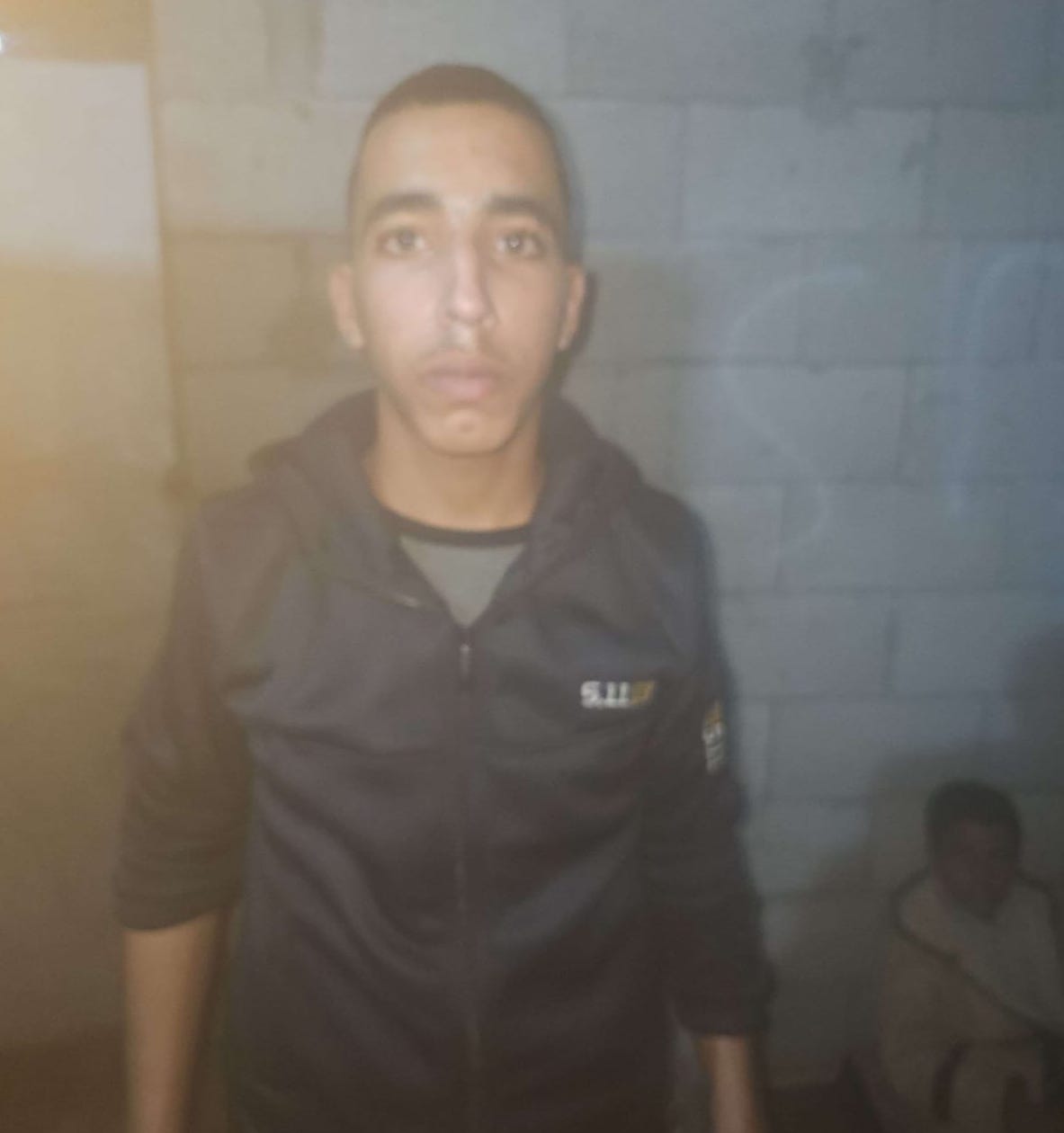
“Throughout this ordeal, the soldiers relentlessly beat and tortured us,” Mahmoud told DCIP. “They forced us into stress positions, struck us with sticks, and subjected us to electric shocks. Although I was blindfolded the entire time, I could sense the brutality of the beatings and the manner in which they were inflicted. They marked an ‘x’ on my back, and I understood that anyone bearing this mark would be taken to prison.”
Mahmoud and the others were then crammed into an Israeli military vehicle and were transported to the crossing, where they were transferred to additional military vehicles and brought to Sde Teiman. Mahmoud was subjected to an additional interrogation, where he was beaten, before being moved to the “disco room.”
“A prisoner would be forced to lie on the concrete floor, and the music would blare on until one felt overwhelmed, suffering from headaches and a sensation as if their head might explode,” Mahmoud told DCIP. “I was confined in the disco room from 11 a.m. until 3 a.m. Following that, I was moved to another room where they activated the air conditioner to an extremely cold setting, stripped me of all my clothing, and left me there alone without explanation. They instructed me to recall anything or any information. I remained in this state for two days.”
After the “disco room,” Mahmoud was transferred to a cell for children, where the child detainees were subjected to frequent crackdowns.
“The crackdown unit launched stun grenades into the room, conducted a search, and removed us from the premises,” Mahmoud said. “They pulled me aside, handcuffed me, and dislocated my shoulder. I spent around 30 days unable to move my shoulder, enduring constant pain without any medical attention or assistance.”
After this, Israeli soldiers placed Mahmoud in solitary confinement for two days with his hands bound and feet shackled.
“I was in immense suffering,” Mahmoud recounted. “I couldn’t sleep for even a moment due to the overwhelming pain and paralyzing fear. At times, I would lose control and wet myself from sheer terror. The metal handcuffs were painfully tight, leaving me powerless. My meals in solitary confinement were limited to just two: breakfast consisted of labneh, jam, and a slice of bread, while lunch included tuna, hummus, and two pieces of bread. The heat was unbearable, causing me to sweat profusely. Fever blisters erupted all over my body, along with other unfamiliar blisters that I had no idea how to treat. I requested a doctor multiple times, but none were provided. I endured skin ailments, including scabies, relentless itching, and other unknown conditions. The cell was infested with numerous mosquitoes, flies, and various insects.”
Mahmoud was then approached by an intelligence officer who attempted to recruit him to collaborate with the Israeli military, which he refused. It is against Article 50 of the Fourth Geneva Convention for an occupying power like Israel to enlist or attempt to enlist children into its army or any of its formations.
“He proposed that I collaborate with the Israeli army as a human shield, offering to take me to areas in Gaza and the tunnel regions in exchange for a monthly salary of 30,000 shekels (about $9,200 USD), an apartment fully equipped with essentials like food, water, and delightful treats, a vehicle or jeep of any type, a mobile phone, and three contact numbers. He assured me that I could remain in Israel if I wished, enjoying the freedom to make my own choices. He promised that once the war concluded, they would assist me in relocating my family to any country of my choice. I declined for various reasons, including the impact on my reputation and that of my family.”
After declining, Mahmoud was moved back to the “disco room” where he was beaten by soldiers, before being taken back to his cell.
“Every two days, they would unleash dogs to torment us,” Mahmoud said. “After midnight, the crackdown unit would toss stun grenades into the rooms, compelling the prisoners to awaken and kneel. The act of throwing stun grenades is perilous; if they were to melt or come into contact with anyone, the plastic casing could melt and inflict burns. This unit also subjected me to severe beatings on my chest and other areas of my body, rendering me unconscious. My mental state deteriorated to such an extent that I attempted suicide twice: once by hanging myself with my trousers’ tie and again by cutting my wrist. Unfortunately, both attempts were unsuccessful.”
Mahmoud was released back to Gaza on October 13 alongside other detainees.
“Ever since my release from prison, I have struggled to sleep like others do,” he told DCIP. “Each time I shut my eyes, I am haunted by the same location, the same faces, the same cell. I awaken in terror, feeling as though I am still trapped within those cold walls. My mother gently wakes me, but my eyes are filled with fear, and my heart races as if I am still undergoing interrogation. The concept of deep sleep is foreign to me. I manage to doze off in bits, yet I frequently awaken. Nightmares are my constant companions, invading my nights with the faces of soldiers and their shouts echoing in my mind. It feels as though I have never truly escaped; the prison is inside me.”
“I feel exhausted, but not in a physical sense. There is a profound ache in my heart. It seems as though my soul is shattered, and I am at a loss for how to mend it,” Mahmoud said. “People perceive me as a child stepping into the world, yet I sense that I’ve abruptly matured during my confinement. Prison has stripped away my childhood, forcing me to rediscover how to laugh, how to sleep, and how to feel secure.”
“I could hear the bones in my arm cracking”
17-year-old Mohammad was abducted by Israeli forces on the morning of July 11 while seeking aid at the Gaza Humanitarian Foundation site in Rafah, according to documentation collected by DCIP. Israeli forces opened fire and surrounded the aid seekers, releasing a few but detaining most of them. Israeli forces scanned their irises, blindfolded and bound their hands, and forced them to their knees. Israeli military vehicles transported the detainees to Hamad Hospital, which Israeli forces are using as a military base, and the detainees were interrogated one by one.
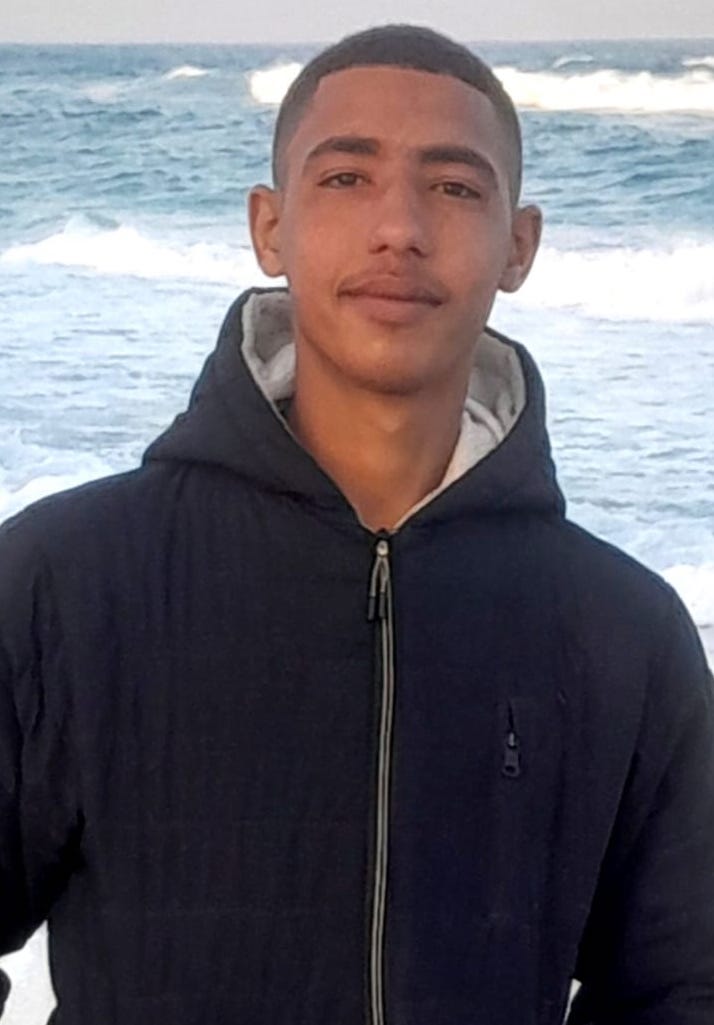
“They commenced torturing and hitting me,” Mohammad told DCIP, describing his interrogation. “They repeatedly struck my stomach and sides. We were all blindfolded. One of us vomited blood and collapsed. They continued to kick and punch us. Their military boots had metal tips, causing intense pain. I still recall the agony as if it were occurring right now.”
Similar to Faris and Mahmoud, Mohammad was transported to the Karem Abu Salem crossing where he was stripped, given white coveralls to wear, then transported to Sde Teiman and placed in a cell with adults.
“The following day, they initiated a suppression against me and the others in the room,” Mohammad said. “At that moment, I was unaware of what suppression entailed. In the dead of night, they launched stun grenades into the room, close to my cage, causing them to explode. We were asleep, and the noise was terrifying. They opened the metal door, dragged us out, ordered us to raise our hands, and kneel. Then, they assaulted us, hurling the most vulgar insults. They searched the room thoroughly to ensure there were no knives or sharp objects.”
Mohammad was moved to the cell for children, which contained 15 boys.
“After 77 days, I was subjected to interrogation,” Mohammad said. “They brought me to a room referred to as the ‘disco room,’ a distinct area within the prison, cut off from the rest of the facility. Continuous loud music blares without pause. The prisoner is made to lie on the concrete floor, and the music plays on until you feel bored, develop a headache, and your head seems like it might burst.”
After the “disco room,” Mohammad was subjected to an interrogation during which the interrogator threatened to shoot him if he didn’t give him information. The interrogator also tightened the handcuffs so severely that Mohammad’s arm broke.
“I could hear the bones in my arm cracking,” Mohammad recounted.
“They subjected us to electric shocks and used dogs to intimidate and torture us by unleashing the dogs on us while we were restrained and unable to defend ourselves,” Mohammad added. “Every two days, they would bring dogs to torment us, and the riot control unit would launch stun grenades into the cells after midnight to force us awake and make us kneel. The act of throwing grenades into the cells is extremely hazardous because if they melt or come into contact with anyone’s body, the plastic can melt and inflict injuries. The burns were intense.”
Now, Mohammad is back with his family in Gaza, but the impacts of Israel’s torture remain with him.
“These days, I find myself waking up at 2:00 a.m., the exact time of the raid, a habit formed during my time in prison,” he said. “If I failed to wake up during the raid, the soldiers would beat me, and I risked being hit by a stun grenade they tossed into the room. I feel extremely exhausted and struggle to articulate or convey the emotions stemming from my experiences. Each time I recall those moments, I find myself sitting alone and crying.”
Each child interviewed by DCIP after release from Israeli military custody has reported brutal, dehumanizing torture, unsanitary conditions leading to scabies and infectious outbreaks, rotten and meager food, constant beatings and acts of humiliation by Israeli forces, and treatment designed to break their personhood and extract false confessions.
Israel’s detention of Palestinians has nothing to do with security, law or justice. It is a system designed to physically and mentally scar a generation of Palestinians in an attempt to suppress any attempt to resist Israel’s Apartheid regime or demand that their fundamental rights are upheld. Israel seeks to break Palestinian children’s hope, spirit, and personhood, in an attempt to see that Palestinians’ right to self-determination is never realized.
Torture, the deprivation of a fair and regular trial, and unlawful confinement of a protected person are not only blatant war crimes, but are considered grave breaches of the Geneva Conventions and the Rome Statute. Israel, as a State party to the Convention against Torture, is legally obligated to prevent, investigate, and prosecute such acts. Instead, its forces continue to carry out systematic torture of Palestinian children with complete impunity. The ongoing failure of the international community to hold Israeli officials accountable enables the continued assault on Palestinian children’s rights, safety, and dignity.
Under the Convention on the Rights of the Child, Israel is further obligated to ensure that no child is subjected to arbitrary detention or unlawful deprivation of liberty, and that every detained child is treated with respect for their inherent dignity.
Instead of upholding these legal commitments, Israeli forces continue to carry out the systematic torture and ill-treatment of Palestinian children with complete impunity. The ongoing failure of the international community to hold Israeli officials accountable enables the continued assault on Palestinian children’s rights, safety, and dignity.
Defense for Children International defends children’s rights by offering free legal aid, documenting violations of international law,
and advocating for greater protections.
RELATED: