The city asked social media followers ‘what was Charles Clore Garden meant to hide,’ only to later delete the post, saying it was meant to refer to an ecological matter. The park was built on the ruins of Manshiya, whose residents were expelled by Israel in 1948
The Tel Aviv Municipality posted and quickly deleted on Wednesday a social media post inviting followers to explain why a beachside park, which was built on the ruins of a Palestinian neighborhood that was destroyed by Israel in 1948, was built and what it was meant to hide.
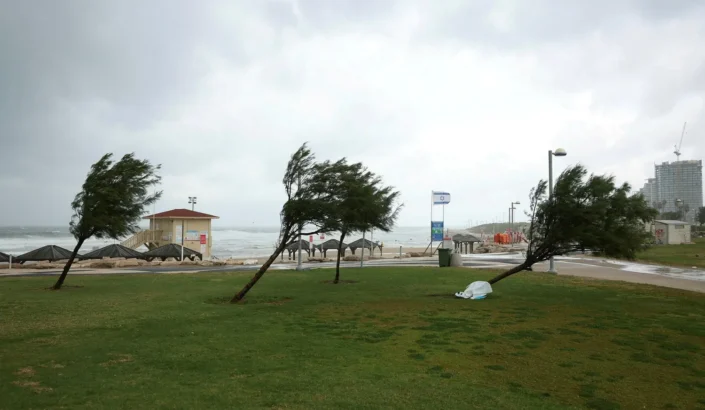
The social media post, uploaded to the city’s official profile, shared a photo of the park with a caption: “Who knows why the Charles Clore Park was built and what it was meant to hide?”
According to the Instagram post, the first ten followers to answer correctly were eligible to win a prize: a photo of themselves, hidden by Charles Clore.
The Charles Clore Park, which can be found on the shoreline between Tel Aviv and Jaffa, was built upon the ruins of Manshiya, which was once a Palestinian neighborhood with a Jewish minority along Jaffa’s shoreline that was heavily bombed and bulldozed in 1948.


The few buildings that still stood after the initial demolition hosted Jewish immigrants who arrived in Israel in the state’s early years.
In the 1970s, the neighborhood’s ruins were pushed westward toward the sea, forming a mound overlooking the city’s southern beaches, upon which the Charles Clore Park, which was named after a British-Jewish businessman and philanthropist, was eventually built.

Today, only a few buildings remain from the Manshiya neighborhood, including the building housing the Irgun Museum (dedicated to the underground Zionist militia) and the Hassan Bek mosque, which stood abandoned for many years and was only recently returned to active use for Friday prayers after a long public struggle.
When asked for comment, the Tel Aviv municipality said that “the post, which concerned ecology, was published as part of a weekly riddle feature on the city’s official Facebook page. However, the post was worded insensitively, and for that reason, the municipality chose to remove it.”

Last week, the Tel Aviv municipality announced that it barred a cafe operating in a community center in the city from selling items from an external brand it partnered with, saying the products carried Palestinian national symbols.
According to the municipality, the items sold at Beit Barakat were “liable to offend public sensibilities.” The announcement came in response to a Facebook post by far-right activist Yoav Eliassi, known as “The Shadow,” in which he criticized the business for selling the products.
The municipality responded to the post several hours after it was published, saying the items were “removed immediately” and adding that “the owners were reprimanded.”
Eliassi posted a message he said was sent by one of his followers, claiming there was “an entire area dedicated to selling items bearing Palestinian symbols” in the cafe.
According to a photo attached to the post, the items featured illustrations of watermelons – used in protests as a symbol of the Palestinian flag because of their colors – and the Arabic word “Biladi” (“My land”). The follower also pointed to a sign reading “Forever,” which he identified as a Palestinian symbol. In fact, it was the name of the external brand that supplied the items, called “Fovero.”
Yair Foldes is a Haaretz Journalist centered in Israel.
RELATED:
- There’s a Mass Palestinian Grave at a Popular Israeli Beach, Veterans Confess
- Army ex-spokesman says Israel lost social media battle, calls for propaganda overhaul
- Netanyahu has a new, well-paid army to fight for Israel on social media
- WATCH: Social Media’s Role in Israel’s War on Gaza
- Israel to run propaganda videos on CNN, NYT, Fox, social media
- Hundreds of social media influencers attend Israel strategy summit in NYC