So long as its power to censor Palestinians remains unchecked, Meta will remain a proud enabler of Israeli colonialism to the very end.
By Omar Zahzah, Reposted from Palestine Chronicle, October 16, 2025
An old saying has it that “the internet is forever,”—but it now seems there is a Palestine exception to this as well.
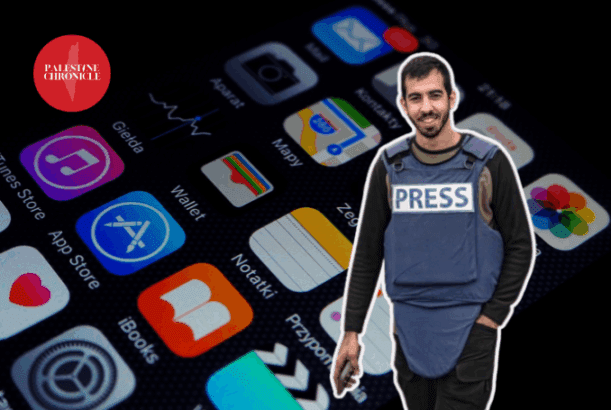
On October 13, 2025, DropSite News reported that the tech giant Meta platforms had “removed the verified account of Gaza journalist Saleh al-Jafarawi,” which had 4.5 million followers. The news agency quoted X posts from Palestinian American writer and activist Susan Abulhawa.
“Some time ago, a friend of mine told me she thought Israel, through the multitude of their technology tentacles, was going to try to scrub the internet as much as possible of evidence of their crimes,” Abulhawa wrote.
“At the time I thought that might be an exaggeration of their capacity, but I’m revisiting tht conversation today as I realized that @Meta not only removed Salah alJafarawi’s primary Instagram account, with over 4.5 million followers, but they’ve somehow scrubbed the archives of his account.”
“I assure you we didn’t wipe anything,” Mark Graham, Director of the online archival project WayBack Machine, said in an update to DropSite News. “That’s the opposite of why we exist.”
Graham maintains that the WayBack Machine “cannot” archive Meta platforms (Instagram, Facebook, or Threads) because the company “blocks its crawlers,” so the content was never archived to begin with. Meta’s largely unchecked power to delete Palestinian journalism from existence and actively inhibit third-party preservation should outrage all individuals dedicated to Palestinian freedom and liberation—especially when the material in question constitutes evidence of genocide.
A renowned journalist from Gaza, Aljafarawi was assassinated by an Israeli-linked gang on October 12, mere days after a clip of him celebrating the ceasefire went viral. The Gaza Government Media Office described his assassination as “a direct result of Israel’s ongoing policy of targeting Palestinian journalists through both airstrikes and proxy militias.”
Aljafarawi’s recognizability and reach were such that he had been placed on a “red notice” list by Israel, just as had been done to Al Jazeera journalist Anas al-Sharif, who was killed by Israel in a bombing attack on Sunday, August 10, 2025 along with colleagues Mohammed Qreiqeh, Ibrahim Zaher, Mohammed Noufal, Momen Aliwa, and Mohammed al-Khalidi.
Human rights lawyers are demanding a probe into Aljafarawi’s murder. Speaking on behalf of Confinium Strategies, which filed complaints with the International Criminal Court (ICC) and multiple UN investigative bodies, Sara Segnari emphasized that “this was not a random tragedy but a targeted attack on a journalist—a young man dedicated to showing the world the truth of Gaza’s suffering.
His life was taken in blatant violation of the laws of war and fundamental human rights.” Segnari also stated that Confinimum’s representation of Aljafarawi “began when he was receiving threats and false accusations, and then the attempts by social media platforms to censor and silence him due to his reporting on the atrocities in Palestine and documenting war crimes and other abuses.”
In other words, not only is Meta’s post-mortem deletion of Aljafarawi’s account not the first instance of social media censorship of his journalism; Meta’s censorship, which spanned months, dovetailed with Israeli threats and false accusations against Aljafarawi to comprehensively enforce a multi-pronged wave of suppression meant to prevent a journalist from documenting genocide.
Author, activist, and Muslim Girl founder Amani Al-Khatahtbeh posted on X about how she had attempted to intercede on Aljafarawi’s behalf when Meta first removed his account. Al-Khatahtbeh wrote that the response she and her contacts received from Meta “is nearly identical to so many whose accounts have been censored for documenting a genocide. This is what it looks like when human rights are violated online.”
In her X post, Al-Khatahtbeh attached screenshots of both the initial restoration request and Meta’s follow-up, which was a standard, boilerplate excuse:
“I asked our internal team to review these actions. This is what I learned: The accounts were investigated and closed for violating our policies as they relate to dangerous organizations and dangerous individuals.” The respondent goes on to explain that they don’t have direct access to the account, and pastes a list of prohibited conduct that prevents “organizations or individuals” from “having a presence on Facebook,” which include all who engage in “terrorist activity;” “organized violence or criminal activity;” “Mass or serial murders;” or “organized hate groups.”
From this, it seems more than clear that Meta was falsely portraying Aljafarawi’s documentation of genocide as “terrorist” in nature as a pretext for removal. In this way, Meta’s anti-Palestinian moderation policies—about which I have written in great length before—emerge as tools to more readily facilitate Israel’s genocide.
Digital settler colonialism, a term I use to refer to Big Tech companies’ willing facilitation of Israeli oppression, is how tech giants like Meta digitally reinforce the physical violence inherent to Zionism by “E-racing Palestine” on their platforms.We are long past the point where social media censorship ought to be considered a benign or secondary instance of tech repression. As Palestinian American lawyer and activist Lara Elborno wrote on Instagram, through this erasure, “Meta is complicit in assisting Israel get away with genocide.”
So long as its power to censor Palestinians remains unchecked, Meta will remain a proud enabler of Israeli colonialism to the very end.
Omar Zahzah is a writer, poet, organizer, and Assistant Professor of Arab and Muslim Ethnicities and Diasporas (AMED) Studies at San Francisco State University.
RELATED:
- Pope Leo praises Palestinian journalists reporting from Gaza
- How much is shoddy, pro-Israel journalism worth? Ask Bari Weiss.
- It was never a Gaza ‘war’. The ‘ceasefire’ is a lie cut from the same cloth
- Global appeal: Gaza’s journalists need urgent protection
- Israel blocking outside journalists from Gaza doesn’t help its cause