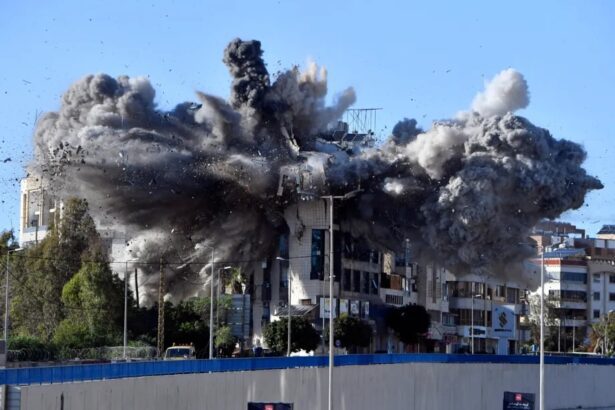
Lebanon’s Christians are being told by the Israeli military to get rid of any displaced Shias hiding in their homes or villages. Haven’t we seen this story before, and don’t we all know how it ends?
By Mehdi Hasan, Reposted from Zeteo, April 6, 2026
Do you want to know what total impunity actually looks like? Look at Israel. It got away with a genocide in Gaza, and now it’s unleashing a similar genocidal campaign against Shia communities in southern Lebanon.
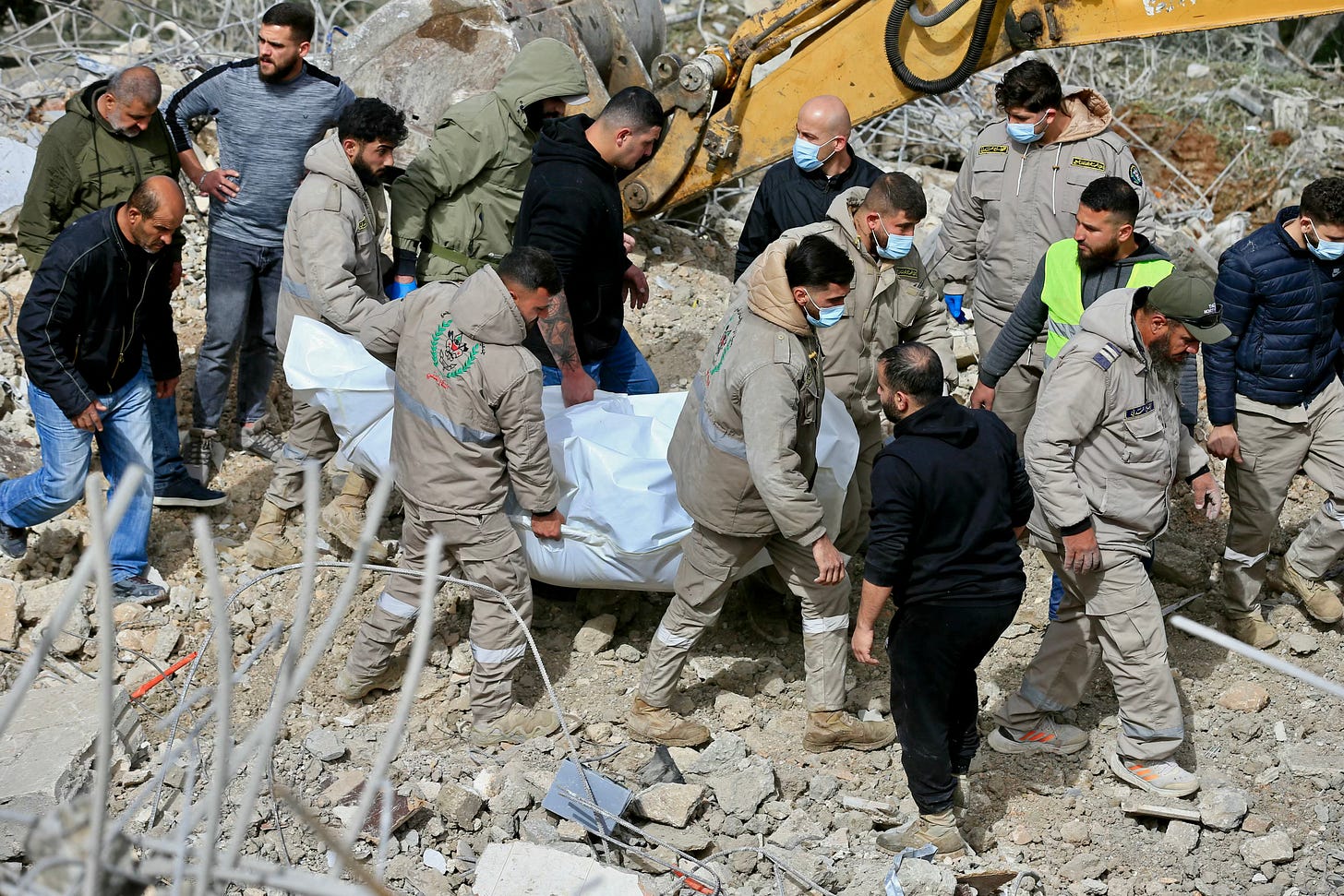
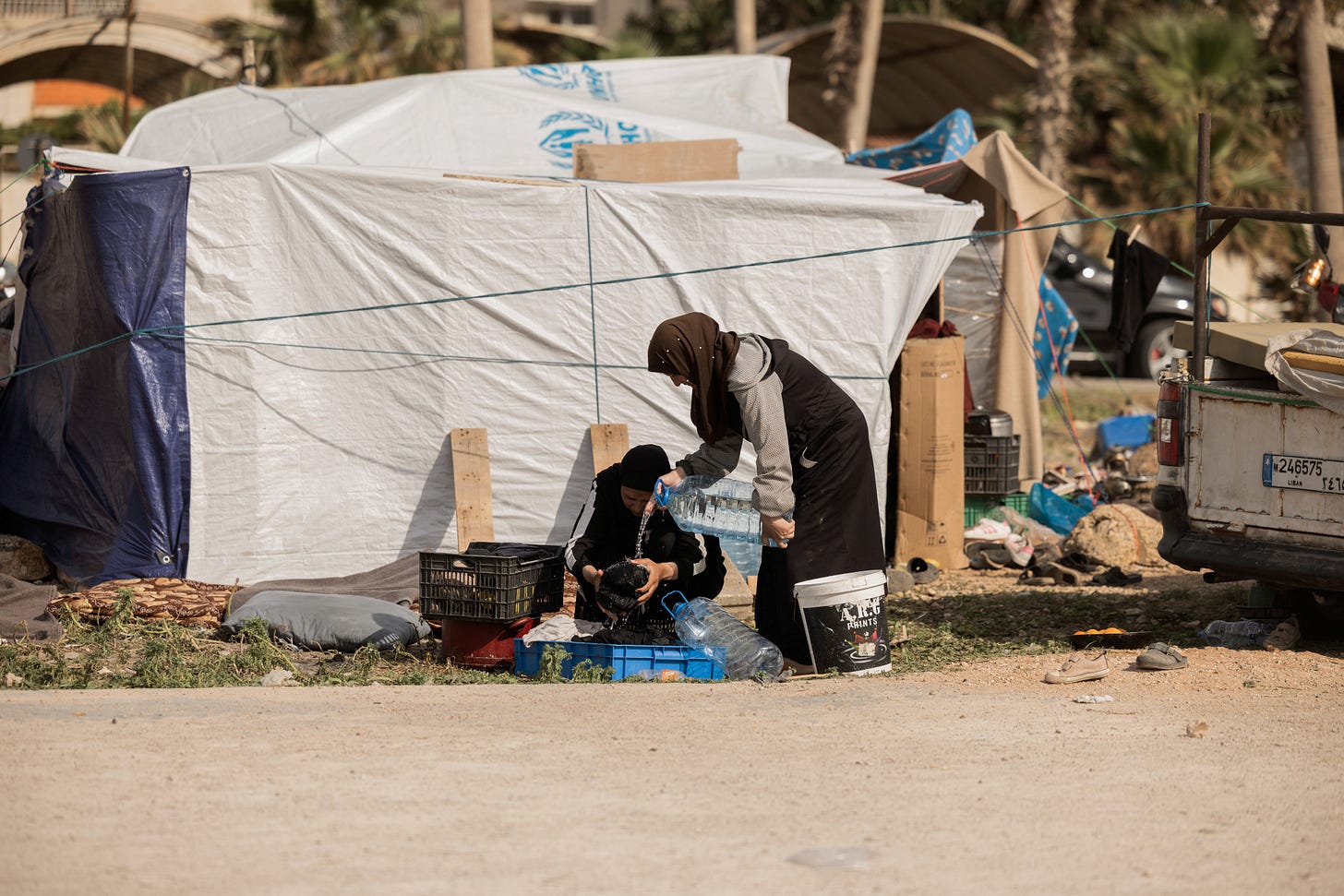
Right now, hundreds of thousands of Shia civilians are being displaced, bombed, and forced to flee. Their villages are emptied. Their homes are reduced to rubble. And Israel’s defense minister says they cannot return.
Where is the anger in the West, or in the Global South, or even in the Muslim world? Where are the emergency summits, the outraged headlines, the moral indignation that we saw when, for example, ISIS was carrying out a genocide against the Yazidis in Iraq and Syria?
Think I’m being hyperbolic? First, consider the relevant sections of the 1948 Genocide Convention, which defines genocide as “acts committed with intent to destroy, in whole or in part” a “religious group,” including “killing members of the group” and “deliberately inflicting on the group conditions of life calculated to bring about its physical destruction in whole or in part.”
Next, consider the recent reporting from both the New York Times and Drop Site News, which reveal how Israeli forces have issued evacuation orders across large swaths of southern Lebanon, explicitly targeting Shia communities who make up the majority of the local population.
Wouldn’t this be labeled “ethnic cleansing” if it were any other part of the world? Here is an entire population, an entire religious group, being targeted, displaced, and massacred simply because of who they are and where they live. The current Israeli approach to the Shias of southern Lebanon is collective, indiscriminate, and chillingly familiar: a community of innocents conflated with a security threat. “Every home in southern Lebanon, the Shia homes, are command and control centers,” an Israeli military spokesman told LBC radio in the UK last month, without offering a shred of evidence.
But it gets even worse.
The Israeli military isn’t just forcing Lebanese Shias from their homes and towns in the south; it is reportedly pressuring Lebanese Christians not to provide refuge to their displaced Shia neighbors. “Over the past two weeks,” reports the Times, “Israeli military officials have called leaders of at least eight villages and told them to expel Shiites who had sought refuge in their communities, municipal officials and local Christian, Druse and Shiite leaders said in interviews.”
Let that sink in. In a fragile, multi-faith country, scarred by decades of civil strife and sectarian violence, an invading foreign military is ordering one religious group to close its doors to another.
How is this not setting off alarm bells across the world? Because history offers us only dark precedents. Ethnic cleansing is hardly ever a single, discrete act; it is often a long and vicious process. Nor should we describe what is happening in southern Lebanon as only ethnic cleansing.
The Israeli-American historian Omer Bartov, a leading scholar of genocide, has warned that ethnic cleansing is not always distinct from genocide and “can morph into genocide.” Gregory Stanton, the founder of Genocide Watch, goes further, saying “the term ‘ethnic cleansing’ is used as a euphemism for genocide.”
Of course, defenders of Israeli policy will point to the security threat from Hezbollah, the Shia militant group that operates out of southern Lebanon. And yes, Hezbollah exists. Yes, it is armed. Yes, it fires rockets at Israel. But here is the question that too many in the West refuse to consider: since when does the presence of a militia group justify the collective punishment of an entire religious population?
I was born and raised a Shia Muslim. My entire life, I have seen Shias occupy a peculiar place in the political imagination of both the East and the West: rendered invisible but also relentlessly demonized. In Israeli political and media discourse, in particular, Shias are portrayed not as innocent civilians or an oft-oppressed minority community but only as extensions of an expansionist Iran, as armed proxies, as violent threats.
For years, Israeli leaders have sought to build a Sunni alliance against Shia actors, speaking conspiratorially of a ‘Shia axis’ or ‘Shia crescent,’ and exploiting sectarian divisions among their Muslim adversaries in a classic divide-and-rule strategy.
I still remember interviewing Naftali Bennett – then-Israel’s education minister, and later prime minister – almost a decade ago for Al Jazeera English, and how startled I was when he told me: “If the Arab countries, the Sunni countries, don’t want to be butchered by their Shia neighbor, they ought to cooperate with us… We need to work together against the big menace.”
In recent years, the Israeli press has gone into anti-Shia overdrive, publishing article after article warning of the “Iranian regime’s dream of establishing a Shi’ite caliphate,” Iran’s “goal for Shia world domination,” and even a “Shi’ite apocalypse.” Last month, after the US-Israeli war on Iran began, one of Israel’s leading scholars of Islamic studies published an op-ed describing the conflict as a “severe blow to Shi’ite Islam” and “marking the beginning of the decline of Shi’ism.”
Nor is this anti-Shia animus and genocidal rhetoric confined only to Israel. It has been echoed and enabled here in the United States. Secretary of State Marco Rubio falsely claims Iran is run by “radical Shia clerics with an apocalyptic vision of the future.” Fellow Republican hawk Senator Lindsey Graham once falsely declared that “the religious doctrine of the Shias in charge compel them to kill all the Jews; it’s a commandment from God.” He also compared Shia Muslims to Adolf Hitler and “religious Nazis.”
These are hardly fringe right-wing voices. These are senior US government officials not only using sectarian bigotry to justify their latest illegal war in the Middle East but also helping to launder it into mainstream discourse.
Remember: When you dehumanize a group long enough, you make their pain and suffering easier to ignore and their displacement and destruction easier to justify.
So when Shia families in southern Lebanon are driven from their homes, when they are denied refuge, when they are targeted and bombarded, it doesn’t trigger the necessary shock or disgust. There is no Yazidi moment here, no global outcry, no talk of “never again.” Just a collective shrug and then the constant and cynical recitation of “Israel’s right to defend itself.”
History – including Jewish history – tells us what happens when entire faith groups are smeared as collectively suspect, and when their neighbors are warned against offering them refuge. We know how that story ends. And yet, here we are, watching it unfold in real time.
So we cannot afford to look away. If the West truly believes in universal human rights, then those rights must apply to Shia Muslims in southern Lebanon as much as they do to Jews in Israel, Yazidis in Iraq, or Ukrainians in the Donbas. And if the Muslim world is capable of recognizing genocide in one context, it must also be willing to recognize its warning signs in another.
Otherwise, our principles are not principles at all. They are merely ethnic and tribal preferences.
As a Shia Muslim, I for one am tired of my faith community being ignored and erased, both by the West and the Muslim world. What’s happening in southern Lebanon to the Shias is not just displacement, not just ethnic cleansing, it is the start of yet another Israeli genocide.
Mehdi Hasan is the Founder, CEO, and editor-in-chief of Zeteo
RELATED:
- 7 Ways Israel Is Turning Lebanon Into Gaza
- Israeli invasion of Lebanon could be worse than 1982, warn European officials
- This is how Israel is systematically killing health workers under the cover of war in Lebanon
- Carrying life under fire: Israeli invasion of Lebanon leaves pregnant women facing deadly risks
- Don’t Be Fooled. Zionist Leaders Have Always Wanted to Control Southern Lebanon