Inside the hospitals, severe pre-war shortages of equipment and staff have turned the wards into internal battlefields.
By Mahmoud Sha’aban, Reposted from New Arab , March 09, 2026
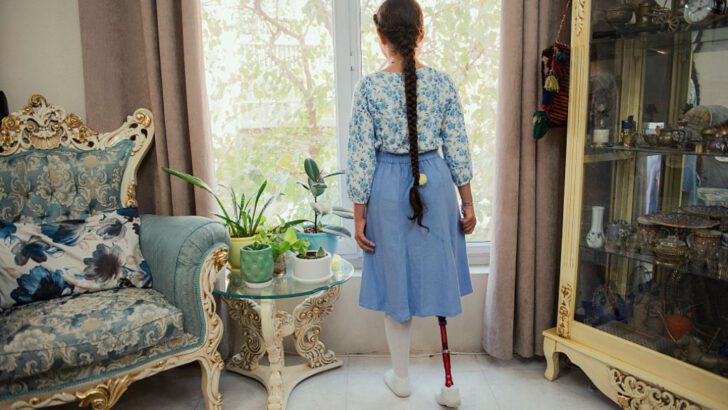
As the US-Israeli war on Iran continues with no end in sight, the Iranian health ministry announced that the preliminary numbers of amputees resulting from war injuries are between 220 to 250 across all of provinces so far.
One case is Arash Nemati, who used to spend his days at a desk, balancing ledgers. Now, the 25-year-old accountant spends his hours staring at the spot where his right leg used to be. When the opening salvo of the US-Israeli war on Iran reached his neighborhood in Tehran, the ground beneath him simply vanished.
“In the moment of the explosion, I felt the earth open up under my feet,” Arash said. “Everything around me disappeared. I didn’t know if I would ever be able to walk again or even see the sun. The physical pain was sharp, but the shock was bigger. I just wondered if I was still there.”
Returning to his apartment after the discharge from the hospital, Arash found the walls he lived in had become hostile. “Every corner of this house reminds me of what I lost,” he said. “Every movement has become an agonizing test of patience. I try to get my life back, but every motion requires a level of focus that eventually breaks my strength. Sometimes, I just collapse.”
His father, Sharif, stands by the door. “We weren’t ready for this,” he remarked. “The doctors sent us home with a few papers and nothing else. No equipment, no advice. We were left with impossible decisions and zero support. It makes every day a new test of whether we can even handle the situation.”
The two men exist in heavy silence “I feel helpless,” Sharif admitted. “I see him trying to do the simplest things and failing. We sit together quietly for long periods of time, just sharing the pain. I try to tell him we are in this together, but sometimes his tears just leave me feeling useless. We sit and share a few words just to find some temporary peace.”
Beyond Arash’s apartment, the crisis stretches across Tehran, Isfahan, Mashhad, and Ahvaz. The amputations are paralyzing every generation. Children are suddenly locked out of schools and unable to play. Young adults are stripped of their livelihoods. The elderly are thrust into total dependency.
In Isfahan, Nasrin Kazemi is discovering that the smallest gestures are the hardest to reclaim. The elderly woman lost her left arm in the strikes. “I never imagined I would lose my arm,” she said. “Everything, eating, dressing, even hugging my grandchildren, is a new struggle. Every moment is a new challenge, and every movement requires double the effort.”
Kazemi spends her days innovating within her kitchen, learning to use modified tools just to hold a cup. “I sit with my grandchildren to find some warmth,” she said. “I try to show them that life goes on, even when a piece of your body is gone. But every day is a fresh battle. Every small step leaves a deep psychological scar and makes me feel a vacuum and isolation.”
Inside the hospitals, severe pre-war shortages of equipment and staff have turned the wards into internal battlefields. Prosthetics are rare. Narjis Shirazi, a medical rehabilitation specialist, noted the permanent toll.
“Amputation doesn’t just affect movement; it hits a person’s sense of dignity and independence,” Shirazi described. “We try to run rehab programs with physical and psychological exercises, but the lack of equipment and staff makes it nearly impossible. Women like Nasrin face psychological isolation alongside the physical pain, and often find no extra support once they leave our doors.”
Further east in Mashhad, Sajjad Babaei lost both legs, and his mind refuses to accept his new reality.
“Sitting in the hospital for long hours, watching other wounded suffer the same way, makes me realize the scale of the pain we all carry,” Sajjad said. “Sometimes I wake up screaming in the dark. The shock of waking up to find my legs gone is worse than the physical pain of the blast.”
The physical loss is compounded by severe depression, insomnia, and a survivor’s guilt among those who lived through blasts that killed others. Dr Hashem Pourfar, a psychologist managing the overflow, organises support groups so patients can share their experiences.
“The first stage is a total loss of control,” Pourfar explained. “They feel like they have lost their place in life. We try to use cognitive-behavioral sessions to build self-confidence, and we teach the families how to support them, because the parents usually lack guidance. But the gap between the need and the resources is massive.”
But where state resources stop, neighbors step in. In South Tehran, Fatima Sadeqi cleared out a room in her home for a neighbor who lost his leg. She involves him in simple daily activities, talking to him to encourage adaptation.
“We are all affected, but we can’t leave him alone,” she said. “He tries to look strong for us, but the night is full of crying and silence. We help him eat, we help him move, we just try to give him some sense of belonging so he doesn’t slip into total despair.”
Around the capital, survivors attempt to find out of the box solutions to adapt. Some weld wheelchairs from scrap metal, as the black market price for titanium is simply unaffordable for the working class.
And for the families of the wounded, the trauma of the bombing has moved permanently inside their homes.
“We talk about the future,” Sharif said, looking at his son. “But then the silence takes over again. We are just trying to find a way to take one step at a time, even when the path is not clear.”
Mahmoud Sha’aban is a journalist in Iran.
RELATED:
- 6,000 Amputees in Gaza Face Impossible Recovery amid Israeli War Ultimatum
- Child Amputees in Gaza Use Makeshift Prosthetics as Israel Restricts Medical Supplies
- Israel is using the ‘Gaza doctrine’ in Lebanon and Iran
- US troops were told war on Iran was ‘all part of God’s divine plan’, watchdog alleges
- Lies, distortions, and propaganda: how the U.S. mainstream media coverage on Iran hides the truth