Israel’s strangulation of the West Bank is collapsing every system of Palestinian well-being, enforcing a mandate of expulsion, and stripping Palestinians of their rights
By Jessica Buxbaum, Reposted from Mondoweiss, March 24, 2026
Editor’s note: Today, we have three articles all revolving around Israeli treatment of Palestinians in the occupied West Bank. We have included excerpts of each of the articles, and have included links to the original, full length articles at the end of each passage.
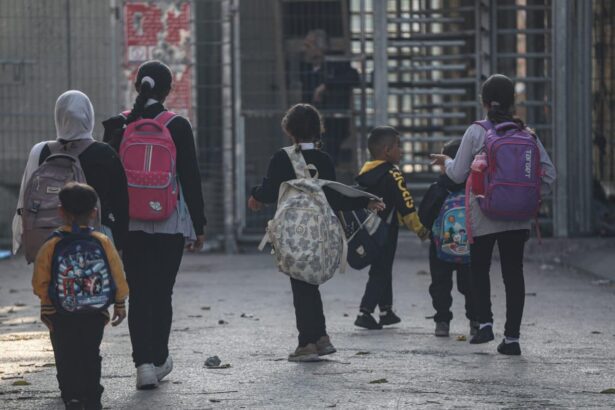
Over the last three weeks, the majority of Israeli students have been unable to attend classes amid the U.S.-Israeli war on Iran. Yet for Palestinian students in the occupied West Bank, this has been the case for the last two years.
Under financial strain, the Palestinian Authority (PA), the West Bank’s governing body, has been paying only 60% of public school teachers’ salaries since October 2023 — resulting in schools operating just three days a week.
“Some of the students left the school because they got bored only going three days a week, so they just dropped out,” Aisha al-Khatib, a school principal in Nablus, said. “Some of them are working, selling things on the streets.”
While grades 1-10 are mandatory under PA law, secondary education is not. Coupling this regulation with a minimum working age of 15, child labor can often become a desirable alternative when significant barriers to education are in place.
Yet the PA has limited control over its enforcement of child labor laws in the West Bank, since it only has administrative authority over less than 40% of the West Bank, known as Areas A and B per the 1993 Oslo Accords. The remaining 60% is classified as Area C, falling under direct Israeli military control.
Since 2019, Israel has withheld nearly NIS 8 billion (about $2.3 billion) in tax revenue owed to the PA for compensating families of Palestinian prisoners and Palestinians killed by Israeli forces. Under the Accords, Israel’s Finance Ministry collects tax revenue on the PA’s behalf and transfers the funds monthly.
Without these so-called “clearing funds,” the PA has been forced to cut public-sector budgets, including education. Israel’s actions against Palestine’s financial system don’t just cripple the economy; it bleeds through every aspect of Palestinian life.
“Because the government is in a financial crisis, and the Palestinian people and the students are all under occupation, and they are all under an apartheid system, everything is targeted,” Sayel Jabareen, a Palestinian parent from Ramallah, told Mondoweiss. “The Israeli Finance Minister [Bezalel Smotrich] knows that not paying the clearance tax will lead to obstructing the work of the engineer, of the police, of the teachers — freezing the whole life.”
If you would like to continue reading, click here.
Next up is a rather extensive article on settler violence and expansion that is well worth the full read.
Erasing the lines’: How settler outposts are seizing new regions of the West Bank
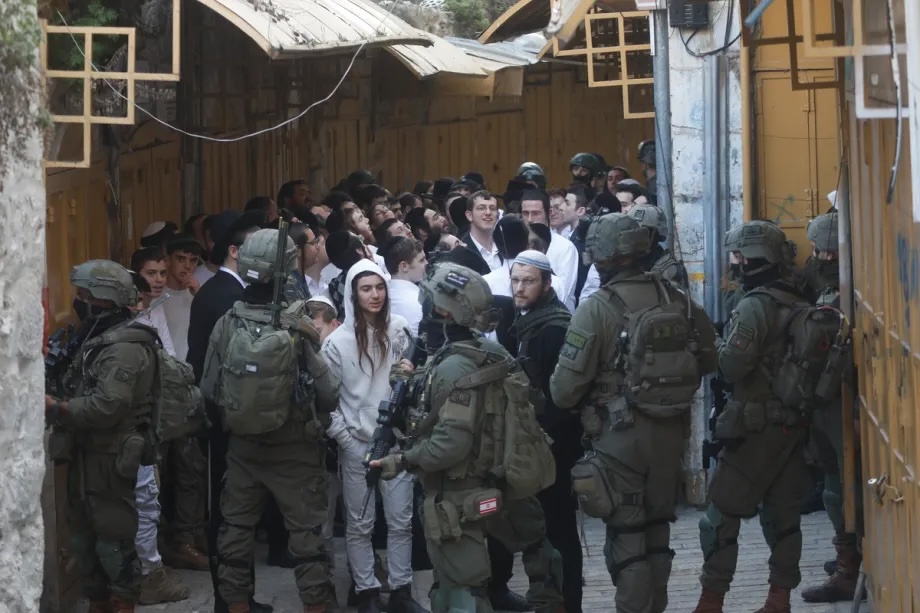
By Oren Ziv and Ariel Caine, reposted from +927 Magazine, March 24, 2026
In May 2023, the Palestinian Bedouin community of Ein Samia, located east of Ramallah, fled their village. Facing mounting pressure and harassment from nearby Israeli settlers, who enjoyed significant military support, dozens of families dismantled their homes and left. It was one of the first instances in which an entire Palestinian community in the West Bank had been completely uprooted since 1967 — and it was a harbinger of what was to follow.
Eleven of those families relocated a short distance away to Al-Khalail, a rural area on the outskirts of the village of Al-Mughayyir. The site lies in Area B of the occupied territory — the zone, under the Oslo Accords, where the Palestinian Authority (PA) has jurisdiction over civil affairs but must coordinate security with Israel. It offers Palestinians more autonomy than Area C, which is under full Israeli control and has been the site of almost all settlement expansion, but less than Area A, which is under full PA control. By moving from Area C into Area B, the displaced residents of Ein Samia thought they would find relative safety.
In Al-Khalail, the families rebuilt their lives. They erected tin houses and animal pens, installed solar panels and water tanks, and resumed herding their animals.
“We are refugees from the Naqab,” explained 85-year-old Muhammad Ka’abneh, referring to the desert in southern Israel. “We moved several times until, in the 1980s, the army ordered us to move to Ein Samia. We lived there until the settlers and the army expelled us three years ago. We came here [to Al-Khalail] because we knew it was Area B and that it was safe.”
For a time, residents said, the area was quiet. Then in 2024, on the hill facing their encampment, a group of settlers established a new herding outpost called Shlisha Farm. (Outposts are mini-settlements established without prior state authorization that serve as strategic beachheads for settlers to expand into the West Bank.)
The settlers began grazing their flocks on land surrounding the community, damaging olive trees and crops, entering the encampment, and threatening families. They did this with the backing of the military. “They just make a phone call, and the army comes,” Ka’abneh said of the settlers. “The soldiers protect them.”

For months, the families in Al-Khalail endured near-daily harassment. Earlier this year, on Feb. 1, soldiers arrived and instructed residents to leave for 48 hours without their belongings, citing an order that declared the area a “closed military zone” — a measure frequently used to keep Palestinians and Israeli and international activists away from hot spots of settler violence. The families refused. “If we had left, we wouldn’t have returned,” Ka’abneh said.
While the soldiers didn’t enforce the evacuation that day, they arrested two international activists who were at the scene. Documents from their subsequent hearing stated they had been detained for being “present in a closed military zone where an evacuation of Bedouin residents who had settled illegally by order of the Central Command chief was taking place.” The fact that the Palestinian families had relocated inside Area B — where the PA, not Israel, maintains authority over building and planning — seemed to make no difference.
In the weeks that followed, the pressure became too much to bear; settlers entered the Palestinians’ homes, bringing their sheep and dogs with them, and the army detained residents. On Feb. 21, the community fled. Less than a month later, settlers erected a new outpost on the site.
The displacement of Ein Samia’s families was a strategic coup for the settlement movement. By expanding the Shiloh settlement bloc — a collection of contiguous settlements and outposts that bisect the northern West Bank — it has helped create a corridor of unobstructed Israeli control from the Green Line to the Jordan Valley, while further isolating the major Palestinian cities of Ramallah and Nablus from each other.

The expulsion of the families also epitomizes a broader pattern that has accelerated since October 2023: the proliferation of settler outposts and the mass displacement of Palestinian communities across the West Bank, including in areas that were until recently considered off limits, even by settlers.
If you would like to continue reading, click here.
Up next is an article on the systemic inequality between Jewish settlers and Palestinians in the West Bank.
Deadly missile strike in West Bank highlights lack of protection for Palestinians
![Many rockets, fired from Iran, are seen over Jerusalem from Hebron, West Bank on October 01, 2024 [Wisam Hashlamoun – Anadolu Agency]](https://israelpalestinenews.org/wp-content/uploads/2024/10/10-1-a.jpg)
By Nurit Yohanan, reposted from The Times of Israel, March 24, 2026
Over the last several weeks, Iran has begun habitually firing missiles containing cluster munitions at Israel, raining dozens of small bomblets over urban areas and sowing chaos and destruction.
The submunitions, which can challenge air defenses, lack the explosive power of conventional warheads, but still pack a punch strong enough to destroy small buildings, flip cars, and maim or kill those in their way.
Though directed at Israel, the deadliest such attack has not been suffered by Israelis, but by West Bank Palestinians, who often find themselves in the path of Iran’s imprecise weaponry and without the protections Israel affords its citizens.
On March 18, four women ranging in age from 17 to 50 were killed when an Iranian cluster bomb slammed into a West Bank salon where they had been preparing a Ramadan break-fast meal. Nine other Palestinians were wounded in the strike, including a 4-year-old girl.
The incident shook the town of Beit Awwa in the southern West Bank, home to around 15,000 residents. More broadly, it exposed what locals describe as a lack of protective infrastructure and awareness among Palestinians in the West Bank regarding the threat of Iranian missile fire.
While Israelis receive warnings of incoming missiles to their phones and have community-wide sirens telling them to head to a protected space or seek cover, Palestinians have no such system and uneven access to the alerts sent by Israel’s Home Front Command. Most only learn of the danger by hearing the wailing of air raid sirens emanating from nearby settlements.
But even when they are warned, the bigger problem is finding somewhere to shelter from the incoming fire.
Continue reading here.
Jessica Buxbaum is a freelance journalist based in Jerusalem covering Palestine and the Israeli occupation. @jess_buxbaum.
Oren Ziv is a photojournalist, reporter for Local Call, and a founding member of the Activestills photography collective. Ariel Caine is a London-based, Jerusalem-born artist and researcher. His practice centers on the intersection of three-dimensional photography, modelling, and surveying technologies, and their operation in the production of cultural memories and national narratives.
Nurit Yohanan is The Times of Israel’s Palestinian and Arab world correspondent
RELATED:
- Israeli media reports grotesque settler attack in West Bank
- With focus on Iran and Gaza, Israel is quietly annexing the West Bank
- Former Israeli PM: Settlers are Aiding and Abetting Jewish Rioters in the West Bank
- Kristallnacht in the West Bank on Holocaust Remembrance Day
- A West Bank Bus Trip Through ‘the Best Documented Ethnic Cleansing in History’