If Israel is telling the truth when it claims that Palestinian journalists are biased, it should welcome international press.
Reposted from The Washington Post, August 29, 2025
Those arrangements have been necessary because Israel has largely barred access to Gaza for international media and Israeli journalists since Hamas launched terrorist attacks on Oct. 7, 2023. The exceptions have been very brief, carefully choreographed trips with the military. With Israel attempting to impose a media blackout, only locals have been able to bear witness and tell the stories of Gaza’s suffering to the outside world.
Israel routinely seeks to discredit the reporting of Palestinian journalists as biased, while refusing to allow independent international journalists into Gaza to freely report the facts.
Israeli officials say the ban is primarily for the media’s own safety. But journalists understand and take those risks every time they enter a war zone. Journalists now venture to the frontlines of Ukraine, where they risk Russian missile and drone attacks. Some reporters have ventured into Sudan to cover the civil war at great personal risk.
The official Israeli explanation belies recent history. Foreign correspondents with valid press credentials have always been free to cross Israeli checkpoints to enter Gaza and the West Bank, even during the height of the violent second “intifada” of the early 2000s, and were able to interview the leaders of Hamas and Islamic Jihad.
The troubling implication is that Israel does not want Western journalists to see its tactics firsthand. The Jewish state prides itself on being a functioning democracy in the Middle East. But freedom of the press is a bedrock foundation of any democracy. Blocking journalists from reporting is its antithesis.
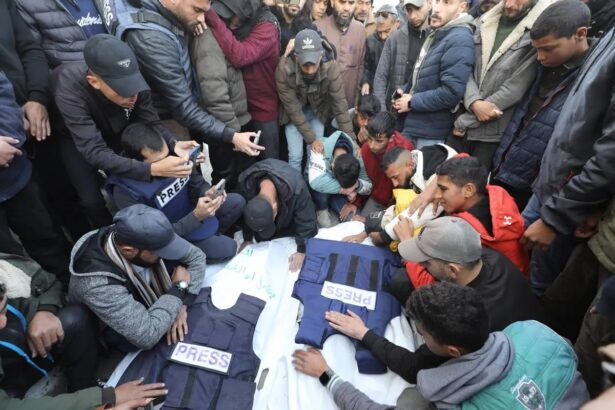
Israel strongly denies that it deliberately attacks legitimate journalists. “Israel values the work of journalists, medical staff, and all civilians,” Israeli Prime Minister Benjamin Netanyahu said in a statement, calling the attack on Monday (August 25) on Nasser Hospital a “tragic mishap.”
But the government has acknowledged ordering a strike aimed at Al Jazeera’s Anas al-Sharif, whom Israel accused of leading a Hamas cell that fired rockets into Israel. Three other Al Jazeera employees and two other journalists were killed in that attack. Israel has long targeted the Qatar-based Al Jazeera for allegedly inciting and supporting terrorism. Israel last year shut down Al Jazeera’s offices in Jerusalem and Ramallah in the West Bank, confiscating their equipment.
The Palestinians who have served as the outside world’s eyes and ears have paid a heavy price. Last month, four of the world’s largest global news organizations — the Associated Press, Reuters, the BBC, and Agence France-Presse — warned that their Gaza-based reporters risked starving to death.
Israeli officials accuse the world’s press of presenting a biased picture. Despite widespread evidence and reports from the United Nations, they deny there is famine or even widespread hunger in Gaza and accuse Hamas of siphoning food aid while peddling fabricated images for propaganda. All the more reason to welcome independent outside observers to see for themselves.
RELATED:
- The Palestine Chronicle Case: When Truth Becomes the Crime
- Gaza genocide: ‘There is nothing to occupy. The city itself no longer exists’
- ‘Starvation Is Everywhere’: Virtual Tours of Gaza Clinics Expose the Scale of the Horror
- Bootstraps or Bailouts? The Hidden Truth of Israel’s Military Power
- How western media helped turn Israel’s genocide into ‘fake news’