In a timeline from 1918 to now, historian Zachary Foster shows Zionists and Israeli leaders have wanted to occupy, annex, and dominate Lebanon since long before the existence of Hezbollah.
By Zachary Foster, Reposted from Zeteo, March 26, 2026
On Monday, Israel’s ultranationalist Finance Minister Bezalel Smotrich declared, “the Litani River must become our new border with the State of Lebanon.”
His remarks come amidst a mobilization of some 400,000 reserve soldiers, up from Israel’s previous limit of 280,000, as the country enters its fourth week of fighting in Lebanon. His dream appeared to come one step closer to reality when Israel announced on Tuesday that it was occupying the area from its border to the Litani River.
But Smotrich, who also presides over Israel’s apartheid regime in the West Bank, is not alone in his call to expand Israel’s borders. He follows in the footsteps of Israel’s most decorated leaders, including David Ben-Gurion, Moshe Dayan, and Menachem Begin, all of whom sought Israeli control over Lebanon.
Israel’s current offensive marks the country’s 10th ground invasion of Lebanon since 1948, and comes in the wake of the November 2024 ceasefire deal between Israel and Lebanon, upheld by Hezbollah until March 2, violated 15,400 times by Israel, killing more than 370 people.
Meanwhile, “Greater Israel” fever is spreading across Israel. The Israeli academic Omri Abadi has made a Biblical case for retaking south Lebanon because of its Israelite and Jewish history. “Uri Tzafon,” an ultra-right Israeli activist group, is pushing for Jewish settlement in Lebanon while Israeli journalists and pundits demand that their leaders conquer the country’s south and stay there.
As a historian of Palestine, I’m reminded of Israel’s century-long quest to dominate Lebanon, one that long pre-dates Hezbollah’s existence. And while Israel’s masterplan for Lebanon has changed significantly over the decades, as have the reasons for the invasions, as well as the sectarian identities of Israel’s adversaries, the drive to occupy, annex, and dominate Lebanon has remained unchanged.
This is a brief timeline of that history – from 1918 to the present:
1918: Zionist leaders set their eyes on the Litani River. David Ben-Gurion and Yitzhak Ben-Zvi wrote, “our country” stretched from the Litani River to the Hermon Mountain foothills and Wadi A’waj, just south of Damascus, in the north.
1919: The Zionist Organization’s map of the “Jewish National Home” extended south of Sidon and followed the foothills of the Lebanon mountains to the Litani River. Chaim Weizmann, president of the Zionist Organization at the time, told British Prime Minister David Lloyd George in 1919 that the Litani was “valueless” to Lebanon but “essential to the future of the Jewish national home.”
1943: The Palestine Water Company, a Zionist cooperative, partnered with the Maronite Christian Alfred Naccache, the president of Lebanon at the time, to conduct a joint study of the Litani River, concluding Lebanon could “usefully employ” only one seventh of the Litani’s flow, recommending most of the water be diverted through a tunnel into Palestine.
1948: Ten days after Israel’s establishment, Israeli Prime Minister David Ben Gurion declared the wartime goal of “smashing” Lebanon. “The weak point in the Arab coalition is Lebanon,” he said, since “the Muslim regime is artificial and easy to undermine. A Christian state should be established, with its southern border on the Litani River. We will make an alliance with it.”
1948-1949: In October 1948, Israeli forces invaded south Lebanon, occupying 15 mostly Shia villages and massacring dozens of unarmed civilians in the Lebanese village of Hula. Israeli forces sought to secure the Litani River and Wadi Duba, as they afforded natural, defensible boundaries, but withdrew from Lebanon as part of the March 1949 armistice agreements.
1950s: Moshe Dayan, a key Israeli military figure, advocated for an Israeli invasion and annexation of southern Lebanon, alongside the establishment of a Maronite state in the north, allied with Israel, throughout the 1950s and 1960s.
1956: Israel partnered with Britain and France to invade and occupy Egypt. After the war, Ben-Gurion envisioned Lebanon would disintegrate, with Israel annexing south Lebanon – up to and including the Litani River. The remains of the country north of the Litani would be reconstituted as a Christian republic, allied with Israel.
1963: Yitzhak Rabin, deputy chief of staff for the Israeli military, outlined to the recently elected Prime Minister Levi Eshkol the ideal boundaries of Israel: the Jordan River in the east, the Suez Canal in the south and west, and the Litani River in the north.
1968-1970s: Palestinian guerilla fighters, now based in Lebanon, carried out attacks on Israel from southern Lebanon. Israel besieged Beirut Airport in 1968 and frequently attacked Lebanese territory, killing hundreds and forcibly displacing tens, if not hundreds of thousands, over the years.
1972: Israel invaded south-central Lebanon, killing 60 people and capturing others.
1975-1976: Civil war broke out in Lebanon. The army was fractured, and the south left defenseless, having already suffered decades of abandonment by the government. Israel presented itself as the “protector” of three Christian enclaves in Lebanon, placing them under de facto Israeli military occupation.
1978: The Israeli army invaded Lebanon up to the Litani River to create a “security zone,” killing 1,100 people, mostly civilians, seeking to uproot the Palestinian Liberation Organization (PLO) from the south. Israel was forced to withdraw following US pressure, but installed a Maronite militia, the South Lebanon Army (SLA), in its place. That initiated a period of Israeli freedom of action in Lebanon, with at least 1,000 Israeli soldiers moving in and out of Lebanese territory over the next few years.
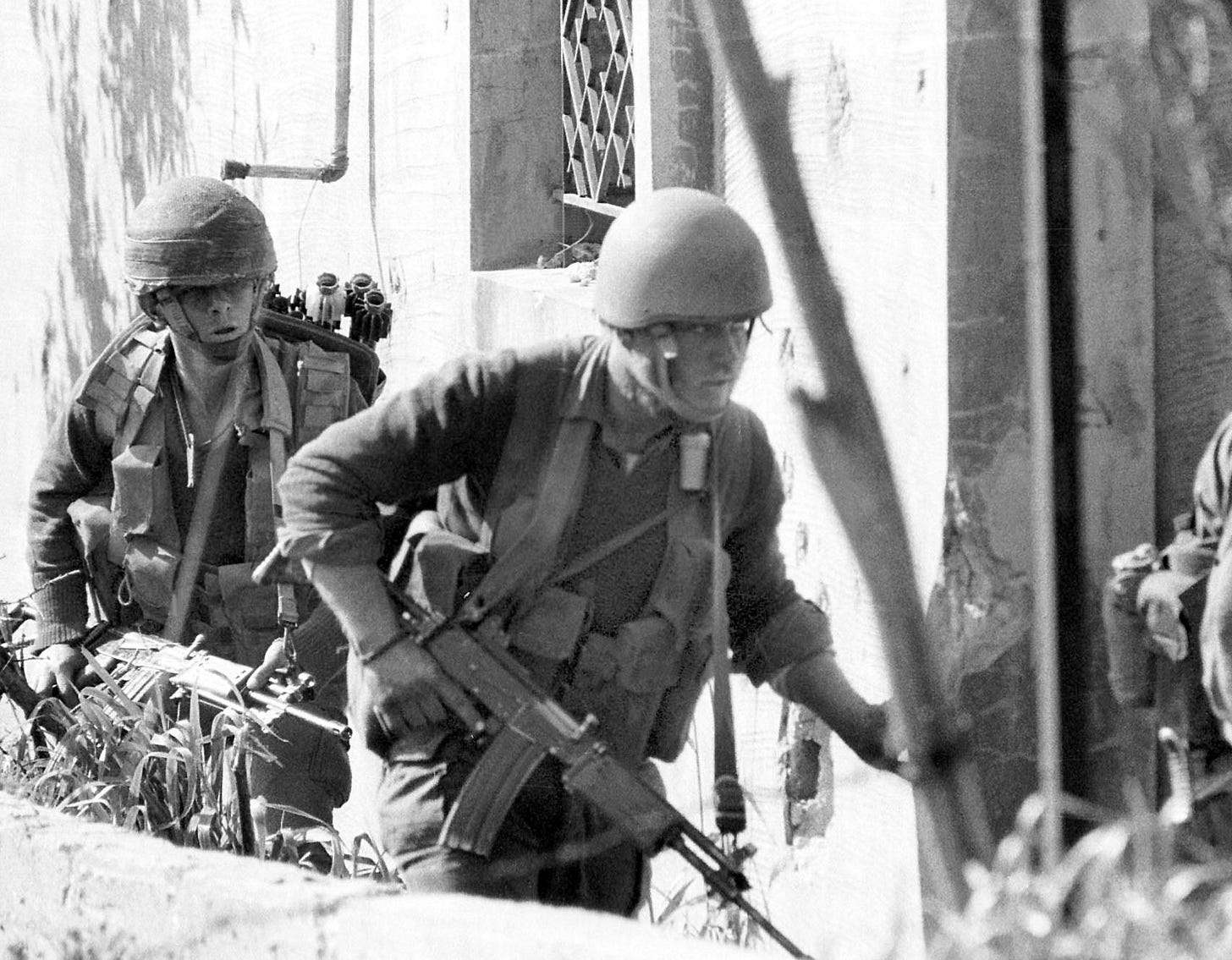
1981: Israel and the PLO agreed to a ceasefire on July 25, calling for the termination of all hostilities along the Lebanese-Israeli border. Israel repeatedly broke the ceasefire, attacking PLO bases throughout 1981-1982.
1982: Israel re-invaded Lebanon, blowing up the ceasefire deal, with the goal of eradicating the PLO, even though there were zero Israeli deaths in the Galilee due to Palestinian attacks for nearly a year. Israel occupied the territory south of the Litani River, besieged Beirut for 10 weeks, devastated civilian infrastructure, and killed an estimated 19,000 people, mostly civilians. Israel also facilitated the massacre of thousands of Palestinians in the Sabra and Shatila refugee camps.
1982-2000: Israel occupied south Lebanon, establishing a “security zone” in 10% of Lebanese territory, where it exerted total control. Israel’s military occupation gave rise to Hezbollah, founded in 1982 with support from its co-religionists in Iran.
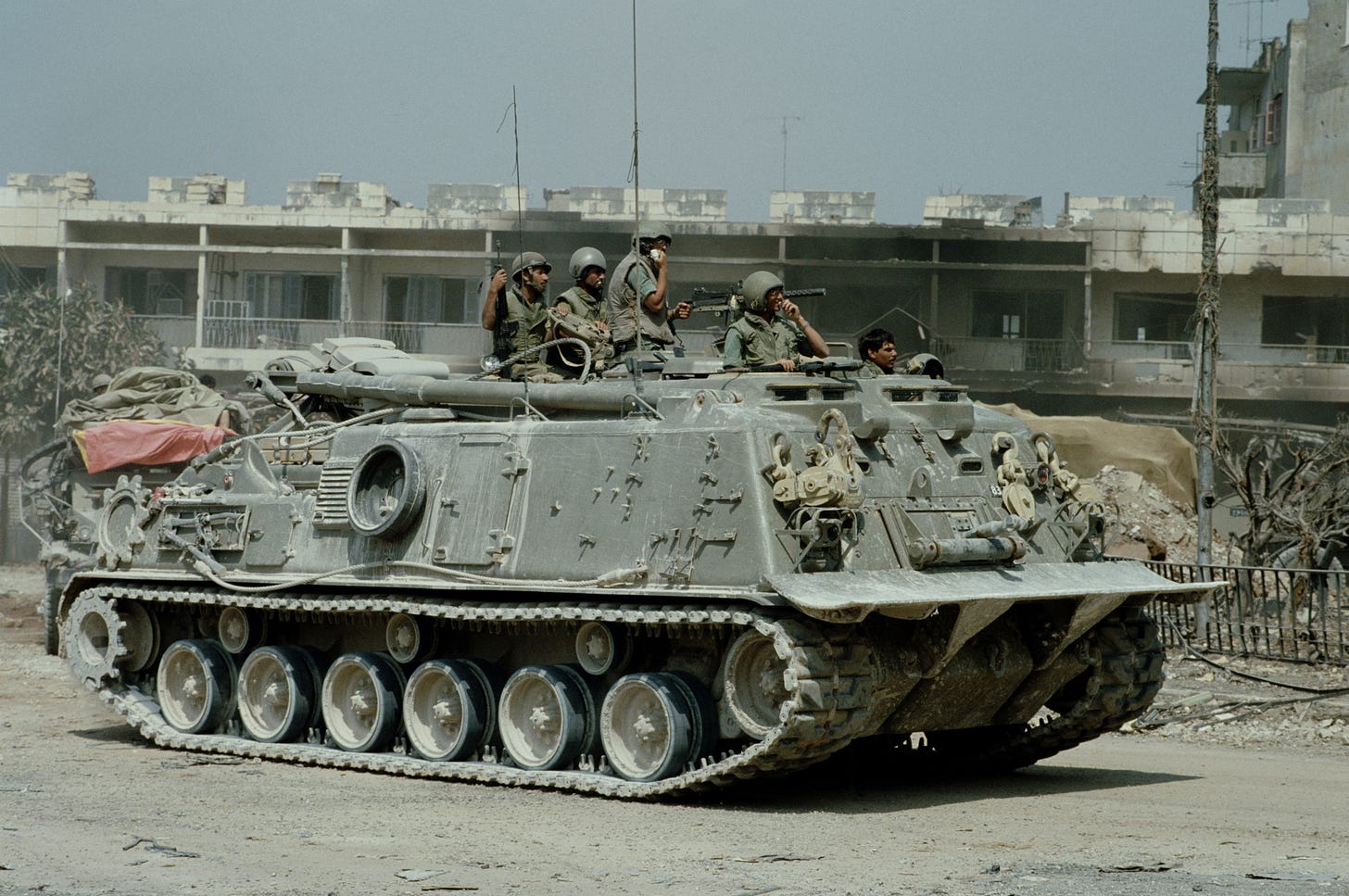
1993: Israeli forces re-invaded Lebanon, attempting to force Hezbollah north of the Litani River and “effect a massive displacement of the civilian population in south Lebanon,” as Human Rights Watch put it. An estimated 140 Lebanese civilians were killed, 500 wounded, and 300,000 displaced.
1996: Israeli forces re-invaded Lebanon, attempting to force Hezbollah out of the south and again to “effect a massive displacement of the civilian population in south Lebanon,” according to Human Rights Watch. Israel killed 154 civilians and injured 351.
1999-2000: Israel struck Lebanese power plants, darkening much of Lebanon in 1999 and twice in 2000, to punish the civilian population of Lebanon for supporting or tolerating Hezbollah. Israeli forces withdrew from the military’s “security zone” in southern Lebanon.
2006: Israel re-invaded Lebanon, killing more than 1,109 people, mostly civilians, and displacing a million people, while Hezbollah killed around 164 people, two-thirds Israeli soldiers. According to the Pentagon, the war was seen as “a disaster” for the Israeli military, as Hezbollah forces were able to wreak havoc on Israeli armor columns.
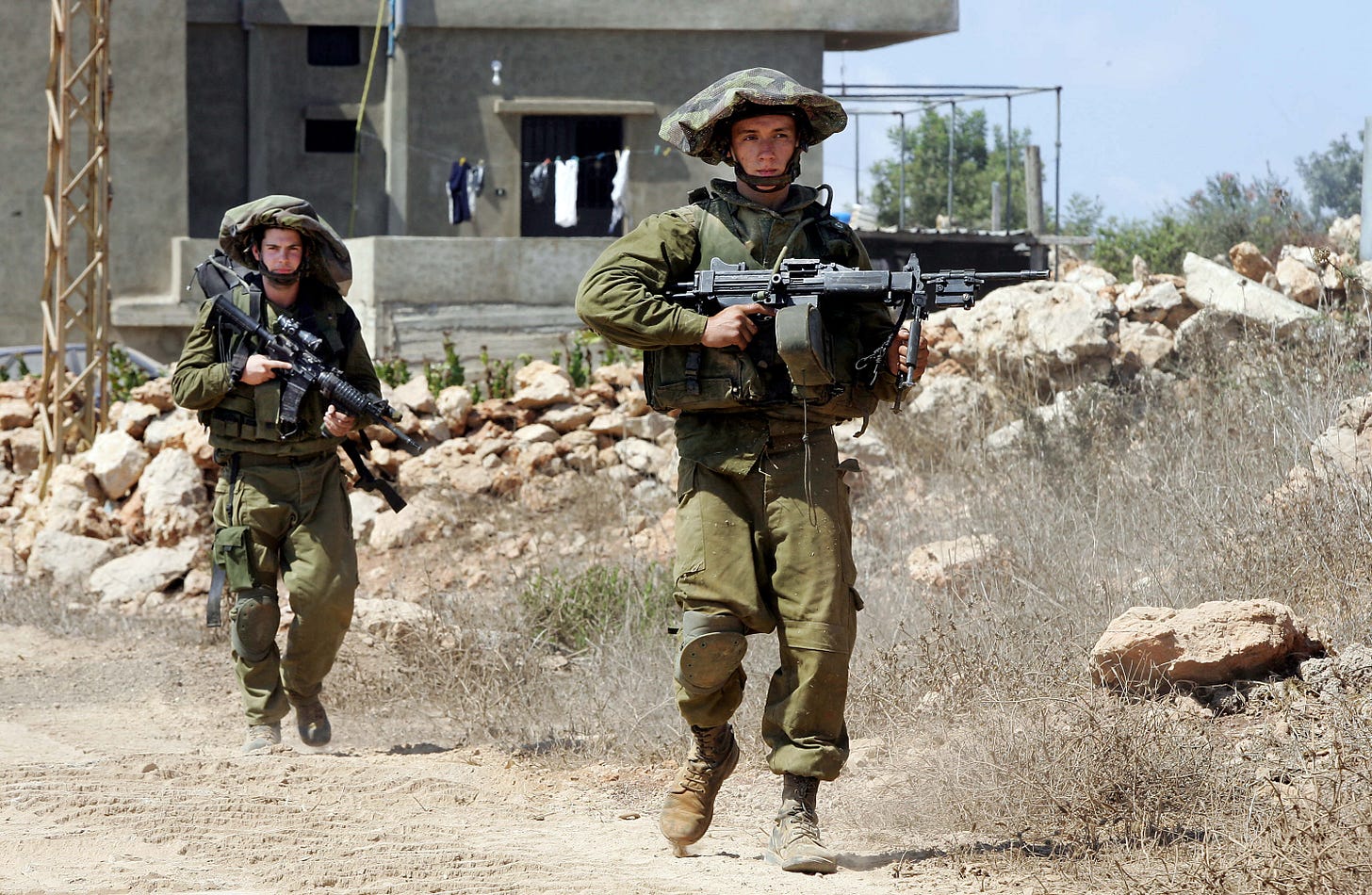
2024: Israel carried out a series of perfidious attacks, planting bombs in communication devices like pagers, killing scores across Lebanon, and assassinating Hezbollah leader Hassan Nasrallah. Then Israeli ground forces invaded Lebanon, but failed to advance very far due to heavy resistance by Hezbollah forces. Israeli forces killed nearly 4,000 people, mostly civilians, while Hezbollah killed about 120 Israelis, nearly two-thirds soldiers.
2026: Israel re-invaded Lebanon, killing, at the time of publication, at least 1,094 and injuring more than 3,100. Israel issued evacuation orders in southern Lebanon and south Beirut, displacing more than 1.2 million. Some have called it a Lebanese “Nakba,” as residents of the south have been told they “will not return to the area south of the Litani [River] until the safety of the residents of the north [of Israel] is guaranteed.”
This history may seem antiquarian, but to many Israelis, this history is living. Ben-Gurion’s vision for Lebanon was cited by Begin when Israel invaded Lebanon in 1982, and it’s being cited now by academics and pundits as justification for the war.
If history is any guide, Israeli troops will face inhospitable terrain in Lebanon and an even more inhospitable population, one fighting an existential war. And, after weeks, months, or years of occupation, Israeli forces will eventually withdraw from Lebanon, wondering what got them into the quagmire in the first place.
Zachary Foster earned his PhD in Near Eastern Studies from Princeton University. He is a historian of Palestine and the founder of Palestine Nexus.
RELATED:
- Israel is using the ‘Gaza doctrine’ in Lebanon and Iran
- Craig Murray: Israeli Atrocities Continue in Lebanon
- Mass Expulsion in Lebanon as Israel Expands War: “We Don’t Know Where to Go”
- Israel used widely banned cluster munitions in Lebanon, photos of remnants suggest
- Lebanon: Israel’s White Phosphorous Use Risks Civilian Harm