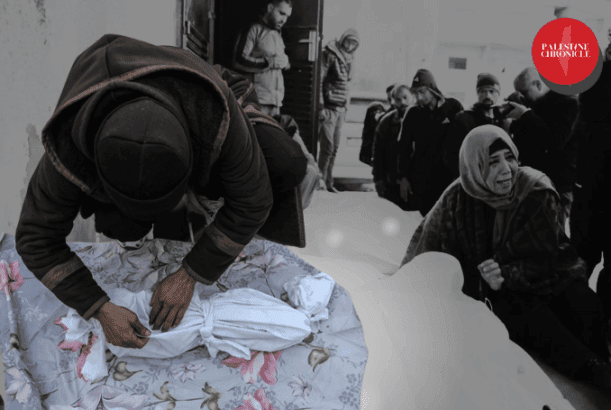
After 17 years of waiting, the Abu Hamad family welcomed a baby boy—only to lose him six months later to cold, pollution, and siege in Gaza’s displacement camps.
For seventeen years, the Abu Hamad family waited for a child. When he finally arrived, the siege, the winter cold, and Gaza’s collapsing environment took him away.
Six-month-old Yousef Abu Hamad died this week after prolonged exposure to freezing temperatures and sewage pollution near his family’s makeshift shelter in al-Mawasi, west of Khan Yunis in southern Gaza. His death is one of a growing number of infant fatalities linked not to illness alone, but to the conditions imposed by genocide, displacement, and blockade.
Displaced from their home in Bani Suheila, east of Khan Yunis, the family had been living in a tent erected beside an open sewage discharge point—one of many created after Israel’s bombardment destroyed large sections of Gaza’s sanitation infrastructure.
Doctors told the family that Yousef died from a combination of severe cold exposure and dehydration, worsened by constant contact with polluted wastewater surrounding the shelter.
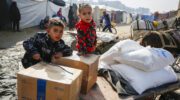
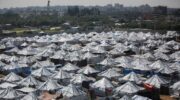
Since December, winter storms have swept through Gaza, flooding tent camps and tearing apart the thin fabric structures that now house hundreds of thousands of displaced Palestinians after Israeli attacks flattened much of the enclave’s housing.
‘He Came After 17 Years’
Cradling his son’s small body, Yousef’s father, Omar Abu Hamad, struggled to speak.
“This child came after 17 years of suffering and waiting,” he said. “He was our only son, among six daughters.”
Abu Hamad said he repeatedly appealed for baby formula, diapers, and basic assistance in recent months, but received no response. As temperatures dropped and conditions worsened, his child became increasingly vulnerable.
On January 20, Gaza’s Ministry of Health reported that at least nine children had died from cold-related causes since the start of winter. Yousef’s death raised the number further, with health officials warning that many more infants remain at risk amid acute shortages of shelter, heating, clean water, and sanitation.
Sewage has flooded streets and displacement camps across Gaza, contributing to outbreaks of intestinal and skin diseases, particularly among children and the elderly.
‘His Body Had Turned Blue’
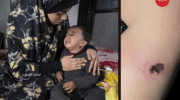
Yousef’s grandmother, Um Mohammed, recalled receiving a late-night call telling her the baby’s body had turned blue from the cold.
“When we arrived at the hospital, he was already gone,” she said.
At Nasser Hospital, family members said Yousef’s shrouded body bore visible signs of extreme cold exposure. Severe diarrhea had left him dehydrated in the days before his death, a condition exacerbated by polluted surroundings and lack of medical supplies.
Environmental Collapse by Design
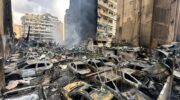
The Gaza Government Media Office says Israeli attacks have destroyed nearly 90 percent of Gaza’s civilian infrastructure, including more than 700,000 meters of sewage networks, triggering what officials describe as a full-scale environmental disaster.
Municipalities warn that remaining water and sewage pumping stations are barely functioning due to fuel shortages imposed by the blockade, threatening further public health catastrophes as winter continues.
For the Abu Hamad family, the consequences are no longer abstract.
After seventeen years of waiting, their son lived just six months.
Since October 2023, the Israeli genocide in Gaza has killed more than 71,000 Palestinians—most of them women and children—and wounded over 171,000, leaving the territory in ruins. Despite a ceasefire that began on October 10, Israeli attacks have continued, killing hundreds more and deepening the humanitarian catastrophe that claimed Yousef’s life.
The Palestine Chronicle, also known as People Media Project, is an American 501 organization and news website that covers local and international news related to Palestine, reporting from a Palestinian perspective
RELATED:
- Israeli forces kill three Palestinian children in the occupied West Bank
- Palestinian children disappear amid Israeli military detentions in Gaza
- At least 13 killed by Israeli strikes on Gaza, including five children, civil defense agency says
- With Their Breadwinners Killed, Gaza’s Children Turn to Begging to Survive
- Tucker Carlson visits Gaza refugees, accuses Israel of murdering children