Among the most shocking cases is that of Leqaa Kordia, a Palestinian woman and the last person still held in US federal detention in connection with protests at Columbia University.
Exactly a year ago today, I was abducted from a Zurich street by plainclothes police, bundled into an unmarked car and taken to prison.
I was walking with one of my hosts toward a venue where I was scheduled to speak at an event organized by Swiss activists about Israel’s genocide in Gaza.
During my detention, Swiss intelligence officers tried to question me without my lawyer present – an apparent attempt, I told Swiss academic Pascal Lottaz in a recent interview, to manufacture grounds for my arrest retroactively.
After three days in detention, I was handcuffed, caged in a police van, taken to the airport and expelled.
The operation achieved its purpose: preventing me from participating in public events about Israel’s crimes. But it failed to intimidate or silence me.
In December, Zurich’s Administrative Court ruled that my detention violated both the Swiss constitution and the European Convention on Human Rights.
I have filed additional cases, including a criminal complaint against Nicoletta della Valle, the Israel-linked police official later identified by a parliamentary investigation as having ordered the action against me.
As I told Lottaz, what happened to me is not exceptional. It is part of a widening campaign across the so-called West to silence journalists, students and activists who expose Israel’s crimes or advocate for Palestinian rights.
You can watch our conversation on his Neutrality Studies channel in this video:
“One of the lucky ones”
Among the most shocking cases is that of Leqaa Kordia, a Palestinian woman and the last person still held in US federal detention in connection with protests at Columbia University.
On 13 March last year, Kordia attended what she believed was a routine, voluntary check-in at ICE headquarters in New Jersey.
Instead, she was transported to a detention facility in Texas, 1,500 miles away from her home, her mother and her brother with special needs who relied on her support.
I visited Leqaa Kordia in Texas where she’s been unjustly held for 9 months for demanding freedom for Palestinians-from bombs, from siege, from Genocide. And for that her own freedom was taken away by @DHSgov @Sec_Noem. Say her name. Share her story. Demand her freedom pic.twitter.com/k6O4lJfu5G
— Laila El-Haddad (@gazamom) December 22, 2025
“Inside the ICE facility where I’m being held, conditions are filthy, overcrowded and inhumane,” Kordia wrote recently for USA Today
“For months, I slept in a plastic shell, known as a ‘boat,’ surrounded by cockroaches and only a thin blanket.”
The food is inedible and with no halal meals available, she has lost significant weight.
“Still, I consider myself one of the lucky ones. Many women come and go through this hall of sorrows, and I try my best to help them where I can,” Kordia writes. “There are others with me who cannot afford legal representation. Some have diabetes or terminal cancer, or are wheelchair bound.”
An immigration judge has twice ordered her release. The Trump administration has blocked it using an obscure procedural loophole – a practice now being challenged in federal courts, many of which have already ruled it unconstitutional.
Opinion: 10 months later, I’m the last Columbia protester still in ICE custody https://t.co/4h3DTPp9kR
— USA TODAY Opinion (@usatodayopinion) January 21, 2026
In September, US federal judge William G. Young ruled that the Trump administration’s campaign of arresting and deporting noncitizen students and faculty over Palestine advocacy violates the First Amendment
Last week, Young went further, finding that officials engaged in an “unconstitutional conspiracy” to suppress free speech.
The ruling focused on five prominent targets: Mahmoud Khalil, Yunseo Chung, Mohsen Mahdawi, Rumeysa Ozturk and Badar Khan Suri.
Khalil, who spent over three months in ICE custody, recently suffered a setback when a federal appeals court overturned an earlier ruling that found his detention and the effort to deport him likely unconstitutional.
Although the government cannot lawfully re-detain him while appeals continue, it continues to display contempt for due process.
“It looks like he’ll go to Algeria,” a Department of Homeland Security spokesperson said publicly.
Khalil has vowed to continue fighting through every legal avenue.
French woman imprisoned for exposing Israeli soldier
Repression is no less severe in Europe.
Last week, a court in the French city of Nice sentenced Amira Zaiter, founder of activist group Nice to Gaza, to 15 months in prison for “anti-Semitic” social media posts.
Zaiter admitted to calling Illan Choukroune, a French citizen who served in the Israeli army, a “genocidaire.”
“I will continue saying it,” Zaiter told the judge.
This is not her first conviction.
In June, a court sentenced Zaiter to six months in prison and a $7,000 fine – reduced from an original sentence of three years.
She was first arrested in November 2024 for her posts on Twitter/X and for exposing an Israeli soldier who had returned to Nice after being in Gaza, according to Civic Space Watch, an EU-funded group that monitors rights violations.
Widespread repression
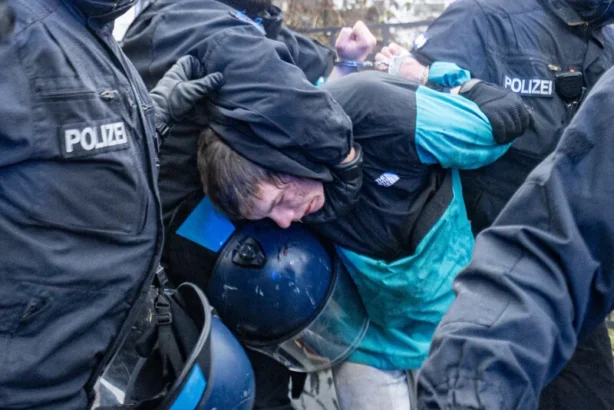
In October, UN experts called on Germany to stop criminalizing, punishing and suppressing Palestine-related speech.
Tensions rose as police intervened during a pro-Palestine protest in Berlin, where demonstrators gathered outside Neukolln City Hall chanting their support of Gaza. Several protesters were detained pic.twitter.com/j3zu7yDFhK
— TRT World (@trtworld) December 28, 2025
“We are alarmed by the persistent pattern of police violence and apparent suppression of Palestine solidarity activism by Germany,” the independent special rapporteurs said.
I have had a taste of German authoritarianism myself: In 2024, German authorities threatened me with up to one year in prison and a fine if I addressed a conference in Germany from abroad via the internet.
In Australia, the government exploited the aftermath of December’s Bondi Beach attack to rush through “hate speech” laws that target Palestine solidarity.
“These laws dramatically expand state power to police speech, association and protest,” according to APAN, the Australia Palestine Solidarity Network.
“Their vague definitions and broad enforcement mechanisms create a chilling environment in which political advocacy – particularly pro-Palestinian organizing and opposition to Israel’s genocide and apartheid – is criminalized.”
British repression
Australia appears to be following Britain’s lead, where people are routinely arrested for holding signs opposing genocide and supporting Palestine Action – the protest group arbitrarily banned by the government as “terrorist.”
Meanwhile, anyone is free to hold a sign in British streets stating “I support genocide,” without fear of arrest.
Activists associated with Palestine Action continue to suffer severe persecution, including prolonged imprisonment, even though they have not been convicted of a crime.
That prompted several detainees to go on life-threatening hunger strikes in an effort to force the government to ease their conditions and cancel arms contracts with Israel.
One detainee, Umer Khalid, announced in recent days that he will stop taking fluids, after already refusing food for two weeks.
My full statement on my recent detention. 1/2 pic.twitter.com/QnBHkAAxna
— Momodou ✊🏿 (@MomodouTaal) January 23, 2026
Last week, Momodou Taal – a Cornell University doctoral student previously forced to leave the US over his Palestine advocacy – was detained at London’s Heathrow airport
A British citizen, he was interrogated for hours about his political views under the repressive Terrorism Act. Police also confiscated his laptop and phone.
Taal – who has never been charged with any crime – called the interrogation, “a racist fishing expedition designed to intimidate and punish someone for advocating freedom and opposing mass slaughter.”
Expanding censorship
This repression coincides with expanding systems of censorship.
Last week saw the finalization of the forced break-up and sale of TikTok to a group controlled by Larry Ellison, a pro-Israel billionaire whose family also recently took over CBS News.
WATCH: TikTok’s new CEO, Adam Presser, told the World Jewish Congress last year how TikTok banned criticism of “Zionists.”
You can say, “You’re a proud Zionist,” but if you’re calling someone a “Zionist” as a pejorative, then “that gets designated as hate speech,” he said. pic.twitter.com/zT9X05HqUw
— Chris Menahan 🇺🇸 (@infolibnews) January 25, 2026
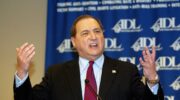
Meanwhile, Jonathan Greenblatt, the head of the Anti-Defamation League – the Israel lobby group that spied for apartheid South Africa during the 1980s – was caught on camera discussing efforts to “monitor and disrupt” left-wing and Palestine solidarity groups and report them to the FBI under the pretext of combating extremism.
ADL CEO Jonathan Greenblatt reveals the ADL is *still* working with the FBI.
“I have 40 analysts working full-time 7 days a week, 24 hours a day monitoring extremists,” he tells an LA synagogue. “We monitor these people, and we share the intelligence with the FBI.”
He says… pic.twitter.com/hGF58bCmGO
— Chris Menahan 🇺🇸 (@infolibnews) January 15, 2026
All of this is being carried out under governments that claim democracy, free speech and human rights as their highest values – yet readily sacrifice those rights to protect a genocidal apartheid settler-colony whose leader is wanted for crimes against humanity.
Ali Abunimah is the co-founder of The Electronic Intifada and author of The Battle for Justice in Palestine, now out from Haymarket Books.
RELATED:
- Ha’aretz: Free the Palestinian Activist Who Dared to Document Israel’s Crimes in the West Bank
- Israel Apologists Hasten To Use Bondi Shooting To Attack Anti-Genocide Activists
- Palestinian Activist Recorded His Own Murder, Israel Still Released His Killer
- American Nurse Who Tried to Save “No Other Land” Activist Was Detained & Deported By Israel
- Israeli settler kills West Bank activist who worked on Oscar-winning film