The arrest and investigation of two Israeli soldiers in Belgium over alleged Gaza war crimes could mark a turning point in the pursuit of global accountability for Israel’s genocide in Gaza.
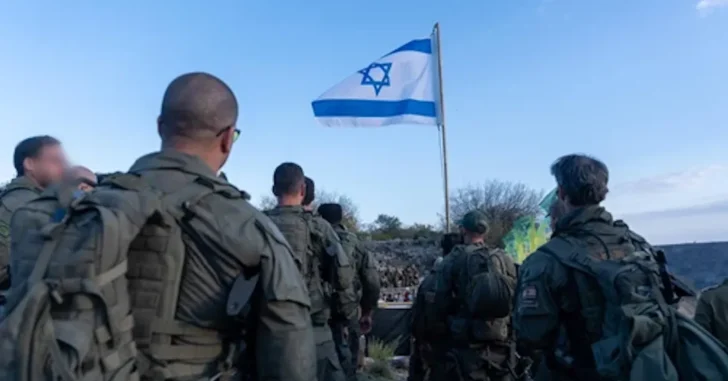
In mid-July, Belgian police arrested and questioned two Israeli soldiers at the Tomorrowland music festival in Boom after pro-Palestinian groups alleged they had been waving flags from their army brigade.
This was facilitated by the Hind Rajab Foundation (HRF) and the Global Legal Action Network (GLAN), which previously filed complaints against the soldiers, accusing them of involvement in atrocities carried out in the Gaza Strip. The legal organisations are pursuing similar work in several jurisdictions.
The men suspected of war crimes were briefly taken into custody, interrogated, and then released. The Belgian prosecution office confirmed that a criminal investigation is underway.
“States have the legal basis and responsibility to act to ensure compliance with international law. This is a crack in the wall of impunity,” Gearóid Ó Cuinn, founding director of the UK-based GLAN, told The New Arab, commenting on the Belgian prosecutor’s decision.
He emphasised that this is the first time serving Israeli soldiers have been arrested in connection with violations of humanitarian law in Gaza, deeming it a crucial recognition of the gravity of their purported crimes.
According to the director of the lawyers’ group, the move by the Belgian authorities highlights the seriousness of their alleged crimes, with compelling evidence against individual soldiers motivating prosecutors to act. It also indicates, he said, a shift in acknowledging that “third states have obligations under international law” and, therefore, that they need to live up to their responsibilities.
In an interview with TNA, Celeste Kmiotek, staff lawyer within the Atlantic Council’s Strategic Litigation Project, contended that the significance of the case lies in applying the law equally and universally, as double standards in Gaza have eroded trust in international law.
The questioning was conducted under a new provision in Belgium’s criminal code, in force since last year, allowing courts to investigate acts overseas covered by international treaties that the country has ratified, including the 1949 Geneva Conventions and the 1984 UN Convention against Torture.
This effectively provided a legal basis to apply Belgium’s universal jurisdiction, which permits the prosecution of alleged crimes committed beyond its borders.
“It’s a step forward, demonstrating that prosecutors are starting to realise the seriousness of the crimes in question and are inclined toward justice,” Shahd Hammouri, lecturer in international law at the University of Kent, told The New Arab.
The Palestinian lawyer said that Belgium’s judicial intervention also helps break the perception among Israelis that they are above accountability, forcing soldiers to think twice about their actions, knowing they could face prosecution or travel restrictions in the future.
The Belgian case marked the first instance in a European country where Israeli suspects linked to war crimes in Gaza have been arrested and formally questioned. It is a major step toward accountability for those involved in the genocide, especially in the face of widespread governmental inaction and growing outrage worldwide.

Over 60,000 Palestinians have been killed in Gaza since October 2023 as Israel’s war and blockade have left the territory in ruins, with mass starvation and a critical shortage of medicine and other essentials.
“At a time when far too many governments remain silent, this action sends a clear message: credible evidence of international crimes must be met with legal response, not political indifference,” the Belgium-based Hind Rajab Foundation said in a statement.
Named after a five-year-old Palestinian girl killed with her family by Israeli troops early in the war, the foundation has campaigned for the arrest of Israeli military personnel accused of war crimes. It has been using the travelling soldiers’ own social media footage as evidence for war crimes investigations.
The HRF, along with other legal groups, has initiated efforts to pursue legal proceedings against low- and high-ranking Israeli officers, prompting some holidaying Israelis to flee various countries.
Ó Cuinn pointed to robust proof of complicity in photos and videos posted by Israeli soldiers, showing them openly boasting about, filming, and publicising their atrocities, while also revealing their movements.
“The information is there, and the authorities need to act on it now. If the will exists, it’s entirely possible,” he said, noting that the key question is whether nations will demonstrate a genuine commitment to the rule of law and act.
By invoking universal jurisdiction, Belgium has affirmed its ability to prosecute individuals for serious breaches of international law, regardless of where the offences were committed.
The action could trigger other states to follow suit, recognising universal jurisdiction as a legal obligation and making clear that credible evidence of international crimes must be met with law enforcement.
At last month’s emergency conference in Bogotá, The Hague Group concluded with 12 nations – Bolivia, Colombia, Cuba, Indonesia, Iraq, Libya, Malaysia, Namibia, Nicaragua, Oman, Saint Vincent and the Grenadines, and South Africa – agreeing to the immediate implementation of six measures against Israel, including prosecuting international crimes in their national jurisdictions on the basis of universal jurisdiction.
Efforts to hold Israel accountable have largely been limited to international courts and countries in the global south. Yet, the arrests in Belgium suggest that some Western actors may be showing unease with continuing evidence of Israel’s war crimes and are starting to take a firmer position, especially as forced starvation in Gaza intensifies.
Hammouri anticipates a ripple effect across Europe, with other member states possibly following Belgium’s lead, although she criticised not just the EU’s inaction but its active collusion throughout nearly 22 months of Israel’s war on Gaza.
“European nations have become complicit in the most atrocious way possible,” the international advocate said, implying that EU countries have abandoned any pretence of upholding international law.
The law professor stressed how the international order is at a critical tipping point, with most nations neglecting their obligations. Belgium’s initiative, in this sense, could help revive the international legal system and repair its legitimacy, she added.
“States must do their bare minimum; they have a fundamental duty to prosecute war crimes suspects. This is a basic norm of customary international law,” Hammouri said.
“Building momentum and political will among countries is key to ensuring the appropriate teams are resourced and supported to pursue cases under universal jurisdiction,” said Kmiotek, who focuses on justice efforts for crimes and human rights violations.
The Atlantic Council lawyer outlined additional accountability measures to support justice for Gaza’s victims, including forming joint investigation teams, launching structural investigations to build broader evidence to facilitate timely prosecutions, and promoting information-sharing among states.

She also remarked that countries can support the International Criminal Court by providing resources, shielding it from the effects of US sanctions, and prosecuting domestic companies complicit in atrocities in Gaza.
Pursuing legal action against Israeli citizens could expose the initiating state to a backlash from Israel or its allies. However, Gearóid Ó Cuinn believes that this risk is diminishing, as more countries in the global north are taking a stand against Israel’s ongoing genocidal war in Gaza, making it increasingly difficult for Tel Aviv to mount meaningful counter-responses.
Last week, Ireland’s foreign affairs and trade committee urged the government to expand its Occupied Territories Bill to include a full ban on trade in goods and services with illegal Israeli settlements in the occupied West Bank.
The Netherlands has threatened sanctions against Israel, including suspension of the trade component of the EU-Israel Association Agreement, while Sweden has joined it in calling on the EU to suspend its trade partnership with Israel.
On Friday, meanwhile, Slovenia became the first EU country to ban all arms trade with Israel.
Ó Cuinn, however, criticised the Belgian authorities for freeing the two Israeli soldiers, cautioning that failure to prosecute war crime suspects risks enabling them to return to Gaza and commit further criminal acts.
“If states are serious about upholding the rule of law over the rule of might, they must make sure their jurisdictions are not safe havens for alleged war criminals,” he argued.
The accused perpetrators reportedly fled to the Netherlands shortly after their release, prompting the HRF and GLAN to swiftly lodge a second criminal complaint with the Dutch authorities, calling for their arrest.
Last week, Belgian prosecutors referred the complaints against the two members of the Israeli military to the ICC. Hind Rajab urged the international court to act promptly and issue arrest warrants for the pair.
Kmiotek explained that the ICC Prosecutor’s Office will need time to review the file, conduct any necessary follow-up investigations, determine whether the suspects fall under its mandate to prosecute those “most responsible” for war crimes, and eventually apply for arrest warrants.
She reiterated that Belgium and other states need to take concrete subsequent actions against suspected perpetrators, going beyond detention and referral.
“Domestic jurisdictions play a critical role in complementing the ICC and other international justice mechanisms,” she said.
Alessandra Bajec is a freelance journalist currently based in Tunis.
RELATED:
- Spying & threats: Israel spent 9 years trying to keep the ICC off the trail of Israel’s war crimes
- MAGA Rabbi Shmuley Boteach’s Sons Allegedly Committed War Crimes in Gaza. Trump May Be Able to Protect Them.
- Israel, The ICC, And The Disintegration Of Our Species
- War on Gaza: Why ICC bid for arrest warrants is a bold and historic move — Richard Falk
- Mainstream media largely sidelined Gaza starvation story, until it couldn’t