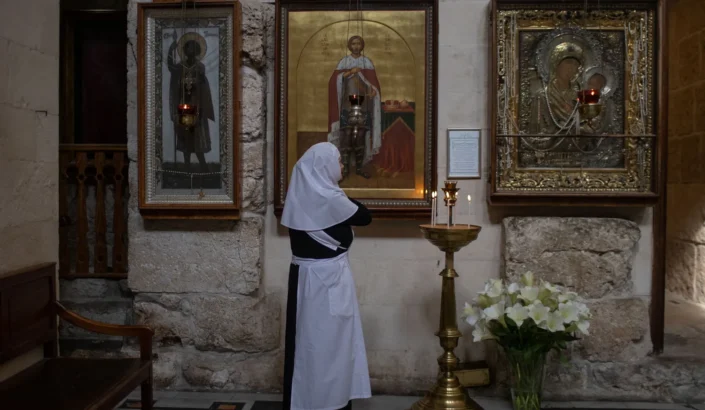
From Jerusalem to the West Bank to Lebanon, attacks on Christians by Israelis have become far too common. The perpetrators confuse dominance and security – and any unfamiliar ‘other’ is seen as an enemy.
By Raef Zreik, reposted from Haaretz, May 17, 2026
Why would someone attack a nun from behind – in the middle of the day, in the middle of the street – without any provocation?
After all, according to the encyclopedia, a nun is someone who “dedicates her life to religious service, typically living under vows of poverty, chastity and obedience within a convent or monastery.”
This question arises, not as a hypothetical but as a real debacle, after a Catholic nun was attacked in Jerusalem’s Old City on April 28. Yona Schreiber, 36, from the West Bank settlement of Peduel, was arrested and charged several days later.
תקיפת הנזירה אתמול באזור קבר דוד בירושלים – שוטרי מרחב דוד איתרו את החשוד (36) ועצרו אותו בחשד לתקיפה ממניע גזעני >>> pic.twitter.com/agRpznR84X
— משטרת ישראל (@IL_police) April 30, 2026
International outcry from Christian leaders led a Knesset committee to convene last Wednesday to discuss the attacks and harassment targeting Christians in Jerusalem.
One may choose to make sense of this violence by explaining it away: There’s no valid reason to generalize and to condemn a whole population, or segment of society, or whole society writ large. Or: This is a sporadic event, rather than a pattern, and perhaps the attacker’s psychological condition is to blame.
The issue with these rationales is that there is more than enough evidence that the violent attack on the nun was not a one-off event. It just happened to be caught on camera.
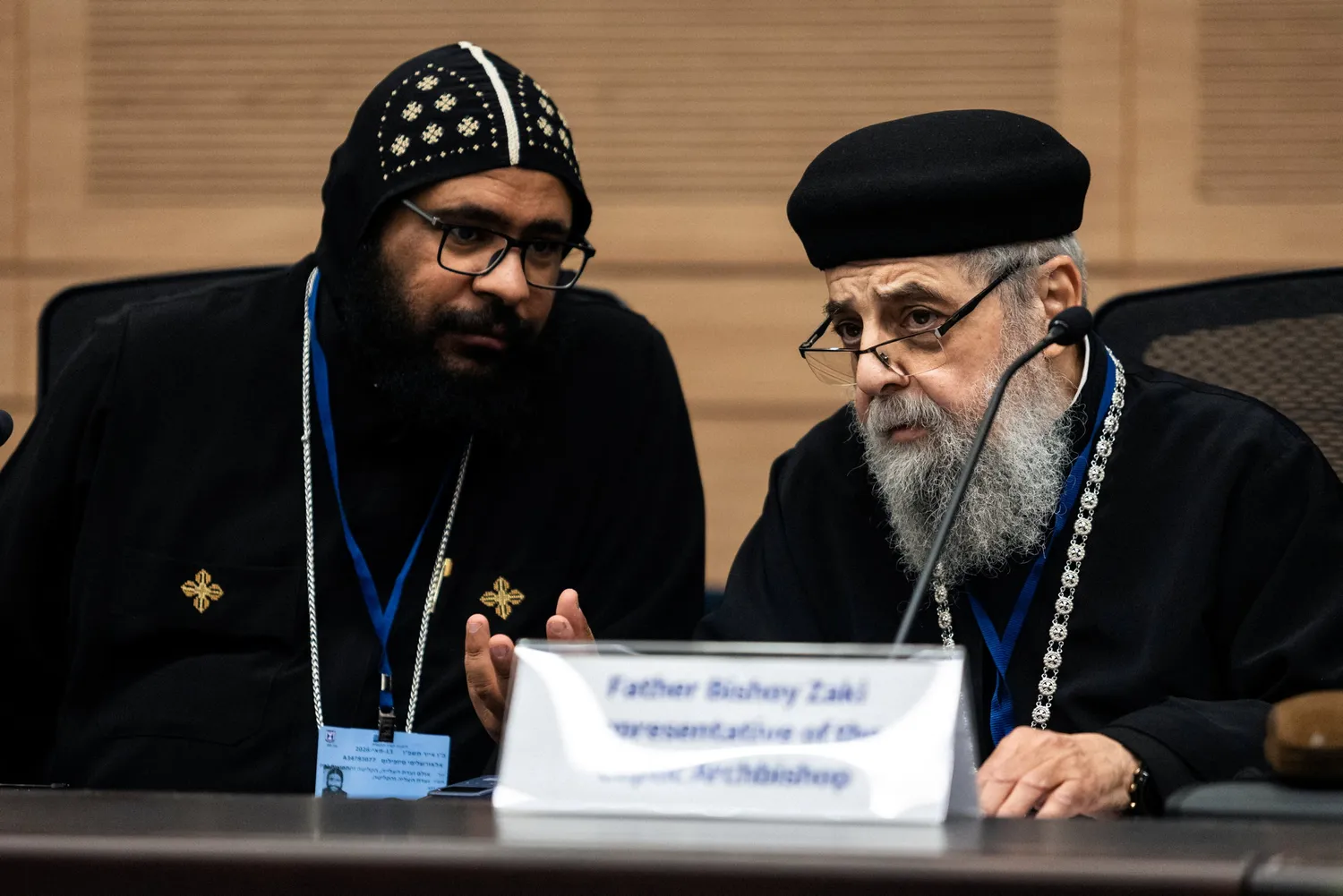
Father Bishoy Zaki, a representative of the Coptic Church, testified at the Knesset hearing that Christians in Jerusalem’s Old City face “violent attacks, restrictions by security forces on prayer, spitting, kicking and stone-throwing” while walking through the area.
The harassment is so common that the Jerusalem-based Rossing Center for Education and Dialogue began tracking incidents and patterns in 2023, which are detailed in its annual reports of “attacks on Christians in Israel and East Jerusalem.”
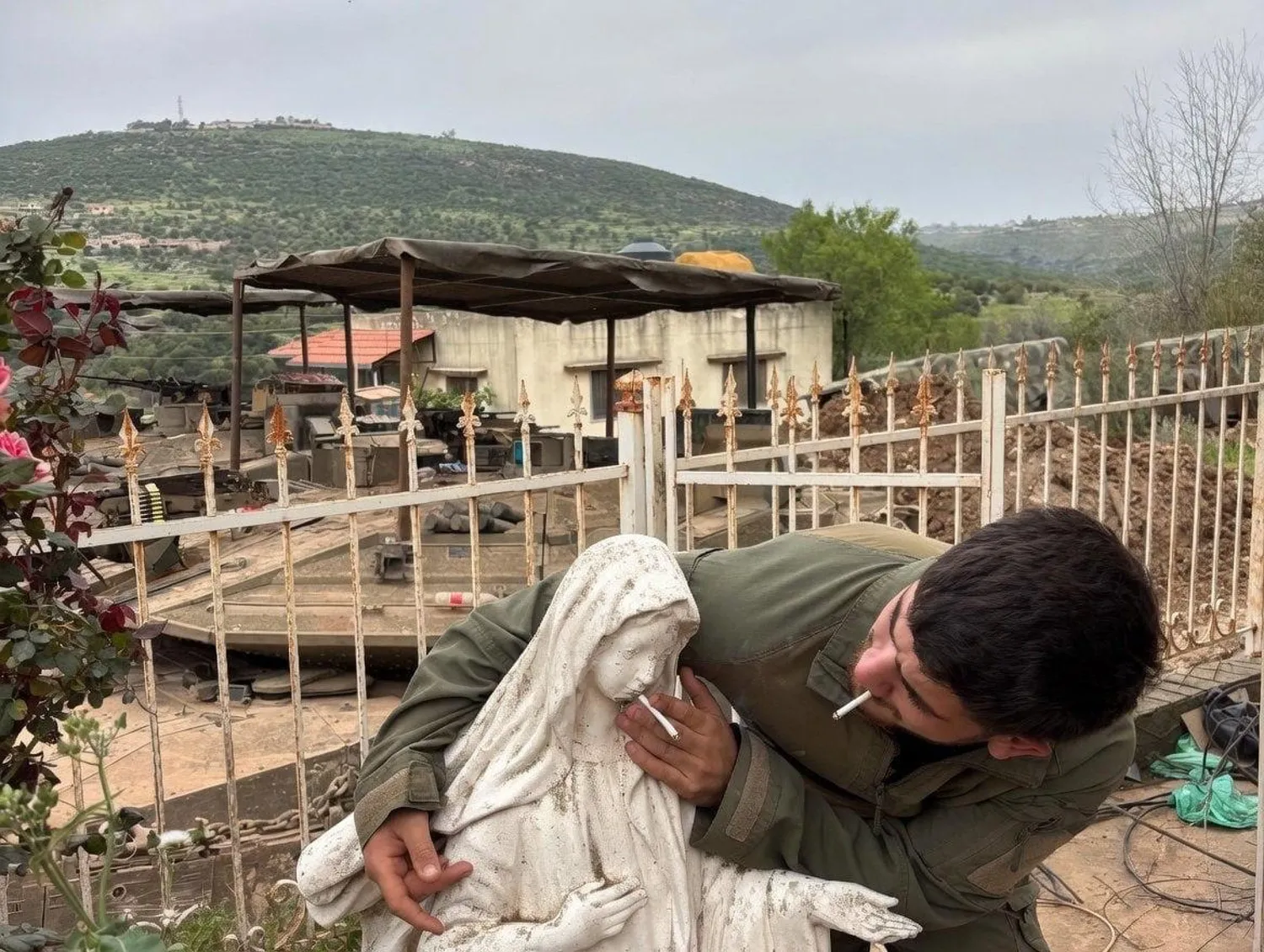
This vitriol for Christians is manifesting far beyond Israel or Jerusalem. On April 19, an Israeli soldier was documented smashing a Jesus statue at a church in southern Lebanon; later on May 8, a photo went viral of a different Israeli soldier smoking beside a statue of the Virgin Mary with a cigarette placed in her mouth.
Could these all really just be coincidences? All of this is taking place as endless reports and testimonies regarding terrorist attacks by Israeli settlers in the West Bank, on civilian populations, sometimes midday and at other times midnight, to spread horror and fear within the local population – indiscriminately against Christian (like Taybeh) and Muslim communities alike.
Clergy being assaulted, desecrated holy Christian symbols and attacks by settlers in the West Bank cannot be decontextualized from the war of annihilation that Israel has been conducting against the population in Gaza and its institutions, infrastructure, homes, hospitals for more than two years, and the more recent general war of sweeping destruction against tens of villages in southern Lebanon.
There are so many theories that try to explain this gleeful destruction, the celebrations by soldiers and politicians, the pleasure in seeing buildings collapsing or hospitals set on fire. Israeli attacks on the nun and the Jesus statue both reflect the average self in Israel – one that looks around and only sees enemies, and legitimate targets for humiliation.
Still, something is not fully clear here: Israel has been fighting this total war against Hamas and against Iran as war of civilization – the Judeo-Christian world against Islamic fundamentalism, be it Sunni or Shi’ite. How did symbols of Christianity turn out to be the enemy?

One lazy answer is that Christianity is the religious enemy of the past, and Islam is the political enemy of the present. But the past is the past. The Europe of today is not Europe of yesterday, and the present is not a predetermined fate but the outcome of Israel’s actions in this region to the Palestinians, to the Arab and Muslim world writ large.
Enmity is not a destiny; it is a choice as well. Occupation, dispossession and humiliation create enmity.
The “self” that is being threatened by the nun is symptomatic. It is a self that feels high anxiety from the mere fact that there are other selves in the world. This is a self that is unable to accept the fact that it has to share the world with other selves. That these selves have their own plans, desires, projects and aspirations. This is a self that seeks to annul the mere subjectivity of others. This self confuses security for dominance, and the more it seeks to dominate, the less it feels secure.
This is a self that is unable to stipulate a sense of security without annihilating other selves. Israel today is exactly this kind of self.
Raef Zreik is a professor of legal and political philosophy at Ono Academic College and the Academic College of Tel Aviv-Yafo. He is also a senior researcher at the Van Leer Jerusalem Institute.
RELATED:
- If not stopped, Israel will wipe out Christians from Palestine by 2050: Bethlehem pastor
- “Spitting and humiliation are daily. People are afraid to walk in Jerusalem with Christian symbols.”
- Nun assaulted in Jerusalem amid ‘pattern’ of anti-Christian attacks by Israelis
- The Shattered Figure of Jesus Is Not an Exception. It’s a Pattern
- Christians in Israel and Palestine, past and present