Israel no longer bothers to dispute the Gaza Health Ministry figures, which show that the number of civilians killed since October 7 is the highest in any war in the 21st century
Ten days ago, former army Chief of Staff Herzl Halevi visited Moshav Ein HaBesor, a Gaza border community, for a discussion with its residents.
Halevi tried to apologize for and explain the IDF’s failures on October 7, and then went on to say, “There are 2.2 million people in Gaza, and more than 10 percent of them have been killed or wounded. It’s not a gentle war.”
It wasn’t the first time that an Israeli leader has more or less confirmed the figures reported by the Hamas-run Gaza Health Ministry.
As of this moment, the health ministry says 65,283 Gazans have been killed and more than 166,000 have been wounded since the beginning of the war in 2023, a total of about 230,000 people.

In March 2024, Israeli Prime Minister Benjamin Netanyahu confirmed the ministry’s estimate at the time that 13,000 Hamas terrorists had been killed until then, and that for every one terrorist killed, 1-1.5 civilians were killed as well.
The results of that equation came very close to the mortality rates of the Gaza Health Ministry. Thus, at a time when Israel was officially denying the ministry’s data, it was confirming it in practice.
It should be noted that the ministry doesn’t just publish headline numbers, but backs them up with detailed lists that include the full name (including those of the father and grandfather) and identity card number of the deceased.
The ID numbers are issued by Israel. Thus, if the Israeli government thought the lists were unreliable, the Gaza Health Ministry gave it the tools to refute them. The fact that Israel gave up trying to refute the figures testifies to their reliability.

The question of the number of dead in Gaza isn’t being asked outside of Israeli television panels. The main debate centers on their identity, namely, how many of the dead are gunmen affiliated with Hamas and other organizations and how many are, using military parlance, non-combatants.
Israel is correct in noting that the Health Ministry list doesn’t distinguish between fighters and civilians. However, a large number of studies and reports issued over the course of the war, as well as comparisons of figures issued by the Israel Defense Forces and the Gaza Health Ministry, raise suspicions that civilians comprise a clear majority of the deaths. The rates are far higher than the official Israeli estimate, which usually puts the ratio at 1-2 civilian deaths for every gunman killed, and the highest of any war in the 21st century.
The IDF spokesman issued on August 20 a summary of the results of Operation Gideon’s Chariots, which began after the cease-fire with Hamas broke down on March 18 (and since transitioned into Gideon’s Chariots 1, now that Gideon’s Chariots 2 has gotten underway).
In the announcement, the IDF boasted of killing “more than 2,100 terrorists.” The statement included the names of 34 Hamas commanders or leaders during the operation. The same day, according to the Palestinian Health Ministry, 10,576 Gazans had been killed since the collapse of the cease-fire, meaning that only 20 percent of the dead were actual combatants.

In the same announcement, the IDF spokesman added, by the way, that it had staged 10,000 attacks over the period. In other words, according to the army, on average, five separate attacks resulted in the death of a single terrorist. The IDF, of course, didn’t relate to who might have been killed in the other four attacks during those six months.
An investigation published last week by the Armed Conflict Location and Event Data (ACLED), a U.S. NGO that documents violent conflicts, claimed that the number of armed terrorists killed during this period did not exceed 1,100, i.e., less than 10 percent of those killed. However, the organization doesn’t say how its number was derived.
However, the figure on the enormous proportion of civilians killed does align with an investigation from August by journalist Yuval Avraham on the +972 website and in The Guardian, based on the Military Intelligence database. The investigation found that, in May, the database recorded 8,900 Hamas and Islamic Jihad members killed or “presumed” killed. At the same time, Hamas’s death toll stood at about 53,000. This means that, according to these figures, only about 17 percent of the dead were armed or identified as Hamas members.

In the early stage of the fighting, journalists and organizations tried to examine IDF data. In February 2024, the BBC aired an investigation examining the army’s claim that 10,000 terrorists had died in the fighting by then and found it to be implausible.
The Airwars organization, which analyzed the first three weeks of the fighting, also found that the rate of children and women killed was exceptional by international comparison. It asserted that the number of militants killed during this period was minuscule. Of the 606 attacks documented by the organization, in only 26 was there evidence of a militant being killed.

Linguist and blogger Idan Landau, who followed the IDF spokesman’s announcements regarding the death toll, also reached a similar conclusion, as did historian Lee Mordechai, who maintains a vast database on the war. The organization Action on Armed Violence, which examined the data in November 2024, also concluded that at least 74 percent of those killed up to that point were civilians.
One can also check the death toll lists of the Gaza Health Ministry. The data shows that 46 percent of the dead are women and children under the age of 18, including more than 940 babies under the age of one.
This figure is double that of any other conflict examined in wars since the 1990s. According to British researcher Prof. Michael Spagat, this indicates the extent of harm to civilians.
The rate of civilian deaths in Gaza can also be assumed from the silence of the IDF spokesman regarding specific attacks about which it was asked to respond. Three weeks ago, Haaretz asked for a response to 29 documented attacks from August in which 180 people were killed. In the vast majority of cases, no substantive response was provided on the reason for the attack or on the question of whether the IDF has evidence of the identities of those killed.
Last week, the spokesman was again asked about the deaths of 23 members of the Al-Zaqout family in Gaza, and again, he didn’t respond.

In dozens of other incidents that were carefully investigated by human rights organizations and journalists, it emerges that the IDF’s rules of engagement enable mass killing of civilians even when the danger to troops is minimal or the target of an attack is a low-level functionary.
The fighting in Gaza is happening behind a smokescreen. The Israeli public and journalists are having a hard time finding out the truth, but from all the investigations, reports and accumulating accounts, it is very difficult to accept the Israeli claims about upholding the laws of war and avoiding harm to innocent people.
The explanation for this policy can perhaps be found in what Halevi said at the Ein Besor meeting: “Between a year and a half and a year and seven months, we attacked all over the Middle East, a lot, in huge quantities. Not once did anyone restrict me – not even the military advocate general. By the way, she has no authority to restrict me.”
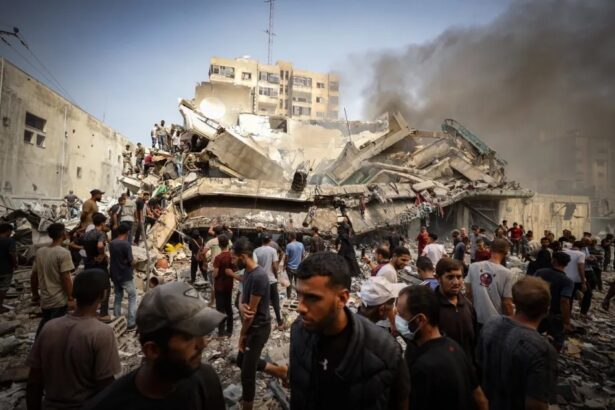
The preoccupation with numbers can make us forget that behind them lies an unimaginable human tragedy. In the past two days, as in most days since the war began, the evidence has surfaced of dead civilians in the Gaza Strip – bodies and body parts scattered in the street, two nurses lying dead next to each other, a baby whose body was charred, and a pile of bodies loaded into a truck.

Among the photos is a picture of four siblings from the Jumla family, an older brother hugging his younger brother, and their two sisters standing tall and smiling embarrassingly at the camera. All of them perished in an attack on their home in Gaza on Saturday morning.
“The IDF is working to minimize harm to civilians and civilian infrastructure in accordance with the laws of war,” the spokesman’s office said in response.
“It is investing great efforts to take precautions before carrying out attacks. The numbers presented in the article do not at all correspond to the ongoing assessments in the IDF regarding the scope of harm to Hamas operatives and its formations, which are based on a variety of sources and data.”
Nir Hasson is an Israeli journalist for Haaretz.
RELATED:
- US sixth veto of resolution on ceasefire, hostage release is a greenlight for Israel’s campaign of annihilation in Gaza
- In Gaza, the So-called ‘Evacuation of Civilians’ Is a Trail of Bombs and Death
- Israel to flood Gaza City with explosive-laden robots, report says
- Every Atrocity Imaginable: Litany of Israeli War Crimes Continues
- Top UN legal investigators conclude Israel is guilty of genocide in Gaza