Read a gutting dispatch from Gaza City, where, after last week’s building collapse killed 21, Palestinians fear there will be many more similar tragedies unless Israel allows much-needed equipment in.
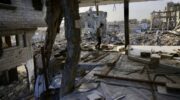
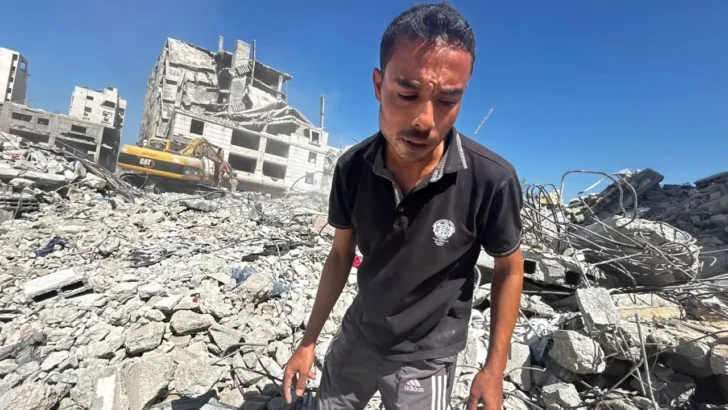
Amr Adas kneels in front of what used to be the Al-Saada building. Crews have cleared much of the rubble in the days since the building collapsed at dawn last week, but he still runs his hands over what is left, over the spot where he believes his two youngest children were trapped and died.
The bodies of his 6-year-old son Bilal, the only boy among his four sisters, and his 12-year-old daughter Dunya were pulled from the rubble five hours after the building collapsed. Before they went to sleep that night, they talked about buying new clothes and stationery for the upcoming first day of the school year.
Adas picks through the debris for anything that belonged to his children, the living and the dead. Each time he finds a piece of clothing or a small notebook, his voice falters. He goes quiet and stares for a long time, first at the evening sky and then at the rubble.
“God, why did this happen to us?” the 37-year-old says, striking one palm against the other before he buries his face and weeps. “Why did I lose my son? Why were we forced to live in a destroyed building in the first place? Why did the world leave us alone?”
Bilal and Dunya were among the 11 children killed in the building collapse that day. Ten adults were also killed, and dozens were injured or remain missing. Some may have been saved if Israel didn’t block the heavy machinery and equipment needed for rescues from entering the Strip. But Palestinians families should never have been forced to shelter in such buildings in the first place. Faced with repeated displacement, Israel’s continued bombing and gunfire, harsh weather conditions, and no money to move, if there was somewhere to move at all, Palestinians feel they have no option but to risk sheltering in war-damaged buildings. Nowhere in Gaza is safe. And unless things change, Palestinians know there will be many more Al-Saadas in the weeks and months to come.
Over 2,000 Buildings Waiting to Fall
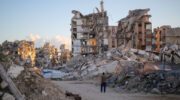
Tens of thousands of Palestinians – more than two-thirds of them women and children – are living in war-damaged buildings, according to Mahmoud Basal, spokesperson for Gaza’s Civil Defense. Al-Saada, which Israel first bombed two days into the current war, was sheltering 12 families, totaling around 100 people, displaced from eastern Gaza City when it fell last week.
The Palestinian Civil Defense has warned Palestinians that these buildings are unsafe, but with no other alternatives, many have no choice but to stay.
Adas, for example, has no work and no income. Moving anywhere costs money, whether for a new place or for a tent and everything needed to set it up. He tried hard, he says, and ended up at Al-Saada.
“Since the start of the war I’ve been fleeing from place to place with my children, looking for somewhere safe from the Israeli bombing, because we love life, we love our children, and we’re afraid of anything happening to them,” he tells me.
“If I had found anything that could replace that building, I wouldn’t have hesitated to leave. But we’d rather live in anything that can be called a house, even a crumbling one, than in a tent.”
Over the last three years, more than 50 Palestinians have been killed, and scores have been injured in building collapses. First responders know there will be many more. Basal says more than 2,000 bombed buildings have been documented as at risk of collapse. In the days after Al-Saada fell, there were more than five partial collapses that injured several people.
“The Al-Saada scene will inevitably repeat itself as long as the occupation doesn’t allow mobile homes and shelter supplies in,” Basal says. “Winter will be worse. Heavy rain and strong winds will hit buildings so weak you can sometimes see them leaning with the naked eye. Whoever survived the bombing won’t survive death under the rubble.”
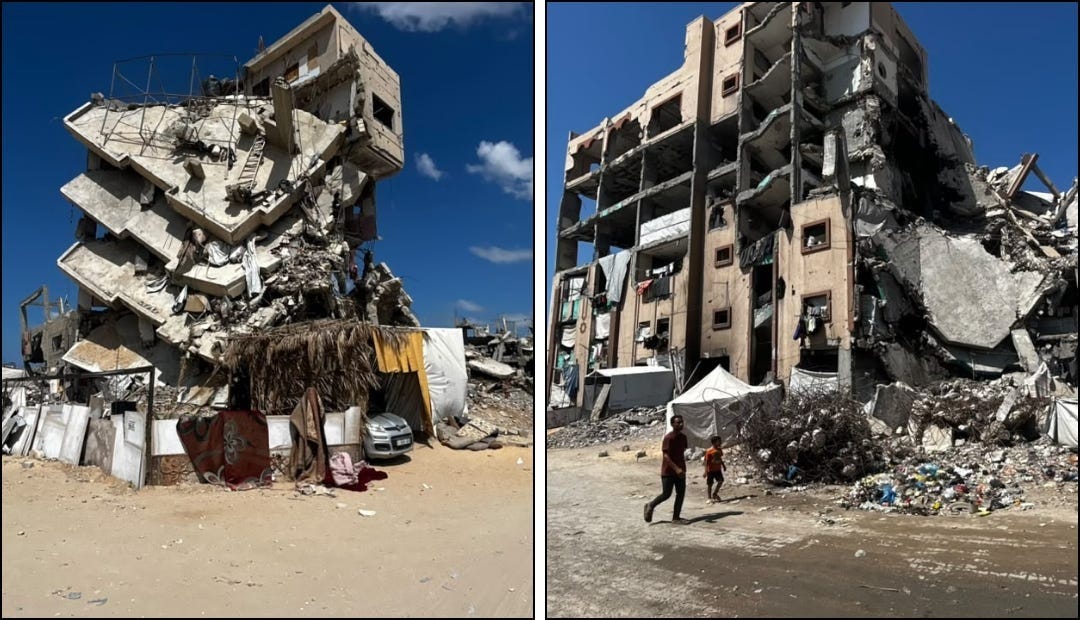
These buildings cannot be repaired or shored up, he says, and need to be fully demolished. Doing that would take dozens of bulldozers, excavators and trucks, and at least a year. Separately, civil defense has around 350,000 requests from homes that are temporarily habitable but need smaller interventions, such as removing a hanging concrete block, a wall or a section of ceiling.
The UN, along with Arab and local organizations, is preparing a project to deal with dangerous buildings, according to engineer Bilal al-Harazin, who directs the survey program at the Arab International Authority for Reconstruction. But he says it would cover no more than about 100 buildings, around 5% of the total.
“Every plan is worthless unless Israel allows in the equipment, temporary shoring supplies and shelter materials,” he tells me, noting that there are only about five excavators in all of Gaza. He adds that fuel, lubricants, and spare parts are also needed, and that none of this has anything to do with reconstruction. It is only about keeping more people from dying.
Under the so-called “ceasefire,” Israel was supposed to allow more aid, as well as necessary equipment to remove rubble and clear roads to enter the Strip, according to the UN. But nearly a year later, it’s clear the ceasefire was not a ceasefire at all.
From near-daily strikes to continued restrictions on what enters the Strip, the Israeli government has largely ignored the agreement, leaving Palestinian rescue workers with little to work with when a building collapses or an area is bombed.
“We have nothing except simple tools and our hands,” Basal says. “We could hear the victims [in Al-Saada] and see them, but we don’t have heavy equipment, no excavators, no bulldozers, none of the rescue equipment used everywhere else in the world.”
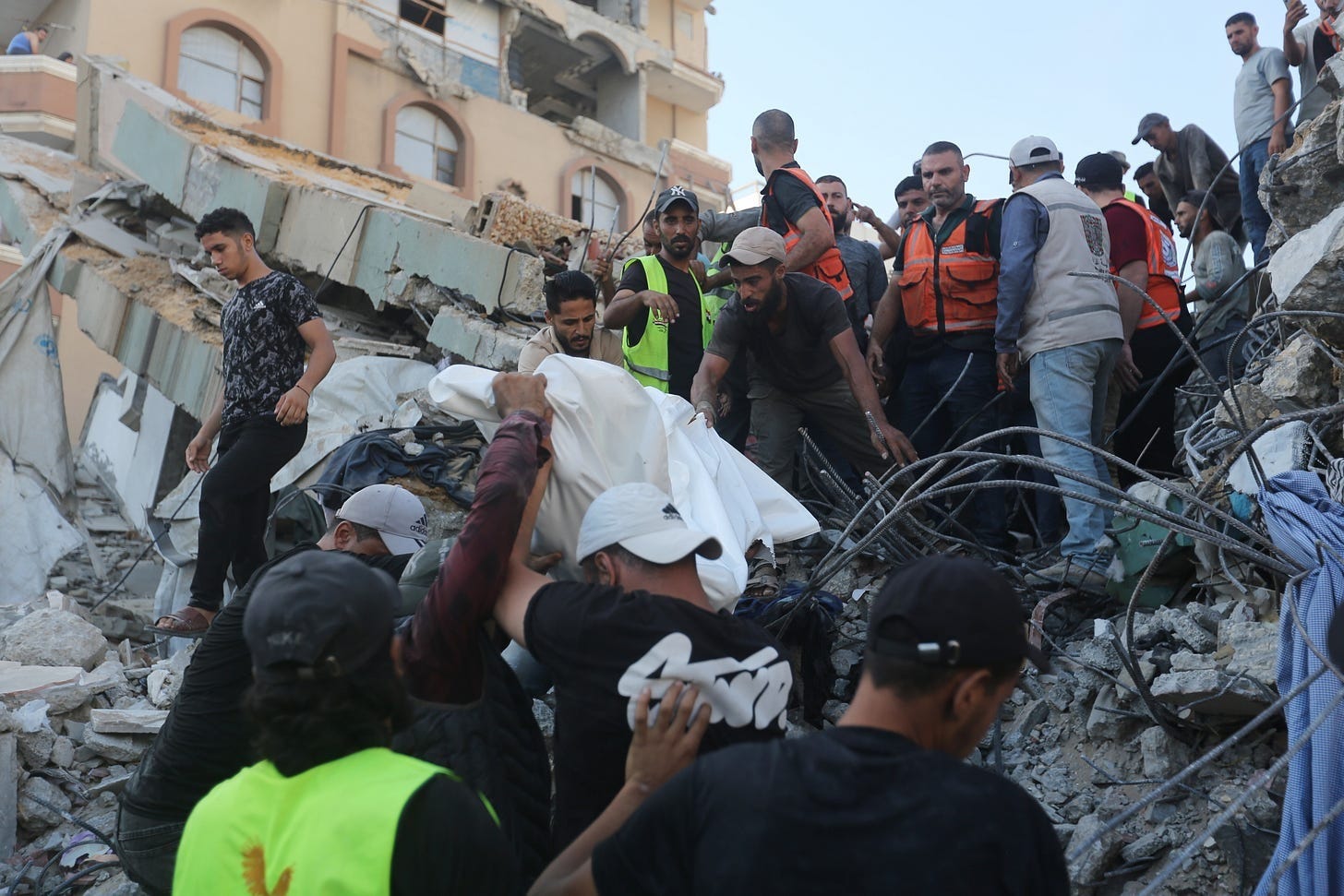
According to Basal, Israel has destroyed around 90% of civil defense vehicles. What remains is no more than 145 small vehicles and no heavy equipment.
Crews dug by hand for several hours in the rubble of Al-Saada before heavy machinery arrived from the Egyptian committee, the Red Cross, the UN, and a local private company.
“By then it was too late,” Basal says. “With the right equipment, far fewer people would have died. Some victims could be heard moaning and calling out, and no one could reach them.”
“Come On, Baba, I’m Coming”
When the Al-Saada building collapsed, Adas was trapped by debris and a concrete column that had fallen on his leg.
He could hear his children crying for help, but all he could do was call out: “Come on, Baba, I’m coming.”
His wife, Nawal, 32, was next to him, injured, after throwing her body over their 19-month-old daughter, Minnatullah, to shield her when the building began to fall.
Adas remembers his eldest daughter, Suma, 14, calling out in a small, terrified voice for someone to save her. Soon he could no longer speak. Nawal kept talking, soothing the children in the dark, until people outside rushed in to pull them free.
“Everything is shattered,” he says. “I lost two of my children. My eldest daughter has multiple injuries; her younger sister Malak, who is 10, has pelvic fractures, and my wife and I are covered in wounds.”
“And that’s not all,” he adds. “I lost everything I owned, all our belongings, everything we need for daily life. I don’t know how I’ll manage in the coming period.”
Adas tells me the collapse is no different from Israel’s bombing.
“The building only collapsed because of the Israeli bombing,” he tells me. “That means the occupation is responsible for what happened to us. If they hadn’t bombed the building at the start of the war, it wouldn’t have collapsed. If they hadn’t bombed our homes and occupied our areas, we wouldn’t have been forced to flee.”
Mohammed Al-Astal is a veteran freelance journalist in Gaza.
RELATED: