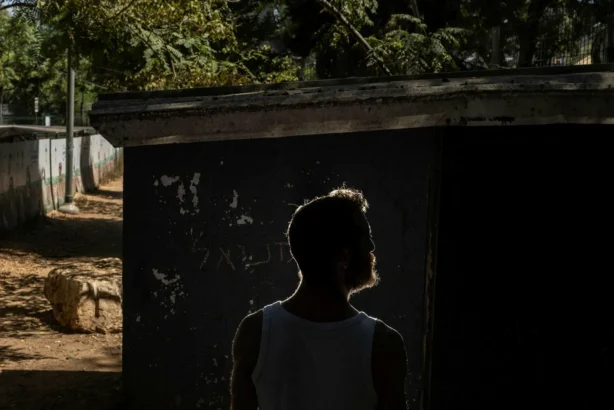
A decade of serving in the IDF broke Nir. As soldiers around him succumbed to ‘ethical burnout,’ he began questioning what he was being asked to do. Returning to duty on October 7, he saw an army out of control
By Yaniv Kubovich, reposted from Haaretz, September 10, 2026
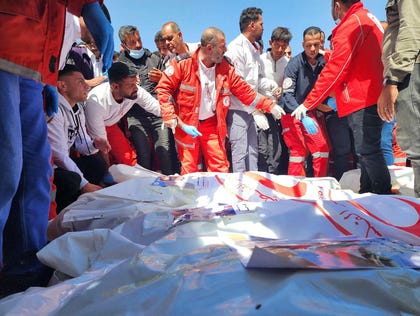
That night, Nir was sitting in a trailer filled with screens, at a base in the Gaza border area. On the screens, he watched ambulances driving down a road and then saw Golani Brigade troops ambush them.
“These were clearly identifiable as emergency vehicles, even when ground fire opened on them,” Nir (a pseudonym) recounts. “Without any apparent reason, the ground troops stormed the convoy. They shot at the first vehicle, the medical staff exited, hid behind the ambulances and pleaded for their lives, and the soldiers shot them, one after another.”
That happened in the early morning of March 23, 2025, in Rafah’s Tel-al Sultan neighborhood, at the southwestern tip of the Gaza Strip. The incident is now known as the “Gaza paramedic killings,” or “Rafah paramedic massacre.” The Israel Defense Forces have claimed it was an identification mistake, a professional error. Following a military investigation, however, the military advocate general recently ordered the Military Police Criminal Investigation Division to investigate the circumstances.
Nir, a major in the reserves and a drone operator, remembers the operation in great detail. Moreover, what happened that day haunts him relentlessly. “After this incident, I realized that anyone can kill whoever they want, as much as they want, and they won’t be held accountable for it.”
According to Nir, what broke him wasn’t just the shooting, but the troops’ conduct afterward and what he subsequently learned. “The trigger finger was very light. People lost their humanity,” Nir said. He also described what happened over the radio: “They didn’t report that these were emergency vehicles, even though the sirens were on. At first, they spoke of 15 Hamas operatives, then 12, and in the end, they only spoke of three suspects.”
According to him, the bodies were buried on the spot, and the ambulances were run over by a Caterpillar D9 armored bulldozer and covered with earth. “For me, something broke there. I felt that I wasn’t just witnessing a challenging operational event, but an entire system capable of containing it and moving on as if nothing had happened.”
It would take over a year after the incident before Nir realized he couldn’t cope anymore with the symptoms of his moral injury and took off his uniform for the last time.
“It was a gradual process,” he said in a conversation with Haaretz. At first, he believed that the physical distance between him and the targets he was hitting and killing, gave him a kind of protection. But over time, that distance only exacerbated the difficulty and the feelings of guilt. “The one sitting in the chair isn’t God,” he said, “but he’s the one who’ll decide whether to attack or not attack.”
That realization gnawed at his soul more and more. He understood that he needed to cope, but he didn’t know how. He started using drugs, had anxiety attacks and psychosis, and also harmed his partner in his sleep. Only in the last few months would he gather the courage to admit that he suffers from PTSD and moral injury, and that he’s been carrying them for many years. “You’re literally sitting and watching the hardest movie you can see,” Nir says. “You see everyone’s faces. You see the children, the parents, the families, the women who come, crying, begging for help.”
The experiences that fueled his PTSD began long before the last war. They built up over a long list of operations, assassinations, and what would later turn out to be fatal errors – even if not everyone saw it that way.
‘Score a goal’
On the morning of October 7, when reports from the Gaza border began to come in, “everything was erased,” Nir remembered. “Everything that weighed on me, all the PTSD, everything disappeared in the face of the insane reality there, or so I thought.” Hours into the war, he traveled to the Air Force headquarters in Tel Aviv and volunteered his help. Soon, he was back to screens and split-second decisions. “In the first days, there are no rules,” he says. “The principle was clear to everyone: we have to protect the troops, provide supporting fire, allow the army to regain control of the [border] communities and save as many civilians as possible.”
His deep operational experience let him exchange his blue uniform for a green one – he began serving as a commander in an attack cell, accompanying the maneuvering brigades deep in Gaza. And there, he said that he witnessed firsthand burnout among the troops, and the lack of discipline that came with it. The result was mortal danger, and not just for civilians. Nir recounted many IDF near-misses and friendly fire incidents. In one of them, two paratroopers were killed. In another, eight soldiers moving in the area without proper coordination were marked as suspects and almost shot; something prevented it at the last second. “The enemy wasn’t just Hamas – sometimes the enemy was also burnout.”
When those mistakes were on IDF soldiers, they were immediately acknowledged as errors or malfunctions. But when the casualties were Palestinians, the mistakes were instead met with consideration, even approval. That was the case when Nir realized the Yellow Line – the IDF’s line of control in Gaza – began to drift westward, without approval from political or top military officials, and without nearby civilians realizing it.
“The Yellow Line is basically concrete barriers on the ground,” he explained. “The division commander [a brigadier general] decided, on his own, to push them westward, sometimes for hundreds of meters, creating a new border.” The Palestinians had no idea it existed, and the Air Force wasn’t always updated either.
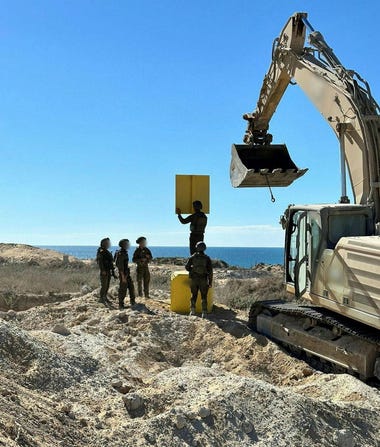
“From the perspective of a farmer entering his land – he doesn’t understand at all that he’s walking into an area that the IDF suddenly decided was a firing zone,” Nir said, recounting that it didn’t take long for cases to occur of unarmed civilians entering the area and being marked as targets for killing.
“I canceled attacks in droves,” he recounted. “I said that only if there was a direct and immediate threat would I attack. Then all sorts of justifications began to emerge retroactively: ‘He came for a weapons deal;’ ‘He touched the ground, maybe he’s planting an explosive device.’ In my opinion, they tried to incriminate people without intelligence and without proof, retroactively, just to create a justification for an attack.”
According to Nir, he wasn’t the only one who objected. “My counterparts and my friends didn’t want to approve every attack either. Everyone understood there was a problem here. Especially in the agricultural areas, we refused to accept ‘the division commander’s line,’ and adhered as much as possible to the original Yellow Line that appeared on the maps.”
He said that this was one side of the burnout soldiers were experiencing – ethical burnout. “The feeling was that something was broken; everyone had become cynical about death – you can’t understand it from the outside,” Nir recounted. “It’s not just fatigue, it’s a burnout of morality, of responsibility, of the feeling that someone’s still in control of the situation.”
As the war went on, the word “terrorist” became very flexible. In one instance, the IDF attacked a multi-story building based on the assessment that a wanted person had entered it. “The order was that the terrorist was inside the building, and anyone who came out of it should be killed.” 15 people were killed in that incident, but not the wanted person.
“In general,” Nir said, “very quickly, this whole story of ‘collateral damage’ disappeared from consideration. They fire at anyone they see.” The language in attack cells also changed completely. “The atmosphere started to be like in a soccer stadium’s stands. Just like they shout to a player, ‘Come on, score a goal,’ they shout to a soldier, ‘Kill him, attack him.'”
During his reserve duty in May of this year, Nir was exposed to another aspect: the IDF’s aerial surveillance of Palestinian militias opposing Hamas. “You say ‘ok’ once, also the second time, and then it becomes routine. They burn rows of houses, and we watch them from above. Arson, looting, shooting.”
Nir described something else from the war: Hamas began sending women and people with mental disabilities to IDF outposts “to scout the area, or out of suspicion that [specific individuals] were collaborators [and thus allowed in IDF areas]. And then [the IDF] launches a “Zik” drone, and you understand that you don’t have a choice, because they’re walking towards the soldiers. And there’s no question there; action needs to be taken.”
‘Don’t infect them’
Nir was drafted into the IDF in 2008. He dropped out of flight school after a year and transferred to the drone unit, where he completed his training with honors and was certified to operate Zik drones. He served in the career army, working as an instructor at the drone operator school and joining a special operations squad. In 2016, he was discharged with the rank of captain, but continued to serve in the reserves until July 2026, when he decided to end his service. He took with him a long list of achievements, and an equally long list of faces he can’t forget.
Nir remembers well the first time he killed people. It was in August 2012; terrorists who had infiltrated from Sinai took over an armored personnel carrier and tried to breach the Israeli border with it. Nir spotted the APC, firing two missiles that destroyed it. He received a certificate of excellence for his performance. This is the only event in his years of service that he speaks about today with almost no moral reservation; there were armed individuals, a clear danger, and a defined mission. After that, things became much more complicated.
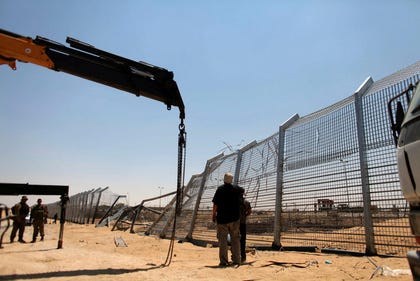
During the 2014 Gaza war, during which Nir says he spent over 500 hours in flight over Gaza, he was directly involved in the killing of 19 people. That number would rise, reaching 54 by October 7 2023, including terrorists and, he admits, uninvolved individuals. “Suddenly I discovered that, in every room I was in, I had killed the most people.”
For years, he managed to live alongside this number and its psychological weight. He began studying entrepreneurship and computer science and graduated with honors, worked briefly in defense tech giant Elbit’s drone department, and traveled to India to seek answers to his questions, which he hadn’t found in Israel. On the surface, it was a completely standard, even successful, life path.
In 2019, the IDF and Palestinian Islamic Jihad clashed over two days. Nir remembered asking his commander how he should act if a child appeared in the camera frame. The answer he received amounted to two words: “It’s gray,” meaning there was no absolute directive from above. “Meaning I’m the one deciding whether to kill or not.”
At that time, he said the operational orders and the board made an explicit prohibition against harming women and children, but it turned out that the prohibition wasn’t absolute. A few months later, he realized he couldn’t continue any longer, and approached his commanders and asked not to participate in attacks anymore, switching to only takeoff and landing missions. They agreed, with a single condition: that he not discuss his feelings with others in his squad. “Don’t start telling stories to the pilots here and your friends, so you don’t infect them,” he quoted one of his commanders, “so you don’t poison them.” That stuck with him to this day. “Poison?” he asked painfully. “Am I the poison?”
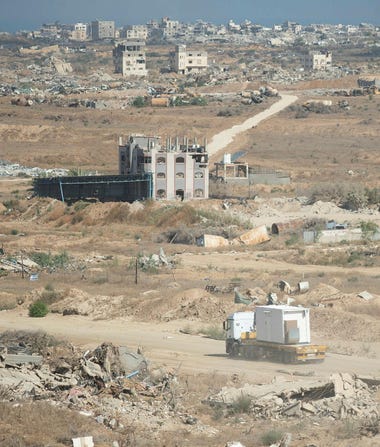
He hadn’t been officially diagnosed yet at that time, but he knew that something inside him wasn’t working right. Past events he had managed to suppress for years were resurfacing; anxiety, feelings of guilt, and self-hatred began to appear.
While taking part in an ayahuasca psychedelic ceremony, he remembered a case from 2014, when a data entry error led to the killing of a Gazan farmer (“he was just working in his garden”). “I saw myself as if I were the bomb,” he describes his experiences from the ceremony. “I see all the people standing there, and I feel like I’m blowing up at them.” He didn’t just see the dead standing before him. “The most important insight was that it wasn’t just hard for me because of the man I killed who was just working in his garden, but also because of the people close to him who came to cry over him.”
Around the end of 2022, Nir went to the Air Force archive library and asked to watch recordings of the attacks he had carried out over his service. He was instantly shocked. “I hear myself during the operations, talking like a hunter who wants to hunt people,” he said. “I couldn’t believe I was hearing myself.” He said that his squad would openly use the phrase “hunting missions.” “You realize you’re a hunter. The hardest part for me was hearing how eager I was to attack and kill.”
In one of the videos, he watched three people whom he had remembered for years as members of a terrorist cell. Watching the old footage, it became clear to him that “this story of armed terrorists never existed. It’s a story I likely invented for myself to live with myself.”
Getting to treatment happened almost by accident. His father told him about Kfar Izzun, a therapeutic framework for PTSD and addiction rehabilitation. At first, he joined just to volunteer and cook, but the staff noticed his condition and urged him to become a patient. He spent four months in a treatment program. “There I began to understand that I couldn’t keep running, and that I myself needed help.” He got help, and his condition began to improve. Then, October 7 happened.
Tower of David
In the most recent war, Nir’s problems didn’t appear immediately. They took time to sink in, for doubts to pile up and begin to weigh on his conscience.
One incident he couldn’t ignore anymore was in October 2024, about a year after Hamas’ massacre. Nir was sent then to the Netzarim corridor, a strip of land bisecting the Strip that was occupied by the IDF, to instruct soldiers in drone operation. That was the first time he felt a tangible sense of mortal danger, and that his comrades weren’t going to be able to protect him. He took a gun and grenades and went up alone to the third floor of one of the buildings in the area.
“I told myself, I’ll stand guard. I sat there in the dark, alone, and started imagining figures 20 meters away from me. In the corner of a dark room, with a rifle and grenades in hand, I waited all night for Hamas to arrive. In retrospect, I realize that I was already in the middle of a severe anxiety attack there.” In the morning, he was returned to Israel. “I went straight home, and felt as if I hadn’t left that room. I heard and saw the same figures; I heard the tanks, like I was really still in Gaza.”
At first he tried coping alone, but it didn’t go well. “On Memorial Days, I would go into attacks, cry endlessly, see the people I killed cursing me in my imagination,” he said. “I would lock myself in the room so my parents wouldn’t see, and smash things.” Then he turned to drugs. First cannabis “to find some calm,” and then MDMA and ketamine – “anything that could make me escape.”
According to Nir, the use of psychoactive substances among reservists isn’t a fringe phenomenon, but a quiet coping mechanism. “Many people use it. No one wants to know, and no one wants to hear. It wasn’t an experience of celebration – it was a way to calm the inferno inside.”
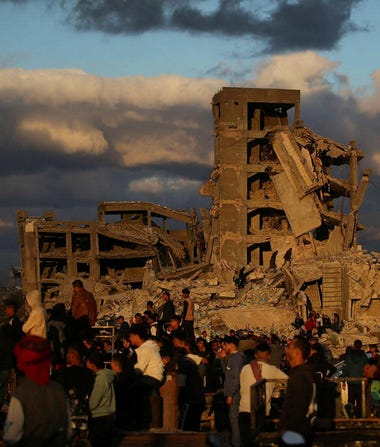
How common is it? According to Nir, his division’s mental health officer said to him that “there are soldiers who say orgies and hard drugs are an excellent way to get back to routine. We laughed, but then he said he too was actively depressed.” All that time, he continued to serve in uniform. Although he says he never came to duty intoxicated, during his civilian hours, it was his solace.
Purim 2026 was a breaking point, another breaking point. At a party at the Tower of David in Jerusalem, “everything blew up,” he recounts. “I got into a truly psychotic state. I didn’t remember my friends’ names. I looked at the Tower of David, and suddenly it looked like a mosque in Gaza to me. I felt like I was losing my sanity.”
In the following weeks, he committed to quitting cannabis and traveled with his partner for a five-day trip to Georgia. But only a day after Nir returned to Israel in late April, he was called up for a sector patrol in Gaza. “I arrived at the Nahal Oz outpost and saw how Gaza had turned into [slapstick army movie] Halfon Hill. We hadn’t even started the round, and everyone was already talking about killing. I asked to meet with the intelligence officer to upload targets to the computer, and he told me, ‘You have two million targets in Gaza.’ He meant that the two million people there were the targets.
It would take another two months before he finished his service. He repeatedly got into arguments (“people who were once ethical became shadows of themselves”) and went back to drugs. Only when it was over did he feel he could truly get clean. “Today I’ve been clean of all drugs for several months,” he said, but he finds it hard to ignore the harm that still follows him.
Nir’s moral injury isn’t only guilt over the actions he participated in, but also a feeling that he betrayed trust. “The definition of moral injury in Israel is betrayal; that’s how I feel,” he said. “Think about it, I, who’m supposed to protect the soldiers and kill terrorists, suddenly show compassion towards the enemy. What’s that if not betrayal? How can an Air Force officer feel compassion towards Palestinian families, especially after October 7? This is the contradiction I’m living within.”
Feelings of guilt swelled. “I started to hate myself and was afraid people would hate me. I really felt like a Nazi, as if I had committed murder. On a trip to Europe, I told strangers I was a murderer. Legally, it’s not murder, I know, but that was my feeling.”
A few months ago, he decided to file a claim with the Defense Ministry for recognition of his mental injury. Then he realized he was alone in other ways. His squad gradually stopped talking to him; some of his friends stopped answering his calls or WhatsApp messages, and then he learned he was no longer part of it. “My best friends cut me out,” he said. Now he’s coping with his feelings, which, unlike his friends, aren’t leaving him.
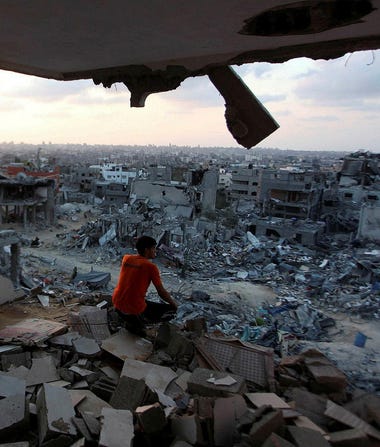
“Just because you kill someone from a distance doesn’t mean you’re not affected by the killing’s consequences,” Nir emphasized. “Technology is designed to keep the combatant away from physical danger, but it doesn’t keep the soul away – sometimes it does exactly the opposite.”
In a statement responding to the article, the IDF Spokesperson wrote: “The IDF is fully responsible for the mental and physical health of its service members, and it is a vital component of their readiness and the IDF’s readiness for its missions. In any case of expressed mental distress among soldiers, immediate assistance is provided through commanders and relevant medical personnel, including a unit doctor, mental health officer, and, if necessary, a psychiatrist. In all squadrons, debriefings are conducted with sufficient frequency.
“Combatants and drone system operators receive full support in the field of mental health. All operators have undergone and continue to undergo tailored debriefing and support processes. Assuming this refers to an active operator in the system, he is also included in this support framework.”
Regarding Nir, the IDF Spokesperson wrote, “Prior to publication, no identifying details were provided about the reserve officer described in the article. If they are provided, they will be examined and addressed as necessary. The IDF calls on every soldier and service member experiencing distress to approach their commanders, share their situation, and receive the necessary assistance and support.
“The IDF, including the Air Force, will continue to work to maintain the health of its service members and provide them with the professional, medical and command support required. Regarding the claim of lack of coordination between the Air Force and the division forces, the Air Force operates in full coordination with the forces on the ground, as it has throughout the fighting.”
Yaniv Kubovich is a reporter for Haaretz.
RELATED:
- Israel’s Quadcopter Drones Have Become a Weapon of Everyday Killing in Gaza
- The GOAT (Greatest of All Time) Merchant of Death
- ‘Israel Is Sending Armed Militias Into Gaza to Commit War Crimes – and the IDF Has to Protect Them’
- Israeli Media: The IDF’s Gaza Investigations Aren’t Professionalism – They’re Political Theater (MSF agrees)
- How public health research supports accountability for Israeli war crimes in Gaza